






.........Rebound bei FEC Resources......oder kommen die Chinesen !?!? - 500 Beiträge pro Seite (Seite 2)
eröffnet am 11.05.07 18:39:49 von
neuester Beitrag 20.11.18 13:30:30 von
neuester Beitrag 20.11.18 13:30:30 von
Beiträge: 704
ID: 1.127.255
ID: 1.127.255
Aufrufe heute: 0
Gesamt: 97.432
Gesamt: 97.432
Aktive User: 0
ISIN: CA30246X1087 · WKN: A0ERXT · Symbol: FECOF
0,0017
USD
0,00 %
0,0000 USD
Letzter Kurs 22.04.24 Nasdaq OTC
Werte aus der Branche Öl/Gas
| Wertpapier | Kurs | Perf. % |
|---|---|---|
| 1,7000 | +53,15 | |
| 6,0800 | +43,06 | |
| 12,990 | +38,93 | |
| 0,5070 | +31,52 | |
| 17,200 | +27,31 |
| Wertpapier | Kurs | Perf. % |
|---|---|---|
| 7,1700 | -9,58 | |
| 0,6500 | -12,16 | |
| 1,2100 | -13,57 | |
| 11,820 | -16,41 | |
| 20,000 | -33,33 |

 Feedback
Antwort auf Beitrag Nr.: 40.583.368 von hainholz am 24.11.10 16:30:19500

Antwort auf Beitrag Nr.: 40.583.471 von hainholz am 24.11.10 16:39:31vielleicht werden wir ja mal belohnt, wird auch mal langsam zeit
Antwort auf Beitrag Nr.: 40.583.881 von schneebe am 24.11.10 17:15:26aber,ehrlich
in london 25 % auffi
in london 25 % auffi

Antwort auf Beitrag Nr.: 40.583.881 von schneebe am 24.11.10 17:15:26Der Startschuss ist gefallen! Das wird hier was!
Antwort auf Beitrag Nr.: 40.584.100 von xxtsc am 24.11.10 17:35:53das ist schon nicht schlecht,erst in amiland und jetzt schon wieder hier

Trading Spotlight
Antwort auf Beitrag Nr.: 40.584.243 von hainholz am 24.11.10 17:49:05I agree! 

Forum Energy seeking partners
By Amy R. Remo
Philippine Daily Inquirer
First Posted 22:08:00 11/28/2010
Filed Under: Oil & Gas - Upstream activities, Joint Ventures, business, Investments
MANILA, Philippines—UK-based Forum Energy Plc is seeking prospective partners for its plan to further explore and develop the oil- and gas-rich Reed Bank basin in offshore Palawan, which is covered by Service Contract 72.
“The company continues to have discussions with potential strategic partners for the purpose of accelerating the development of SC72. However, no firm proposal is currently being considered,” Forum said.
Months after it was granted a service contract, Forum Energy is finally set to start the implementation of its approved work program. The company recently secured a $10-million facility from Philex Mining Corp.
The lending facility, which would make available the $10 million for three years at an interest rate of US Libor plus 4.5 percent, will allow the local subsidiary, Forum Philippines Holdings Ltd., to fund its 70-percent share (or $7.4 million) in the first sub-phase work program for SC 72.
SC72, which covers 880,000 hectares within the Reed Bank basin, contains the Sampaguita oil and gas field discovery, which is estimated to contain as much as 3.4 trillion cubic feet of gas.
The planned work program was designed to provide a more comprehensive valuation of these areas and identify potential sites for appraisal wells within the Reed Bank basin.
The work program also includes 3D seismic work in an area of up to 550 square kilometers around the Sampaguita gas discovery and 2,200 line-kilometers of high resolution 2D over existing leads within the 8,800-square-kilometer contract area.
The acquisition of the seismic data is scheduled for completion in the first half of 2011 and will then be subject to technical analysis.
Aside from Sampaguita gas discovery, the SC 72 field was also reported to contain at least eight other potential leads.
Given the resources covered by SC 72, Forum said it was enough to form the foundation of a liquefied natural gas (LNG) project, similar to the Malampaya deepwater-to-gas power project.
By Amy R. Remo
Philippine Daily Inquirer
First Posted 22:08:00 11/28/2010
Filed Under: Oil & Gas - Upstream activities, Joint Ventures, business, Investments
MANILA, Philippines—UK-based Forum Energy Plc is seeking prospective partners for its plan to further explore and develop the oil- and gas-rich Reed Bank basin in offshore Palawan, which is covered by Service Contract 72.
“The company continues to have discussions with potential strategic partners for the purpose of accelerating the development of SC72. However, no firm proposal is currently being considered,” Forum said.
Months after it was granted a service contract, Forum Energy is finally set to start the implementation of its approved work program. The company recently secured a $10-million facility from Philex Mining Corp.
The lending facility, which would make available the $10 million for three years at an interest rate of US Libor plus 4.5 percent, will allow the local subsidiary, Forum Philippines Holdings Ltd., to fund its 70-percent share (or $7.4 million) in the first sub-phase work program for SC 72.
SC72, which covers 880,000 hectares within the Reed Bank basin, contains the Sampaguita oil and gas field discovery, which is estimated to contain as much as 3.4 trillion cubic feet of gas.
The planned work program was designed to provide a more comprehensive valuation of these areas and identify potential sites for appraisal wells within the Reed Bank basin.
The work program also includes 3D seismic work in an area of up to 550 square kilometers around the Sampaguita gas discovery and 2,200 line-kilometers of high resolution 2D over existing leads within the 8,800-square-kilometer contract area.
The acquisition of the seismic data is scheduled for completion in the first half of 2011 and will then be subject to technical analysis.
Aside from Sampaguita gas discovery, the SC 72 field was also reported to contain at least eight other potential leads.
Given the resources covered by SC 72, Forum said it was enough to form the foundation of a liquefied natural gas (LNG) project, similar to the Malampaya deepwater-to-gas power project.
FEC Resources, Inc. Announces Management Changes
Fec Resources (OTCBB:FECOF)
Intraday Stock Chart
Today : Wednesday 15 December 2010
Click Here for more Fec Resources Charts.
FEC Resources, Inc. Announces Management Changes
PR Newswire
CALGARY, Canada, Dec. 15, 2010
CALGARY, Canada, Dec. 15, 2010 /PRNewswire-FirstCall/ -- FEC Resources, Inc. (OTC Bulletin Board: FECOF) wishes to announce the following management appointments:
Barry Stansfield has retired as Chairman of the Company and will remain a Director of the Company. Carlo Pablo, currently Director of FEC, will assume the role of Chairman effective immediately.
Carlo Pablo (age 47) is currently Chief Operating Officer of Philex Petroleum Corporation, Philippines, which is the wholly-owned oil and gas subsidiary of Philex Mining Corporation. Previously Mr. Pablo was a Commercial Adviser at Shell, where he worked for 24 years in various upstream and downstream projects in the Philippines, Indonesia and Malaysia. Mr. Pablo was a Director of PT Kridapetra Graha between October 2001 and September 2005 and is also a director of Petroenergy Resources Corporation and an Executive Director of Forum Energy Plc.
In addition, the following have been appointed as officers of the Company:
Jose Ernesto Villaluna - President and CEO
Riaz Sumar – Chief Financial Officer and Corporate Secretary
Renato Migrino – Treasurer
All above management were elected as Directors at the Company's last Annual General Meeting along with Edward Tortorici and Andrew Mullins.
For and on behalf of the Board of FEC Resources, Inc.
FEC Resources, Inc.
"Carlo S. Pablo"
Carlo S. Pablo
Chairman
This release contains "forward looking statements" as per Section 21E of the US Securities and Exchange Act of 1934, as amended. Although the Company believes that the expectations reflected in such forward looking statements are reasonable, it can give no assurance that such expectations will prove to have been correct. Management is currently reviewing many options and there is no assurance that they will not make decisions other than those now contemplated. The Company is subject to political risks and operational risks identified in documents filed with the Securities and Exchange Commission, including changing and depressed oil prices, unsuccessful drilling results, change of government and political unrest in its main area of operations
For more information please contact Riaz Sumar at (403) 290-1676 e-mail info@fecresources.com or visit the FEC Resources website at www.fecresources.com
SOURCE FEC Resources, Inc.
Fec Resources (OTCBB:FECOF)
Intraday Stock Chart
Today : Wednesday 15 December 2010
Click Here for more Fec Resources Charts.
FEC Resources, Inc. Announces Management Changes
PR Newswire
CALGARY, Canada, Dec. 15, 2010
CALGARY, Canada, Dec. 15, 2010 /PRNewswire-FirstCall/ -- FEC Resources, Inc. (OTC Bulletin Board: FECOF) wishes to announce the following management appointments:
Barry Stansfield has retired as Chairman of the Company and will remain a Director of the Company. Carlo Pablo, currently Director of FEC, will assume the role of Chairman effective immediately.
Carlo Pablo (age 47) is currently Chief Operating Officer of Philex Petroleum Corporation, Philippines, which is the wholly-owned oil and gas subsidiary of Philex Mining Corporation. Previously Mr. Pablo was a Commercial Adviser at Shell, where he worked for 24 years in various upstream and downstream projects in the Philippines, Indonesia and Malaysia. Mr. Pablo was a Director of PT Kridapetra Graha between October 2001 and September 2005 and is also a director of Petroenergy Resources Corporation and an Executive Director of Forum Energy Plc.
In addition, the following have been appointed as officers of the Company:
Jose Ernesto Villaluna - President and CEO
Riaz Sumar – Chief Financial Officer and Corporate Secretary
Renato Migrino – Treasurer
All above management were elected as Directors at the Company's last Annual General Meeting along with Edward Tortorici and Andrew Mullins.
For and on behalf of the Board of FEC Resources, Inc.
FEC Resources, Inc.
"Carlo S. Pablo"
Carlo S. Pablo
Chairman
This release contains "forward looking statements" as per Section 21E of the US Securities and Exchange Act of 1934, as amended. Although the Company believes that the expectations reflected in such forward looking statements are reasonable, it can give no assurance that such expectations will prove to have been correct. Management is currently reviewing many options and there is no assurance that they will not make decisions other than those now contemplated. The Company is subject to political risks and operational risks identified in documents filed with the Securities and Exchange Commission, including changing and depressed oil prices, unsuccessful drilling results, change of government and political unrest in its main area of operations
For more information please contact Riaz Sumar at (403) 290-1676 e-mail info@fecresources.com or visit the FEC Resources website at www.fecresources.com
SOURCE FEC Resources, Inc.
Ganz schön was los in Amerika, 0,042$ zur Zeit, mal sehen, ob der Anstieg hält und es nicht ne Bullenfalle ist. News gabs keine und FEP dümpelt nachwievor vor sich hin, wenig Volumen.
Die Amis sind auf FEC aufmerksam geworden, viele neue Schreiberlinge bei IHUB.
Die Amis sind auf FEC aufmerksam geworden, viele neue Schreiberlinge bei IHUB.
Antwort auf Beitrag Nr.: 40.865.923 von xxtsc am 14.01.11 20:14:50jau ich auch
aber sehr schön so nach langer Nichtbeachtung
aber sehr schön so nach langer Nichtbeachtung

Antwort auf Beitrag Nr.: 40.866.387 von hainholz am 14.01.11 21:43:080,035$ = 400 % Plus für mich!
Mit guten FEP News könnte FEC zum Jahresende 2011 ein 5 - 10 Bagger werden! Bin sehr optimistisch!
Schönes WE!
Mit guten FEP News könnte FEC zum Jahresende 2011 ein 5 - 10 Bagger werden! Bin sehr optimistisch!
Schönes WE!
Antwort auf Beitrag Nr.: 40.866.685 von xxtsc am 14.01.11 22:24:22im US Board sehen welche Fecof bei o,16 bis Ende Februar,was bei dem aufkommenden Interesse auch gut möglich ist.
My prediction is that we reach .16 by the end of february
Everything is in the works and its all going to happen in the first part of 2011
Glad to be onboard for the ride
My prediction is that we reach .16 by the end of february
Everything is in the works and its all going to happen in the first part of 2011
Glad to be onboard for the ride
Antwort auf Beitrag Nr.: 40.867.282 von hainholz am 15.01.11 08:20:47ist von euch keiner mehr dabei, geht seit tagen nach oben.
Antwort auf Beitrag Nr.: 40.923.108 von schneebe am 25.01.11 19:35:56
Antwort auf Beitrag Nr.: 40.923.116 von schneebe am 25.01.11 19:36:47türlich
ist schwer was los im US Board
nur hier interessiert´s kein Mensch
ist schwer was los im US Board
nur hier interessiert´s kein Mensch
0,020
1.900,00 %
0,0190
es wurde ja wnigstens mal der preis angepasst
1.900,00 %
0,0190
es wurde ja wnigstens mal der preis angepasst
Antwort auf Beitrag Nr.: 40.923.818 von hainholz am 25.01.11 21:05:16ja da war ich schuld, habe meine paar st in frankfurt verkauf
konzentriere mich nur noch auf die drüben hehehe
konzentriere mich nur noch auf die drüben hehehe
Antwort auf Beitrag Nr.: 40.923.857 von hainholz am 25.01.11 21:11:04wenn jetzt dann noch endlich die erwarteten news kommen,
geht es schnell auf die 0,10 hin.
die im army board schreiben das der kurz in februar auf 0,16 sein
könnte, dass wäre mal was
geht es schnell auf die 0,10 hin.
die im army board schreiben das der kurz in februar auf 0,16 sein
könnte, dass wäre mal was
vielleicht schließen wir auf tages hoch.
der umsatz ist ja für fec auch nicht so schlecht.
die meisten aktien sind ja in festen händen
der umsatz ist ja für fec auch nicht so schlecht.
die meisten aktien sind ja in festen händen
Antwort auf Beitrag Nr.: 40.924.194 von schneebe am 25.01.11 21:57:24das sind mal die, die jeweils über 10 % der aktien besitzen
Philex Mining Corporation 225.000.000 st
Asian Coast International 65.740.000 st
CDS & Co 44.464.231 st
Philex Mining Corporation 225.000.000 st
Asian Coast International 65.740.000 st
CDS & Co 44.464.231 st
Antwort auf Beitrag Nr.: 40.925.100 von schneebe am 26.01.11 07:18:47FEC steigt nur aufgrund der Ihub-Euphorie. Verfolge das US-Board nun schon einige Jahre, es gab noch nie so viele Posts wie in den letzten Wochen. Das zieht neue Käufer ein, viele sind aus dem HDY (sehr gut gelaufen im vergang. Jahr) Board zu FEC gewechselt.
Ein news-begründeter Anstieg wäre mir lieber. FEP verzeichnet kaum Umsätze und steigt nicht. Ganz anders FEC: Mit Pump sind 0,10 jederzeit möglich, mit Dump kann es auch schnell wieder zu 0,02$ zurücklaufen. Halt OTC!
Ich warte auf gute Palavan-News. Denke, dass Philex irgendwann alle Shares aufkaufen wird. Das haben Sie auch bei Philex Gold getan. Die Frage ist zu welchen Preis?
Gruß
Ein news-begründeter Anstieg wäre mir lieber. FEP verzeichnet kaum Umsätze und steigt nicht. Ganz anders FEC: Mit Pump sind 0,10 jederzeit möglich, mit Dump kann es auch schnell wieder zu 0,02$ zurücklaufen. Halt OTC!
Ich warte auf gute Palavan-News. Denke, dass Philex irgendwann alle Shares aufkaufen wird. Das haben Sie auch bei Philex Gold getan. Die Frage ist zu welchen Preis?
Gruß
Antwort auf Beitrag Nr.: 40.925.302 von xxtsc am 26.01.11 08:29:10ja sehe ich auch so, war noch nie soviel postings im us board wie die letzten wochen.
jetzt wären gute news vom vorteil, wenn die euphorie vorbei ist, dann geht es schneller
wieder auf die 0.01 runter wie wir schauen können.
aber ich denke bis 0,16 geht es noch.
jetzt wären gute news vom vorteil, wenn die euphorie vorbei ist, dann geht es schneller
wieder auf die 0.01 runter wie wir schauen können.
aber ich denke bis 0,16 geht es noch.
Antwort auf Beitrag Nr.: 40.925.891 von schneebe am 26.01.11 09:53:52moin FEC- lers,
zur verdeutlichung des gewaltigen ansprungs in den letzten monaten mal
zwei chartbilder.
schön erkennbar, mit welcher dynamik es hier zuletzt UPPPP- ging bzw.
phantasie weckend, wohin es NOCH gehen kann......


....wird 2011 DAS jahr für unser flügge werdendes baby


zur verdeutlichung des gewaltigen ansprungs in den letzten monaten mal
zwei chartbilder.
schön erkennbar, mit welcher dynamik es hier zuletzt UPPPP- ging bzw.
phantasie weckend, wohin es NOCH gehen kann......
....wird 2011 DAS jahr für unser flügge werdendes baby


Antwort auf Beitrag Nr.: 40.926.277 von hbg55 am 26.01.11 10:37:21hoffen wir es mal
mit meinem ersten kauf bei 0,40 wird es noch dauern bis ich da im plus bin,
aber mit meinen nachkauf positionen bei durchschnitt 0,01 schaut es eh schon gut aus
mit meinem ersten kauf bei 0,40 wird es noch dauern bis ich da im plus bin
,aber mit meinen nachkauf positionen bei durchschnitt 0,01 schaut es eh schon gut aus

heute sehen wir die 0,05
ask ist schon auf 0,054 ist aber nicht aktuell 15 min verzögert
Antwort auf Beitrag Nr.: 40.928.478 von schneebe am 26.01.11 15:21:16
....sieht gaaaaanz so aus, als könnten wir HEUTE die usd 0,05- hürde
nehmen.........

....sieht gaaaaanz so aus, als könnten wir HEUTE die usd 0,05- hürde
nehmen.........
ist aktuell bei 0,062
Antwort auf Beitrag Nr.: 40.929.818 von schneebe am 26.01.11 17:26:15wirklich der hammer , wie das teil heute aufgepumpt wird, so wie es aussieht dürfte es weiterlaufen
, wie das teil heute aufgepumpt wird, so wie es aussieht dürfte es weiterlaufen
Antwort auf Beitrag Nr.: 40.929.919 von xxtsc am 26.01.11 17:36:10schaut so aus, wird ja auch endlich mal zeit das wir belohnt werden.
Antwort auf Beitrag Nr.: 40.929.952 von schneebe am 26.01.11 17:38:43Hoffentlich kommen bald FEP News. Wenn sich das upside potential bis 20 TCF bestätigt sitzen wir hier auf einen Goldesel! Die jetzigen Kursturbulenzen sind nur ein Vorspiel.
Antwort auf Beitrag Nr.: 40.930.080 von xxtsc am 26.01.11 17:52:22wenn diese jetzt noch nach geschossen werden würden,
dann ist die 0,0 geschichte, 0,1? willkommen.
dann ist die 0,0 geschichte, 0,1? willkommen.
Antwort auf Beitrag Nr.: 40.930.125 von schneebe am 26.01.11 17:58:43Edison hat für FEP ( zur Zeit 64 Pence ) 9 Pfund pro Share veranschlagt. Sobald das 10 Mill.$ Erkundungsprogramm erledigt ist (irgendwann im Laufe des Jahres) und positiv ausfällt wird FEP rasch in den Pfundbereich aufrücken. Für FEC könnte das 0,20 - 0,30 $ bedeuten.
hi Jungs
das sieht ja riesig aus da drüben
lasst uns mal ein wenig mit posten
das sieht ja riesig aus da drüben
lasst uns mal ein wenig mit posten
auch hier zu Lande wird man mutig
Das wird die Ihub - Euphorie weiter anheizen! Anschnallen bitte, die Startposition ist erreicht! 
Aquino bares 2 oil exploration projectsJanuary 26, 2011, 8:45pmMANILA, Philippines – President Aquino is excited about two oil exploration projects in the country, including a probable oil reserve in Palawan that may be as big as Iraq’s stock.
The President mentioned the two prospective oil finds that could help meet the country’s oil requirements during a tribute to his mother, the late President Corazon Aquino, in Malacañang last Tuesday.
“A military official has told me about the start of a seismic study in an area of Palawan which allegedly is as big as Iraq’s proven reserves. Iraq, by the way, has the second biggest proven reserve next to Saudi Arabia,” he said in his speech.
The President also cited that local officials of Mindoro Occidental have also informed him about the “sizeable natural gas field” that is being verified in their province.
“Those are the natural resources that are found in the country but there are also those secured by our hard work,” he said.
Apart from oil exploration projects, the President highlighted the flow of investments in the country coming from Japan and other countries. (Genalyn Kabiling)
.http://www.mb.com.ph/articles/300844/aquino-bares-2-oil-expl…" target="_blank" rel="nofollow ugc noopener">
http://www.mb.com.ph/articles/300844/aquino-bares-2-oil-expl…
Anschnallen bitte, die Startposition ist erreicht! 
Aquino bares 2 oil exploration projectsJanuary 26, 2011, 8:45pmMANILA, Philippines – President Aquino is excited about two oil exploration projects in the country, including a probable oil reserve in Palawan that may be as big as Iraq’s stock.
The President mentioned the two prospective oil finds that could help meet the country’s oil requirements during a tribute to his mother, the late President Corazon Aquino, in Malacañang last Tuesday.
“A military official has told me about the start of a seismic study in an area of Palawan which allegedly is as big as Iraq’s proven reserves. Iraq, by the way, has the second biggest proven reserve next to Saudi Arabia,” he said in his speech.
The President also cited that local officials of Mindoro Occidental have also informed him about the “sizeable natural gas field” that is being verified in their province.
“Those are the natural resources that are found in the country but there are also those secured by our hard work,” he said.
Apart from oil exploration projects, the President highlighted the flow of investments in the country coming from Japan and other countries. (Genalyn Kabiling)
.http://www.mb.com.ph/articles/300844/aquino-bares-2-oil-expl…" target="_blank" rel="nofollow ugc noopener">
http://www.mb.com.ph/articles/300844/aquino-bares-2-oil-expl…
Antwort auf Beitrag Nr.: 40.932.897 von xxtsc am 27.01.11 06:13:31Die IHub - Euphorie hält an. Das Ganze könnte sich als Pump and Dump erweisen, wenn nicht bald FEP News kommen. Keiner kauft FEP Shares, FEC ist mehr wert als FEP. Also aufgepasst, falls der Kurs wieder in sich zusammenfällt.
Gruß
Gruß
Antwort auf Beitrag Nr.: 40.932.897 von xxtsc am 27.01.11 06:13:31volumen steigt immer mehr.
0,067 geschlossen
0,067 geschlossen
Antwort auf Beitrag Nr.: 40.939.794 von schneebe am 27.01.11 22:00:26ich korrigiere 0,065
Antwort auf Beitrag Nr.: 40.939.825 von schneebe am 27.01.11 22:03:53Schon der Wahnsinn, alles ohne News, nur aufgrund IHub Posts...könnte noch weiterlaufen, bevor es abwärts geht.
Antwort auf Beitrag Nr.: 40.939.913 von xxtsc am 27.01.11 22:15:50ist echt der wahnsinn wie die hochgetrieben wird, vielleicht kommen ja noch
super news, wir werden es aber bald wissen wo es hingeht.
super news, wir werden es aber bald wissen wo es hingeht.
Antwort auf Beitrag Nr.: 40.940.861 von schneebe am 28.01.11 08:27:40moin s.,
für MICH verdichten sich die anzeichen, daß hier ´etwas´ gewaltiges
in der luft liegt - ansonsten wären wir gestern in USA nicht mit TOP- vol.
bzw. nahe TH ausm handel gegangen
für MICH verdichten sich die anzeichen, daß hier ´etwas´ gewaltiges
in der luft liegt - ansonsten wären wir gestern in USA nicht mit TOP- vol.
bzw. nahe TH ausm handel gegangen
Antwort auf Beitrag Nr.: 40.942.398 von hbg55 am 28.01.11 11:53:12und die ganze woche waren wir im plus,
bin schon gespannt wie es heute weitergeht.
kann mir auch nur vorstellen das was in der luft liegt,
der umsatz (zumindestens für fec) ist ja enorm.
bin schon gespannt wie es heute weitergeht.
kann mir auch nur vorstellen das was in der luft liegt,
der umsatz (zumindestens für fec) ist ja enorm.
Antwort auf Beitrag Nr.: 40.942.398 von hbg55 am 28.01.11 11:53:12Mag sein, wenn es sich um SC 72 handelt, müsste zuerst FEP profitieren. Aber FEP kauft niemand, wenig Umsatz. Könnte es sich um die anderen Vermögenswerte handeln? Allerdings liegt die Kursfantasie eindeutig auf Palavan! Oder einfach Pump and Dump?
Es sieht weiterhin gut aus. Eine mögliche Erklärung könnte auch sein, dass Philex FEC voll aufkauft, wie sie es bei Philex Gold gemacht haben. Vielleicht wissen Insider mehr und beeilen sich die Aktien aufzukaufen und hoffen auf einen guten Preis. Philex hat letztes Jahr für FEC Shares 0,50$ hingelegt!
Antwort auf Beitrag Nr.: 40.946.887 von xxtsc am 28.01.11 21:58:52
durchaus ein denkbares szenario bzw. ein nachvollziehbarer gedanke
´gegen´ PUMP & DUMP....IMO
durchaus ein denkbares szenario bzw. ein nachvollziehbarer gedanke
´gegen´ PUMP & DUMP....IMO
China vows to continue buying overseas businesses
January 29, 2011, 12:27am
DAVOS, Switzerland, Jan. 28 (AFP) – China pledged Thursday to play its part in lifting global consumption, with Commerce Minister Chen Deming saying the Asian giant planned to double its imports over the next five years.
''Our development needs to be shared, so in future we will be even more open. We will focus on Chinese companies investing overseas, buying even more from overseas,'' Chen told political and economic elites gathered at the annual World Economic Forum meeting in Davos. ''We want to help boost consumption,'' he declared.
Major industrialized nations such as the United States have been urging China to help rebalance the global economy by boosting domestic consumption and cutting its reliance on exports.
On Thursday, Chen outlined Beijing's plan to ''focus even more on joint development'' with the world in the next 10 years and noted that its internal market of 1.3 billion people was a massive opportunity for foreign firms.
China is latching on to the occasion of its 10th year anniversary as a member of the World Trade Organization as a ''new start.'' ''We plan to be even more open. China is planning to double import trade in the next five years,'' he told reporters.
''We are encouraging Chinese companies to head out all over the world and expand. We are also building up our domestic market to increase consumption,'' he added.
China has been posting 15-16 percent annual growth in domestic consumption in recent years, Chen noted. ''In the next 10 years, such robust growth will continue,'' he added.
Chen last week voiced hopes that US exports to China would more than double to 200 billion dollars by 2015 as part of 500 billion dollars in overall trade.
Nevertheless, the latest US data showed that the US trade deficit with China in 2010 was likely to top the 2008 record of 268 billion dollars, even though the overall US trade gap shrank in November.
Chen said that Chinese trade surplus makes up a ''very small part'' of the country's output.
''Ninety-nine percent of our trade surplus is really against one country. This year, we will try our best to change this situation very quickly,'' he said, referring to the United States.
January 29, 2011, 12:27am
DAVOS, Switzerland, Jan. 28 (AFP) – China pledged Thursday to play its part in lifting global consumption, with Commerce Minister Chen Deming saying the Asian giant planned to double its imports over the next five years.
''Our development needs to be shared, so in future we will be even more open. We will focus on Chinese companies investing overseas, buying even more from overseas,'' Chen told political and economic elites gathered at the annual World Economic Forum meeting in Davos. ''We want to help boost consumption,'' he declared.
Major industrialized nations such as the United States have been urging China to help rebalance the global economy by boosting domestic consumption and cutting its reliance on exports.
On Thursday, Chen outlined Beijing's plan to ''focus even more on joint development'' with the world in the next 10 years and noted that its internal market of 1.3 billion people was a massive opportunity for foreign firms.
China is latching on to the occasion of its 10th year anniversary as a member of the World Trade Organization as a ''new start.'' ''We plan to be even more open. China is planning to double import trade in the next five years,'' he told reporters.
''We are encouraging Chinese companies to head out all over the world and expand. We are also building up our domestic market to increase consumption,'' he added.
China has been posting 15-16 percent annual growth in domestic consumption in recent years, Chen noted. ''In the next 10 years, such robust growth will continue,'' he added.
Chen last week voiced hopes that US exports to China would more than double to 200 billion dollars by 2015 as part of 500 billion dollars in overall trade.
Nevertheless, the latest US data showed that the US trade deficit with China in 2010 was likely to top the 2008 record of 268 billion dollars, even though the overall US trade gap shrank in November.
Chen said that Chinese trade surplus makes up a ''very small part'' of the country's output.
''Ninety-nine percent of our trade surplus is really against one country. This year, we will try our best to change this situation very quickly,'' he said, referring to the United States.
0,031
3.000,00 %
0,030
macht was her
3.000,00 %
0,030
macht was her
moin ALLLL,
sehen zwar vereinzelt gewinnmitnahmen, OHNE allerdings neu- gefundenes
kursniv. zu verlassen.......sieht gut aus....IMO
sehen zwar vereinzelt gewinnmitnahmen, OHNE allerdings neu- gefundenes
kursniv. zu verlassen.......sieht gut aus....IMO
gewaltig unter Pari hier !!
Antwort auf Beitrag Nr.: 40.970.237 von hainholz am 02.02.11 18:09:23Forum Energy obtains nod to explore Reed Bank gas prospect
by Alena Mae S. Flores
The Energy Department gave the go-signal to Forum Energy Plc of UK to proceed with the exploration of the Reed Bank basin near the disputed Kalayaan Islands off South China Sea.
Energy Secretary Jose Rene Almendras said Forum Energy’s work program for service contract 72 located offshore West Palawan complied with the requirements of the department.
“Forum is okay,” Almendras said when asked if Forum passed the review of the petroleum service contracts. “Their work program is in order.”
The work program includes 3D seismic work over an area of up to 550 square kilometers over and around the Sampaguita gas discovery, and 2,200 line-km of high resolution 2D over existing leads within the 8,800 sq. km. contract area.
Forum Energy is expected to complete acquisition of the seismic data in the first half for technical analysis.
Almendras said “discussions are ongoing” regarding Forum’s planned exploration activities.
Almendras has threatened to cancel the service contracts of non-performing oil and gas companies.
Forum Philippines Holdings Ltd., a wholly-owned subsidiary of Forum, earlier signed a $10-million facility agreement with Philex Mining Corp. to partly finance the work program in SC 72.
Earlier results from a 248-sq. km 3D seismic survey over the SC 72 contract area in 2006 indicated 3.4 trillion cubic feet of gas at the Reed Bank basin.
“The company continues to have discussions with potential strategic partners for the purpose of accelerating the development of SC 72. However, no firm proposal is currently being considered,” Forum said.
http://www.manilastandardtoday.com/insideBusiness.htm?f=2011…
by Alena Mae S. Flores
The Energy Department gave the go-signal to Forum Energy Plc of UK to proceed with the exploration of the Reed Bank basin near the disputed Kalayaan Islands off South China Sea.
Energy Secretary Jose Rene Almendras said Forum Energy’s work program for service contract 72 located offshore West Palawan complied with the requirements of the department.
“Forum is okay,” Almendras said when asked if Forum passed the review of the petroleum service contracts. “Their work program is in order.”
The work program includes 3D seismic work over an area of up to 550 square kilometers over and around the Sampaguita gas discovery, and 2,200 line-km of high resolution 2D over existing leads within the 8,800 sq. km. contract area.
Forum Energy is expected to complete acquisition of the seismic data in the first half for technical analysis.
Almendras said “discussions are ongoing” regarding Forum’s planned exploration activities.
Almendras has threatened to cancel the service contracts of non-performing oil and gas companies.
Forum Philippines Holdings Ltd., a wholly-owned subsidiary of Forum, earlier signed a $10-million facility agreement with Philex Mining Corp. to partly finance the work program in SC 72.
Earlier results from a 248-sq. km 3D seismic survey over the SC 72 contract area in 2006 indicated 3.4 trillion cubic feet of gas at the Reed Bank basin.
“The company continues to have discussions with potential strategic partners for the purpose of accelerating the development of SC 72. However, no firm proposal is currently being considered,” Forum said.
http://www.manilastandardtoday.com/insideBusiness.htm?f=2011…
Antwort auf Beitrag Nr.: 41.004.474 von schneebe am 08.02.11 18:43:33Was für Mondkurse in Deutschland!
Antwort auf Beitrag Nr.: 41.005.101 von xxtsc am 08.02.11 19:57:48xxtsc
Re: styl post# 2863
I bought FECOF in 2008 and last year because of the substance. This is not a typical penny. No dilution. Philex last year paid 0.50 cents per share. FECOF is a long play and this year will be the year of good news.
hoffen wir´s mal, dass es ein gutes jahr wird.
Re: styl post# 2863
I bought FECOF in 2008 and last year because of the substance. This is not a typical penny. No dilution. Philex last year paid 0.50 cents per share. FECOF is a long play and this year will be the year of good news.
hoffen wir´s mal, dass es ein gutes jahr wird.
endlich habe die mal die homepage aktualisiert
Antwort auf Beitrag Nr.: 41.007.619 von schneebe am 09.02.11 10:10:26ach,sag blos
da muß ich gleich mal nachsehen
da muß ich gleich mal nachsehen
Antwort auf Beitrag Nr.: 41.011.553 von hainholz am 09.02.11 17:46:36Update:
FEC Provides Update on SC72 and Lascogon Mining Corporation
Mar 4, 2011 1:16:00 PM
Lascogon Mining Corporation
FEC has recently appointed two directors to the Board of Lascogon. It is anticipated that the Board of Lascogon will convene in the coming weeks to examine available results and make recommendations to the joint venture partners. The Company will provide a further update once it receives the results and recommendations from the Board of Lascogon.
Forum Energy Plc
FEP approved a work program for the first sub-phase of the Service Contract 72, designed to provide a more comprehensive valuation of the contract area and identify potential sites for appraisal wells. FEP's 70% share of the first sub-phase work program will be funded by a US$10 million Facility Agreement with Philex Mining Corporation.
FEC's President commented, "We are pleased that FEP was able to source the funds for the work program in order to maintain FEC's shareholding in FEP at 25.63%. We are looking forward to the results of the work program and are pleased to see that the project is moving ahead."
For and on behalf of the Company:
FEC Resources, Inc.
"J.E. Villaluna"
Jose Ernesto C. Villaluna, Jr.
President & CEO
This release contains "forward looking statements" as per Section 21E of the US Securities and Exchange Act of 1934, as amended. Although the Company believes that the expectations reflected in such forward looking statements are reasonable, it can give no assurance that such expectations will prove to have been correct. Management is currently reviewing many options and there is no assurance that they will not make decisions other than those now contemplated. The Company is subject to political risks and operational risks identified in documents filed with the Securities and Exchange Commission, including changing and depressed oil prices, unsuccessful drilling results, change of government and political unrest in its main area of operations
For more information please call (403) 290-1676 e-mail info@FECResources.com or visit the FEC Resources website at www.FECResources.com
SOURCE FEC Resources Inc.
----------------------------------------------
FEC Resources Inc
+1-403-290-1676
fax
+1-403-398-1382
info@FECResources.com
FEC Provides Update on SC72 and Lascogon Mining Corporation
Mar 4, 2011 1:16:00 PM
Lascogon Mining Corporation
FEC has recently appointed two directors to the Board of Lascogon. It is anticipated that the Board of Lascogon will convene in the coming weeks to examine available results and make recommendations to the joint venture partners. The Company will provide a further update once it receives the results and recommendations from the Board of Lascogon.
Forum Energy Plc
FEP approved a work program for the first sub-phase of the Service Contract 72, designed to provide a more comprehensive valuation of the contract area and identify potential sites for appraisal wells. FEP's 70% share of the first sub-phase work program will be funded by a US$10 million Facility Agreement with Philex Mining Corporation.
FEC's President commented, "We are pleased that FEP was able to source the funds for the work program in order to maintain FEC's shareholding in FEP at 25.63%. We are looking forward to the results of the work program and are pleased to see that the project is moving ahead."
For and on behalf of the Company:
FEC Resources, Inc.
"J.E. Villaluna"
Jose Ernesto C. Villaluna, Jr.
President & CEO
This release contains "forward looking statements" as per Section 21E of the US Securities and Exchange Act of 1934, as amended. Although the Company believes that the expectations reflected in such forward looking statements are reasonable, it can give no assurance that such expectations will prove to have been correct. Management is currently reviewing many options and there is no assurance that they will not make decisions other than those now contemplated. The Company is subject to political risks and operational risks identified in documents filed with the Securities and Exchange Commission, including changing and depressed oil prices, unsuccessful drilling results, change of government and political unrest in its main area of operations
For more information please call (403) 290-1676 e-mail info@FECResources.com or visit the FEC Resources website at www.FECResources.com
SOURCE FEC Resources Inc.
----------------------------------------------
FEC Resources Inc
+1-403-290-1676
fax
+1-403-398-1382
info@FECResources.com
Antwort auf Beitrag Nr.: 41.150.675 von xxtsc am 04.03.11 19:44:46geht alles seinen gang
Antwort auf Beitrag Nr.: 41.151.205 von hainholz am 04.03.11 21:33:25Hi Hain, bin gespannt auf das Goldupdate. Was ich bisher über Lascogon weiss stimmt mich positiv, zumal das Gold, was bisher nachgewiesen ist, oberflächennah liegt. Was mag wohl in der Tiefe vorhanden sein? Gold, Öl und Gas, das wird eine explosive Mischung. Obwohl FEC seit seinem Tiefs mehr als 1000 % gemacht hat, stehen wir immer noch am Anfang. Meine Shares sind alle Freeshares, meinen Einsatz habe ich raus. Was soll hier noch schief gehen mit Philex als starken Partner?
Antwort auf Beitrag Nr.: 41.152.385 von xxtsc am 05.03.11 12:23:38 Was soll hier noch schief gehen mit Philex als starken Partner?
na nix mehr
na nix mehr
Antwort auf Beitrag Nr.: 41.153.182 von hainholz am 05.03.11 18:11:17was meinst du denn mit Freeshares ?
Antwort auf Beitrag Nr.: 41.153.794 von hainholz am 06.03.11 01:02:08Habe einen kleinen Teil mit 1000 % Gewinn verkauft und damit die Anschaffungskosten für den Gesamtbestand reingeholt. Die verbleibenden Shares haben somit nix gekostet und immer, wenn ich so verfahre, bezeichne ich sie als "Freeshares".
0,048
45,45 %
0,0150
gewaltiger Umsatz
45,45 %
0,0150
gewaltiger Umsatz
Antwort auf Beitrag Nr.: 41.160.394 von hainholz am 07.03.11 19:01:22Wer hat sich denn in Frankfurt 50 Stück gegönnt?
Antwort auf Beitrag Nr.: 41.160.471 von xxtsc am 07.03.11 19:14:07
...HEUTE schon 30k zu € 0,049
weiß da EINER schon meeeeeehr
...HEUTE schon 30k zu € 0,049
weiß da EINER schon meeeeeehr
in USA das ASK hoch auf o,o6
Last Price
0.047
Change $
0.006
Change %
14.63%
vielleicht doch was los
Last Price
0.047
Change $
0.006
Change %
14.63%
vielleicht doch was los
FEP Results
Final Results
TIDMFEP
RNS Number : 5465C
Forum Energy Plc
08 March 2011
8 March 2011
FORUM ENERGY PLC
("Forum Energy" or the "Company")
Audited results for the year ended 31 December 2010
Forum Energy, the UK incorporated oil and gas exploration and production company with a focus on the Philippines, today announces its audited results for the year ended 31 December 2010.
OPERATIONAL HIGHLIGHTS
-- Conversion of the GSEC101 licence to Service Contract 72 in February 2010
-- First sub-phase work programme ongoing and 2D and 3D seismic surveys on track for completion within Q1 2011
-- Galoc production of 61,000 barrels in 2010 (net to Forum) and expected 40,000 barrels (net to Forum) in 2011. Forum has a 2.27% interest in the Galoc field
FINANCIAL AND CORPORATE HIGHLIGHTS
-- Revenues of US$6.1 million in 2010 (US$1.8 million - 2009)
-- Gross Profit of US$2.1 million in 2010 (US$0.2 million - 2009)
-- Fixed overhead costs US$2.4 million in 2010 (US$2.6 million - 2009)
-- Working capital of US$1.7 million as of 31 December 2010 (US$4.1 million - 2009)
-- Facility Agreement with Philex Mining Corporation for US$10 million to be utilized within 3 years
-- Shareholders' equity of US$44 million as of 31 December 2010 (US$44 million - 2009)
Robin Nicholson, Executive Chairman, commented:
"The main development in 2010 was the final conversion of the GSEC101 licence area to a Service Contract in February 2010 and the implementation of the first sub-phase work programme which includes a further 550 Km(2) of 3D seismic and 2,200 line Km of 2D seismic, expected to be completed within Q1 2011. In addition, the Company progressed discussions with potential strategic partners. A facility agreement with Philex Mining for US$10 million has enabled Forum to progress the development of its principal asset and we look forward to further developments at a critical point in the Company's development."
Final Results
TIDMFEP
RNS Number : 5465C
Forum Energy Plc
08 March 2011
8 March 2011
FORUM ENERGY PLC
("Forum Energy" or the "Company")
Audited results for the year ended 31 December 2010
Forum Energy, the UK incorporated oil and gas exploration and production company with a focus on the Philippines, today announces its audited results for the year ended 31 December 2010.
OPERATIONAL HIGHLIGHTS
-- Conversion of the GSEC101 licence to Service Contract 72 in February 2010
-- First sub-phase work programme ongoing and 2D and 3D seismic surveys on track for completion within Q1 2011
-- Galoc production of 61,000 barrels in 2010 (net to Forum) and expected 40,000 barrels (net to Forum) in 2011. Forum has a 2.27% interest in the Galoc field
FINANCIAL AND CORPORATE HIGHLIGHTS
-- Revenues of US$6.1 million in 2010 (US$1.8 million - 2009)
-- Gross Profit of US$2.1 million in 2010 (US$0.2 million - 2009)
-- Fixed overhead costs US$2.4 million in 2010 (US$2.6 million - 2009)
-- Working capital of US$1.7 million as of 31 December 2010 (US$4.1 million - 2009)
-- Facility Agreement with Philex Mining Corporation for US$10 million to be utilized within 3 years
-- Shareholders' equity of US$44 million as of 31 December 2010 (US$44 million - 2009)
Robin Nicholson, Executive Chairman, commented:
"The main development in 2010 was the final conversion of the GSEC101 licence area to a Service Contract in February 2010 and the implementation of the first sub-phase work programme which includes a further 550 Km(2) of 3D seismic and 2,200 line Km of 2D seismic, expected to be completed within Q1 2011. In addition, the Company progressed discussions with potential strategic partners. A facility agreement with Philex Mining for US$10 million has enabled Forum to progress the development of its principal asset and we look forward to further developments at a critical point in the Company's development."
Antwort auf Beitrag Nr.: 41.165.692 von hainholz am 08.03.11 16:38:12The main development in 2010 was the final conversion of the GSEC101 licence area to a Service Contract in February 2010 and the implementation of the first sub-phase work programme which includes a further 550 Km(2) of 3D seismic and 2,200 line Km of 2D seismic, expected to be completed within Q1 2011.
Das wäre in spät. drei Wochen, es sei denn, die Aussetzung der Exploration nach dem Zwischenfall mit dem chinesischen Militärboot verzögert das Ganze.
Heute war der Umsatz in Frankfurt höher als bis jetzt im Amiland. Aber das kann sich ja noch ändern!
Das wäre in spät. drei Wochen, es sei denn, die Aussetzung der Exploration nach dem Zwischenfall mit dem chinesischen Militärboot verzögert das Ganze.
Heute war der Umsatz in Frankfurt höher als bis jetzt im Amiland. Aber das kann sich ja noch ändern!
Antwort auf Beitrag Nr.: 41.166.922 von xxtsc am 08.03.11 19:23:26die sind auf dem richtigen Weg!
ein strategischer Partner wird bestimmt demnächst auch benannt,es sei denn,sie stemmen es mit philex allein.
ein strategischer Partner wird bestimmt demnächst auch benannt,es sei denn,sie stemmen es mit philex allein.
Antwort auf Beitrag Nr.: 41.168.386 von hainholz am 09.03.11 08:09:092011 wird unser Jahr. Noch dümmpelt FEP bei 60 Pence, könnte sein, dass sie bald bei 9 Pfund stehen ( ein Kursziel von Edison-Research ). FEC wird entsprechend profitieren!
Antwort auf Beitrag Nr.: 41.172.264 von xxtsc am 09.03.11 17:08:20was ist denn heut in USA los?
ausgesetzt oder einfach
ausgesetzt oder einfach

Antwort auf Beitrag Nr.: 41.172.684 von hainholz am 09.03.11 17:59:47war doch gestern auch so...handel kam erst kurz vorm börsenschluss auf
Antwort auf Beitrag Nr.: 41.173.053 von xxtsc am 09.03.11 18:51:41hast ja nen dollen Bericht in USA reingesetzt

Forum Energy im Ranking verbessert!!
außerdem fortgeschrittene Gespräche mit potentiellen partnern
Forum Energy Annual Revenue Up
By Staff Writer
Wednesday, 09 March 2011
UK-based oil and gas exploration firm Forum Energy has reported a revenue of $6.07m for the full year ended December 31, 2010, compared to $1.79m for the same period in 2009.
The company posted a gross profit of $2.06m for the full year of 2010, compared to $0.2m for the same period in 2009.
Total administrative expenses were $2.4m, compared to $2.58m for the same period in 2009.
Loss from operations was $0.34m, compared to $2.38m for the same period in 2009.
Loss for the year was $0.56m, compared to $3.73m for the same period in 2009.
The group's working capital decreased from $4.1m to $1.7m, primarily due to capital spending during the year on service contract 72 (SC72) first sub-phase.
Financial income and expenses recorded a net loss of $0.22m compared to a net loss of $0.12m in the previous year primarily due to unrealised losses on a Philippines peso-based long term creditor.
Robin Nicholson, executive chairman of the company, said: “The main development in 2010 was the final conversion of the GSEC101 licence area to a service contract in February 2010 and the implementation of the first sub-phase work programme which includes a further 550 Km2of 3D seismic and 2,200 line Km of 2D seismic, expected to be completed within Q1 2011.
In addition, the company progressed discussions with potential strategic partners.
“A facility agreement with Philex Mining for $10m has enabled Forum to progress the development of its principal asset and we look forward to further developments at a critical point in the company’s development.”
Will the firm further improve revenue in 2011?
Have your say and discuss with your peers on the InfoGrok community.
Participate by posting your comments now.
Forum Energy plc's Index Rating
Current Index Score Historical Index Score
Forum Energy plc is currently ranked 12 out of 12061 companies.
This is in the top 0.01 percent of companies ranked in the index.
Forum Energy plc is currently ranked 21 out of 35419 included in the InfoGrok Company Index.
This is the top 0.06 percent of companies.
User perception of the company stands at 50 percent.
This differs 0 percent over the score attributed to the company by other scoring factors.
außerdem fortgeschrittene Gespräche mit potentiellen partnern
Forum Energy Annual Revenue Up
By Staff Writer
Wednesday, 09 March 2011
UK-based oil and gas exploration firm Forum Energy has reported a revenue of $6.07m for the full year ended December 31, 2010, compared to $1.79m for the same period in 2009.
The company posted a gross profit of $2.06m for the full year of 2010, compared to $0.2m for the same period in 2009.
Total administrative expenses were $2.4m, compared to $2.58m for the same period in 2009.
Loss from operations was $0.34m, compared to $2.38m for the same period in 2009.
Loss for the year was $0.56m, compared to $3.73m for the same period in 2009.
The group's working capital decreased from $4.1m to $1.7m, primarily due to capital spending during the year on service contract 72 (SC72) first sub-phase.
Financial income and expenses recorded a net loss of $0.22m compared to a net loss of $0.12m in the previous year primarily due to unrealised losses on a Philippines peso-based long term creditor.
Robin Nicholson, executive chairman of the company, said: “The main development in 2010 was the final conversion of the GSEC101 licence area to a service contract in February 2010 and the implementation of the first sub-phase work programme which includes a further 550 Km2of 3D seismic and 2,200 line Km of 2D seismic, expected to be completed within Q1 2011.
In addition, the company progressed discussions with potential strategic partners.
“A facility agreement with Philex Mining for $10m has enabled Forum to progress the development of its principal asset and we look forward to further developments at a critical point in the company’s development.”
Will the firm further improve revenue in 2011?
Have your say and discuss with your peers on the InfoGrok community.
Participate by posting your comments now.
Forum Energy plc's Index Rating
Current Index Score Historical Index Score
Forum Energy plc is currently ranked 12 out of 12061 companies.
This is in the top 0.01 percent of companies ranked in the index.
Forum Energy plc is currently ranked 21 out of 35419 included in the InfoGrok Company Index.
This is the top 0.06 percent of companies.
User perception of the company stands at 50 percent.
This differs 0 percent over the score attributed to the company by other scoring factors.
Antwort auf Beitrag Nr.: 41.174.913 von hainholz am 10.03.11 07:32:28Spradly Islands und Reed Bank sind nun mal verschiedene Schuhe...im AmiBoard scheint die Luft erstmal raus zu sein...wenn FEP lange mit News auf sich warten lässt wird wohl der Kurs langsam nach Süden gehen
RNS Number : 9724C
Forum Energy Plc
15 March 2011
FORUM ENERGY plc
("Forum Energy" or the "Company")
2D and 3D seismic surveys completed
Forum Energy is pleased to announce that it has completed its seismic acquisition over SC72.
As part of the work program, 564.887 Km2 of 3D seismic data was acquired over the Sampaguita Gas Field and 2,202.38 Line-Km of 2D seismic data was also acquired over the block in order to further define additional leads identified within the SC72 acreage.
The Company will immediately begin processing the data with the aim of further evaluating the commercial potential of the block, and to help identify the best location for possible appraisal wells to be drilled in the next sub-phase of the SC72 licence.
The survey was carried out by CGG Veritas, using the M/V Veritas Voyager.
Robin Nicholson, Executive Chairman, commented:
"We are delighted to have completed our work programme so efficiently and ahead of our anticipated schedule. We have now met our contractual commitments with the Philippine Department of Energy under Service Contract 72 and look forward to making further investments into the project."
For further information please contact:
Forum Energy Plc
Andrew Mullins, Tel: +44 (0) 1932 445 344
Executive Director
Company Secretary
Execution Noble & Company Ltd (Nominated Adviser & Broker)
Harry Stockdale Tel: +44 (0) 207 456 9191
Or visit the Company's website:
www.forumenergy.com
Notes to Editors:
1 Service Contract 72 (formerly GSEC101) is an 8,800 Km2 licence located approximately 100 Km offshore West Palawan, in the South China Sea. Forum Energy Plc (through its 100% interest in Forum Philippine Holdings Ltd and Forum (GSEC101) Ltd) holds a 70% equity interest in the SC72 licence.
2 In 2006, results from a 248-square kilometre 3D seismic survey over the SC72 licence area indicated mean 3.4 Trillion Cubic Feet (TCF) gas-in-place (GIP) at the Sampaguita Gas Discovery.
3 Philex Mining Corporation (through its interests in FEC Resources, Inc and Philex Petroleum Corporation) controls 64.45% of the share capital of Forum.
Forum Energy Plc
15 March 2011
FORUM ENERGY plc
("Forum Energy" or the "Company")
2D and 3D seismic surveys completed
Forum Energy is pleased to announce that it has completed its seismic acquisition over SC72.
As part of the work program, 564.887 Km2 of 3D seismic data was acquired over the Sampaguita Gas Field and 2,202.38 Line-Km of 2D seismic data was also acquired over the block in order to further define additional leads identified within the SC72 acreage.
The Company will immediately begin processing the data with the aim of further evaluating the commercial potential of the block, and to help identify the best location for possible appraisal wells to be drilled in the next sub-phase of the SC72 licence.
The survey was carried out by CGG Veritas, using the M/V Veritas Voyager.
Robin Nicholson, Executive Chairman, commented:
"We are delighted to have completed our work programme so efficiently and ahead of our anticipated schedule. We have now met our contractual commitments with the Philippine Department of Energy under Service Contract 72 and look forward to making further investments into the project."
For further information please contact:
Forum Energy Plc
Andrew Mullins, Tel: +44 (0) 1932 445 344
Executive Director
Company Secretary
Execution Noble & Company Ltd (Nominated Adviser & Broker)
Harry Stockdale Tel: +44 (0) 207 456 9191
Or visit the Company's website:
www.forumenergy.com
Notes to Editors:
1 Service Contract 72 (formerly GSEC101) is an 8,800 Km2 licence located approximately 100 Km offshore West Palawan, in the South China Sea. Forum Energy Plc (through its 100% interest in Forum Philippine Holdings Ltd and Forum (GSEC101) Ltd) holds a 70% equity interest in the SC72 licence.
2 In 2006, results from a 248-square kilometre 3D seismic survey over the SC72 licence area indicated mean 3.4 Trillion Cubic Feet (TCF) gas-in-place (GIP) at the Sampaguita Gas Discovery.
3 Philex Mining Corporation (through its interests in FEC Resources, Inc and Philex Petroleum Corporation) controls 64.45% of the share capital of Forum.
Antwort auf Beitrag Nr.: 41.207.710 von schneebe am 15.03.11 14:20:59Das sieht gut aus. Momentan ist es ein großer Vorteil, dass FEC als Wert kaum jemand kennt. Wenn ich mir die Panikverkäufe bei anderen Werten ansehe, steht FEC gut da.
Antwort auf Beitrag Nr.: 41.209.689 von xxtsc am 15.03.11 17:11:18ja ist der wahnsinnig, dax war heute schon über 5% im minus,
gott sei dank kennt noch kaum einer fec, aber das wird
noch kommen, bin auf die ausgewerteten daten gespannt.
gott sei dank kennt noch kaum einer fec, aber das wird
noch kommen, bin auf die ausgewerteten daten gespannt.
Forum Energy Plc Seismic Completed
Fec Resources (OTCBB:FECOF)
Intraday Stock Chart
Today : Wednesday 16 March 2011
Click Here for more Fec Resources Charts.
FEC Resources, Inc. (OTC Bulletin Board: FECOF) ("FEC" or the "Company") reports that Forum Energy Plc ("Forum") has announced the following:
"2D and 3D seismic surveys completed"
Forum Energy is pleased to announce that it has completed its seismic acquisition over SC72.
As part of the work program, 564.887 Km(2) of 3D seismic data was acquired over the Sampaguita Gas Field and 2,202.38 Line-Km of 2D seismic data was also acquired over the block in order to further define additional leads identified within the SC72 acreage.
The Company will immediately begin processing the data with the aim of further evaluating the commercial potential of the block, and to help identify the best location for possible appraisal wells to be drilled in the next sub-phase of the SC72 licence.
The survey was carried out by CGG Veritas, using the M/V Veritas Voyager.
Robin Nicholson, Executive Chairman, commented:
"We are delighted to have completed our work programme so efficiently and ahead of our anticipated schedule. We have now met our contractual commitments with the Philippine Department of Energy under Service Contract 72 and look forward to making further investments into the project."
For and on behalf of the Company:
FEC Resources, Inc.
"J.E. Villaluna"
Jose Ernesto C. Villaluna, Jr.
President & CEO
This press release contains forward-looking statements and forward-looking information (collectively, "forward-looking statements") within the meaning of applicable Canadian and US securities legislation. All statements, other than statements of historical fact, included herein are forward-looking statements. Although the Company believes that such statements are reasonable, it can give no assurance that such expectations will prove to be correct. Forward-looking statements are typically identified by words such as: believe, expect, anticipate, intend, estimate, postulate and similar expressions, or are those, which, by their nature, refer to future events. The Company cautions investors that any forward-looking statements by the Company are not guarantees of future results or performance, and that actual results may differ materially from those in forward looking statements as a result of various factors, including, but not limited to, variations in the nature, quality and quantity of any natural resources that may be located, variations in the market price of any natural resource products the Company may produce or plan to produce, the Company's inability to obtain any necessary permits, consents or authorizations required for its activities, the Company's inability to produce natural resources from its properties successfully or profitably, to continue its projected growth, to raise the necessary capital or to be fully able to implement its business strategies, and other risks and uncertainties disclosed in the Company's Annual Report on Form 20-F for the year ended December 31, 2009 and its most recent quarterly reports filed with the United States Securities Exchange Commission (the "SEC"), and other information released by the Company and filed with the appropriate regulatory agencies. All of the Company's Canadian public disclosure filings may be accessed via www.sedar.com and its United States public disclosure filings may be accessed via www.sec.gov, and readers are urged to review these materials.
For more information please contact (403) 290-1676 e-mail info@FECResources.com or visit the FEC Resources website at www.FECResources.com
SOURCE FEC Resources, Inc.
Fec Resources (OTCBB:FECOF)
Intraday Stock Chart
Today : Wednesday 16 March 2011
Click Here for more Fec Resources Charts.
FEC Resources, Inc. (OTC Bulletin Board: FECOF) ("FEC" or the "Company") reports that Forum Energy Plc ("Forum") has announced the following:
"2D and 3D seismic surveys completed"
Forum Energy is pleased to announce that it has completed its seismic acquisition over SC72.
As part of the work program, 564.887 Km(2) of 3D seismic data was acquired over the Sampaguita Gas Field and 2,202.38 Line-Km of 2D seismic data was also acquired over the block in order to further define additional leads identified within the SC72 acreage.
The Company will immediately begin processing the data with the aim of further evaluating the commercial potential of the block, and to help identify the best location for possible appraisal wells to be drilled in the next sub-phase of the SC72 licence.
The survey was carried out by CGG Veritas, using the M/V Veritas Voyager.
Robin Nicholson, Executive Chairman, commented:
"We are delighted to have completed our work programme so efficiently and ahead of our anticipated schedule. We have now met our contractual commitments with the Philippine Department of Energy under Service Contract 72 and look forward to making further investments into the project."
For and on behalf of the Company:
FEC Resources, Inc.
"J.E. Villaluna"
Jose Ernesto C. Villaluna, Jr.
President & CEO
This press release contains forward-looking statements and forward-looking information (collectively, "forward-looking statements") within the meaning of applicable Canadian and US securities legislation. All statements, other than statements of historical fact, included herein are forward-looking statements. Although the Company believes that such statements are reasonable, it can give no assurance that such expectations will prove to be correct. Forward-looking statements are typically identified by words such as: believe, expect, anticipate, intend, estimate, postulate and similar expressions, or are those, which, by their nature, refer to future events. The Company cautions investors that any forward-looking statements by the Company are not guarantees of future results or performance, and that actual results may differ materially from those in forward looking statements as a result of various factors, including, but not limited to, variations in the nature, quality and quantity of any natural resources that may be located, variations in the market price of any natural resource products the Company may produce or plan to produce, the Company's inability to obtain any necessary permits, consents or authorizations required for its activities, the Company's inability to produce natural resources from its properties successfully or profitably, to continue its projected growth, to raise the necessary capital or to be fully able to implement its business strategies, and other risks and uncertainties disclosed in the Company's Annual Report on Form 20-F for the year ended December 31, 2009 and its most recent quarterly reports filed with the United States Securities Exchange Commission (the "SEC"), and other information released by the Company and filed with the appropriate regulatory agencies. All of the Company's Canadian public disclosure filings may be accessed via www.sedar.com and its United States public disclosure filings may be accessed via www.sec.gov, and readers are urged to review these materials.
For more information please contact (403) 290-1676 e-mail info@FECResources.com or visit the FEC Resources website at www.FECResources.com
SOURCE FEC Resources, Inc.
bleiben wir bei diesem
Forum Energy eyes partners for Reed Bank
FORUM Energy Plc. is in talks with potential partners for the development of its exploration block in the Reed Bank Basin in offshore West Palawan.
Robin Nicholson, Forum Energy executive chairman, said in a report that the company has “progressed discussions with potential strategic partners” for Service Contract (SC) 72.
The company is completing a 550 square kilometer of 3D seismic and 2,200 line kilometer of 2D seismic exploration activity over the oil and gas block that is expected to be completed within the first quarter of the year.
SC 72 was awarded to Forum Energy in February 2010 after the Department of Energy approved the conversion of the Geophysical Survey and Exploration Contract (GSEC) 101 into a full SC, allowing the company to proceed with drilling activities.
GSEC 101 was earlier included in an area in the Spratly’s Islands covered by a marine seismic study under a tripartite agreement among the Philippines, China and Vietnam, leading to delays in the area’s conversion into a full SC.
The acquisition of seismic data over the 8,800 square kilometer exploration block is part of Forum Energy’s first sub-phase work program, which is estimated to cost approximately $7.4 million.
“The completion of our first sub-phase work program over SC 72 will be a milestone for the company since the last data acquisition which was concluded over five years ago.
We expect that this data will give us significant additional information that will enable the company to better assess the various development scenarios and potential partnership options for the SC 72 block at a critical time in the development of this important asset,” Nicholson said.
Forum Energy eyes partners for Reed Bank
FORUM Energy Plc. is in talks with potential partners for the development of its exploration block in the Reed Bank Basin in offshore West Palawan.
Robin Nicholson, Forum Energy executive chairman, said in a report that the company has “progressed discussions with potential strategic partners” for Service Contract (SC) 72.
The company is completing a 550 square kilometer of 3D seismic and 2,200 line kilometer of 2D seismic exploration activity over the oil and gas block that is expected to be completed within the first quarter of the year.
SC 72 was awarded to Forum Energy in February 2010 after the Department of Energy approved the conversion of the Geophysical Survey and Exploration Contract (GSEC) 101 into a full SC, allowing the company to proceed with drilling activities.
GSEC 101 was earlier included in an area in the Spratly’s Islands covered by a marine seismic study under a tripartite agreement among the Philippines, China and Vietnam, leading to delays in the area’s conversion into a full SC.
The acquisition of seismic data over the 8,800 square kilometer exploration block is part of Forum Energy’s first sub-phase work program, which is estimated to cost approximately $7.4 million.
“The completion of our first sub-phase work program over SC 72 will be a milestone for the company since the last data acquisition which was concluded over five years ago.
We expect that this data will give us significant additional information that will enable the company to better assess the various development scenarios and potential partnership options for the SC 72 block at a critical time in the development of this important asset,” Nicholson said.
65 11.00 (20.37%) up in London
NEWS in THE AIR
NEWS in THE AIR
Antwort auf Beitrag Nr.: 41.248.917 von hainholz am 22.03.11 17:40:44Hallo hainholz,
ist wirklich noch zu erwarten, dass diese Firma noch mal auf die Beine kommt? Wenn ja, was für Gründe wären das?
ist wirklich noch zu erwarten, dass diese Firma noch mal auf die Beine kommt? Wenn ja, was für Gründe wären das?
Antwort auf Beitrag Nr.: 41.250.530 von Bollodotz am 22.03.11 22:53:28z.B.
das hier
Forum Energy completes Reed Bank survey
By Donnabelle L. Gatdula, The Philippine Star
Posted at 03/23/2011 1:57 AM | Updated as of 03/23/2011 2:01 AM
MANILA, Philippines - Despite territorial disputes, UK-based Forum Energy Plc said it had completed its seismic survey at Service Contract (SC) 72 in the Reed Bank basin.
In a report, Forum executive chairman Robin Nicholson said as part of the work program, 564.887 square kilometers of 3D seismic data was acquired over the Sampaguita gas field and 2,202.38 line-kilometers of 2D seismic data was also acquired over the block in order to further define additional leads identified within the SC 72 acreage.
Nicholson said the company will continue to pour in capital for exploration in the area.
“We are delighted to have completed our work program so efficiently and ahead of our anticipated schedule.
We have now met our contractual commitments with the Department of Energy under Service Contract 72 and look forward to making further investments into the project,” he said.
Forum Energy had been stressing that SC 72 is not situated in the disputed Spratlys Group of Islands.
It said the contract is located in the Reed Bank basin which is at least 150 kilometers east of the disputed Spratlys Island and is closer to the island of Palawan.
It said SC 72 is within the 200-nautical mile exclusive economic zone (EEZ) based on Republic Act 9522 or the Philippine Archipelagic Baseline Law signed on March 10, 2009.
RA 9522 defines the archipelagic baselines of the Philippines, while affirming Philippine sovereignty and jurisdiction over these areas, which include SC 72.
Reed Bank has been subject of numerous exploration campaigns in the past.
The first petroleum contract in the area was awarded by the then Ministry of Energy in 1975.
Forum (through its 100% interest in Forum Philippine Holdings Ltd and Forum (GSEC101) Ltd). holds a 70% equity interest in the SC 72 license.
Philex Mining Corp. (through its interests in FEC Resources Inc. and Philex Petroleum Corp.) controls 64.45% of the share capital of Forum.
Philex provided a financing facility worth $10 million that enabled Forum to progress the development of SC 72.
In its report, Forum said it will immediately begin processing the data with the aim of further evaluating the commercial potential of the block, and to help identify the best location for possible appraisal wells to be drilled in the next sub-phase of the SC 72 license.
MANILA, Philippines - Forum Energy Plc. of the United Kingdom is ready to put up additional investments in its Sampaguita gas discovery off West Palawan after completing the seismic survey in the area ahead of schedule.
“We have now met our contractual commitments with the Energy Department under Service Contract [SC] 72 and we look forward to making further investments into the project,” Robin Nicholson, Forum executive chairman, said.
Nicholson said they have been going about the work program in SC 72 “efficiently and ahead of our anticipated schedule.”
The company initially projected to complete the survey at the end of the first quarter. It completed the survey in the middle of March.
Forum acquired 564.887 kilometer of 3D seismic data over the Sampaguita gas field and 2,202.38 line-kilometer of 2D seismic data as part of its work program in order to further define drilling areas within the SC 72 acreage.
“The company will immediately begin processing the data with the aim of further evaluating the commercial potential of the block, and to help identify the best location for possible appraisal wells to be drilled in the next subphase of the SC 72 license,” Nicholson said.
CGG Veritas, using the MV Veritas Voyager carried out the seismic survey.
A previous 248-square- kilometer 3D seismic survey over the SC 72 license area indicated a 3.4-trillion-cubic-feet gas-in-place at the Sampaguita gas discovery, an 8,800-km license area loca
das hier
Forum Energy completes Reed Bank survey
By Donnabelle L. Gatdula, The Philippine Star
Posted at 03/23/2011 1:57 AM | Updated as of 03/23/2011 2:01 AM
MANILA, Philippines - Despite territorial disputes, UK-based Forum Energy Plc said it had completed its seismic survey at Service Contract (SC) 72 in the Reed Bank basin.
In a report, Forum executive chairman Robin Nicholson said as part of the work program, 564.887 square kilometers of 3D seismic data was acquired over the Sampaguita gas field and 2,202.38 line-kilometers of 2D seismic data was also acquired over the block in order to further define additional leads identified within the SC 72 acreage.
Nicholson said the company will continue to pour in capital for exploration in the area.
“We are delighted to have completed our work program so efficiently and ahead of our anticipated schedule.
We have now met our contractual commitments with the Department of Energy under Service Contract 72 and look forward to making further investments into the project,” he said.
Forum Energy had been stressing that SC 72 is not situated in the disputed Spratlys Group of Islands.
It said the contract is located in the Reed Bank basin which is at least 150 kilometers east of the disputed Spratlys Island and is closer to the island of Palawan.
It said SC 72 is within the 200-nautical mile exclusive economic zone (EEZ) based on Republic Act 9522 or the Philippine Archipelagic Baseline Law signed on March 10, 2009.
RA 9522 defines the archipelagic baselines of the Philippines, while affirming Philippine sovereignty and jurisdiction over these areas, which include SC 72.
Reed Bank has been subject of numerous exploration campaigns in the past.
The first petroleum contract in the area was awarded by the then Ministry of Energy in 1975.
Forum (through its 100% interest in Forum Philippine Holdings Ltd and Forum (GSEC101) Ltd). holds a 70% equity interest in the SC 72 license.
Philex Mining Corp. (through its interests in FEC Resources Inc. and Philex Petroleum Corp.) controls 64.45% of the share capital of Forum.
Philex provided a financing facility worth $10 million that enabled Forum to progress the development of SC 72.
In its report, Forum said it will immediately begin processing the data with the aim of further evaluating the commercial potential of the block, and to help identify the best location for possible appraisal wells to be drilled in the next sub-phase of the SC 72 license.
MANILA, Philippines - Forum Energy Plc. of the United Kingdom is ready to put up additional investments in its Sampaguita gas discovery off West Palawan after completing the seismic survey in the area ahead of schedule.
“We have now met our contractual commitments with the Energy Department under Service Contract [SC] 72 and we look forward to making further investments into the project,” Robin Nicholson, Forum executive chairman, said.
Nicholson said they have been going about the work program in SC 72 “efficiently and ahead of our anticipated schedule.”
The company initially projected to complete the survey at the end of the first quarter. It completed the survey in the middle of March.
Forum acquired 564.887 kilometer of 3D seismic data over the Sampaguita gas field and 2,202.38 line-kilometer of 2D seismic data as part of its work program in order to further define drilling areas within the SC 72 acreage.
“The company will immediately begin processing the data with the aim of further evaluating the commercial potential of the block, and to help identify the best location for possible appraisal wells to be drilled in the next subphase of the SC 72 license,” Nicholson said.
CGG Veritas, using the MV Veritas Voyager carried out the seismic survey.
A previous 248-square- kilometer 3D seismic survey over the SC 72 license area indicated a 3.4-trillion-cubic-feet gas-in-place at the Sampaguita gas discovery, an 8,800-km license area loca
Antwort auf Beitrag Nr.: 41.250.530 von Bollodotz am 22.03.11 22:53:28Ich halte es für sicher, dass FECOF bald richtig durchstarten wird, natürlich nur meine Meinung!
Infos findet Du hier:
http://ih.advfn.com/p.php?pid=squote&symbol=fecof
http://www.iii.co.uk/investment/detail?code=cotn:FEP.L&it=le" target="_blank" rel="nofollow ugc noopener">
http://www.iii.co.uk/investment/detail?code=cotn:FEP.L&it=le
Infos findet Du hier:
http://ih.advfn.com/p.php?pid=squote&symbol=fecof
http://www.iii.co.uk/investment/detail?code=cotn:FEP.L&it=le" target="_blank" rel="nofollow ugc noopener">
http://www.iii.co.uk/investment/detail?code=cotn:FEP.L&it=le
China Aims to More Than Triple Its Oil & Gas Production in the South China Sea over the Next 10 years
Philex-led Forum Energy seeks partners for SC 72
By Donnabelle L. Gatdula (The Philippine Star) Updated June 11, 2011 12:00 AM
MANILA, Philippines - Forum Energy Plc is scouting for a partner for Service Contract (SC) 72 off Palawan to be able to continue exploration activities in the area. a top company official said.
“The company is also assessing potential partnerships in SC 72 to accelerate the development of the project, although there are no proposals currently in place,” Forum chairman Robert Nicholson said in a report.
But he stressed they are optimistic that SC 72 would continue to be one of the company’s major achievements.
“The completion of our first sub-phase work program over SC 72 will be a milestone for the company, since the last data acquisition which was concluded over five years ago. We expect that this data will give us significant additional information that will enable the company to better assess the various development scenarios and potential partnership options for the SC 72 block at a critical time in the development of this important asset,” he said.
Forum (through its 100-percent interest in Forum Philippine Holdings Ltd and Forum (GSEC101) Ltd). holds a 70 percent equity in the SC 72 licence. Philex Mining Corp. (through its interests in FEC Resources Inc and Philex Petroleum Corp.) controls 64.45 percent of the share capital of Forum.
SC 72, covers an area of 8,800 square kilometers and contains the Sampaguita gas discovery and a number of additional leads.
In 2008, a joint venture was formed with Monte Oro Resources and Energy Inc. (MORE) which qualified it for the Filipino Participation Incentive Allowance (FPIA). Through a 30-percent farm-out to MORE, the joint venture receives 7.5 percent of gross revenues shared with the government.
In February 2010, the exploration licence was converted into a service contract.
Forum Energy had been stressing that SC 72 is not situated in the disputed Spratlys Group of Islands. It said the contract is located in the Reed Bank basin which is at least 150 kilometers east of the disputed Spratlys Island and is closer to the island of Palawan.
Reed Bank has been subject of numerous exploration campaigns in the past under the Philippine contractual regime. The first petroleum contract in he area was awarded by the then Ministry of Energy in 1975.
Forum (through its 100-percent interest in Forum Philippine Holdings Ltd. and Forum (GSEC101 Ltd.) holds a 70 percent equity in the SC 72 licence. Philex Mining Corp. (through its interests in FEC Resources Inc. and Philex Petroleum Corp.) controls 64.45 percent fo the share capital of Forum.
Philex provided a financing facility worth $10 million that enabled Forum to progress the development of SC 72.
By Donnabelle L. Gatdula (The Philippine Star) Updated June 11, 2011 12:00 AM
MANILA, Philippines - Forum Energy Plc is scouting for a partner for Service Contract (SC) 72 off Palawan to be able to continue exploration activities in the area. a top company official said.
“The company is also assessing potential partnerships in SC 72 to accelerate the development of the project, although there are no proposals currently in place,” Forum chairman Robert Nicholson said in a report.
But he stressed they are optimistic that SC 72 would continue to be one of the company’s major achievements.
“The completion of our first sub-phase work program over SC 72 will be a milestone for the company, since the last data acquisition which was concluded over five years ago. We expect that this data will give us significant additional information that will enable the company to better assess the various development scenarios and potential partnership options for the SC 72 block at a critical time in the development of this important asset,” he said.
Forum (through its 100-percent interest in Forum Philippine Holdings Ltd and Forum (GSEC101) Ltd). holds a 70 percent equity in the SC 72 licence. Philex Mining Corp. (through its interests in FEC Resources Inc and Philex Petroleum Corp.) controls 64.45 percent of the share capital of Forum.
SC 72, covers an area of 8,800 square kilometers and contains the Sampaguita gas discovery and a number of additional leads.
In 2008, a joint venture was formed with Monte Oro Resources and Energy Inc. (MORE) which qualified it for the Filipino Participation Incentive Allowance (FPIA). Through a 30-percent farm-out to MORE, the joint venture receives 7.5 percent of gross revenues shared with the government.
In February 2010, the exploration licence was converted into a service contract.
Forum Energy had been stressing that SC 72 is not situated in the disputed Spratlys Group of Islands. It said the contract is located in the Reed Bank basin which is at least 150 kilometers east of the disputed Spratlys Island and is closer to the island of Palawan.
Reed Bank has been subject of numerous exploration campaigns in the past under the Philippine contractual regime. The first petroleum contract in he area was awarded by the then Ministry of Energy in 1975.
Forum (through its 100-percent interest in Forum Philippine Holdings Ltd. and Forum (GSEC101 Ltd.) holds a 70 percent equity in the SC 72 licence. Philex Mining Corp. (through its interests in FEC Resources Inc. and Philex Petroleum Corp.) controls 64.45 percent fo the share capital of Forum.
Philex provided a financing facility worth $10 million that enabled Forum to progress the development of SC 72.
na ,dann schaun wir mal wer es wird
tippe auf Shell
tippe auf Shell
The Reed Bank, which the Philippines now officially calls the Recto Bank, lies within the country’s 200-nautical-mile exclusive economic zone and is home to prospective oil and gas areas, notably the Sampaguita prospect, which was reported to contain as much as 3.4-trillion cubic feet of gas and potentially 440 million barrels of oil. It is believed to host a much bigger deposit of oil and gas than the adjoining Malampaya gas field, the country’s only and largest gas production field to date.
Philex Mining to raise more funds for Recto Bank gas project
07/26/2011 | 04:47 PM
Amid tensions between China and the Philippines over the disputed Spratly Islands in the West Philippine Sea (South China Sea), Philex Mining Corp., through its petroleum arm, said it may raise more funds for its work program in the Recto Bank area being undertaken by Forum Energy Plc of the UK.
Manuel Pangilinan, chairman of Philex Mining, said there is a possibility that the company would partially fund the drilling of two wells in the next sub-phase of service contract 72 estimated at $86 million and covers the period between now and 2013.
Pangilinan is keeping his fingers crossed that the territorial dispute will not affect the exploration project.
"[That cost is for] one appraisal and one exploratory well. But the timing, considering the Spratlys issue, is beyond our control," he said.
So far, Forum Energy is the only service contractor conducting exploration in the Recto Bank.
In the past, government has been helpful especially when Forum Energy conducted seismic activities at the South China Sea, Pangilinan said.
A 3D seismic survey covering 248 square kilometers in 2006 placed the potential reserves at 3.4 trillion cubic feet of gas in the Sampaguita discovery in the Recto Bank basin.
"The seismic [survey] has covered a limited area of the total hectarage," Pangilan said, adding that he believes SC 72's potential reserves would merit its commercial development.
Philex Mining holds 64.45 percent of the capital equity in Forum Energy, through its interests in FEC Resources and Philex Petroleum.
Forum Energy, meanwhile, owns a 70-percent stake in the SC 72 license, covering an estimated 8,800 square-kilometer area in offshore Palawan in the West Philippine Sea.
Since Forum Energy owns 70 percent of the concession, Pangilinan said the company would have a two-step funding source with "Philex Mining funding Philex Petroleum, and Philex Petroleum funding Forum Energy for its share of the work program." — JMT/VS, GMA News
07/26/2011 | 04:47 PM
Amid tensions between China and the Philippines over the disputed Spratly Islands in the West Philippine Sea (South China Sea), Philex Mining Corp., through its petroleum arm, said it may raise more funds for its work program in the Recto Bank area being undertaken by Forum Energy Plc of the UK.
Manuel Pangilinan, chairman of Philex Mining, said there is a possibility that the company would partially fund the drilling of two wells in the next sub-phase of service contract 72 estimated at $86 million and covers the period between now and 2013.
Pangilinan is keeping his fingers crossed that the territorial dispute will not affect the exploration project.
"[That cost is for] one appraisal and one exploratory well. But the timing, considering the Spratlys issue, is beyond our control," he said.
So far, Forum Energy is the only service contractor conducting exploration in the Recto Bank.
In the past, government has been helpful especially when Forum Energy conducted seismic activities at the South China Sea, Pangilinan said.
A 3D seismic survey covering 248 square kilometers in 2006 placed the potential reserves at 3.4 trillion cubic feet of gas in the Sampaguita discovery in the Recto Bank basin.
"The seismic [survey] has covered a limited area of the total hectarage," Pangilan said, adding that he believes SC 72's potential reserves would merit its commercial development.
Philex Mining holds 64.45 percent of the capital equity in Forum Energy, through its interests in FEC Resources and Philex Petroleum.
Forum Energy, meanwhile, owns a 70-percent stake in the SC 72 license, covering an estimated 8,800 square-kilometer area in offshore Palawan in the West Philippine Sea.
Since Forum Energy owns 70 percent of the concession, Pangilinan said the company would have a two-step funding source with "Philex Mining funding Philex Petroleum, and Philex Petroleum funding Forum Energy for its share of the work program." — JMT/VS, GMA News
Antwort auf Beitrag Nr.: 41.848.292 von hainholz am 26.07.11 20:14:52Sehe ich auch so. Hoffentlich veröffentlicht FEP bald die seismischen Daten vom Frühjahr. Die Auwertung der Daten dürfte abgeschlossen sein, sonst würde Pangilinan eine solche Ankündigung ( 86 Mill.!!!! bis 2013) wohl nicht treffen. Bin gespannt auf die Freigabe der Daten und wie sich die Kurse von FEP und FEC dann entwickeln.
bei diesen guten Nachrichten,muß doch mal ne News kommen
Antwort auf Beitrag Nr.: 41.852.894 von hainholz am 27.07.11 15:52:38http://uk.finance.yahoo.com/news/Forum-Energy-Plc-Interims-a…
Interim Results
Forum Energy, the UK incorporated oil and gas exploration and production company with a focus on the Philippines, today announces its unaudited interims for the six months ended 30 June 2011
Forum Energy recorded a profit after tax of US$3,322,000 for the interim period ended 30 June 2011 (Loss - US$285,000 for interim period ended 30 June 2010). The turnaround to profit from loss compared to 2010 period was due to an increased share of revenue from the Galoc field as the operator fully recovered development costs during 2010; which has resulted in gross profit of US$4,557,000 (US$880,000 for interim period ended 30 June 2010).
Operational Highlights
· First Sub-phase work programme commitments over SC72 satisfied by the acquisition of 564,887 Km2 of 3D seismic data collected over the Sampaguita Gas Field and 2,202line-Km of 2D seismic data over the remainder of the block. This seismic data is currently being processed and its interpretation is expected to be available by the fourth quarter of 2011;
· Galoc production of 1.39 million barrels gross for first 6 months of 2011 (2.69 million barrels gross for 12 months in 2010), the Company has a 2.27% interest in the field;
· Development of Libertad Gas Field (SC40) by DESCO with expected commercial production in Q4 2011; and
· Interpretation of 3,000 line-km 2D seismic data started in May 2011 to generate prospects for possible drilling on the Toledo and Maya areas (SC40) in 2012.
Financial Highlights
· Revenues of US$7,556,000 (US$2,528,000 - 30 June 2010);
· Gross profit of US$4,557,000 (US$880,000 - 30 June 2010);
· Profit before tax of US$3,322,000 (Loss before tax of US$285,000 - 30 June 2010);
· Working capital of US$3.4 million as of 30 June 2011 (US$3.5m - 30 June 2010);
· US$6 million of the agreed US$10 million three year loan facility borrowed during period, at an interest rate of US LIBOR plus 4.5%, to fund first sub-phase work programme over SC72; and
· Continued reduction in administrative expenses.
Sehr, sehr gut!!!!
Interim Results
Forum Energy, the UK incorporated oil and gas exploration and production company with a focus on the Philippines, today announces its unaudited interims for the six months ended 30 June 2011
Forum Energy recorded a profit after tax of US$3,322,000 for the interim period ended 30 June 2011 (Loss - US$285,000 for interim period ended 30 June 2010). The turnaround to profit from loss compared to 2010 period was due to an increased share of revenue from the Galoc field as the operator fully recovered development costs during 2010; which has resulted in gross profit of US$4,557,000 (US$880,000 for interim period ended 30 June 2010).
Operational Highlights
· First Sub-phase work programme commitments over SC72 satisfied by the acquisition of 564,887 Km2 of 3D seismic data collected over the Sampaguita Gas Field and 2,202line-Km of 2D seismic data over the remainder of the block. This seismic data is currently being processed and its interpretation is expected to be available by the fourth quarter of 2011;
· Galoc production of 1.39 million barrels gross for first 6 months of 2011 (2.69 million barrels gross for 12 months in 2010), the Company has a 2.27% interest in the field;
· Development of Libertad Gas Field (SC40) by DESCO with expected commercial production in Q4 2011; and
· Interpretation of 3,000 line-km 2D seismic data started in May 2011 to generate prospects for possible drilling on the Toledo and Maya areas (SC40) in 2012.
Financial Highlights
· Revenues of US$7,556,000 (US$2,528,000 - 30 June 2010);
· Gross profit of US$4,557,000 (US$880,000 - 30 June 2010);
· Profit before tax of US$3,322,000 (Loss before tax of US$285,000 - 30 June 2010);
· Working capital of US$3.4 million as of 30 June 2011 (US$3.5m - 30 June 2010);
· US$6 million of the agreed US$10 million three year loan facility borrowed during period, at an interest rate of US LIBOR plus 4.5%, to fund first sub-phase work programme over SC72; and
· Continued reduction in administrative expenses.
Sehr, sehr gut!!!!
Antwort auf Beitrag Nr.: 41.860.190 von xxtsc am 28.07.11 17:06:58· Development of Libertad Gas Field (SC40) by DESCO with expected commercial production in Q4 2011;
das ist hervorragend
das ist hervorragend
Antwort auf Beitrag Nr.: 41.861.009 von hainholz am 28.07.11 19:20:46Das sieht doch sehr gut aus:
Development of Libertad Gas Field (SC40) by DESCO with expected commercial production in Q4 2011
LIBERTAD GAS FIELD
The Libertad Gas Field is situated in northern Cebu, north of Cebu City. The field was discovered in the late 1950's but was not developed. In 1993, a testing programme was carried out on two wells and during 1994 and 1995 five additional wells were drilled on Libertad. One of these wells tested gas and subsequently completed as a gas producer.
In 2004, Forum Energy carried out a feasibility study to determine the most commercially viable option for the development of the field. The results of this work recommended a development plan using three gas-to-electricity generators, with a maximum of 3.0 MW.
In 2009 an agreement was signed with a local company to generate power on-site. Power production is expected to commence in 2010.
Development of Libertad Gas Field (SC40) by DESCO with expected commercial production in Q4 2011
LIBERTAD GAS FIELD
The Libertad Gas Field is situated in northern Cebu, north of Cebu City. The field was discovered in the late 1950's but was not developed. In 1993, a testing programme was carried out on two wells and during 1994 and 1995 five additional wells were drilled on Libertad. One of these wells tested gas and subsequently completed as a gas producer.
In 2004, Forum Energy carried out a feasibility study to determine the most commercially viable option for the development of the field. The results of this work recommended a development plan using three gas-to-electricity generators, with a maximum of 3.0 MW.
In 2009 an agreement was signed with a local company to generate power on-site. Power production is expected to commence in 2010.
Philex semester profits surge 233%
July 29, 2011, 2:24am
MANILA, Philippines — Philex Mining Corporation reported that it posted historic high earnings for the first half of 2011 with consolidated reported net income surging 233 percent to P3.22 billion from P965.0 million in the same period last year.
In a disclosure to the Philippine Stock Exchange, the firm said its consolidated core net income for the period is at P2.84 billion, 188 percent higher than the P983.9 million posted in the first half of 2010.
Consolidated revenue also posted the highest level ever for the period at P8.15 billion, higher by 68 percent than the revenue of P4.86 billion a year ago.
“We are gratified by the very favorable metal prices and the good production performance of our Padcal mine,” said Philex president Jose Ernesto C. Villaluna Jr. adding that “these factors helped generate record levels of earnings and cash flows thus far this year.”
Philex chairman Manuel V. Pangilinan noted that, “with the expectation that metal prices will remain strong and the Padcal mine achieving its production goals in the second half, we are anticipating that the Company’s whole year results could again be setting new record levels.”
He added that, “in the medium term, we will continue to advance the Silangan Project and, in due course, the Kalayaan Project, to put them into commercial operation at the earliest possible time.”
An extraordinary gain of P523.7 million was recorded this year from the restatement of the Company’s investment in Pitkin Petroleum Plc. to fair value after the accounting treatment was changed when the Company’s holdings in Pitkin was diluted from 21 percent to 18.46 percent.
Revenue from petroleum, principally from Forum Energy Plc., a 64.45 percent-controlled subsidiary through wholly-owned Philex Petroleum Corporation, amounted to P328.9 million, higher by 183 percent from the revenue of P116.1 million a year ago. Petroleum contributed net earnings of P98.8 million to Philex’s consolidated profit this year, compared to a loss of P54.6 million in 2010.
Gold revenue, contributing 54 percent of total, amounted to P4.40 billion, a rise of 79 percent from the revenue of P2.46 billion from gold in 2010.
Copper likewise increased by 49 percent to P3.32 billion in 2011 from P2.23 billion last year and contributed 41 percent of this year’s revenue.
Revenues from silver and petroleum together reported a 149 percent increase, equivalent to P430.6 million this year from P172.6 million last year.
Realized price for gold averaging $1,398 per ounce and copper at $4.09 per pound, compared with $1,054 per ounce gold and $3.04 per pound copper last year (net of amortization of hedging costs). From better ore grades and higher tonnage milled, metal production rose to 72,784 ounces of gold and 18.7 million pounds of copper this year, up 42 percent and 16 percent, respectively, from the 51,122 ounces and 16.1 million pounds produced in the first half of 2010.
Gold grade was at 0.591 grams per ton while copper stood at 0.221 percent, from the 4.7 million tons of ore milled this year. A year ago, ore grade averaged 0.476 grams per ton gold and 0.208 percent copper from the ore milled of 4.4 million tons. (JAL)
gewaltig
July 29, 2011, 2:24am
MANILA, Philippines — Philex Mining Corporation reported that it posted historic high earnings for the first half of 2011 with consolidated reported net income surging 233 percent to P3.22 billion from P965.0 million in the same period last year.
In a disclosure to the Philippine Stock Exchange, the firm said its consolidated core net income for the period is at P2.84 billion, 188 percent higher than the P983.9 million posted in the first half of 2010.
Consolidated revenue also posted the highest level ever for the period at P8.15 billion, higher by 68 percent than the revenue of P4.86 billion a year ago.
“We are gratified by the very favorable metal prices and the good production performance of our Padcal mine,” said Philex president Jose Ernesto C. Villaluna Jr. adding that “these factors helped generate record levels of earnings and cash flows thus far this year.”
Philex chairman Manuel V. Pangilinan noted that, “with the expectation that metal prices will remain strong and the Padcal mine achieving its production goals in the second half, we are anticipating that the Company’s whole year results could again be setting new record levels.”
He added that, “in the medium term, we will continue to advance the Silangan Project and, in due course, the Kalayaan Project, to put them into commercial operation at the earliest possible time.”
An extraordinary gain of P523.7 million was recorded this year from the restatement of the Company’s investment in Pitkin Petroleum Plc. to fair value after the accounting treatment was changed when the Company’s holdings in Pitkin was diluted from 21 percent to 18.46 percent.
Revenue from petroleum, principally from Forum Energy Plc., a 64.45 percent-controlled subsidiary through wholly-owned Philex Petroleum Corporation, amounted to P328.9 million, higher by 183 percent from the revenue of P116.1 million a year ago. Petroleum contributed net earnings of P98.8 million to Philex’s consolidated profit this year, compared to a loss of P54.6 million in 2010.
Gold revenue, contributing 54 percent of total, amounted to P4.40 billion, a rise of 79 percent from the revenue of P2.46 billion from gold in 2010.
Copper likewise increased by 49 percent to P3.32 billion in 2011 from P2.23 billion last year and contributed 41 percent of this year’s revenue.
Revenues from silver and petroleum together reported a 149 percent increase, equivalent to P430.6 million this year from P172.6 million last year.
Realized price for gold averaging $1,398 per ounce and copper at $4.09 per pound, compared with $1,054 per ounce gold and $3.04 per pound copper last year (net of amortization of hedging costs). From better ore grades and higher tonnage milled, metal production rose to 72,784 ounces of gold and 18.7 million pounds of copper this year, up 42 percent and 16 percent, respectively, from the 51,122 ounces and 16.1 million pounds produced in the first half of 2010.
Gold grade was at 0.591 grams per ton while copper stood at 0.221 percent, from the 4.7 million tons of ore milled this year. A year ago, ore grade averaged 0.476 grams per ton gold and 0.208 percent copper from the ore milled of 4.4 million tons. (JAL)
gewaltig
3 ships due for deployment at oil/gas exploration sites
By MYRNA M. VELASCO
July 31, 2011, 8:00am
MANILA, Philippines — At least three ‘blue water’ ships are due to arrive starting next month for deployment at areas where oil and gas exploration ventures are being carried out.
Energy Secretary Rene D. Almendras told reporters that after the delivery of the Hamilton ship this August, there will be another one due by the end of this year; while the third will be delivered next year.
The energy chief noted that the procurement of the ships as well as the other equipment geared toward ensuring safety of the petroleum exploration ventures would be part of the P8.0 billion Malampaya fund allocation to strengthen the capabilities of the Armed Forces of the Philippines (AFP) in patrolling and securing the country’s oil/gas drilling projects.
“It will be for all exploration projects, it’s not only in Recto Bank, but it would be all the way to those in Sulu (basin),” the energy chief noted.
The move of the energy department to secure the drilling areas, according to Almendras, will also reinforce the government’s commitment that it would be able to secure the 15 new petroleum blocks it has been offering to investors.
It must be noted that two of the new blocks being offered lie along the Recto Bank (internationally called Reed Bank). Although these are legally within the 200 nautical miles of the exclusive economic zone (EEZ) of the Philippines’ claimed territory, the area is not also spared from reported ‘harassment’ attempts of Chinese contingents.
Areas 3 and 4, which cover around 600,00 and 616,000 hectares respectively, are located within the northwest Palawan and Reed Bank basins. These two blocks are also considered ‘most productive’ based on seismic data already acquired.
During his State of the Nation Address, President Benigno Aquino III indicated that the country would have to defend its territory in the disputed “Spratlys island”; and the energy department qualified that this will include those areas where oil and gas drillings are being undertaken.
It must be noted that the drilling program of the equity-holders in Service Contract 72 has encountered impediments when one Chinese ship attempted to ‘badger’ the project contractor’s vessel within the Recto Bank.
Philex Mining chairman Manuel V. Pangilinan indicated though that they will go ahead with their drillings as scheduled under sub-phase 2 of their work program.
The company, along with minority partner Monte Oro Resources, allocated $86 million investment for its work commitment in the block – which include the drilling of one appraisal well and an exploratory well.
By MYRNA M. VELASCO
July 31, 2011, 8:00am
MANILA, Philippines — At least three ‘blue water’ ships are due to arrive starting next month for deployment at areas where oil and gas exploration ventures are being carried out.
Energy Secretary Rene D. Almendras told reporters that after the delivery of the Hamilton ship this August, there will be another one due by the end of this year; while the third will be delivered next year.
The energy chief noted that the procurement of the ships as well as the other equipment geared toward ensuring safety of the petroleum exploration ventures would be part of the P8.0 billion Malampaya fund allocation to strengthen the capabilities of the Armed Forces of the Philippines (AFP) in patrolling and securing the country’s oil/gas drilling projects.
“It will be for all exploration projects, it’s not only in Recto Bank, but it would be all the way to those in Sulu (basin),” the energy chief noted.
The move of the energy department to secure the drilling areas, according to Almendras, will also reinforce the government’s commitment that it would be able to secure the 15 new petroleum blocks it has been offering to investors.
It must be noted that two of the new blocks being offered lie along the Recto Bank (internationally called Reed Bank). Although these are legally within the 200 nautical miles of the exclusive economic zone (EEZ) of the Philippines’ claimed territory, the area is not also spared from reported ‘harassment’ attempts of Chinese contingents.
Areas 3 and 4, which cover around 600,00 and 616,000 hectares respectively, are located within the northwest Palawan and Reed Bank basins. These two blocks are also considered ‘most productive’ based on seismic data already acquired.
During his State of the Nation Address, President Benigno Aquino III indicated that the country would have to defend its territory in the disputed “Spratlys island”; and the energy department qualified that this will include those areas where oil and gas drillings are being undertaken.
It must be noted that the drilling program of the equity-holders in Service Contract 72 has encountered impediments when one Chinese ship attempted to ‘badger’ the project contractor’s vessel within the Recto Bank.
Philex Mining chairman Manuel V. Pangilinan indicated though that they will go ahead with their drillings as scheduled under sub-phase 2 of their work program.
The company, along with minority partner Monte Oro Resources, allocated $86 million investment for its work commitment in the block – which include the drilling of one appraisal well and an exploratory well.
Philex Mining eyes participation in new oil, gas exploration contracts
By Ted P. Torres (The Philippine Star) Updated August 02, 2011 12:00 AM Comments (0) View comments
MANILA, Philippines - Philex Mining Corp. has expressed interest to participate in the fourth Philippine Energy Contracting Round (PECR), which will offer for bidding 15 new oil and gas exploration areas.
The government is presently conducting and evaluating proposals from investors for the 15 oil and gas exploration areas offered under PECR 4.
“Well, we might (bid). It’s something the country needs to explore,” Philex Mining chairman Manuel V. Pangilinan told reporters.
Philex Mining controls Forum Energy Plc. which holds the service contract over Recto Bank (formerly Reed Bank).
Pangilinan said the company is still studying which among the prospective blocks Forum Energy will bid for.
Philex Mining, through its interests in FEC Resources Inc. and Philex Petroleum, controls 64.45 percent of the share capital of Forum Energy.
Forum Energy, on the other hand, owns a 70-percent equity interest in the Service Contract 72 license, which covers 8,800-square kilometers in offshore West Palawan in the West Philippine Sea.
The Department of Energy is interested in three onshore and 12 offshore blocks for exploration and development, with a total area of more than 10 million hectares located in Northwest Palawan, East Palawan and Sulu Sea basins.
Government is hoping to raise approximately $7.5 billion from the PECR 4, or around $500 million investment for each block offered.
By Ted P. Torres (The Philippine Star) Updated August 02, 2011 12:00 AM Comments (0) View comments
MANILA, Philippines - Philex Mining Corp. has expressed interest to participate in the fourth Philippine Energy Contracting Round (PECR), which will offer for bidding 15 new oil and gas exploration areas.
The government is presently conducting and evaluating proposals from investors for the 15 oil and gas exploration areas offered under PECR 4.
“Well, we might (bid). It’s something the country needs to explore,” Philex Mining chairman Manuel V. Pangilinan told reporters.
Philex Mining controls Forum Energy Plc. which holds the service contract over Recto Bank (formerly Reed Bank).
Pangilinan said the company is still studying which among the prospective blocks Forum Energy will bid for.
Philex Mining, through its interests in FEC Resources Inc. and Philex Petroleum, controls 64.45 percent of the share capital of Forum Energy.
Forum Energy, on the other hand, owns a 70-percent equity interest in the Service Contract 72 license, which covers 8,800-square kilometers in offshore West Palawan in the West Philippine Sea.
The Department of Energy is interested in three onshore and 12 offshore blocks for exploration and development, with a total area of more than 10 million hectares located in Northwest Palawan, East Palawan and Sulu Sea basins.
Government is hoping to raise approximately $7.5 billion from the PECR 4, or around $500 million investment for each block offered.
Chinese oil firms eyeing petroleum blocks
Published : Thursday, August 04, 2011 00:00
Article Views : 280
Written by : Euan Paulo C. Añonuevo
CHINESE oil firms are keen on petroleum exploration and development contracts in the Philippines despite conflicting claims over the Spratlys islands.
Department of Energy Undersecretary Jay Layug said three Chinese oil companies are interested in the petroleum blocks that the government recently opened for bidding.
“I guess it’s their decision to bid and that they recognize that these areas are within Philippine territory. So I don’t think there’s a question on their side [on] who owns the area. It’s a question whether they could get the service contract,” he said.
The official said the Chinese companies did not identify which petroleum blocks they will vie for. They have 150 days from the time the data packages on these sites are made available to them to tender their proposals.
The DOE earlier bid out 15 SCs to investors under the fourth Philippine Energy Contracting Round. Most of these areas are located in the Sulu Sea.
The department may bid out petroleum blocks in offshore Palawan near the Spartlys islands, which is claimed in whole or in part by the Philippines, China, Vietnam, Brunei, Malaysia and Taiwan.
The Philippines has an existing petroleum contract within Recto Bank in offshore Palawan. SC 72 is held by UK-listed Forum Energy Plc.
Layug said the DOE is also expediting the joint venture agreement of China National Offshore Oil Corp. and Philippine National Oil Co.-Exploration Corp. to develop SC 57 or the Calamian block in offshore Northwest Palawan.
“It was pending before the previous administration in Malacañang, so they followed it up and we’re reviewing the documents and checking whether we can approve the applications. The issues pertain more on administrative issues,” he said.
Published : Thursday, August 04, 2011 00:00
Article Views : 280
Written by : Euan Paulo C. Añonuevo
CHINESE oil firms are keen on petroleum exploration and development contracts in the Philippines despite conflicting claims over the Spratlys islands.
Department of Energy Undersecretary Jay Layug said three Chinese oil companies are interested in the petroleum blocks that the government recently opened for bidding.
“I guess it’s their decision to bid and that they recognize that these areas are within Philippine territory. So I don’t think there’s a question on their side [on] who owns the area. It’s a question whether they could get the service contract,” he said.
The official said the Chinese companies did not identify which petroleum blocks they will vie for. They have 150 days from the time the data packages on these sites are made available to them to tender their proposals.
The DOE earlier bid out 15 SCs to investors under the fourth Philippine Energy Contracting Round. Most of these areas are located in the Sulu Sea.
The department may bid out petroleum blocks in offshore Palawan near the Spartlys islands, which is claimed in whole or in part by the Philippines, China, Vietnam, Brunei, Malaysia and Taiwan.
The Philippines has an existing petroleum contract within Recto Bank in offshore Palawan. SC 72 is held by UK-listed Forum Energy Plc.
Layug said the DOE is also expediting the joint venture agreement of China National Offshore Oil Corp. and Philippine National Oil Co.-Exploration Corp. to develop SC 57 or the Calamian block in offshore Northwest Palawan.
“It was pending before the previous administration in Malacañang, so they followed it up and we’re reviewing the documents and checking whether we can approve the applications. The issues pertain more on administrative issues,” he said.
Antwort auf Beitrag Nr.: 41.889.021 von hainholz am 04.08.11 04:13:23Chinese 'pressure tactics' pose risks to investors - report
By Alexis Romero (The Philippine Star) Updated August 05, 2011 12:00
MANILA, Philippines - China’s “pressure tactics” pose risks to firms having interests in the West Philippine Sea (South China Sea) and could hinder the development of the Philippines’ oil and gas reserves in the region, according to a multinational risk consultancy.
In a report released to its clients last July 28, Pacific Strategies & Assessments (PSA) said the tensions in the Spratlys indicate that investors would likely face “serious and costly risks” in their operations.
“While the possibility of a high-level military conflict in the region remains remote in the future, Chinese pressure tactics have shown that the risks faced by non-state oil and gas investors in the South China Sea (SCS) will clearly not be limited to armed conflict in the region,” it said.
PSA, whose clients include multinational firms and embassies, said a prolonged territorial dispute would be the primary hindrance to the development of oil and gas reserves in the region.
“Past and recent developments in the SCS have underscored that a protracted multilateral territorial dispute would be the foremost stumbling block in efforts to commercially develop the oil and gas reserves in the region,” it added.
The Philippines, China, Brunei, Malaysia, Vietnam and Taiwan are claiming parts of the Spratly Islands in the West Philippine Sea.
“Notwithstanding the opportunities in the oil and gas sector, the commitment of Philippine government policies and support vacillate depending on the priorities of the incumbent administration,” the report read.
“This adds to the risks for potential and current oil and gas investors in the Philippines. China, for its part, is expected to maintain its pressure on oil and gas investors in the region,” it added.
PSA, nevertheless, said the Aquino administration had indicated a serious stand to support the gas and oil potentials of the country.
It noted that the government has prodded British firm Forum Energy into exploring Service Contract 72 that includes the Recto Bank (Reed Bank) off Palawan.
PSA, which has offices in Manila, Hong Kong, Shanghai, Beijing, Bangkok, Milwaukee and Sydney, said surveys on SC 72 alone showed 96 billion cubic meters of natural gas potential and 440 million barrels of oil potential.
“The figures are greater than the natural gas reserves of the $130-billion Malampaya project, also in Palawan, as well as the oil reserves in Thailand,” it said.
PSA said the possibility of earning twice the amount from the combined Malampaya project and SC 72 is expected to be a major motivation for the Philippines to remain committed to its territorial claims.
The report noted that the Philippines is heavily dependent on oil imports from the Middle East, with about 90 percent of its oil imports coming from the region.
“The potential oil and natural gas reserves in the South China Sea could prove to be significant in reducing the country’s dependence on Middle East oil,” PSA said.
The Philippines has expressed readiness to bring the territorial dispute in accordance with international law before the United Nations. China, however, said the issue should be resolved through direct negotiations among claimant countries.
By Alexis Romero (The Philippine Star) Updated August 05, 2011 12:00
MANILA, Philippines - China’s “pressure tactics” pose risks to firms having interests in the West Philippine Sea (South China Sea) and could hinder the development of the Philippines’ oil and gas reserves in the region, according to a multinational risk consultancy.
In a report released to its clients last July 28, Pacific Strategies & Assessments (PSA) said the tensions in the Spratlys indicate that investors would likely face “serious and costly risks” in their operations.
“While the possibility of a high-level military conflict in the region remains remote in the future, Chinese pressure tactics have shown that the risks faced by non-state oil and gas investors in the South China Sea (SCS) will clearly not be limited to armed conflict in the region,” it said.
PSA, whose clients include multinational firms and embassies, said a prolonged territorial dispute would be the primary hindrance to the development of oil and gas reserves in the region.
“Past and recent developments in the SCS have underscored that a protracted multilateral territorial dispute would be the foremost stumbling block in efforts to commercially develop the oil and gas reserves in the region,” it added.
The Philippines, China, Brunei, Malaysia, Vietnam and Taiwan are claiming parts of the Spratly Islands in the West Philippine Sea.
“Notwithstanding the opportunities in the oil and gas sector, the commitment of Philippine government policies and support vacillate depending on the priorities of the incumbent administration,” the report read.
“This adds to the risks for potential and current oil and gas investors in the Philippines. China, for its part, is expected to maintain its pressure on oil and gas investors in the region,” it added.
PSA, nevertheless, said the Aquino administration had indicated a serious stand to support the gas and oil potentials of the country.
It noted that the government has prodded British firm Forum Energy into exploring Service Contract 72 that includes the Recto Bank (Reed Bank) off Palawan.
PSA, which has offices in Manila, Hong Kong, Shanghai, Beijing, Bangkok, Milwaukee and Sydney, said surveys on SC 72 alone showed 96 billion cubic meters of natural gas potential and 440 million barrels of oil potential.
“The figures are greater than the natural gas reserves of the $130-billion Malampaya project, also in Palawan, as well as the oil reserves in Thailand,” it said.
PSA said the possibility of earning twice the amount from the combined Malampaya project and SC 72 is expected to be a major motivation for the Philippines to remain committed to its territorial claims.
The report noted that the Philippines is heavily dependent on oil imports from the Middle East, with about 90 percent of its oil imports coming from the region.
“The potential oil and natural gas reserves in the South China Sea could prove to be significant in reducing the country’s dependence on Middle East oil,” PSA said.
The Philippines has expressed readiness to bring the territorial dispute in accordance with international law before the United Nations. China, however, said the issue should be resolved through direct negotiations among claimant countries.
C 72 alone showed 96 billion cubic meters of natural gas potential and 440 million barrels of oil potential.
gewaltig
und dann so ein quatschkurs hier
gewaltig
und dann so ein quatschkurs hier
Antwort auf Beitrag Nr.: 41.896.197 von hainholz am 04.08.11 22:17:05Der Gesamtmarkt ist ohnehin im Tauchgang. Müssen wohl noch ein paar Jahre warten. Wenn SC 72 in Betrieb geht wird sich das Warten gewaltig auszahlen. So long!
nu geht bald loooooooooooooooooooos
Forum Energy to produce gas in offshore Cebu before yearend
Published : Tuesday, August 09, 2011 00:00
Article Views : 61
Written by : EUAN PAULO C. AÑONUEVO
FORUM Energy Plc. said it would start commercial production at the Libertad gas field covered by Service Contract 40 in offshore Cebu in the fourth quarter of the year.
Forum Exploration Inc., a wholly owned unit of Forum Energy, controls two-thirds of SC 40, while Forum Pacific Inc. owns the remaining stake in the contract.
The field was discovered in the late 1950’s. Test drills conducted in the area during the 1990’s showed signs of gas. Libertad has an estimated proven reserve of a billion cubic feet of natural gas.
Forum Energy conducted a feasibility study in 2004 to determine the most commercially viable option for the development of the field.
The results recommended a development plan using three gas-to-electricity generators, with a maximum capacity of three megawatts.
Forum Energy earlier signed a gas sale and purchase agreement with Desco for the development of the Libertad gas field for power generation.
Under the agreement, Desco will install the power generating facilities that will use the gas in Bogo, northern Cebu.
Forum Energy will sell the gas to Desco at an agreed rate of $1.50 per million British thermal units for the first 0.70 billion cubic feet of gas extracted and used, and $1.60 per million BTU for any gas produced beyond 0.70 BCF.
Forum Energy said interpretation of 3,000 line-kilometer 2D seismic data started in May. The data will enable the company to generate prospects for possible drilling on the Toledo and Maya areas, also located within SC 40, by next year.
Business
Forum Energy to produce gas in offshore Cebu before yearend
Published : Tuesday, August 09, 2011 00:00
Article Views : 61
Written by : EUAN PAULO C. AÑONUEVO
FORUM Energy Plc. said it would start commercial production at the Libertad gas field covered by Service Contract 40 in offshore Cebu in the fourth quarter of the year.
Forum Exploration Inc., a wholly owned unit of Forum Energy, controls two-thirds of SC 40, while Forum Pacific Inc. owns the remaining stake in the contract.
The field was discovered in the late 1950’s. Test drills conducted in the area during the 1990’s showed signs of gas. Libertad has an estimated proven reserve of a billion cubic feet of natural gas.
Forum Energy conducted a feasibility study in 2004 to determine the most commercially viable option for the development of the field.
The results recommended a development plan using three gas-to-electricity generators, with a maximum capacity of three megawatts.
Forum Energy earlier signed a gas sale and purchase agreement with Desco for the development of the Libertad gas field for power generation.
Under the agreement, Desco will install the power generating facilities that will use the gas in Bogo, northern Cebu.
Forum Energy will sell the gas to Desco at an agreed rate of $1.50 per million British thermal units for the first 0.70 billion cubic feet of gas extracted and used, and $1.60 per million BTU for any gas produced beyond 0.70 BCF.
Forum Energy said interpretation of 3,000 line-kilometer 2D seismic data started in May. The data will enable the company to generate prospects for possible drilling on the Toledo and Maya areas, also located within SC 40, by next year.
Business
Forum Energy Plc to drill oil wells in Visayan Basin by 2012 http://t.co/0T2dcpk
By: Amy R. Remo
Philippine Daily Inquirer
9:01 pm | Monday, August 8th, 2011
MANILA, Philippines—Forum Energy Plc, a UK-incorporated oil and gas exploration and production firm, plans to drill wells within two prospective petroleum areas at the Visayan Basin by 2012.
This will enable the company to tap more sites across a significant acreage as covered by Service Contract (SC) 40, which is believed to contain “numerous onshore prospects and leads and significant offshore potential.”
In a regulatory filing, Forum Energy said it has already begun last May the interpretation of 3,000 line-kilometers of 2D seismic data that would allow it to identify possible drilling targets, specifically within the Toledo and Maya areas, that were also covered by the SC 40 license.
SC 40 is likewise home to the Libertad gas field, which is expected to start commercial production within the fourth quarter this year, according to Forum Energy. Once the field starts producing gas, Forum Energy’s partner Desco Inc. will be able to begin generating power for Cebu.
The Libertad gas field lies 100 kilometers north of Cebu City.
Forum Energy, through majority-owned unit Forum Exploration Inc., and Desco, a provider of petroleum and geothermal products and services in the Philippines, signed in 2009 a gas sale and purchase agreement (GSPA) to develop the gas field for power generation. The GSPA was approved by the Department of Energy in July 2009.
Under the agreement, Desco had to install a 1- to 1.5-megawatt power-generating unit in Bogo, Cebu, using GE Jenbacher gas engines.
Forum Energy currently holds a 66.7-percent interest in SC 40 license, which covers the northern area of Cebu Island and the adjacent offshore areas in the Central Tañon Strait and Visayan Sea. Since 1994, a total of 15 wells have been drilled offshore in the Visayan Basin, 13 of these on the acreage covered by SC 40.
In a related development, Forum Energy reported in the same filing that it would complete the interpretation of seismic data from the highly prospective SC 72 within the fourth quarter of 2011.
The SC 72 joint venture has already completed earlier this year the acquisition of 564,887 square kilometers of 3D (three-dimensional) seismic data collected over the Sampaguita gas field and 2,202 line-kilometers of 2D seismic data over the remainder of the block.
The interpretation of these data will allow the SC 72 joint venture to identify drillable targets within the Recto Bank. The Sampaguita prospect alone has been estimated to contain as much as 3.4 trillion cubic feet of gas. Aside from this large discovery, the SC 72 field was reported to contain at least eight other potential leads.
Between now and mid-2013, the SC 72 joint venture plans to spend $86 million to pursue exploration activities, which will include the drilling of an appraisal well and an exploration well.
Forum Energy holds a 70-percent interest in the SC 72 license, while the remaining 30 percent is held by Monte Oro Resources and Energy Inc.
By: Amy R. Remo
Philippine Daily Inquirer
9:01 pm | Monday, August 8th, 2011
MANILA, Philippines—Forum Energy Plc, a UK-incorporated oil and gas exploration and production firm, plans to drill wells within two prospective petroleum areas at the Visayan Basin by 2012.
This will enable the company to tap more sites across a significant acreage as covered by Service Contract (SC) 40, which is believed to contain “numerous onshore prospects and leads and significant offshore potential.”
In a regulatory filing, Forum Energy said it has already begun last May the interpretation of 3,000 line-kilometers of 2D seismic data that would allow it to identify possible drilling targets, specifically within the Toledo and Maya areas, that were also covered by the SC 40 license.
SC 40 is likewise home to the Libertad gas field, which is expected to start commercial production within the fourth quarter this year, according to Forum Energy. Once the field starts producing gas, Forum Energy’s partner Desco Inc. will be able to begin generating power for Cebu.
The Libertad gas field lies 100 kilometers north of Cebu City.
Forum Energy, through majority-owned unit Forum Exploration Inc., and Desco, a provider of petroleum and geothermal products and services in the Philippines, signed in 2009 a gas sale and purchase agreement (GSPA) to develop the gas field for power generation. The GSPA was approved by the Department of Energy in July 2009.
Under the agreement, Desco had to install a 1- to 1.5-megawatt power-generating unit in Bogo, Cebu, using GE Jenbacher gas engines.
Forum Energy currently holds a 66.7-percent interest in SC 40 license, which covers the northern area of Cebu Island and the adjacent offshore areas in the Central Tañon Strait and Visayan Sea. Since 1994, a total of 15 wells have been drilled offshore in the Visayan Basin, 13 of these on the acreage covered by SC 40.
In a related development, Forum Energy reported in the same filing that it would complete the interpretation of seismic data from the highly prospective SC 72 within the fourth quarter of 2011.
The SC 72 joint venture has already completed earlier this year the acquisition of 564,887 square kilometers of 3D (three-dimensional) seismic data collected over the Sampaguita gas field and 2,202 line-kilometers of 2D seismic data over the remainder of the block.
The interpretation of these data will allow the SC 72 joint venture to identify drillable targets within the Recto Bank. The Sampaguita prospect alone has been estimated to contain as much as 3.4 trillion cubic feet of gas. Aside from this large discovery, the SC 72 field was reported to contain at least eight other potential leads.
Between now and mid-2013, the SC 72 joint venture plans to spend $86 million to pursue exploration activities, which will include the drilling of an appraisal well and an exploration well.
Forum Energy holds a 70-percent interest in the SC 72 license, while the remaining 30 percent is held by Monte Oro Resources and Energy Inc.
Forum Energy to start nat gas production in Q4
By Ted P. Torres (The Philippine Star) Updated August 10, 2011 12:00 AM Comments (0) View comments
MANILA, Philippines - Forum Energy Plc will start the production of natural gas in the last quarter of the year from the Libertad gas field in Cebu, with a maximum potential of up to three megawatts (MWs).
Initially, the Libertad gas field can power a one-MW power plant in the Visayas grid.
The Libertad gas field is situated in northern Cebu and lies within Service Contract 40. The field was discovered in the late 1950s but was not developed. A testing program was carried out from 1993 to 1995 involving the drilling of around seven wells, with one of the wells tested positive for gas.
“It could even be earlier than the fourth quarter,” said Jose Raymund Apostol, president of Forum Energy’s Philippine unit.
Forum Energy carried out a feasibility study in 2004 to determine the most commercially viable option for the development of the field. The results recommended a development plan using three gas-to-electricity generators, which will be developed by DESCO, a leading provider of petroleum and geothermal products and services in the Philippines.
Forum Energy had earlier signed a gas sale and purchase agreement with DESCO for the development of the Libertad gas field for power generation. Forum Energy will act as gas supplier to DESCO.
Under the agreement, DESCO will install within the power generating units in Bogo, northern Cebu using GE Jenbacher gas engines.
Forum Energy will sell the gas to DESCO at an agreed rate of $1.50 per million British Thermal Units (BTU) for the first 0.70 billion cubic feet of gas extracted and utilized, and $1.60 per million BTU for any gas produced beyond 0.70 BCF.
Apostol earlier said DESCO would supply electricity from the gas plant to Cebu Electric Cooperative Inc.
Forum Exploration Inc., a wholly-owned unit of Forum Energy, holds 66.66 percent of the Libertad project while Forum Pacific Inc. owns the remaining 33.33 percent.
evtl.noch früher
By Ted P. Torres (The Philippine Star) Updated August 10, 2011 12:00 AM Comments (0) View comments
MANILA, Philippines - Forum Energy Plc will start the production of natural gas in the last quarter of the year from the Libertad gas field in Cebu, with a maximum potential of up to three megawatts (MWs).
Initially, the Libertad gas field can power a one-MW power plant in the Visayas grid.
The Libertad gas field is situated in northern Cebu and lies within Service Contract 40. The field was discovered in the late 1950s but was not developed. A testing program was carried out from 1993 to 1995 involving the drilling of around seven wells, with one of the wells tested positive for gas.
“It could even be earlier than the fourth quarter,” said Jose Raymund Apostol, president of Forum Energy’s Philippine unit.
Forum Energy carried out a feasibility study in 2004 to determine the most commercially viable option for the development of the field. The results recommended a development plan using three gas-to-electricity generators, which will be developed by DESCO, a leading provider of petroleum and geothermal products and services in the Philippines.
Forum Energy had earlier signed a gas sale and purchase agreement with DESCO for the development of the Libertad gas field for power generation. Forum Energy will act as gas supplier to DESCO.
Under the agreement, DESCO will install within the power generating units in Bogo, northern Cebu using GE Jenbacher gas engines.
Forum Energy will sell the gas to DESCO at an agreed rate of $1.50 per million British Thermal Units (BTU) for the first 0.70 billion cubic feet of gas extracted and utilized, and $1.60 per million BTU for any gas produced beyond 0.70 BCF.
Apostol earlier said DESCO would supply electricity from the gas plant to Cebu Electric Cooperative Inc.
Forum Exploration Inc., a wholly-owned unit of Forum Energy, holds 66.66 percent of the Libertad project while Forum Pacific Inc. owns the remaining 33.33 percent.
evtl.noch früher
Nice article and coverage of FEP dated 11th August 2011 in PHILIPPINES.
Something tells me FEP is about to get recognised at last on the International Stage.
http://www.malaya.com.ph/aug11/edit.html
Second natural gas field
‘We should devote more attention to gas and oil prospects instead of getting bedazzled by some purported black gold at the end of the rainbow.’
WHILE the attention of some people are focused on the purportedly oil and gas-rich disputed territories in the South China Sea, it is good that a British-owned company is actually set to put into production a real, verifiable gas deposit in Cebu.
Forum Energy Plc. said the Libertad gas field will be commercially harnessed by the fourth quarter of 2012 to fuel a 1 to 1.5 megawatt power plant in Bogo, Cebu. That plant will almost double the energy supply in the Visayas, a dramatic turnaround from the shortage that had been plaguing the region as late as last year.
New plants were inaugurated in the region lately, putting an end to rotating brownouts, but the supply/demand situation remains precarious. The natural gas-fired plant will give the Visayas a comfortable buffer for years to come.
When on stream, Liberty, which is covered by Service Contract 40, will be the country’s second natural gas field to be tapped for power generation after Malampaya offshore northwest Palawan which went commercial in 2001.
(Malampaya currently powers the 500 MW San Lorenzo and 1,000 MW Sta. Rita plants of the Lopez Group and the 1,250MW Ilijan plant of Korea Power Corp.)
The puzzle is why it is only now that the Liberty gas field is being tapped. It was declared a commercial find in 2005. Why would it take seven years to tap the natural gas deposit for power generation?
It was presumably a business decision. Forum needed a buyer of the gas. It was only in 2009 that Desco, the power project proponent, signed a contract to buy the output of Libertad. Desco, for its part, presumably also needed to secure a buyer for the power produced before committing to invest in the generating plant. Every link in the chain had to fall into place before the project could be started.
Anyway, all the hurdles seemed to have been cleared. The country is another step closer to the dream of relative independence from imported fossil fuel.
What is worth noting in the Libertad gas field development is the identity of the operator. Forum Energy is also the operator of the service contract covering the Sampaguita gas finds in the Reed Bank (now Recto Bank). At the start of the year, a ship hired by Forum Energy to conduct a seismic survey in Sampaguita was harassed by alleged Chinese warships.
Forum Energy is on record as saying it will meet its commitment in Sampaguita despite the rising temperature in the area because of the territorial disputes involving the Philippines and China. Review of the seismic data is ongoing and the results will be the basis for Forum’s decision whether or not to undertake exploratory drilling.
Meanwhile, Forum is not putting all its eggs in one basket. It is planning to drill more exploration wells at the Toledo and Maya areas, both also covered by the same contract as Libertad.
The lesson that could be drawn here, we suppose, is that we should devote more attention to gas and oil prospects in territories unquestionably hours instead of getting bedazzled by some purported black gold at the end of the rainbow.
Something tells me FEP is about to get recognised at last on the International Stage.
http://www.malaya.com.ph/aug11/edit.html
Second natural gas field
‘We should devote more attention to gas and oil prospects instead of getting bedazzled by some purported black gold at the end of the rainbow.’
WHILE the attention of some people are focused on the purportedly oil and gas-rich disputed territories in the South China Sea, it is good that a British-owned company is actually set to put into production a real, verifiable gas deposit in Cebu.
Forum Energy Plc. said the Libertad gas field will be commercially harnessed by the fourth quarter of 2012 to fuel a 1 to 1.5 megawatt power plant in Bogo, Cebu. That plant will almost double the energy supply in the Visayas, a dramatic turnaround from the shortage that had been plaguing the region as late as last year.
New plants were inaugurated in the region lately, putting an end to rotating brownouts, but the supply/demand situation remains precarious. The natural gas-fired plant will give the Visayas a comfortable buffer for years to come.
When on stream, Liberty, which is covered by Service Contract 40, will be the country’s second natural gas field to be tapped for power generation after Malampaya offshore northwest Palawan which went commercial in 2001.
(Malampaya currently powers the 500 MW San Lorenzo and 1,000 MW Sta. Rita plants of the Lopez Group and the 1,250MW Ilijan plant of Korea Power Corp.)
The puzzle is why it is only now that the Liberty gas field is being tapped. It was declared a commercial find in 2005. Why would it take seven years to tap the natural gas deposit for power generation?
It was presumably a business decision. Forum needed a buyer of the gas. It was only in 2009 that Desco, the power project proponent, signed a contract to buy the output of Libertad. Desco, for its part, presumably also needed to secure a buyer for the power produced before committing to invest in the generating plant. Every link in the chain had to fall into place before the project could be started.
Anyway, all the hurdles seemed to have been cleared. The country is another step closer to the dream of relative independence from imported fossil fuel.
What is worth noting in the Libertad gas field development is the identity of the operator. Forum Energy is also the operator of the service contract covering the Sampaguita gas finds in the Reed Bank (now Recto Bank). At the start of the year, a ship hired by Forum Energy to conduct a seismic survey in Sampaguita was harassed by alleged Chinese warships.
Forum Energy is on record as saying it will meet its commitment in Sampaguita despite the rising temperature in the area because of the territorial disputes involving the Philippines and China. Review of the seismic data is ongoing and the results will be the basis for Forum’s decision whether or not to undertake exploratory drilling.
Meanwhile, Forum is not putting all its eggs in one basket. It is planning to drill more exploration wells at the Toledo and Maya areas, both also covered by the same contract as Libertad.
The lesson that could be drawn here, we suppose, is that we should devote more attention to gas and oil prospects in territories unquestionably hours instead of getting bedazzled by some purported black gold at the end of the rainbow.
0.034 ▲ 0.011 (47.83%)
kommt wieder gut Bewegung auf in USA
kommt wieder gut Bewegung auf in USA
Antwort auf Beitrag Nr.: 41.954.541 von hainholz am 15.08.11 20:00:36Dieses Jahr stehen noch einige News ins Haus, so die Verkündigung der seismischen Daten im vierten Quartal. Die Resource soll größer sein als Shells Malampaya Projekt. Die Briten ignorieren FEP völlig. Die Marktcap. von FEP ist ein Witz, ebenso der FEC Kurs in Frankfurt. Der Kurs von FEP wird imo innerhalb kurzer Zeit explodieren und FECOF wird nachziehen. Wie man sieht wollen heute einige ins Boot!
Last Edison Update:
Forum recently published interim results showing a return to profitability now that it enjoys an increased share in revenues from its 2.27% interest in the Galoc field. With favourable PSC terms Forum receives 60% gross profit margins on its Galoc activities, providing a steady base to expand its more material development portfolio. Forum expects production from its Libertad gas field within SC40 to start in Q411, with further seismic recently acquired across additional SC40 prospects ahead of potential drilling in 2012. However, the main valuation driver is the 70% interest in the SC72 block that contains the potentially multi-TCF Sampaguita field. Seismic processing is ongoing here with interpretation expected in Q411. We currently carry Sampaguita at 126p within our RENAV of 145p.
Last updated on 05/08/2011
Industry outlook
The SC72 Sampaguita field is a potential company maker for Forum. In the context of the UK sector of the North Sea, a 3tcf find would be one of the largest in the last 25 years.
Last updated on 05/08/2011
Forum recently published interim results showing a return to profitability now that it enjoys an increased share in revenues from its 2.27% interest in the Galoc field. With favourable PSC terms Forum receives 60% gross profit margins on its Galoc activities, providing a steady base to expand its more material development portfolio. Forum expects production from its Libertad gas field within SC40 to start in Q411, with further seismic recently acquired across additional SC40 prospects ahead of potential drilling in 2012. However, the main valuation driver is the 70% interest in the SC72 block that contains the potentially multi-TCF Sampaguita field. Seismic processing is ongoing here with interpretation expected in Q411. We currently carry Sampaguita at 126p within our RENAV of 145p.
Last updated on 05/08/2011
Industry outlook
The SC72 Sampaguita field is a potential company maker for Forum. In the context of the UK sector of the North Sea, a 3tcf find would be one of the largest in the last 25 years.
Last updated on 05/08/2011
FrankfurtTimes & Sales
Zeit Kurs Volumen
14:52:44 0,007 50000
14:04:33 0,002 250000
14:03:20 0,003 5000
Wer hat denn heute seine Shares zu diesen Preisen in Frankfurt rausgeschmissen?
Glückwunsch an den Erwerber, es sei denn, der Handel war verabredet.
Zeit Kurs Volumen
14:52:44 0,007 50000
14:04:33 0,002 250000
14:03:20 0,003 5000
Wer hat denn heute seine Shares zu diesen Preisen in Frankfurt rausgeschmissen?
Glückwunsch an den Erwerber, es sei denn, der Handel war verabredet.
ich war es nicht,ich bin doch nicht d..f
Antwort auf Beitrag Nr.: 41.992.320 von hainholz am 23.08.11 20:07:22Hätte die gern gekauft!!!
Es geht voran! China kommt mit ins Boot, wetten?
PHL, China to forge $60-B trade, investment program
08/24/2011 | 04:13 PM
(Updated 11:54 p.m.) Despite geopolitical tensions brewing over the disputed Spratly Islands in the West Philippine Sea (South China Sea), China and the Philippines intend to forge a $60-billion investment program over the next five years.
The Department of Foreign Affairs (DFA) said Wednesday the multibillion-dollar investment program is among six agreements Chinese and Filipino officials will forge during President Benigno Aquino III’s five-day state visit to China next week.
Aquino will have 200 to 250 Filipino businessmen as part of the Philippine entourage during his state visit.
“We always have targets and we won’t have this target kung hindi magiging posible. We will work hard but I think it could be done," DFA Assistant Secretary for Asia and Pacific Affairs Cristina Ortega said of the $60 billion-dollar goal of the trade and economic cooperation program Filipino and Chinese officials will sign next week.
Ortega said the sectors included in the program are infrastructure, mining, energy, information and tourism. An “Implementing Program" on a memorandum of understanding on tourism will also be forged.
Joint mineral exploration
"The Chinese government is willing to negotiate with the Philippines and other claimant countries for joint exploration activities in the Spratlys," said Chinese Ambassador to Manila Liu Jianchao in another press briefing Wednesday at his residence in Makati City.
The Philippines and China will tackle the South China Sea disputes when Aquino meets with Chinese President Hu Jintao next week, according to Ambassador Liu.
“We have to reach consensus. We need to have further dialogue and consultations on how to go about it," said Liu.
“We do hope that this [joint activity] will materialize as soon as possible," he said. “We believe this is the best way for claimant countries to have an opportunity for cooperation."
President Aquino will also meet with Premiere Wen Jiabao and Chairman Wu Bangguo of the National People’s Congress, according to the DFA.
“We will have a joint statement of the Philippines and China… that will be crafted during and right after the state visit to China… I don’t think we can preempt the joint statement but I would assume that there would be a line or two on the West Philippine Sea," said Ortega.
She believed that the President would just say a few words on the matter. “You know, saying in a general way that we agree to disagree but we will keep our lines of communication. We will keep on talking and hopefully this state visit would improve or raise our bilateral relations with China on a higher level," she said.
Ortega also said it is unlikely that there will be a special agreement on the West Philippine Sea during the visit.
“An agreement regarding territorial or maritime disputes is not very easy to have. Hindi ‘yun mangyayari, maraming claimants, as you already know, and we are pushing for the multilateral approach. Since there are many claimants in the South China Sea and because this is a problem of the region then the answer would be multilateral or a regional," she said.
Within the broken red line is the vast area being claimed by China. The Philippines is claiming some of the islands in the Spratlys and has started calling the area the West Philippine Sea. GMANews.TV
Es geht voran! China kommt mit ins Boot, wetten?
PHL, China to forge $60-B trade, investment program
08/24/2011 | 04:13 PM
(Updated 11:54 p.m.) Despite geopolitical tensions brewing over the disputed Spratly Islands in the West Philippine Sea (South China Sea), China and the Philippines intend to forge a $60-billion investment program over the next five years.
The Department of Foreign Affairs (DFA) said Wednesday the multibillion-dollar investment program is among six agreements Chinese and Filipino officials will forge during President Benigno Aquino III’s five-day state visit to China next week.
Aquino will have 200 to 250 Filipino businessmen as part of the Philippine entourage during his state visit.
“We always have targets and we won’t have this target kung hindi magiging posible. We will work hard but I think it could be done," DFA Assistant Secretary for Asia and Pacific Affairs Cristina Ortega said of the $60 billion-dollar goal of the trade and economic cooperation program Filipino and Chinese officials will sign next week.
Ortega said the sectors included in the program are infrastructure, mining, energy, information and tourism. An “Implementing Program" on a memorandum of understanding on tourism will also be forged.
Joint mineral exploration
"The Chinese government is willing to negotiate with the Philippines and other claimant countries for joint exploration activities in the Spratlys," said Chinese Ambassador to Manila Liu Jianchao in another press briefing Wednesday at his residence in Makati City.
The Philippines and China will tackle the South China Sea disputes when Aquino meets with Chinese President Hu Jintao next week, according to Ambassador Liu.
“We have to reach consensus. We need to have further dialogue and consultations on how to go about it," said Liu.
“We do hope that this [joint activity] will materialize as soon as possible," he said. “We believe this is the best way for claimant countries to have an opportunity for cooperation."
President Aquino will also meet with Premiere Wen Jiabao and Chairman Wu Bangguo of the National People’s Congress, according to the DFA.
“We will have a joint statement of the Philippines and China… that will be crafted during and right after the state visit to China… I don’t think we can preempt the joint statement but I would assume that there would be a line or two on the West Philippine Sea," said Ortega.
She believed that the President would just say a few words on the matter. “You know, saying in a general way that we agree to disagree but we will keep our lines of communication. We will keep on talking and hopefully this state visit would improve or raise our bilateral relations with China on a higher level," she said.
Ortega also said it is unlikely that there will be a special agreement on the West Philippine Sea during the visit.
“An agreement regarding territorial or maritime disputes is not very easy to have. Hindi ‘yun mangyayari, maraming claimants, as you already know, and we are pushing for the multilateral approach. Since there are many claimants in the South China Sea and because this is a problem of the region then the answer would be multilateral or a regional," she said.
Within the broken red line is the vast area being claimed by China. The Philippines is claiming some of the islands in the Spratlys and has started calling the area the West Philippine Sea. GMANews.TV
Antwort auf Beitrag Nr.: 41.999.432 von xxtsc am 25.08.11 08:16:00jau,warum auch nicht
Galoc consortium readies more exploration wells
Published : Wednesday, September 07, 2011 00:00
Article Views : 259
Written by : EUAN PAULO C. AÑONUEVO
The consortium running the Galoc field will conduct additional exploration and development activities in line with plans to drill new oil wells.
Otto Energy Ltd. said in a statement that the Galoc joint venture will proceed with the front end engineering and design works, and the acquisition of new 3D seismic data to determine the exact locations and number of additional wells to be drilled at the petroleum block.
The final project approval for the drilling of new wells at the field is scheduled for mid-2012.
The proposal to put up additional wells at the Galoc oil field is part of the petroleum block’s second development phase aimed at tapping three to 10 million additional reserves.
Located in offshore Northwest Palawan, the Galoc oil field is estimated to contain around 15 million barrels of oil.
At present, the field has two production wells, which are projected to churn out oil between 2014 and 2018.
Since starting production in October 2008, the field has produced eight million barrels of oil.
Galoc is run by Galoc Production Co., which holds a 58.84 percent interest in the project, which is jointly owned by global oil trader Vitol Group and Otto Energy of Australia.
Galoc’s other stakeholders are Nido Petroleum Ltd., The Philodrill Corp., Oriental Petroleum & Minerals Corp./Linapacan Oil Gas & Power Corp. and Forum Energy Philippines Corp.
feine Sache das
Published : Wednesday, September 07, 2011 00:00
Article Views : 259
Written by : EUAN PAULO C. AÑONUEVO
The consortium running the Galoc field will conduct additional exploration and development activities in line with plans to drill new oil wells.
Otto Energy Ltd. said in a statement that the Galoc joint venture will proceed with the front end engineering and design works, and the acquisition of new 3D seismic data to determine the exact locations and number of additional wells to be drilled at the petroleum block.
The final project approval for the drilling of new wells at the field is scheduled for mid-2012.
The proposal to put up additional wells at the Galoc oil field is part of the petroleum block’s second development phase aimed at tapping three to 10 million additional reserves.
Located in offshore Northwest Palawan, the Galoc oil field is estimated to contain around 15 million barrels of oil.
At present, the field has two production wells, which are projected to churn out oil between 2014 and 2018.
Since starting production in October 2008, the field has produced eight million barrels of oil.
Galoc is run by Galoc Production Co., which holds a 58.84 percent interest in the project, which is jointly owned by global oil trader Vitol Group and Otto Energy of Australia.
Galoc’s other stakeholders are Nido Petroleum Ltd., The Philodrill Corp., Oriental Petroleum & Minerals Corp./Linapacan Oil Gas & Power Corp. and Forum Energy Philippines Corp.
feine Sache das
Philex Petroleum shares sizzle on listing debut
$80M exploration planfor Recto Bank unveiled
http://business.inquirer.net/18627/philex-petroleum-shares-s…" target="_blank" rel="nofollow ugc noopener">
http://business.inquirer.net/18627/philex-petroleum-shares-s…
By: Doris C. Dumlao
Philippine Daily Inquirer
6:07 pm | Monday, September 12th, 2011
MANILA, Philippines—Shares of Philex Petroleum Corp. sizzled on the company’s stock listing debut on Monday as the company unveiled an $80-million exploration plan for its concession area in the Recto Bank (Reed Bank), which contains the Sampaguita natural gas discovery in offshore west Palawan.
Philex Petroleum, which listed by way of introduction on the PSE under the ticker “PXP,” saw its shares surge by 617 percent to close at P8.60 from an initial listing price of P1.20 per share.
“PXP’s activity was a mix of speculation and bona fide investing. The listing of P1.20 was likewise based on very conservative assumptions,” said PNB Securities deputy chief Manuel Lisbona.
During the listing on Monday, top officials led by chairman Manuel V. Pangilinan said the group would invest about $80 million in Service Contract 72 (SC72) covering part of the Recto Bank. This amount will cover survey, appraisal and other exploratory works on the 8,800-square-kilometer concession area within the next two years.
Philex Petroleum’s UK-incorporated oil and gas unit Forum Energy Plc (FEP) has a 70-percent interest in this service contract 72, which the Philex group was hoping to be the “next Malampaya” gas field.
This Recto Bank service contract, apart from its international exposure in oil and gas exploration, was what was setting Philex Petroleum apart from other listed peers, said company president and chief operating officer Carlo Pablo.
“This is one of the few assets (in the Philippines) with a (gas) discovery (referring to the Sampaguita discovery) and it’s a sizeable discovery compared with other assets that have been opened up for bid. So this is more advanced than other opportunities and we have 70-percent interest in it,” said Pablo, when asked to explain why the company would prioritize SC 72.
“We know that Malampaya is a very successful project. The question is, can it be the next Malampaya?” he said.
The concession area is subject to international boundary issues pertaining to certain areas of the West Philippine Sea. In PXP’s prospectus, the company said the uncertainty of how these issues would be resolved may be a “source of continuing risk to the operations in offshore Palawan.” The company said it would “continue to rely on government support and policy in addressing such geopolitical issues.”
“As a Filipino, how can I say that it belongs to the Chinese? Recto Bank belongs to us,” Pangilinan said.
SC72 has a seven-year exploration period extendible by three years and a 25-year production period that can be extended by 15 years. It was awarded by the Department of Energy in February last year. It contains the Sampaguita gas field discovered in 1976 and a number of leads identified from earlier seismic evaluation.
The remaining 30-percent interest in SC72 is held by Monte Oro Resources and Energy Inc., which is led by businessman Enrique Razon.
In September 2006, results of the interpretation of a 3D seismic program at the Sampaguita gas discovery performed by independent consultants Count Geophysics Ltd. indicated 3.4 trillion cubic feet gas-in-place with significant upside potential.
$80M exploration plan
for Recto Bank unveiledhttp://business.inquirer.net/18627/philex-petroleum-shares-s…" target="_blank" rel="nofollow ugc noopener">
http://business.inquirer.net/18627/philex-petroleum-shares-s…
By: Doris C. Dumlao
Philippine Daily Inquirer
6:07 pm | Monday, September 12th, 2011
MANILA, Philippines—Shares of Philex Petroleum Corp. sizzled on the company’s stock listing debut on Monday as the company unveiled an $80-million exploration plan for its concession area in the Recto Bank (Reed Bank), which contains the Sampaguita natural gas discovery in offshore west Palawan.
Philex Petroleum, which listed by way of introduction on the PSE under the ticker “PXP,” saw its shares surge by 617 percent to close at P8.60 from an initial listing price of P1.20 per share.
“PXP’s activity was a mix of speculation and bona fide investing. The listing of P1.20 was likewise based on very conservative assumptions,” said PNB Securities deputy chief Manuel Lisbona.
During the listing on Monday, top officials led by chairman Manuel V. Pangilinan said the group would invest about $80 million in Service Contract 72 (SC72) covering part of the Recto Bank. This amount will cover survey, appraisal and other exploratory works on the 8,800-square-kilometer concession area within the next two years.
Philex Petroleum’s UK-incorporated oil and gas unit Forum Energy Plc (FEP) has a 70-percent interest in this service contract 72, which the Philex group was hoping to be the “next Malampaya” gas field.
This Recto Bank service contract, apart from its international exposure in oil and gas exploration, was what was setting Philex Petroleum apart from other listed peers, said company president and chief operating officer Carlo Pablo.
“This is one of the few assets (in the Philippines) with a (gas) discovery (referring to the Sampaguita discovery) and it’s a sizeable discovery compared with other assets that have been opened up for bid. So this is more advanced than other opportunities and we have 70-percent interest in it,” said Pablo, when asked to explain why the company would prioritize SC 72.
“We know that Malampaya is a very successful project. The question is, can it be the next Malampaya?” he said.
The concession area is subject to international boundary issues pertaining to certain areas of the West Philippine Sea. In PXP’s prospectus, the company said the uncertainty of how these issues would be resolved may be a “source of continuing risk to the operations in offshore Palawan.” The company said it would “continue to rely on government support and policy in addressing such geopolitical issues.”
“As a Filipino, how can I say that it belongs to the Chinese? Recto Bank belongs to us,” Pangilinan said.
SC72 has a seven-year exploration period extendible by three years and a 25-year production period that can be extended by 15 years. It was awarded by the Department of Energy in February last year. It contains the Sampaguita gas field discovered in 1976 and a number of leads identified from earlier seismic evaluation.
The remaining 30-percent interest in SC72 is held by Monte Oro Resources and Energy Inc., which is led by businessman Enrique Razon.
In September 2006, results of the interpretation of a 3D seismic program at the Sampaguita gas discovery performed by independent consultants Count Geophysics Ltd. indicated 3.4 trillion cubic feet gas-in-place with significant upside potential.
Antwort auf Beitrag Nr.: 42.076.742 von hainholz am 12.09.11 19:30:07PPC president Carlo Pablo said they have six more years to decide whether there are enough recoverable gas reserves in the field to bring it to commercial production although they are hoping it will be the next Malampaya.
fein, fein
fein, fein
0,022 $ usa
geht los
geht los
Chart ist gut für ein Verdoppler.
Forum Energy starts production of natural gas from Cebu field
By Donnabelle L. Gatdula (The Philippine Star) Updated November 16, 2011 12:00 AM Comments (0)
MANILA, Philippines - UK firm Forum Energy Plc. has started the production of natural gas from its Libertad gas field in Cebu, a top energy official said.
Energy Undersecretary Jay Layug said the Libertad gas field is situated in northern Cebu and lies within Service Contract 40.
The field was discovered in the late 1950s but was not immediately developed. A testing program was carried out from 1993 to 1995 involving the drilling of around seven wells, with one of the wells showing positive results for gas.
Forum Energy carried out a feasibility study in 2004 to determine the most commercially viable option for the development of the field.
The results recommended a development plan using three gas-to-electricity generators, with a maximum capacity of three megawatts which will be developed by Desco, a leading provider of petroleum and geothermal products and services in the Philippines.
Forum Energy had earlier signed a gas sale and purchase agreement with Desco, for the development of the Libertad gas field for power generation. Forum Energy will act as gas supplier to Desco.
Desco, under the agreement, will install within the power generating units in Bogo, northern Cebu using GE Jenbacher gas engines.
Forum Energy, for its part, will sell the gas to Desco at an agreed rate of $1.50 per million British Thermal Units for the first 0.70 billion cubic feet of gas extracted and utilized, and $1.60 per million BTU for any gas produced beyond 0.70 BCF.
The company earlier said Desco would supply electricity from the gas plant to Cebu Electric Cooperative Inc.
Forum Energy, meanwhile, said interpretation of 3,000 line-kilometer of 2D seismic data started in May. The data will enable the company to generate prospects for possible drilling on the Toledo and Maya areas, also located within SC 40, by next year.
Forum Exploration Inc., a wholly-owned unit of Forum Energy, holds 66.66 percent of the Libertad project while Forum Pacific Inc. owns the remaining 33.33 percent.
By Donnabelle L. Gatdula (The Philippine Star) Updated November 16, 2011 12:00 AM Comments (0)
MANILA, Philippines - UK firm Forum Energy Plc. has started the production of natural gas from its Libertad gas field in Cebu, a top energy official said.
Energy Undersecretary Jay Layug said the Libertad gas field is situated in northern Cebu and lies within Service Contract 40.
The field was discovered in the late 1950s but was not immediately developed. A testing program was carried out from 1993 to 1995 involving the drilling of around seven wells, with one of the wells showing positive results for gas.
Forum Energy carried out a feasibility study in 2004 to determine the most commercially viable option for the development of the field.
The results recommended a development plan using three gas-to-electricity generators, with a maximum capacity of three megawatts which will be developed by Desco, a leading provider of petroleum and geothermal products and services in the Philippines.
Forum Energy had earlier signed a gas sale and purchase agreement with Desco, for the development of the Libertad gas field for power generation. Forum Energy will act as gas supplier to Desco.
Desco, under the agreement, will install within the power generating units in Bogo, northern Cebu using GE Jenbacher gas engines.
Forum Energy, for its part, will sell the gas to Desco at an agreed rate of $1.50 per million British Thermal Units for the first 0.70 billion cubic feet of gas extracted and utilized, and $1.60 per million BTU for any gas produced beyond 0.70 BCF.
The company earlier said Desco would supply electricity from the gas plant to Cebu Electric Cooperative Inc.
Forum Energy, meanwhile, said interpretation of 3,000 line-kilometer of 2D seismic data started in May. The data will enable the company to generate prospects for possible drilling on the Toledo and Maya areas, also located within SC 40, by next year.
Forum Exploration Inc., a wholly-owned unit of Forum Energy, holds 66.66 percent of the Libertad project while Forum Pacific Inc. owns the remaining 33.33 percent.
Forum Energy to explore Recto Bank next year
By: Amy R. Remo
Philippine Daily Inquirer
10:26 pm | Thursday, November 24th, 2011
0 share18 17
MANILA, Philippines—Forum Energy Plc may spend anywhere between $70 million and $100 million to finally drill a deepwater exploration well within the contested Recto Bank by next year, as it targets to tap gas-rich blocks within the area.
In an interview with reporters Wednesday night, Energy Undersecretary Jose M. Layug Jr. said the company is expected to conduct drilling activities as Forum Energy has already completed its seismic data acquisition in the first quarter of this year and is now in the process of reviewing the results.
Layug further disclosed that Forum Energy, led by Philex Mining Corp., is now looking for potential partners for its exploration and drilling activities within Service Contract 72.
Philex Mining, through its subsidiaries FEC Resources Inc. and Philex Petroleum Corp., holds 64.45 percent of the issued capital of Forum Energy.
Forum Energy, meanwhile, holds 70 percent of the SC 72 license, while the remaining 30 percent is held by Monte Oro Resources and Energy Inc. (MORE).
According to Layug, Forum Energy seemed bent on pursuing its activities within SC 72 despite the security problems it faced earlier, when its exploration boat was “approached” by two Chinese patrol boats.
The Recto Bank, which was being disputed to be part of the Spratly group of islands and was being claimed by several neighboring countries, reportedly contains some 3.4 trillion cubic feet of gas and potentially 440 million barrels of oil. It is believed to host much bigger deposits of oil and gas than the adjoining Shell Philippines Exploration BV-operated Malampaya gas field, the country’s only gas production field to date.
Given the resources covered by SC 72, Forum Energy had said that it was even enough to form the foundation of a liquefied natural gas (LNG) project, similar to the Malampaya deepwater-to-gas power project.
By: Amy R. Remo
Philippine Daily Inquirer
10:26 pm | Thursday, November 24th, 2011
0 share18 17
MANILA, Philippines—Forum Energy Plc may spend anywhere between $70 million and $100 million to finally drill a deepwater exploration well within the contested Recto Bank by next year, as it targets to tap gas-rich blocks within the area.
In an interview with reporters Wednesday night, Energy Undersecretary Jose M. Layug Jr. said the company is expected to conduct drilling activities as Forum Energy has already completed its seismic data acquisition in the first quarter of this year and is now in the process of reviewing the results.
Layug further disclosed that Forum Energy, led by Philex Mining Corp., is now looking for potential partners for its exploration and drilling activities within Service Contract 72.
Philex Mining, through its subsidiaries FEC Resources Inc. and Philex Petroleum Corp., holds 64.45 percent of the issued capital of Forum Energy.
Forum Energy, meanwhile, holds 70 percent of the SC 72 license, while the remaining 30 percent is held by Monte Oro Resources and Energy Inc. (MORE).
According to Layug, Forum Energy seemed bent on pursuing its activities within SC 72 despite the security problems it faced earlier, when its exploration boat was “approached” by two Chinese patrol boats.
The Recto Bank, which was being disputed to be part of the Spratly group of islands and was being claimed by several neighboring countries, reportedly contains some 3.4 trillion cubic feet of gas and potentially 440 million barrels of oil. It is believed to host much bigger deposits of oil and gas than the adjoining Shell Philippines Exploration BV-operated Malampaya gas field, the country’s only gas production field to date.
Given the resources covered by SC 72, Forum Energy had said that it was even enough to form the foundation of a liquefied natural gas (LNG) project, similar to the Malampaya deepwater-to-gas power project.
Forum Energy heute bei 65p auf dem höchsten Stand seit einem Jahr.
FEC zuckt auch schon höher.
Die 3D-Daten sollten Kurse über 100p resp. 5 UScent bringen.
Bleibt nur zu hoffen, dass die Finanzierung der hohen Bohrkosten keine übermäßige Verwässerung für uns bringen wird.
FEC zuckt auch schon höher.
Die 3D-Daten sollten Kurse über 100p resp. 5 UScent bringen.
Bleibt nur zu hoffen, dass die Finanzierung der hohen Bohrkosten keine übermäßige Verwässerung für uns bringen wird.
Antwort auf Beitrag Nr.: 42.624.751 von borazon am 20.01.12 18:13:28Ja, das sieht gut aus. Bleibt zu hoffen, dass FEP bald News bringt! Ich sehe weder bei FECOF noch FEP Verwässerungsgefahr, da Philex die Mehrheit behalten will. Sie suchen einen finanzstarken Partner, vielleicht Sino oder Shell?, damit wird der Anteil an SC72 sinken, vielleicht auf 50 Prozent?
RNS Number : 2968W
Forum Energy Plc
27 January 2012
Forum Energy Plc
("Forum" or the "Group")
Update on Operations at Recto Bank
The Board of Forum wishes to provide an interim update to its shareholders on the status of work on the SC72 Recto Bank (formerly Reed Bank) block.
The 2D and 3D seismic data acquired in 2011 has now been processed and is being interpreted by an international consultancy company, with the final report currently expected by mid 2012.
The interpretation of the 3D data aims to identify optimal drilling locations over the Sampaguita Gas Field. The interpretation of the 2D data is also ongoing and aims to identify new prospects outside the Sampaguita Gas Field and potentially to elevate known leads to prospect status.
The Group's results for the year ended 31st December 2011 are currently scheduled for publication in late February 2012, and will include a commentary on all of the Group's operations.
For further information please contact:
Andrew Mullins
Tel: +44 (0)1932 445 344
Executive Director
Forum Energy Plc
27 January 2012
Forum Energy Plc
("Forum" or the "Group")
Update on Operations at Recto Bank
The Board of Forum wishes to provide an interim update to its shareholders on the status of work on the SC72 Recto Bank (formerly Reed Bank) block.
The 2D and 3D seismic data acquired in 2011 has now been processed and is being interpreted by an international consultancy company, with the final report currently expected by mid 2012.
The interpretation of the 3D data aims to identify optimal drilling locations over the Sampaguita Gas Field. The interpretation of the 2D data is also ongoing and aims to identify new prospects outside the Sampaguita Gas Field and potentially to elevate known leads to prospect status.
The Group's results for the year ended 31st December 2011 are currently scheduled for publication in late February 2012, and will include a commentary on all of the Group's operations.
For further information please contact:
Andrew Mullins
Tel: +44 (0)1932 445 344
Executive Director
"The 2D and 3D seismic data acquired in 2011 has now been processed and is being interpreted by an international consultancy company, with the final report currently expected by mid 2012."
Alles so unendlich zäh.
Bohrungen nicht vor 2014, IMO.
Alles so unendlich zäh.
Bohrungen nicht vor 2014, IMO.
Forum Energy allots $80M for 2 Sampaguita oil wells
By Zinnia B. Dela Peña (The Philippine Star) Updated February 08, 2012 12:00 AM Comments (0) View comments
MANILA, Philippines - Forum Energy Plc, a UK-based oil and gas firm controlled by Philex Petroleum Corp., is spending $80 million to drill two wells at the Sampaguita gas field within the Recto Bank in the South China Sea.
“My recollection tells me that we are scheduled to do two wells this year. I mean the environment permitting, appraisal well and exploratory well, so one appraisal well with respect to what has been surveyed, and an exploratory well, in the property”, said Philex Petroleum chairman Manuel V. Pangilinan.
Forum Energy has a 70-percent stake in Service Contract 72, which covers some 8,800 square kilometers in offshore West Palawan. The area is estimated to contain 3.4 trillion cubic feet of gas. China, Vietnam, Taiwan and the Philippines are locked in a territorial dispute over the resource-rich Spratly Islands in the South China Sea.
“We’d like to pursue drillings if they can proceed without conflict. If our ships, drilling rigs will be allowed to come in, we don’t know,” Pangilinan said.
“So far it’s been quiet, so we’re assuming we can do our work because we’re committed to do our work programs with the goverment. We just want to drill and find out whether there’s gas , if there is, I think it benefits the Philippines immensely,” Pangilinan noted.
Forum Energy reported in January that the 2D and 3D seismic data it acquired last year was being interpreted by an international consultancy company, with the final report expected to be out by middle of the year.
Forum Energy earlier said the Recto Bank is at least 150 kilometers east of the Spratlys Islands and is closer to the island of Palawan. The contract area is also within the 200 nautical mile exclusive economic zone of the Philippines.
Forum Energy is 64.45 percent owned by Philex Mining, through its interests in FEC Resources Inc. and Philex Petroleum, and 25.95 percent by Atok-Big Wedge Com. The balance of 9.6 percent is held by minority shareholders based in the UK.
By Zinnia B. Dela Peña (The Philippine Star) Updated February 08, 2012 12:00 AM Comments (0) View comments
MANILA, Philippines - Forum Energy Plc, a UK-based oil and gas firm controlled by Philex Petroleum Corp., is spending $80 million to drill two wells at the Sampaguita gas field within the Recto Bank in the South China Sea.
“My recollection tells me that we are scheduled to do two wells this year. I mean the environment permitting, appraisal well and exploratory well, so one appraisal well with respect to what has been surveyed, and an exploratory well, in the property”, said Philex Petroleum chairman Manuel V. Pangilinan.
Forum Energy has a 70-percent stake in Service Contract 72, which covers some 8,800 square kilometers in offshore West Palawan. The area is estimated to contain 3.4 trillion cubic feet of gas. China, Vietnam, Taiwan and the Philippines are locked in a territorial dispute over the resource-rich Spratly Islands in the South China Sea.
“We’d like to pursue drillings if they can proceed without conflict. If our ships, drilling rigs will be allowed to come in, we don’t know,” Pangilinan said.
“So far it’s been quiet, so we’re assuming we can do our work because we’re committed to do our work programs with the goverment. We just want to drill and find out whether there’s gas , if there is, I think it benefits the Philippines immensely,” Pangilinan noted.
Forum Energy reported in January that the 2D and 3D seismic data it acquired last year was being interpreted by an international consultancy company, with the final report expected to be out by middle of the year.
Forum Energy earlier said the Recto Bank is at least 150 kilometers east of the Spratlys Islands and is closer to the island of Palawan. The contract area is also within the 200 nautical mile exclusive economic zone of the Philippines.
Forum Energy is 64.45 percent owned by Philex Mining, through its interests in FEC Resources Inc. and Philex Petroleum, and 25.95 percent by Atok-Big Wedge Com. The balance of 9.6 percent is held by minority shareholders based in the UK.
Antwort auf Beitrag Nr.: 42.714.545 von hainholz am 07.02.12 19:12:38FEP hat auch ein Statement für diesen Monat angekündigt. 80 Mille bis 2013 ist ein guter Zeitplan!
Wär ja schön, wenn mehr passieren würde.
Forum Energy werden seit heute in Stuttgart notiert, wenn meine Anzeige stimmt.
Schon fast erstaunlich in einer Zeit, wo die dt. Börsen viele kleine ausländische Werte delisten.
Forum Energy werden seit heute in Stuttgart notiert, wenn meine Anzeige stimmt.
Schon fast erstaunlich in einer Zeit, wo die dt. Börsen viele kleine ausländische Werte delisten.
Forum Energy rebounds with $3.4-M profit in 2011
By Neil Jerome C. Morales (The Philippine Star) Updated February 24, 2012 12:00 AM Comments (0) View comments
MANILA, Philippines - Forum Energy Plc, a UK-based oil and gas firm controlled by Pangilinan-led Philex Petroleum Corp., turned around with a $3.42-million profit of more than $3 million last year as revenues from its oil field in Palawan surged.
For this year, the oil company said it is looking at more exploration in its offshore gas fields.
The profit reversed a net loss of $558,000 in the previous year as revenues more than doubled to $12.73 million from $6.07 million a year ago. Overhead costs also declined to $1.99 million last year from $2.4 million the previous year, the company said.
The firm has a 2.27 percent stake in the Galoc oil field in Palawan that produced 2.4 million barrels of crude oil last year but its output is expected to drop to 1.61 million barrels this year as operations has stopped since December as Forum Energy is installing new lifting equipment in the gas field to extend production.
Forum Energy also has minimal production from the service contract (SC) 6/14 Nido/Matinloc in Palawan.
Forum Energy said it is in “continued discussions with potential farm-in partners on the development of SC 72.” The company has a 70-percent stake in SC 72, which covers an area of 8,800 square kilometers in offshore west Palawan land is estimated to contain 3.4 trillion cubic feet of gas.
The second phase of the SC 72 drilling will start before June next year despite a territorial dispute between the Philippines, China, Vietnam and Taiwan for the resource-rich Spratly Islands in the West Philippine Sea (South China Sea).
“With the results of last year’s seismic shoot carried out in 2011 expected in mid-2012, our plans are now under way for further appraisal and development through the drilling of the first wells in the area since the 1980s,” said Forum Energy executive chairman Robin Nicholson.
Nicholson said the company will be supported financially by Philex Petroleum and its major shareholders Philex Mining Corp. and the First Pacific Group of Hong Kong.
Meanwhile, Forum Energy said the generation of one to three megawatts of power in the Libertad gas field in northern Cebu started this month.
The field was discovered late in the 1950s but was not developed. A testing program was carried out from 1993 to 1995 involving the drilling of around seven wells, with one of the wells tested positive for gas.
The UK-based oil and gas firm is also spending $80 million to drill two wells at the Sampaguita gas field within the Recto Bank in the West Philippine Sea.
Forum Energy is 64.45 percent owned by the Philippines’ largest miner Philex Mining, through its interests in FEC Resources, Inc. and Philex Petroleum. In September, Philex Petroleum listed its shares in the Philippine Stock Exchange.
By Neil Jerome C. Morales (The Philippine Star) Updated February 24, 2012 12:00 AM Comments (0) View comments
MANILA, Philippines - Forum Energy Plc, a UK-based oil and gas firm controlled by Pangilinan-led Philex Petroleum Corp., turned around with a $3.42-million profit of more than $3 million last year as revenues from its oil field in Palawan surged.
For this year, the oil company said it is looking at more exploration in its offshore gas fields.
The profit reversed a net loss of $558,000 in the previous year as revenues more than doubled to $12.73 million from $6.07 million a year ago. Overhead costs also declined to $1.99 million last year from $2.4 million the previous year, the company said.
The firm has a 2.27 percent stake in the Galoc oil field in Palawan that produced 2.4 million barrels of crude oil last year but its output is expected to drop to 1.61 million barrels this year as operations has stopped since December as Forum Energy is installing new lifting equipment in the gas field to extend production.
Forum Energy also has minimal production from the service contract (SC) 6/14 Nido/Matinloc in Palawan.
Forum Energy said it is in “continued discussions with potential farm-in partners on the development of SC 72.” The company has a 70-percent stake in SC 72, which covers an area of 8,800 square kilometers in offshore west Palawan land is estimated to contain 3.4 trillion cubic feet of gas.
The second phase of the SC 72 drilling will start before June next year despite a territorial dispute between the Philippines, China, Vietnam and Taiwan for the resource-rich Spratly Islands in the West Philippine Sea (South China Sea).
“With the results of last year’s seismic shoot carried out in 2011 expected in mid-2012, our plans are now under way for further appraisal and development through the drilling of the first wells in the area since the 1980s,” said Forum Energy executive chairman Robin Nicholson.
Nicholson said the company will be supported financially by Philex Petroleum and its major shareholders Philex Mining Corp. and the First Pacific Group of Hong Kong.
Meanwhile, Forum Energy said the generation of one to three megawatts of power in the Libertad gas field in northern Cebu started this month.
The field was discovered late in the 1950s but was not developed. A testing program was carried out from 1993 to 1995 involving the drilling of around seven wells, with one of the wells tested positive for gas.
The UK-based oil and gas firm is also spending $80 million to drill two wells at the Sampaguita gas field within the Recto Bank in the West Philippine Sea.
Forum Energy is 64.45 percent owned by the Philippines’ largest miner Philex Mining, through its interests in FEC Resources, Inc. and Philex Petroleum. In September, Philex Petroleum listed its shares in the Philippine Stock Exchange.
Post # of 5555
Philex Mining to provide bulk of oil search arm's financing needs
By Neil Jerome C. Morales (The Philippine Star) Updated April 09, 2012 12:00 AM Comments (0) View comments
MANILA, Philippines - Pangilinan-led Philex Petroleum Corp. will source the bulk of its financing requirement for exploration from its parent firm Philex Mining Corp.
“We are arranging the relevant financing, the bulk of the funding anyway will come from Philex Mining,” said Philex Petroleum chairman Manuel V. Pangilinan.
Pangilinan said the rest of the funding for this year’s second phase exploration of the Service Contract (SC) 72 in West Palawan will come from other shareholders.
Philex Petroleum’s subsidiary Forum Energy Plc. has a 70-percent stake in SC 72, which is hopefully the “next Malampaya” gas field.
“There are other shareholders in Forum and and 30 percent of the concession is owned by Monte Oro. Most likely equity funding,” Pangilinan said.
The Razon group owns the remaining 30 percent stake in SC 72 through Monte Oro Resources and Energy Inc.
“So far we are on schedule with respect to our work program in SC 72. We hope we do not get delayed,” Pangilinan said.
Pangilinan said the company hopes to conduct drillings this year.
The project covers some 8,800 square kilometers in offshore West Palawan. The area is estimated to contain 3.4 trillion cubic feet of gas.
The second phase of the SC 72 drilling will start before June despite a territorial dispute among the Philippines, China, Vietnam and Taiwan for the resource-rich Spratly Islands in the West Philippine Sea (South China Sea). It will be the first well drilling in the area since the 1980’s.
Last year, Philex Petroleum posted record-high earnings of P537.5 million on the back of petroleum sales and one-time gains.
The latest data showed that Philex Petroleum turned around to being profitable from incurring a comprehensive net loss of P111.69 million in the previous year.
Philex Petroleum, which listed in the local bourse by way of introduction in September, is the subsidiary of Philippines’ largest miner Philex Mining Corp.
Philex Mining to provide bulk of oil search arm's financing needs
By Neil Jerome C. Morales (The Philippine Star) Updated April 09, 2012 12:00 AM Comments (0) View comments
MANILA, Philippines - Pangilinan-led Philex Petroleum Corp. will source the bulk of its financing requirement for exploration from its parent firm Philex Mining Corp.
“We are arranging the relevant financing, the bulk of the funding anyway will come from Philex Mining,” said Philex Petroleum chairman Manuel V. Pangilinan.
Pangilinan said the rest of the funding for this year’s second phase exploration of the Service Contract (SC) 72 in West Palawan will come from other shareholders.
Philex Petroleum’s subsidiary Forum Energy Plc. has a 70-percent stake in SC 72, which is hopefully the “next Malampaya” gas field.
“There are other shareholders in Forum and and 30 percent of the concession is owned by Monte Oro. Most likely equity funding,” Pangilinan said.
The Razon group owns the remaining 30 percent stake in SC 72 through Monte Oro Resources and Energy Inc.
“So far we are on schedule with respect to our work program in SC 72. We hope we do not get delayed,” Pangilinan said.
Pangilinan said the company hopes to conduct drillings this year.
The project covers some 8,800 square kilometers in offshore West Palawan. The area is estimated to contain 3.4 trillion cubic feet of gas.
The second phase of the SC 72 drilling will start before June despite a territorial dispute among the Philippines, China, Vietnam and Taiwan for the resource-rich Spratly Islands in the West Philippine Sea (South China Sea). It will be the first well drilling in the area since the 1980’s.
Last year, Philex Petroleum posted record-high earnings of P537.5 million on the back of petroleum sales and one-time gains.
The latest data showed that Philex Petroleum turned around to being profitable from incurring a comprehensive net loss of P111.69 million in the previous year.
Philex Petroleum, which listed in the local bourse by way of introduction in September, is the subsidiary of Philippines’ largest miner Philex Mining Corp.
nach den big News von Forum Energy ( in London heute 102%)
Fecof
Fec Resources (FECOF)
0.04 ▲ 0.0097 (32.01%)
Fecof
Fec Resources (FECOF)
0.04 ▲ 0.0097 (32.01%)
Antwort auf Beitrag Nr.: 43.087.181 von hainholz am 25.04.12 16:50:19nun schon 0,05, nur in Frankfurt absolute Stille, dabei sind die zu 0,028 angebotenen Shares nun ein Schnäppchen!
nur in Frankfurt absolute Stille, dabei sind die zu 0,028 angebotenen Shares nun ein Schnäppchen!
FEC Reports on Seismic Update
Fec Resources (OTCBB:FECOF)
Intraday Stock Chart
Today : Wednesday 25 April 2012
Click Here for more Fec Resources Charts.
FEC Reports on Seismic Update
PR Newswire
CALGARY, Canada, April 24, 2012
CALGARY, Canada, April 24, 2012 /PRNewswire/ -- FEC RESOURCES INC. (OTCBB: FECOF, Frankfurt/Munich: FE8) ("FEC") wishes to advise shareholders that it has noted the following announcement made by Forum Energy PLC.
"April 24 2012
Seismic Interpretation and Resources Update
Forum Energy plc ("Company"), the UK incorporated oil and gas exploration and production company with a focus on the Philippines, today announces that it has received a report by Weatherford Petroleum Consultants ("Weatherford") on the interpretation of new 3D and 2D data acquired over the Service Contract 72 licence area ("SC72") in 2011.
During 2011, 2,202 Line-Km of 2D seismic data were acquired over SC72 in order to further define additional leads already identified, and 565 Km2 of 3D seismic data were acquired over the Sampaguita Gas Field in SC72.
The interpretation of these surveys has now been carried out by Weatherford. Their report has given the directors a better understanding of the Sampaguita Gas Field and identified a prospect in the North Bank which is located to the north of Sampaguita within SC72. In addition, the report has identified a number of potential drilling locations.
Weatherford has produced the following summary of unrisked resources initially in place: click here for summary, contingent resources, prospective resources, further information and Chairman's comments."
On behalf of the Board of,
FEC Resources, Inc.
Carlo Pablo
Chairman
This press release contains forward-looking statements and forward-looking information (collectively, "forward-looking statements") within the meaning of applicable Canadian and US securities legislation. All statements, other than statements of historical fact, included herein are forward-looking statements. Although the Company believes that such statements are reasonable, it can give no assurance that such expectations will prove to be correct. Forward-looking statements are typically identified by words such as: believe, expect, anticipate, intend, estimate, postulate and similar expressions, or are those, which, by their nature, refer to future events. The Company cautions investors that any forward-looking statements by the Company are not guarantees of future results or performance, and that actual results may differ materially from those in forward looking statements as a result of various factors, including, but not limited to, variations in the nature, quality and quantity of any natural resources that may be located, variations in the market price of any natural resource products the Company may produce or plan to produce, the Company's inability to obtain any necessary permits, consents or authorizations required for its activities, the Company's inability to produce natural resources from its properties successfully or profitably, to continue its projected growth, to raise the necessary capital or to be fully able to implement its business strategies, and other risks and uncertainties disclosed in the Company's Annual Report on Form 20-F for the year ended December 31, 2009 and its most recent quarterly reports filed with the United States Securities Exchange Commission (the "SEC"), and other information released by the Company and filed with the appropriate regulatory agencies. All of the Company's Canadian public disclosure filings may be accessed via www.sedar.com and its United States public disclosure filings may be accessed via www.sec.gov, and readers are urged to review these materials.
For more information please contact (403) 290-1676 e-mail info@FECResources.com or visit the FEC Resources website at www.FECResources.com
Fec Resources (OTCBB:FECOF)
Intraday Stock Chart
Today : Wednesday 25 April 2012
Click Here for more Fec Resources Charts.
FEC Reports on Seismic Update
PR Newswire
CALGARY, Canada, April 24, 2012
CALGARY, Canada, April 24, 2012 /PRNewswire/ -- FEC RESOURCES INC. (OTCBB: FECOF, Frankfurt/Munich: FE8) ("FEC") wishes to advise shareholders that it has noted the following announcement made by Forum Energy PLC.
"April 24 2012
Seismic Interpretation and Resources Update
Forum Energy plc ("Company"), the UK incorporated oil and gas exploration and production company with a focus on the Philippines, today announces that it has received a report by Weatherford Petroleum Consultants ("Weatherford") on the interpretation of new 3D and 2D data acquired over the Service Contract 72 licence area ("SC72") in 2011.
During 2011, 2,202 Line-Km of 2D seismic data were acquired over SC72 in order to further define additional leads already identified, and 565 Km2 of 3D seismic data were acquired over the Sampaguita Gas Field in SC72.
The interpretation of these surveys has now been carried out by Weatherford. Their report has given the directors a better understanding of the Sampaguita Gas Field and identified a prospect in the North Bank which is located to the north of Sampaguita within SC72. In addition, the report has identified a number of potential drilling locations.
Weatherford has produced the following summary of unrisked resources initially in place: click here for summary, contingent resources, prospective resources, further information and Chairman's comments."
On behalf of the Board of,
FEC Resources, Inc.
Carlo Pablo
Chairman
This press release contains forward-looking statements and forward-looking information (collectively, "forward-looking statements") within the meaning of applicable Canadian and US securities legislation. All statements, other than statements of historical fact, included herein are forward-looking statements. Although the Company believes that such statements are reasonable, it can give no assurance that such expectations will prove to be correct. Forward-looking statements are typically identified by words such as: believe, expect, anticipate, intend, estimate, postulate and similar expressions, or are those, which, by their nature, refer to future events. The Company cautions investors that any forward-looking statements by the Company are not guarantees of future results or performance, and that actual results may differ materially from those in forward looking statements as a result of various factors, including, but not limited to, variations in the nature, quality and quantity of any natural resources that may be located, variations in the market price of any natural resource products the Company may produce or plan to produce, the Company's inability to obtain any necessary permits, consents or authorizations required for its activities, the Company's inability to produce natural resources from its properties successfully or profitably, to continue its projected growth, to raise the necessary capital or to be fully able to implement its business strategies, and other risks and uncertainties disclosed in the Company's Annual Report on Form 20-F for the year ended December 31, 2009 and its most recent quarterly reports filed with the United States Securities Exchange Commission (the "SEC"), and other information released by the Company and filed with the appropriate regulatory agencies. All of the Company's Canadian public disclosure filings may be accessed via www.sedar.com and its United States public disclosure filings may be accessed via www.sec.gov, and readers are urged to review these materials.
For more information please contact (403) 290-1676 e-mail info@FECResources.com or visit the FEC Resources website at www.FECResources.com
Antwort auf Beitrag Nr.: 43.087.290 von xxtsc am 25.04.12 17:12:16in den nächsten Wochen kommt auch in Frankfurt bewegung,so schnell hat keiner mit den News gerechnet
0,025 +1.150,00 %
+0,023
o ha
bald stimmt die Boardbezeichnung
Philex eyes Chinese partner in Recto Bank
By Mary Ann Ll. Reyes (The Philippine Star) Updated May 08, 2012 12:00 AM Comments (0)
MANILA, Philippines - The group of businessman Manuel Pangilinan is negotiating with one of China’s biggest firms for possible oil and gas exploration in Recto Bank, which is near the disputed Spratly Islands.
Highly placed sources said Pangilinan flew to Beijing a few days ago to meet with officials of the state-owned China National Offshore Oil Corp. for a possible joint venture in Recto Bank in Western Palawan. CNOOC is China’s biggest offshore oil and gas producer.
The Pangilinan-led Philex Petroleum is also in talks with other foreign oil industry giants for the development of the resource-rich Recto Bank. Sources also said prospects for a China project are high for Philex-controlled Forum Energy Plc.
They also said possible joint ventures in mining were also discussed in the Beijing meeting.
The negotiations for a possible joint gas exploration in Recto Bank came amid a standoff at the Panatag (Scarborough) Shoal off Zambales, involving Philippines and Chinese vessels.
“We are talking about billions of dollars (of investments). You will need an international major. They have the expertise and the marketing power to place the gas,” Pangilinan, Philex chairman, earlier said. “We have talked to a number.”
Forum Energy, a United Kingdom-based oil and gas firm, is doing exploration on Recto Bank under Service Contract 72. When asked earlier if his group was willing to deal with China despite the latter’s incursion into Philippine territory, Pangilinan said: “That is a solution. I think we should be talking to Chinese companies.”
Forum Energy said it needs around $75 million to continue with its drilling in Recto Bank, which showed a potential of producing 16.6 trillion cubic feet of gas.
“You will have to go to a consortium...It could be one or more oil companies that could get involved,” Pangilinan said.
The estimated gas yield in Recto Bank is way above the 3.4 trillion cubic feet of gas in the Malampaya natural gas project in Palawan.
Energy Secretary Jose Rene Almendras earlier said resources in the Recto Bank could last for about 100 years.
The project covers some 8,800 square kilometers off West Palawan.
The second phase of the SC 72 drilling will start before June.
“We would like to stick to the work program and schedule. We would like to be able to build the resources as soon as possible,” Pangilinan said.
He said delays might occur due to tensions between the Philippines and China.
The rigs and survey ships are owned by other countries, many of which prefer not to be involved in territorial disputes in the region.
Pangilinan said it would take six to 10 years to develop the area.
Philex Petroleum, which went public in September, is a subsidiary of Philex Mining Corp., the country’s largest mining firm
Philex eyes Chinese partner in Recto Bank
By Mary Ann Ll. Reyes (The Philippine Star) Updated May 08, 2012 12:00 AM Comments (0)
MANILA, Philippines - The group of businessman Manuel Pangilinan is negotiating with one of China’s biggest firms for possible oil and gas exploration in Recto Bank, which is near the disputed Spratly Islands.
Highly placed sources said Pangilinan flew to Beijing a few days ago to meet with officials of the state-owned China National Offshore Oil Corp. for a possible joint venture in Recto Bank in Western Palawan. CNOOC is China’s biggest offshore oil and gas producer.
The Pangilinan-led Philex Petroleum is also in talks with other foreign oil industry giants for the development of the resource-rich Recto Bank. Sources also said prospects for a China project are high for Philex-controlled Forum Energy Plc.
They also said possible joint ventures in mining were also discussed in the Beijing meeting.
The negotiations for a possible joint gas exploration in Recto Bank came amid a standoff at the Panatag (Scarborough) Shoal off Zambales, involving Philippines and Chinese vessels.
“We are talking about billions of dollars (of investments). You will need an international major. They have the expertise and the marketing power to place the gas,” Pangilinan, Philex chairman, earlier said. “We have talked to a number.”
Forum Energy, a United Kingdom-based oil and gas firm, is doing exploration on Recto Bank under Service Contract 72. When asked earlier if his group was willing to deal with China despite the latter’s incursion into Philippine territory, Pangilinan said: “That is a solution. I think we should be talking to Chinese companies.”
Forum Energy said it needs around $75 million to continue with its drilling in Recto Bank, which showed a potential of producing 16.6 trillion cubic feet of gas.
“You will have to go to a consortium...It could be one or more oil companies that could get involved,” Pangilinan said.
The estimated gas yield in Recto Bank is way above the 3.4 trillion cubic feet of gas in the Malampaya natural gas project in Palawan.
Energy Secretary Jose Rene Almendras earlier said resources in the Recto Bank could last for about 100 years.
The project covers some 8,800 square kilometers off West Palawan.
The second phase of the SC 72 drilling will start before June.
“We would like to stick to the work program and schedule. We would like to be able to build the resources as soon as possible,” Pangilinan said.
He said delays might occur due to tensions between the Philippines and China.
The rigs and survey ships are owned by other countries, many of which prefer not to be involved in territorial disputes in the region.
Pangilinan said it would take six to 10 years to develop the area.
Philex Petroleum, which went public in September, is a subsidiary of Philex Mining Corp., the country’s largest mining firm
Chinas CNOOC will vor den Philippinen Gas fördern
09.05.2012 | 18:34 Uhr | EMFIS
Manila/ Peking - (www.emfis.com) - Der Rohstoffkonzern CNOOC befindet sich mit dem Öl- und Gaskonzern Philex Petroleums von den Philippinen in Gesprächen über eine Kooperation zur Gasförderung im südchinesischen Meer.
Wie das Unternehmen aus dem Inselreich mitteilte, werde eine Zusammenarbeit mit dem chinesischen Energieriesen erörtert. Dabei gehe es vor allem um die Exploration von Gaslagerstätten und die Förderung milliardenschwerer Vorkommen vor der Küste der Philippinen. Philex benötige einen großen renommierten internationalen Partner für die geplanten Tätigkeiten. Der Vorstand sei bereits zu Gesprächen in Peking gewesen. Das enorme Vorhaben bevorrate geschätzte Reserven von 20 Billionen Kubikfuß Gas.
Eine Kooperation wäre auch politisch hilfreich
Wie beiden Staaten China und Philippinen sind derzeit gegenseitigen politischen Spannungen ausgesetzt. China macht territoriale Anspräche gegenüber dem Inselstaat gültig, in jüngster Zeit begegneten sich dort bereits Kriegsschiffe der beiden Länder, bisher ohne Konsequenzen. Eine gemeinsames Großprojekt könnte da beruhigend wirken.
09.05.2012 | 18:34 Uhr | EMFIS
Manila/ Peking - (www.emfis.com) - Der Rohstoffkonzern CNOOC befindet sich mit dem Öl- und Gaskonzern Philex Petroleums von den Philippinen in Gesprächen über eine Kooperation zur Gasförderung im südchinesischen Meer.
Wie das Unternehmen aus dem Inselreich mitteilte, werde eine Zusammenarbeit mit dem chinesischen Energieriesen erörtert. Dabei gehe es vor allem um die Exploration von Gaslagerstätten und die Förderung milliardenschwerer Vorkommen vor der Küste der Philippinen. Philex benötige einen großen renommierten internationalen Partner für die geplanten Tätigkeiten. Der Vorstand sei bereits zu Gesprächen in Peking gewesen. Das enorme Vorhaben bevorrate geschätzte Reserven von 20 Billionen Kubikfuß Gas.
Eine Kooperation wäre auch politisch hilfreich
Wie beiden Staaten China und Philippinen sind derzeit gegenseitigen politischen Spannungen ausgesetzt. China macht territoriale Anspräche gegenüber dem Inselstaat gültig, in jüngster Zeit begegneten sich dort bereits Kriegsschiffe der beiden Länder, bisher ohne Konsequenzen. Eine gemeinsames Großprojekt könnte da beruhigend wirken.
Frankfurt 0,037€
+1.133,33 %
11.05.12 300.000 11.100,00 €
Seit langer Zeit mal ein Umsatz in Frankfurt!
+1.133,33 %
11.05.12 300.000 11.100,00 €
Seit langer Zeit mal ein Umsatz in Frankfurt!
Antwort auf Beitrag Nr.: 43.156.797 von xxtsc am 12.05.12 13:51:12und dann gleich gewaltig
Philex Petroleum: Cnooc Is Viable Partner For Reed Bank Gas Project
Published May 17, 2012
Dow Jones Newswires
MANILA – Philex Petroleum Corp. (PXP.PH) executives said Thursday that state-owned China National Offshore Oil Corp. could be a viable partner for the Sampaguita natural gas oil field in the Reed Bank, an area in southern Philippines that is disputed by China.
Philex Petroleum chairman Manuel Pangilinan, who met with Cnooc Group earlier this month in China, told reporters that the Chinese company has the financial capability and technical expertise to become an investment partner.
Nevertheless, no further talks have been scheduled with Cnooc officials, Pangilinan said.
Philex Petroleum may have to look for a foreign partner once the exploration stage has been completed, he said, adding that the company is talking with other potential partners.
Development costs at the Sampaguita oil field could reach at least $4 billion, said the company's president, Carlo Pablo.
The latest estimate suggests that the natural gas deposit in the Sampaguita prospects could be triple the 2.7 trillion cubic feet reserve of Malampaya, the country's largest natural gas field, which cost $2 billion to develop.
Published May 17, 2012
Dow Jones Newswires
MANILA – Philex Petroleum Corp. (PXP.PH) executives said Thursday that state-owned China National Offshore Oil Corp. could be a viable partner for the Sampaguita natural gas oil field in the Reed Bank, an area in southern Philippines that is disputed by China.
Philex Petroleum chairman Manuel Pangilinan, who met with Cnooc Group earlier this month in China, told reporters that the Chinese company has the financial capability and technical expertise to become an investment partner.
Nevertheless, no further talks have been scheduled with Cnooc officials, Pangilinan said.
Philex Petroleum may have to look for a foreign partner once the exploration stage has been completed, he said, adding that the company is talking with other potential partners.
Development costs at the Sampaguita oil field could reach at least $4 billion, said the company's president, Carlo Pablo.
The latest estimate suggests that the natural gas deposit in the Sampaguita prospects could be triple the 2.7 trillion cubic feet reserve of Malampaya, the country's largest natural gas field, which cost $2 billion to develop.
PPC Plans Reed Bank Drilling
2 Appraisal Wells Next Year
May 18, 2012, 11:26pm
MANILA, Philippines (AFP) - Philex Petroleum Corp. (PPC), a subsidiary of Philex Mining, said it would start drilling next year at a “potentially massive” natural gas field at a reef in the South China Sea also claimed by China.
The drilling of ''two appraisal wells'' at Reed Bank will be carried out by August, 2013, said Philex Petroleum chairman Manuel Pangilinan.
''We need to do a lot before we know the amount of resources beneath those waters,'' he told stockholders.
His comments come amid high tension with China over territorial disputes in the South China Sea, with Manila and Beijing locked in a standoff over the Scarborough Shoal.
Philex Petroleum said last month the field at Reed Bank could hold 4.66 trillion cubic feet (TCF) of gas, nearly twice as much as the Philippines' largest known deposits.
China claims almost all of the South China Sea, including the Reed Bank, which is about 148 kilometers (92 miles) off the Philippine island of Palawan and which the Philippines claims as its territory.
Last year the Philippines accused Chinese vessels of harassing an exploration vessel off Reed Bank, and Manila has repeatedly accused China of aggressive actions in disputed waters.
Pangilinan also said he met with officials of China National Offshore Oil Corporation (CNOOC) in Beijing recently to discuss their offer to jointly develop the Reed Bank field.
But he said that other big companies had also approached Philex, adding that his firm would need the help of a major oil company as a partner to develop the Reed Bank.
''A gas field will need major expenditures and the help of international oil firms that have the technical capability and financial resource,'' he said.
Asked if having CNOOC as a partner might assuage the Chinese, he said: ''I'm assuming the political aspects would recede in the background.''
However, he would not speculate on what would happen if Philex chose another partner.
''If gunboats appear on the horizon, there is nothing we can do,'' he added.
For over a month, Philippine and Chinese ships have been engaged in a standoff to press their conflicting claims to the Scarborough Shoal, which is more than 400 kilometers to the north of Reed Bank.
2 Appraisal Wells Next Year
May 18, 2012, 11:26pm
MANILA, Philippines (AFP) - Philex Petroleum Corp. (PPC), a subsidiary of Philex Mining, said it would start drilling next year at a “potentially massive” natural gas field at a reef in the South China Sea also claimed by China.
The drilling of ''two appraisal wells'' at Reed Bank will be carried out by August, 2013, said Philex Petroleum chairman Manuel Pangilinan.
''We need to do a lot before we know the amount of resources beneath those waters,'' he told stockholders.
His comments come amid high tension with China over territorial disputes in the South China Sea, with Manila and Beijing locked in a standoff over the Scarborough Shoal.
Philex Petroleum said last month the field at Reed Bank could hold 4.66 trillion cubic feet (TCF) of gas, nearly twice as much as the Philippines' largest known deposits.
China claims almost all of the South China Sea, including the Reed Bank, which is about 148 kilometers (92 miles) off the Philippine island of Palawan and which the Philippines claims as its territory.
Last year the Philippines accused Chinese vessels of harassing an exploration vessel off Reed Bank, and Manila has repeatedly accused China of aggressive actions in disputed waters.
Pangilinan also said he met with officials of China National Offshore Oil Corporation (CNOOC) in Beijing recently to discuss their offer to jointly develop the Reed Bank field.
But he said that other big companies had also approached Philex, adding that his firm would need the help of a major oil company as a partner to develop the Reed Bank.
''A gas field will need major expenditures and the help of international oil firms that have the technical capability and financial resource,'' he said.
Asked if having CNOOC as a partner might assuage the Chinese, he said: ''I'm assuming the political aspects would recede in the background.''
However, he would not speculate on what would happen if Philex chose another partner.
''If gunboats appear on the horizon, there is nothing we can do,'' he added.
For over a month, Philippine and Chinese ships have been engaged in a standoff to press their conflicting claims to the Scarborough Shoal, which is more than 400 kilometers to the north of Reed Bank.
CNOOC a solid partner in Recto Bank - Philex
By Neil Jerome Morales (The Philippine Star) Updated May 18, 2012 12:00 AM Comments (1) View comments
Manila, Philippines - Pangilinan-led Philex Petroleum said state-run China National Offshore Oil Corp. (CNOOC) is financially and technically viable partner in the potentially resource-rich Recto Bank.
Philex Petroleum the oil exploration unit of top gold producer Philex Mining Corp., held meetings with CNOOC in Beijing last month, its top executive said yesterday.
“What we want to satisfy ourselves is their interest in Service Contract 72 and they expressed their interest,” said Manuel V. Pangilinan, Philex Petroleum chairman.
“And of course their financial and technical capability and from the looks of it, they do have the resources available,” he said.
Officials of Philex Petroleum and CNOOC met three weeks ago in Beijing, a meeting Pangilinan described as “cordial and “productive.”
Last week, Philex Petroleum announced it is open to partnering with anyone that can help exploit the potential resources of Recto Bank, which lies near the disputed Spratly Islands.
Its subsidiary, London-based Forum Energy Plc, through its 100-percent interest in Forum Philippine Holdings Ltd. and Forum Ltd., holds a 70-percent equity in SC 72.
Last month, Forum Energy revealed that the latest seismic survey on its offshore prospects in the Recto Bank showed the prospective resources could reach as high as 16.612 trillion cubic feet for natural gas and 416 million barrels for oil. The area is now believed to have 3.4 trillion cubic feet of gas and potentially 440 million barrels of oil – said to be bigger than the existing Malampaya gas field off Palawan.
Pangilinan said CNOOC is one of the largest companies in China, with revenues and profits reaching 250 billion renminbi and 67 billion renminbi, respectively, last year.
Pangilinan said the company is open to conducting more discussions with CNOOC.
However, Philex Petroleum has yet to firm up a farm-in deal with any potential partner.
Pangilinan said a number of non-Chinese firms have approached management for a partnership.
“Typically a gas field will need a major expenditure and the help of international oil firms that have the technical capability and the financial resource to develop a field of some size,” Pangilinan said.
SC 72 covers an area of 8,800 square kilometers.
“It is important, if not critical for us, to partner with one or more than one international oil companies. We cannot do this on our own,” Pangilinan said.
Philex Petroleum, which listed in the local bourse by way of introduction in September, wants to plans to drill two appraisal wells in the Sampaguita gas field until August 2013 that needs an investment of $75 million.
China maintains that the waters around the island have been a traditional Chinese fishery.
The Philippines, on the other hand, insists that the Panatag (Scarborough) Shoal is within its 200-nautical mile exclusive economic zone based on the UN Convention on the Laws of the Sea.
By Neil Jerome Morales (The Philippine Star) Updated May 18, 2012 12:00 AM Comments (1) View comments
Manila, Philippines - Pangilinan-led Philex Petroleum said state-run China National Offshore Oil Corp. (CNOOC) is financially and technically viable partner in the potentially resource-rich Recto Bank.
Philex Petroleum the oil exploration unit of top gold producer Philex Mining Corp., held meetings with CNOOC in Beijing last month, its top executive said yesterday.
“What we want to satisfy ourselves is their interest in Service Contract 72 and they expressed their interest,” said Manuel V. Pangilinan, Philex Petroleum chairman.
“And of course their financial and technical capability and from the looks of it, they do have the resources available,” he said.
Officials of Philex Petroleum and CNOOC met three weeks ago in Beijing, a meeting Pangilinan described as “cordial and “productive.”
Last week, Philex Petroleum announced it is open to partnering with anyone that can help exploit the potential resources of Recto Bank, which lies near the disputed Spratly Islands.
Its subsidiary, London-based Forum Energy Plc, through its 100-percent interest in Forum Philippine Holdings Ltd. and Forum Ltd., holds a 70-percent equity in SC 72.
Last month, Forum Energy revealed that the latest seismic survey on its offshore prospects in the Recto Bank showed the prospective resources could reach as high as 16.612 trillion cubic feet for natural gas and 416 million barrels for oil. The area is now believed to have 3.4 trillion cubic feet of gas and potentially 440 million barrels of oil – said to be bigger than the existing Malampaya gas field off Palawan.
Pangilinan said CNOOC is one of the largest companies in China, with revenues and profits reaching 250 billion renminbi and 67 billion renminbi, respectively, last year.
Pangilinan said the company is open to conducting more discussions with CNOOC.
However, Philex Petroleum has yet to firm up a farm-in deal with any potential partner.
Pangilinan said a number of non-Chinese firms have approached management for a partnership.
“Typically a gas field will need a major expenditure and the help of international oil firms that have the technical capability and the financial resource to develop a field of some size,” Pangilinan said.
SC 72 covers an area of 8,800 square kilometers.
“It is important, if not critical for us, to partner with one or more than one international oil companies. We cannot do this on our own,” Pangilinan said.
Philex Petroleum, which listed in the local bourse by way of introduction in September, wants to plans to drill two appraisal wells in the Sampaguita gas field until August 2013 that needs an investment of $75 million.
China maintains that the waters around the island have been a traditional Chinese fishery.
The Philippines, on the other hand, insists that the Panatag (Scarborough) Shoal is within its 200-nautical mile exclusive economic zone based on the UN Convention on the Laws of the Sea.
25 May 2012
FORUM ENERGY PLC
("Forum" or the "Company")
Increase in loan facility from Philex Mining Corporation
The Board of Forum is pleased to announce that Forum Philippines Holdings Limited, a wholly-owned subsidiary of the Company, has today agreed an increase in its existing loan facility agreement with Philex Mining Corporation (the "Facility").
The Facility has been increased from US$10 million to US$15 million. The Facility is unchanged otherwise from the original three year Facility which was announced on 24 November 2010, and which has now been drawn down in full. The repayment date for all amounts drawn under the Facility will therefore remain as 24 November 2013, and funds will continue to be borrowed at an interest rate of LIBOR + 4.5%. The Company also remains as the guarantor under the Facility.
The increase in the Facility will assist in funding Forum's working capital requirements, in particular in the planning stages of the second sub-phase of the work programme for SC72, the Company's principal asset.
Philex Mining Corporation is the parent company of Forum's two principal shareholders, Philex Petroleum Corporation and FEC Resources Inc, and is therefore a related party of the Company. As a result, the increase in the facility is a related party transaction under the AIM Rules for Companies. The independent director of the Company considers, having consulted with Execution Noble & Company Limited, the Company's nominated adviser, that the terms of the Facility are fair and reasonable insofar as the Company's shareholders are concerned.
Andrew Mullins, Executive Director, commented:
"We are delighted to have been able to arrange the increase in the Facility to US$15 million, on the same attractive terms. The Facility will enable the Company to move forward with planning the SC72 drilling programme. As previously announced, we will continue discussions with our major shareholders, our joint venture partner and our advisors to determine how the full SC72 drilling programme will be funded. We look forward to releasing further updates as appropriate."
FORUM ENERGY PLC
("Forum" or the "Company")
Increase in loan facility from Philex Mining Corporation
The Board of Forum is pleased to announce that Forum Philippines Holdings Limited, a wholly-owned subsidiary of the Company, has today agreed an increase in its existing loan facility agreement with Philex Mining Corporation (the "Facility").
The Facility has been increased from US$10 million to US$15 million. The Facility is unchanged otherwise from the original three year Facility which was announced on 24 November 2010, and which has now been drawn down in full. The repayment date for all amounts drawn under the Facility will therefore remain as 24 November 2013, and funds will continue to be borrowed at an interest rate of LIBOR + 4.5%. The Company also remains as the guarantor under the Facility.
The increase in the Facility will assist in funding Forum's working capital requirements, in particular in the planning stages of the second sub-phase of the work programme for SC72, the Company's principal asset.
Philex Mining Corporation is the parent company of Forum's two principal shareholders, Philex Petroleum Corporation and FEC Resources Inc, and is therefore a related party of the Company. As a result, the increase in the facility is a related party transaction under the AIM Rules for Companies. The independent director of the Company considers, having consulted with Execution Noble & Company Limited, the Company's nominated adviser, that the terms of the Facility are fair and reasonable insofar as the Company's shareholders are concerned.
Andrew Mullins, Executive Director, commented:
"We are delighted to have been able to arrange the increase in the Facility to US$15 million, on the same attractive terms. The Facility will enable the Company to move forward with planning the SC72 drilling programme. As previously announced, we will continue discussions with our major shareholders, our joint venture partner and our advisors to determine how the full SC72 drilling programme will be funded. We look forward to releasing further updates as appropriate."
Antwort auf Beitrag Nr.: 43.213.835 von hainholz am 26.05.12 08:22:27FEP - hält 100% von FEP - Market Cap $ 77 m
PXP - hält 53% von FEP - Market Cap $ 1,446 b
Atok Big Wedge - hält 25.9% von FEP - Market Cap $ 1,87 b
FEC - hält 25,63 % von FEP - Market Cap $ 17,57 m
SC72 wird an der phillipinschen Börse erheblich höher bewertet als in London. Bin gespannt wann sich diser gewaltige Unterschied aufösen wird. Nimmt man die Bewertung von PXP (haben geschrieben SC72 sei ihr wertvollstes Asset) müsste FEP in London ca. mit 700 M $ bewertet und FEC mit $ 175 M. Die unterschiedlichen Bewertungen sind absurd und werden sich irgendwann angleichen müssen, entweder auf den Phillipinen nach unten oder in London nach oben. Bevorzuge natürlich die letztere Variante.
Wer mag kann sich sich ja mal die Markt.cap von Cove Energy (SC72 vergleichbares Asset vor Mocambique, Shell legte Übernahmeangebot vor!) oder von Noble Energy (SC72 vergleichbares Asset vor Israel) ansehen. Das könnte ein Ausblick sein, was hier kommen kann, sobald feststeht, welchen Partner Philex für SC72 ins Boot holt und der Streit mit China beigelegt ist. Das letztere zeigt imo das Risiko, die Chinesen sind unbrechenbar. Von FEP sind übrigends nur 3 Mill. Aktien im freien Handel, alle anderen sind im festen Besitz. FEP könnte daher sehr schnell stiegen, soefern es kaufwillige Briten gibt, was bisher nicht der Fall ist.
PXP - hält 53% von FEP - Market Cap $ 1,446 b
Atok Big Wedge - hält 25.9% von FEP - Market Cap $ 1,87 b
FEC - hält 25,63 % von FEP - Market Cap $ 17,57 m
SC72 wird an der phillipinschen Börse erheblich höher bewertet als in London. Bin gespannt wann sich diser gewaltige Unterschied aufösen wird. Nimmt man die Bewertung von PXP (haben geschrieben SC72 sei ihr wertvollstes Asset) müsste FEP in London ca. mit 700 M $ bewertet und FEC mit $ 175 M. Die unterschiedlichen Bewertungen sind absurd und werden sich irgendwann angleichen müssen, entweder auf den Phillipinen nach unten oder in London nach oben. Bevorzuge natürlich die letztere Variante.
Wer mag kann sich sich ja mal die Markt.cap von Cove Energy (SC72 vergleichbares Asset vor Mocambique, Shell legte Übernahmeangebot vor!) oder von Noble Energy (SC72 vergleichbares Asset vor Israel) ansehen. Das könnte ein Ausblick sein, was hier kommen kann, sobald feststeht, welchen Partner Philex für SC72 ins Boot holt und der Streit mit China beigelegt ist. Das letztere zeigt imo das Risiko, die Chinesen sind unbrechenbar. Von FEP sind übrigends nur 3 Mill. Aktien im freien Handel, alle anderen sind im festen Besitz. FEP könnte daher sehr schnell stiegen, soefern es kaufwillige Briten gibt, was bisher nicht der Fall ist.
wohl doch Chinesen
Aquino backs gas project in Recto Bank
By: Christine O. Avendaño, Doris C. Dumlao
Philippine Daily Inquirer
11:28 pm | Monday, June 25th, 2012
share21 3
President Aquino: Full support for Recto Bank gas exploration
LA TRINIDAD, Benguet—President Aquino said Monday the government was fully behind the gas exploration project being undertaken at the Recto Bank by businessman Manuel Pangilinan with a Chinese company as well as the latter’s bid to expand his foreign partners in the venture.
“Mr. Pangilinan will be undertaking the venture based on authorization coming from the Philippine government,” he said.
Aquino told reporters here that the gas exploration project being undertaken by Pangilinan’s Philex Petroleum Corp. with state-owned China National Offshore Oil Corp. (CNOOC) was a major project that would need much financing.
“There will be a lot of finances that are needed and it is also incumbent upon him to source this financing,” the President said, adding that “so long as it complies with the terms and conditions as stipulated in the service contract, we have no issue with this venture.”
Over the weekend, Pangilinan said he planned to expand the consortium undertaking gas exploration at Recto Bank, which both the Philippines and China claim, to “internationalize” and “depoliticize” the concession area while boosting the financial and technological muscle for the project.
While Philex is preparing to work with CNOOC on the project, under an agreement that requires the approval of both the Philippine and the Chinese governments, Pangilinan, speaking on Thursday night in Hong Kong, said the project might be big enough to take in one or two more foreign partners.
Meantime, business tycoon Enrique Razon Jr. has also cleared the air with Pangilinan on the issue of having CNOOC as a strategic partner in the Recto Bank project, touted to have resources much bigger than that of the Malampaya gas field.
“As long as they’re genuine partners, whether Chinese, Japanese or Americans, it’s okay with us,” Razon said.
Razon said he had spoken to Pangilinan in the United States, where they joined the Philippine business delegation during President Aquino’s state visit.
In Congress, Muntinlupa Representative Rodolfo Biazon has urged the government to adopt a moratorium on all negotiations with Chinese exploration companies for joint projects in disputed areas.
Aquino backs gas project in Recto Bank
By: Christine O. Avendaño, Doris C. Dumlao
Philippine Daily Inquirer
11:28 pm | Monday, June 25th, 2012
share21 3
President Aquino: Full support for Recto Bank gas exploration
LA TRINIDAD, Benguet—President Aquino said Monday the government was fully behind the gas exploration project being undertaken at the Recto Bank by businessman Manuel Pangilinan with a Chinese company as well as the latter’s bid to expand his foreign partners in the venture.
“Mr. Pangilinan will be undertaking the venture based on authorization coming from the Philippine government,” he said.
Aquino told reporters here that the gas exploration project being undertaken by Pangilinan’s Philex Petroleum Corp. with state-owned China National Offshore Oil Corp. (CNOOC) was a major project that would need much financing.
“There will be a lot of finances that are needed and it is also incumbent upon him to source this financing,” the President said, adding that “so long as it complies with the terms and conditions as stipulated in the service contract, we have no issue with this venture.”
Over the weekend, Pangilinan said he planned to expand the consortium undertaking gas exploration at Recto Bank, which both the Philippines and China claim, to “internationalize” and “depoliticize” the concession area while boosting the financial and technological muscle for the project.
While Philex is preparing to work with CNOOC on the project, under an agreement that requires the approval of both the Philippine and the Chinese governments, Pangilinan, speaking on Thursday night in Hong Kong, said the project might be big enough to take in one or two more foreign partners.
Meantime, business tycoon Enrique Razon Jr. has also cleared the air with Pangilinan on the issue of having CNOOC as a strategic partner in the Recto Bank project, touted to have resources much bigger than that of the Malampaya gas field.
“As long as they’re genuine partners, whether Chinese, Japanese or Americans, it’s okay with us,” Razon said.
Razon said he had spoken to Pangilinan in the United States, where they joined the Philippine business delegation during President Aquino’s state visit.
In Congress, Muntinlupa Representative Rodolfo Biazon has urged the government to adopt a moratorium on all negotiations with Chinese exploration companies for joint projects in disputed areas.
Forum Energy Seeks Int’l Partner
By MYRNA M. VELASCO
August 27, 2012, 5:51pm
MANILA, Philippines — Forum Energy is eyeing to tap an international oil company (IOC) as a third partner in the Recto Bank exploration venture, Philex Petroleum Corporation Chairman Manuel V. Pangilinan has hinted in an exclusive interview.
“I would like at least to have a third partner, seeing something that proceeds with CNOOC (China National Offshore Oil Corporation); and assuming that, we’d like to see an international oil major to be part of the equation.”
Philex Petroleum is majority stakeholder of United Kingdom-headquartered Forum Energy plc, which is the operator of Service Contract 72 covering the Recto Bank oil and gas exploration block.
For the partnership arrangements being pushed, Pangilinan admitted that their future move would be to convince all parties “to agree to it; and for the government giving consent to it.” He did not disclose yet which global oil firm is being eyed for any farm-in deal in SC 72.
Pangilinan has noted that the tie-up explored initially with CNOOC has been a “commercial partnership.”
He stressed that “when we’ve met (with CNOOC) in May, it was quite productive. They wanted to explore the notion of a commercial partnership.”
When asked on follow-through negotiations with CNOOC on the partnership prospect, Pangilinan noted that he defers commenting further for now.
He emphasized though that the stance of both parties will consider a lot of things in the negotiation table, hence, they would have to proceed cautiously with it.
“For this, you have to deal with foreign government…you have to be expert in Chinese affairs. We have to play it by ear. We have to understand how they operate, how they make decisions,” Pangilinan has enthused.
He added that in exploring that deal with CNOOC, it was also preeminent in Forum Energy’s concern to consider the Philippine government’s interest in the whole process. “Of course on our side, we have to appreciate what is important to our government and our country,” he said.
While mulling over options on tapping foreign partners for the Recto Bank venture, Pangilinan has re-affirmed that drillings at the block have to be deferred to next year because of the lack of rigs that they can contract for the activity.
He noted that they will correspondingly inform the Department of Energy (DoE) on that plan based on the 90-day notice set for petroleum service contractors on their drilling schedules.
Forum Energy has budgeted $80 million for the drilling of two wells at the Recto Bank this year. The company though is given until 2013 to accomplish that commitment under its seven-year work program submitted to the energy department.
The gas potential of the block was reported to be heftier than Malampaya’s yield, but the drillings have yet to confirm if the reserves are really of commercial scale.
By MYRNA M. VELASCO
August 27, 2012, 5:51pm
MANILA, Philippines — Forum Energy is eyeing to tap an international oil company (IOC) as a third partner in the Recto Bank exploration venture, Philex Petroleum Corporation Chairman Manuel V. Pangilinan has hinted in an exclusive interview.
“I would like at least to have a third partner, seeing something that proceeds with CNOOC (China National Offshore Oil Corporation); and assuming that, we’d like to see an international oil major to be part of the equation.”
Philex Petroleum is majority stakeholder of United Kingdom-headquartered Forum Energy plc, which is the operator of Service Contract 72 covering the Recto Bank oil and gas exploration block.
For the partnership arrangements being pushed, Pangilinan admitted that their future move would be to convince all parties “to agree to it; and for the government giving consent to it.” He did not disclose yet which global oil firm is being eyed for any farm-in deal in SC 72.
Pangilinan has noted that the tie-up explored initially with CNOOC has been a “commercial partnership.”
He stressed that “when we’ve met (with CNOOC) in May, it was quite productive. They wanted to explore the notion of a commercial partnership.”
When asked on follow-through negotiations with CNOOC on the partnership prospect, Pangilinan noted that he defers commenting further for now.
He emphasized though that the stance of both parties will consider a lot of things in the negotiation table, hence, they would have to proceed cautiously with it.
“For this, you have to deal with foreign government…you have to be expert in Chinese affairs. We have to play it by ear. We have to understand how they operate, how they make decisions,” Pangilinan has enthused.
He added that in exploring that deal with CNOOC, it was also preeminent in Forum Energy’s concern to consider the Philippine government’s interest in the whole process. “Of course on our side, we have to appreciate what is important to our government and our country,” he said.
While mulling over options on tapping foreign partners for the Recto Bank venture, Pangilinan has re-affirmed that drillings at the block have to be deferred to next year because of the lack of rigs that they can contract for the activity.
He noted that they will correspondingly inform the Department of Energy (DoE) on that plan based on the 90-day notice set for petroleum service contractors on their drilling schedules.
Forum Energy has budgeted $80 million for the drilling of two wells at the Recto Bank this year. The company though is given until 2013 to accomplish that commitment under its seven-year work program submitted to the energy department.
The gas potential of the block was reported to be heftier than Malampaya’s yield, but the drillings have yet to confirm if the reserves are really of commercial scale.
0,025
+733,33 %
+0,022
was los ?
+733,33 %
+0,022
was los ?
Forum wants to start Recto Bank drilling
4:24 am | Monday, November 5th, 2012
Manuel V. Pangilinan: Drilling by March or April 2013. INQUIRER FILE PHOTO
MANILA, Philippines—Forum Energy Plc is hoping to finally start by March next year its planned $75-million oil and gas drilling program at the controversial yet highly prospective Recto Bank.
Forum’s drilling program has been adversely affected by the territorial dispute involving China and Taiwan.
Philex Petroleum Corp. chair Manuel V. Pangilinan said Forum wanted to start drilling one of the two appraisal wells by March or April 2013, as scheduled under its commitment program with the government for Service Contract 72.
Philex owns 64.45 percent of the issued capital of Forum Energy.
Forum Energy holds a 70-percent interest in the SC 72 license, while the remaining 30 percent is held by Monte Oro Resources Energy.
Pangilinan, however admitted that the program might be delayed anew, not because of any incidents concerning territorial disputes, but due to a delay in the issuance of the permits for the holding of a geotechnical survey in the area.
“We were scheduled to have a geotechnical drilling vessel to do seven to 10 days of [survey] work in late October. This is to determine the stability of the soil,” Pangilinan said.
“We advised the Department of Energy, in a letter on July 4, that we intend to have this geotechnical ship out there because it required a 90-day notice. We’ve written them again on Oct. 8 and told them that we did not receive a notice to proceed. Obviously, we cannot proceed without their permission,” he added.
According to Pangilinan, the group has yet to assess whether they would need to seek an extension from the DOE to meet all their commitments under the first exploration subphase, which is supposed to end by August next year.
4:24 am | Monday, November 5th, 2012
Manuel V. Pangilinan: Drilling by March or April 2013. INQUIRER FILE PHOTO
MANILA, Philippines—Forum Energy Plc is hoping to finally start by March next year its planned $75-million oil and gas drilling program at the controversial yet highly prospective Recto Bank.
Forum’s drilling program has been adversely affected by the territorial dispute involving China and Taiwan.
Philex Petroleum Corp. chair Manuel V. Pangilinan said Forum wanted to start drilling one of the two appraisal wells by March or April 2013, as scheduled under its commitment program with the government for Service Contract 72.
Philex owns 64.45 percent of the issued capital of Forum Energy.
Forum Energy holds a 70-percent interest in the SC 72 license, while the remaining 30 percent is held by Monte Oro Resources Energy.
Pangilinan, however admitted that the program might be delayed anew, not because of any incidents concerning territorial disputes, but due to a delay in the issuance of the permits for the holding of a geotechnical survey in the area.
“We were scheduled to have a geotechnical drilling vessel to do seven to 10 days of [survey] work in late October. This is to determine the stability of the soil,” Pangilinan said.
“We advised the Department of Energy, in a letter on July 4, that we intend to have this geotechnical ship out there because it required a 90-day notice. We’ve written them again on Oct. 8 and told them that we did not receive a notice to proceed. Obviously, we cannot proceed without their permission,” he added.
According to Pangilinan, the group has yet to assess whether they would need to seek an extension from the DOE to meet all their commitments under the first exploration subphase, which is supposed to end by August next year.
Philex eyes fresh talks with CNOOC
By Neil Jerome C. Morales (The Philippine Star) | Updated November 19, 2012 - 6:08am
MANILA, Philippines - Philex Petroleum Corp. is looking to start a fresh round of talks with China National Offshore Oil Corp. (CNOOC) for the development of the potentially resource-rich Recto Bank in Northwest Palawan.
The listed upstream oil firm will wait for the response of its Chinese counterpart considering the recent leadership shakeup in the world’s second largest economy.
“Hopefully we can get some response from them with the change of leadership,” Philex Petroleum chairman Manuel V. Pangilinan said.
In April, officials of Philex Petroleum conducted a meeting with government-owned CNOOC in Beijing.
Philex Petroleum earlier announced it is open to partnering with anyone that can help exploit the potential resources of the Recto Bank, which lies near the disputed Spratly Islands.
Its subsidiary, London-based Forum Energy Plc, through its 100-percent interest in Forum Philippine Holdings Ltd. and Forum Ltd., holds a 70-percent equity in the service contract 72 licence that covers an area of 8,800 square kilometers.
Business ( Article MRec ), pagematch: 1, sectionmatch: 1
Pangilinan said there is no timeframe yet on the new round of talks considering the political transition in China.
“I think you have to allow a bit of time because these are new leaders of China so it may take a bit of time to put their feet under the table so to speak,” Pangilinan said.
Last week, Xi Jinping and Li Keqiang were appointed as the president and premier of the Communist Party, respectively, in a once-in-a-decade leadership change.
Philex Petroleum, the oil exploration unit of the country’s top gold producer Philex Mining Corp., earlier said CNOOC is financially and technically viable to be a partner.
In April, Forum Energy revealed that the latest seismic survey on its offshore prospects in the Recto Bank showed the prospective resources could reach as high as 16.612-trillion cubic feet for natural gas and 416 million barrels for oil.
The area is now believed to have 3.4 trillion cubic feet of gas and potentially 440 million barrels of oil – said to be bigger than the existing Malampaya gas field off Palawan.
Philex Petroleum plans to drill two appraisal wells in the Sampaguita gas field until August 2013 that needs an investment of $75 million.
China maintains that the waters around the island have been a traditional Chinese fishery.
The Philippines, on the other hand, insists that the Scarborough Shoal is within its 200-nautical mile exclusive economic zone based on the United Nations Convention on the Laws of the Sea.
By Neil Jerome C. Morales (The Philippine Star) | Updated November 19, 2012 - 6:08am
MANILA, Philippines - Philex Petroleum Corp. is looking to start a fresh round of talks with China National Offshore Oil Corp. (CNOOC) for the development of the potentially resource-rich Recto Bank in Northwest Palawan.
The listed upstream oil firm will wait for the response of its Chinese counterpart considering the recent leadership shakeup in the world’s second largest economy.
“Hopefully we can get some response from them with the change of leadership,” Philex Petroleum chairman Manuel V. Pangilinan said.
In April, officials of Philex Petroleum conducted a meeting with government-owned CNOOC in Beijing.
Philex Petroleum earlier announced it is open to partnering with anyone that can help exploit the potential resources of the Recto Bank, which lies near the disputed Spratly Islands.
Its subsidiary, London-based Forum Energy Plc, through its 100-percent interest in Forum Philippine Holdings Ltd. and Forum Ltd., holds a 70-percent equity in the service contract 72 licence that covers an area of 8,800 square kilometers.
Business ( Article MRec ), pagematch: 1, sectionmatch: 1
Pangilinan said there is no timeframe yet on the new round of talks considering the political transition in China.
“I think you have to allow a bit of time because these are new leaders of China so it may take a bit of time to put their feet under the table so to speak,” Pangilinan said.
Last week, Xi Jinping and Li Keqiang were appointed as the president and premier of the Communist Party, respectively, in a once-in-a-decade leadership change.
Philex Petroleum, the oil exploration unit of the country’s top gold producer Philex Mining Corp., earlier said CNOOC is financially and technically viable to be a partner.
In April, Forum Energy revealed that the latest seismic survey on its offshore prospects in the Recto Bank showed the prospective resources could reach as high as 16.612-trillion cubic feet for natural gas and 416 million barrels for oil.
The area is now believed to have 3.4 trillion cubic feet of gas and potentially 440 million barrels of oil – said to be bigger than the existing Malampaya gas field off Palawan.
Philex Petroleum plans to drill two appraisal wells in the Sampaguita gas field until August 2013 that needs an investment of $75 million.
China maintains that the waters around the island have been a traditional Chinese fishery.
The Philippines, on the other hand, insists that the Scarborough Shoal is within its 200-nautical mile exclusive economic zone based on the United Nations Convention on the Laws of the Sea.
Wednesday, January 09, 2013 5:51:32 AM
Philex again eyes Recto Bank exploration
Jan 09, 2013 - The Manila Times -
Philex Mining Corp. said on Tuesday that it is setting its sights anew on the development of Recto Bank, following the statement of the Chinese embassy in Manila that the Philippines should be open to a joint exploration of the area.
A Philex Petroleum official said that this 2013, they will set their focus on holding discussions on the resource-rich Recto Bank in northwest Palawan province.
Recto Bank is 150 kilometers off Palawan, or within the country's exclusive economic zone, but is also claimed by China.
"We are very interested in Recto Bank. Also, the [Philippine] government, our partner, is also interested in Recto Bank," said lawyer Mike Toledo, Philex senior vice president for Corporate Affairs.
Chinese Ambassador to the Philippines Ma Keqing strongly suggested that China and the Philippines must collaborate in maximizing oil and gas potentials of Recto Bank.
"It is a good sign that China is open [to a joint exploration]," Toledo said.
Philex officials are hopeful that discussions about the issue would progress but Toledo did not disclose a timeline.
"Recto Bank is a resource-rich area. It has 3.4 trillion cubic feet of gas and 440 million barrels of oil, which is so much bigger than the existing Malampaya gas field in Palawan," Toledo said.
He said that in pursuing talks on Recto Bank development, they would have to consider the political reality and that they would have to work under the political guidelines of the government.
Philex earlier announced that it would abandon its planned joint venture with a Chinese company if the maritime dispute plaguing the area will not be resolved in favor of the Philippine government.
Manuel Pangilinan, chairman of Philex Petroleum Corp., earlier said that his group is ready to pull out from the proposed partnership with state-owned China National Offshore Oil Corp., if political and commercial discussions will not satisfy the company and Manila.
"One thing that we will not do is infringe on the sovereignty or breach the laws of this country. So if the terms proposed are not acceptable to us or our government, we will simply not proceed," he said.
(c)2013 The Manila Times (Manila, Philippines)
http://www.menafn.com/menafn/65154b96-d79e-4814-8a5c-15ed096…
hab das mal so übernommen xxtsc
Philex again eyes Recto Bank exploration
Jan 09, 2013 - The Manila Times -
Philex Mining Corp. said on Tuesday that it is setting its sights anew on the development of Recto Bank, following the statement of the Chinese embassy in Manila that the Philippines should be open to a joint exploration of the area.
A Philex Petroleum official said that this 2013, they will set their focus on holding discussions on the resource-rich Recto Bank in northwest Palawan province.
Recto Bank is 150 kilometers off Palawan, or within the country's exclusive economic zone, but is also claimed by China.
"We are very interested in Recto Bank. Also, the [Philippine] government, our partner, is also interested in Recto Bank," said lawyer Mike Toledo, Philex senior vice president for Corporate Affairs.
Chinese Ambassador to the Philippines Ma Keqing strongly suggested that China and the Philippines must collaborate in maximizing oil and gas potentials of Recto Bank.
"It is a good sign that China is open [to a joint exploration]," Toledo said.
Philex officials are hopeful that discussions about the issue would progress but Toledo did not disclose a timeline.
"Recto Bank is a resource-rich area. It has 3.4 trillion cubic feet of gas and 440 million barrels of oil, which is so much bigger than the existing Malampaya gas field in Palawan," Toledo said.
He said that in pursuing talks on Recto Bank development, they would have to consider the political reality and that they would have to work under the political guidelines of the government.
Philex earlier announced that it would abandon its planned joint venture with a Chinese company if the maritime dispute plaguing the area will not be resolved in favor of the Philippine government.
Manuel Pangilinan, chairman of Philex Petroleum Corp., earlier said that his group is ready to pull out from the proposed partnership with state-owned China National Offshore Oil Corp., if political and commercial discussions will not satisfy the company and Manila.
"One thing that we will not do is infringe on the sovereignty or breach the laws of this country. So if the terms proposed are not acceptable to us or our government, we will simply not proceed," he said.
(c)2013 The Manila Times (Manila, Philippines)
http://www.menafn.com/menafn/65154b96-d79e-4814-8a5c-15ed096…
hab das mal so übernommen xxtsc
NEWS
FEC Reports on FEP Request for SC72 Extension
Fec Resources Inc. (QB) (USOTC:FECOF)
Intraday Stock Chart
Today : Tuesday 22 January 2013
CALGARY, Alberta, Jan. 21, 2013 /PRNewswire/ -- The following was released on behalf of the Board of FEC Resources Inc., by Carlo Pablo, Chairman:
FEC RESOURCES INC. (OTCBB: FECOF, Frankfurt/Munich: FE8) ("FEC") wishes to advise shareholders that it has noted the following announcement made by Forum Energy PLC. ("FEP").
"Forum Energy, the UK incorporated oil and gas exploration and production company with a focus on the Philippines, notes press reports in the Philippines today concerning Service Contract 72 ("SC72") and confirms the Company has requested an extension to the second-sub phase of the Service Contract 72 contract from the Philippine Department of Energy ("DOE")
Drilling work had been scheduled to be concluded at SC72 within the second Sub-Phase of the Service Contract on or before 14 August 2013, however the requisite approvals from the DOE to conduct the proposed work programme (comprising of a geotechnical survey and the drilling of two appraisal wells) have to-date not been received. In addition the Company is currently awaiting approval on the extension request.
Further updates will be made as appropriate."
On behalf of the Board of,
FEC Resources Inc.
Carlo Pablo
Chairman
This press release contains forward-looking statements and forward-looking information (collectively, "forward-looking statements") within the meaning of applicable Canadian and US securities legislation. All statements, other than statements of historical fact, included herein are forward-looking statements. Although the Company believes that such statements are reasonable, it can give no assurance that such expectations will prove to be correct. Forward-looking statements are typically identified by words such as: believe, expect, anticipate, intend, estimate, postulate and similar expressions, or are those, which, by their nature, refer to future events. The Company cautions investors that any forward-looking statements by the Company are not guarantees of future results or performance, and that actual results may differ materially from those in forward looking statements as a result of various factors, including, but not limited to, variations in the nature, quality and quantity of any natural resources that may be located, variations in the market price of any natural resource products the Company may produce or plan to produce, the Company's inability to obtain any necessary permits, consents or authorizations required for its activities, the Company's inability to produce natural resources from its properties successfully or profitably, to continue its projected growth, to raise the necessary capital or to be fully able to implement its business strategies, and other risks and uncertainties disclosed in the Company's Annual Report on Form 20-F for the year ended December 31, 2011 and its most recent quarterly reports filed with the United States Securities Exchange Commission (the "SEC"), and other information released by the Company and filed with the appropriate regulatory agencies. All of the Company's Canadian public disclosure filings may be accessed via www.sedar.com and its United States public disclosure filings may be accessed via www.sec.gov, and readers are urged to review these materials.
For more information please contact (403) 290-1676, e-mail info@FECResources.com or visit the FEC Resources website at www.FECResources.com
SOURCE FEC Resources Inc.
Copyright 2013 PR Newswire
FEC Reports on FEP Request for SC72 Extension
Fec Resources Inc. (QB) (USOTC:FECOF)
Intraday Stock Chart
Today : Tuesday 22 January 2013
CALGARY, Alberta, Jan. 21, 2013 /PRNewswire/ -- The following was released on behalf of the Board of FEC Resources Inc., by Carlo Pablo, Chairman:
FEC RESOURCES INC. (OTCBB: FECOF, Frankfurt/Munich: FE8) ("FEC") wishes to advise shareholders that it has noted the following announcement made by Forum Energy PLC. ("FEP").
"Forum Energy, the UK incorporated oil and gas exploration and production company with a focus on the Philippines, notes press reports in the Philippines today concerning Service Contract 72 ("SC72") and confirms the Company has requested an extension to the second-sub phase of the Service Contract 72 contract from the Philippine Department of Energy ("DOE")
Drilling work had been scheduled to be concluded at SC72 within the second Sub-Phase of the Service Contract on or before 14 August 2013, however the requisite approvals from the DOE to conduct the proposed work programme (comprising of a geotechnical survey and the drilling of two appraisal wells) have to-date not been received. In addition the Company is currently awaiting approval on the extension request.
Further updates will be made as appropriate."
On behalf of the Board of,
FEC Resources Inc.
Carlo Pablo
Chairman
This press release contains forward-looking statements and forward-looking information (collectively, "forward-looking statements") within the meaning of applicable Canadian and US securities legislation. All statements, other than statements of historical fact, included herein are forward-looking statements. Although the Company believes that such statements are reasonable, it can give no assurance that such expectations will prove to be correct. Forward-looking statements are typically identified by words such as: believe, expect, anticipate, intend, estimate, postulate and similar expressions, or are those, which, by their nature, refer to future events. The Company cautions investors that any forward-looking statements by the Company are not guarantees of future results or performance, and that actual results may differ materially from those in forward looking statements as a result of various factors, including, but not limited to, variations in the nature, quality and quantity of any natural resources that may be located, variations in the market price of any natural resource products the Company may produce or plan to produce, the Company's inability to obtain any necessary permits, consents or authorizations required for its activities, the Company's inability to produce natural resources from its properties successfully or profitably, to continue its projected growth, to raise the necessary capital or to be fully able to implement its business strategies, and other risks and uncertainties disclosed in the Company's Annual Report on Form 20-F for the year ended December 31, 2011 and its most recent quarterly reports filed with the United States Securities Exchange Commission (the "SEC"), and other information released by the Company and filed with the appropriate regulatory agencies. All of the Company's Canadian public disclosure filings may be accessed via www.sedar.com and its United States public disclosure filings may be accessed via www.sec.gov, and readers are urged to review these materials.
For more information please contact (403) 290-1676, e-mail info@FECResources.com or visit the FEC Resources website at www.FECResources.com
SOURCE FEC Resources Inc.
Copyright 2013 PR Newswire
Forum Gets 2-Year Drilling Extension
By Myrna M. Velasco
January 28, 2013, 4:43pm
The Department of Energy (DoE) has granted two-year extension on the application of Forum Energy plc to defer its drilling at the Recto Bank, a gas prospect which is being affected by the lingering diplomatic scuffle at the West Philippine Sea.
“The deadline for completion of the second sub-phase, comprising the drilling of two appraisal wells, has now been extended by two years to 14 August 2015,” Forum Energy executive director Andrew Mullins has stated in a disclosure to the London Stock Exchange.
The specific plans on the drilling, he added, “will be made in due course, as and when appropriate.”
The drilling will be part of the second sub-phase for Service Contract 72 for the Sampaguita block which is under the operatorship of Forum Energy.
Sources from the energy department have noted that the deferment permission given to the UK-incorporated firm may also provide leeway for tension to ease first at the China-contested territories along the West Philippine Sea.
The company has previously earmarked $80 million for the scheduled drilling of the two wells; which if based on original schedule should have been completed by August this year.
Aside from the territorial strife which has spillover effect at the Recto Bank, Forum Energy is similarly hurdled by the very tight market of rigs for deep-water offshore drilling. Hence, it opted to seek for extension.
Given the resource potential culled from seismic data, Forum Energy which is majority-owned by Philex Petroleum, has earlier initiated talks with China National Offshore Oil Corporation (CNOOC) for a possible “commercial partnership” on the eventual development of the petroleum block.
Data submitted to the energy department reportedly portend of resources that may surpass the output of the Malampaya gas field. However, drillings have to be undertaken first to confirm if the scale of estimated reserves could really merit commercial development.
The quantified resource potential at SC 72 was reportedly increased to 16 trillion cubic feet (TCF) of gas. However, it was not explained how such number was drawn relative to the higher estimate of 20TCF announced by Forum Energy in 2008.
By Myrna M. Velasco
January 28, 2013, 4:43pm
The Department of Energy (DoE) has granted two-year extension on the application of Forum Energy plc to defer its drilling at the Recto Bank, a gas prospect which is being affected by the lingering diplomatic scuffle at the West Philippine Sea.
“The deadline for completion of the second sub-phase, comprising the drilling of two appraisal wells, has now been extended by two years to 14 August 2015,” Forum Energy executive director Andrew Mullins has stated in a disclosure to the London Stock Exchange.
The specific plans on the drilling, he added, “will be made in due course, as and when appropriate.”
The drilling will be part of the second sub-phase for Service Contract 72 for the Sampaguita block which is under the operatorship of Forum Energy.
Sources from the energy department have noted that the deferment permission given to the UK-incorporated firm may also provide leeway for tension to ease first at the China-contested territories along the West Philippine Sea.
The company has previously earmarked $80 million for the scheduled drilling of the two wells; which if based on original schedule should have been completed by August this year.
Aside from the territorial strife which has spillover effect at the Recto Bank, Forum Energy is similarly hurdled by the very tight market of rigs for deep-water offshore drilling. Hence, it opted to seek for extension.
Given the resource potential culled from seismic data, Forum Energy which is majority-owned by Philex Petroleum, has earlier initiated talks with China National Offshore Oil Corporation (CNOOC) for a possible “commercial partnership” on the eventual development of the petroleum block.
Data submitted to the energy department reportedly portend of resources that may surpass the output of the Malampaya gas field. However, drillings have to be undertaken first to confirm if the scale of estimated reserves could really merit commercial development.
The quantified resource potential at SC 72 was reportedly increased to 16 trillion cubic feet (TCF) of gas. However, it was not explained how such number was drawn relative to the higher estimate of 20TCF announced by Forum Energy in 2008.
Philex Petroleum CEO: Still in Talks With Cnooc on Reed Bank Drilling
June 14, 2013, 7:54 a.m. ET
By Cris Larano
MANILA--Philex Petroleum Corp. (PXP.PH) in still in talks with China National Offshore Oil Corp. (CEO ) for a possible joint development of natural gas prospects in a contested area in the South China Sea, the chairman of the Philippine oil explorer said Friday.
Philex Petroleum is the controlling shareholder of the operator of the natural gas prospects in the Reed Bank.
"We can't proceed without them, that's the reality--unless we can enforce our own right to keep them out. In the end, it depends on" both governments, Manuel Pangilinan told Dow Jones Newswires after the annual meeting of Philippine Long Distance Telephone Co. (TEL.PH). Mr. Pangilinan is also the chairman of PLDT.
The Department of Energy has extended Forum Energy PLC's (FEP.LN) right to drill in the Reed Bank by two years to 2015, so Philex Petroleum and Cnooc still have time to reach an agreement, he said.
Philex Petroleum owns a majority stake in London-based Forum Energy.
In October Philex Petroleum called off a planned survey of a sea floor in the Reed Bank, necessary to determine potential gas reserves, due to concerns over harassment by the Chinese navy as had happened earlier.
After Philex Petroleum made a request last year to the Chinese government to consider the joint exploration, Beijing nominated Cnooc to be the partner for the project.
Mr. Pangilinan said a joint exploration with Cnooc will also require the Philippine government's approval.
Write to Cris Larano at cris.larano@dowjones.com
http://online.wsj.com/article/BT-CO-20130614-704025.html#
Wäre zu wünschen, dass hier der Durchbruch kommt und CNOOC an Bord kommt!
June 14, 2013, 7:54 a.m. ET
By Cris Larano
MANILA--Philex Petroleum Corp. (PXP.PH) in still in talks with China National Offshore Oil Corp. (CEO ) for a possible joint development of natural gas prospects in a contested area in the South China Sea, the chairman of the Philippine oil explorer said Friday.
Philex Petroleum is the controlling shareholder of the operator of the natural gas prospects in the Reed Bank.
"We can't proceed without them, that's the reality--unless we can enforce our own right to keep them out. In the end, it depends on" both governments, Manuel Pangilinan told Dow Jones Newswires after the annual meeting of Philippine Long Distance Telephone Co. (TEL.PH). Mr. Pangilinan is also the chairman of PLDT.
The Department of Energy has extended Forum Energy PLC's (FEP.LN) right to drill in the Reed Bank by two years to 2015, so Philex Petroleum and Cnooc still have time to reach an agreement, he said.
Philex Petroleum owns a majority stake in London-based Forum Energy.
In October Philex Petroleum called off a planned survey of a sea floor in the Reed Bank, necessary to determine potential gas reserves, due to concerns over harassment by the Chinese navy as had happened earlier.
After Philex Petroleum made a request last year to the Chinese government to consider the joint exploration, Beijing nominated Cnooc to be the partner for the project.
Mr. Pangilinan said a joint exploration with Cnooc will also require the Philippine government's approval.
Write to Cris Larano at cris.larano@dowjones.com
http://online.wsj.com/article/BT-CO-20130614-704025.html#
Wäre zu wünschen, dass hier der Durchbruch kommt und CNOOC an Bord kommt!
Antwort auf Beitrag Nr.: 44.854.767 von xxtsc am 15.06.13 09:43:51das wäre die Sache überhaupt und die china ansprüche wären auch klar
PBC chairman joins Forum Energy board
By StockMarketWire | Fri, 2nd August 2013 - 09:46
Philippine Bank of Communications chairman Eric Recto has joined Forum Energy's board as a non-executive director.
Recto is also vice-chairman and director of Alphaland Corporation, Atok-Big Wedge Co Inc, PhilWeb Corporation, Petron Corporation, president and director of ISM Communications Corporation, a director of San Miguel Corporation and Manila Electric Company, and a member of the board of supervisors of Acentic GmbH
By StockMarketWire | Fri, 2nd August 2013 - 09:46
Philippine Bank of Communications chairman Eric Recto has joined Forum Energy's board as a non-executive director.
Recto is also vice-chairman and director of Alphaland Corporation, Atok-Big Wedge Co Inc, PhilWeb Corporation, Petron Corporation, president and director of ISM Communications Corporation, a director of San Miguel Corporation and Manila Electric Company, and a member of the board of supervisors of Acentic GmbH
Forum Energy readies exploration in Recto Bank
Philex unit earmarks $88.5M for project
By Riza T. Olchondra
Philippine Daily Inquirer
9:24 pm | Sunday, August 11th, 2013
London-listed Forum Energy Plc, which is majority-owned by Philex Mining Corp., is spending up to $88.5 million to explore oil and natural gas prospects in disputed waters covering resource-rich Recto Bank.
The Palawan Council for Sustainable Development (PCSD) confirmed that it had received and approved the UK firm’s exploration program.
However, Philex Mining, the controlling shareholder of Forum Energy, said it had yet to receive the formal approval for the project.
PCSD said it would issue a document called “clearance” to formally inform Forum Energy of the approval.
According to the approved program, exploration activities will take place in an area covering 880,000 hectares, located about 80 nautical miles from mainland Palawan. Exploration activities are estimated to cost anywhere from $48.5 million to $88.5 million.
Forum Energy would have to apply for a separate clearance if it plans to move on to production, PCSD said.
The UK-based firm has until Aug. 14, 2015, to implement the drilling and investment schedule in Recto Bank. On Jan. 28, 2013, the Department of Energy approved a two-year extension of the drilling and investment schedule.
Forum Energy has also obtained a certificate of non-coverage (issued in lieu of the Environmental Compliance Certificate) from the Department of Environment and Natural Resources as well as certification from the National Commission of Indigenous People.
Philex Mining, which is chaired by businessman Manuel V. Pangilinan, holds 64.45 percent of the issued capital of Forum through subsidiaries FEC Resources Inc. and Philex Petroleum Corp.
Energy Secretary Carlos Jericho L. Petilla had said that the Pangilinan group might continue commercial talks with state-owned China National Offshore Oil Corp.
(CNOOC) on natural gas resources in the West Philippine Sea as long as territorial concerns were “untouched.” Petilla said it was additionally a matter of “survival” for the Philippines since natural gas production at Malampaya might run out by 2024.
Pangilinan, in turn, had said that talks with CNOOC (through Phoenix Petroleum) continued on “a very preliminary basis” but there was “nothing tangible” to report so far.
Forum Energy, whose first-half losses nearly doubled year-on-year, posted higher project expenses in the period due to delays in SC72. It gets revenue from other projects like the oil-producing Galoc field off northwest Palawan. Forum Energy has a 70-percent interest in SC72. Monte Oro Resources and Energy Inc., which is led by business tycoon Enrique Razon, owns the remaining 30-percent stake in SC72. Walter Brown’s A. Brown & Co. owns 11.4 percent of Monte Oro.
Both the Philippines and China are claiming sovereignty over the West Philippine Sea, which covers Recto Bank.
Philex unit earmarks $88.5M for project
By Riza T. Olchondra
Philippine Daily Inquirer
9:24 pm | Sunday, August 11th, 2013
London-listed Forum Energy Plc, which is majority-owned by Philex Mining Corp., is spending up to $88.5 million to explore oil and natural gas prospects in disputed waters covering resource-rich Recto Bank.
The Palawan Council for Sustainable Development (PCSD) confirmed that it had received and approved the UK firm’s exploration program.
However, Philex Mining, the controlling shareholder of Forum Energy, said it had yet to receive the formal approval for the project.
PCSD said it would issue a document called “clearance” to formally inform Forum Energy of the approval.
According to the approved program, exploration activities will take place in an area covering 880,000 hectares, located about 80 nautical miles from mainland Palawan. Exploration activities are estimated to cost anywhere from $48.5 million to $88.5 million.
Forum Energy would have to apply for a separate clearance if it plans to move on to production, PCSD said.
The UK-based firm has until Aug. 14, 2015, to implement the drilling and investment schedule in Recto Bank. On Jan. 28, 2013, the Department of Energy approved a two-year extension of the drilling and investment schedule.
Forum Energy has also obtained a certificate of non-coverage (issued in lieu of the Environmental Compliance Certificate) from the Department of Environment and Natural Resources as well as certification from the National Commission of Indigenous People.
Philex Mining, which is chaired by businessman Manuel V. Pangilinan, holds 64.45 percent of the issued capital of Forum through subsidiaries FEC Resources Inc. and Philex Petroleum Corp.
Energy Secretary Carlos Jericho L. Petilla had said that the Pangilinan group might continue commercial talks with state-owned China National Offshore Oil Corp.
(CNOOC) on natural gas resources in the West Philippine Sea as long as territorial concerns were “untouched.” Petilla said it was additionally a matter of “survival” for the Philippines since natural gas production at Malampaya might run out by 2024.
Pangilinan, in turn, had said that talks with CNOOC (through Phoenix Petroleum) continued on “a very preliminary basis” but there was “nothing tangible” to report so far.
Forum Energy, whose first-half losses nearly doubled year-on-year, posted higher project expenses in the period due to delays in SC72. It gets revenue from other projects like the oil-producing Galoc field off northwest Palawan. Forum Energy has a 70-percent interest in SC72. Monte Oro Resources and Energy Inc., which is led by business tycoon Enrique Razon, owns the remaining 30-percent stake in SC72. Walter Brown’s A. Brown & Co. owns 11.4 percent of Monte Oro.
Both the Philippines and China are claiming sovereignty over the West Philippine Sea, which covers Recto Bank.
Galoc drilling discovers oil reservoir
Galoc drilling discovers oil reservoir
By Myrna M. Velasco
Published: August 26, 2013
The on-going drilling at the Galoc Phase 2 oil exploration and development project has hit a section of “very high-quality reservoir,” field operator Otto Energy has emphasized in its update report.
As of last week, the company noted that it drilled a section of the G-6H well “to 3,958 meters through the Galoc reservoir interval.”
The Australian firm added “the well intersected a 260m section of very high-quality reservoir which was at the high end of prognosed outcomes.”
The field operator thus decided on subsequently drilling “through poorer sections of formation… to TD (total depth) the well early to ensure successful completion across the high quality reservoir.”
The first oil flow from the field’s phase 2 development is expected November this year. The forecast has been that Galoc 2, once it reaches commercial operation, would be able to shore up oil production at the field to 12,000 barrels per stream day from 5,000 barrels currently.
Otto Energy said the forward plan “is to move the rig to the G-5H and drill the 81/2 hole horizontally for approximately 2,400 meters through the reservoir interval prior to running the completion liner and assembly.”
Meanwhile, for the G-6H well, the operator noted that it is “currently being suspended prior to running the upper completion and well clean-up flow.”
The Galoc field is under Service Contract 14-C in northwest Palawan basin. For the project’s phase 1, the field already delivered over 10 million barrels of oil production since it was commissioned in 2008.
The two-well drillings at G-5H and G-6H are part of the field’s phase 2 development which had been previously earmarked with capital outlay of $62 million.
Otto Energy added after the drillings would have been completed, “the DOF operated Skandia Hercules construction vessel will be used to install the subsea equipment and complete the hook-up of both wells to the FPSO (floating production storage and offloading) Rubicon intrepid” – the same production facility used at Galoc phase 1.
Drilling started in June and targeted for completion within 115 days, based on the work program submitted by the operator to the Department of Energy.
Galoc drilling discovers oil reservoir
By Myrna M. Velasco
Published: August 26, 2013
The on-going drilling at the Galoc Phase 2 oil exploration and development project has hit a section of “very high-quality reservoir,” field operator Otto Energy has emphasized in its update report.
As of last week, the company noted that it drilled a section of the G-6H well “to 3,958 meters through the Galoc reservoir interval.”
The Australian firm added “the well intersected a 260m section of very high-quality reservoir which was at the high end of prognosed outcomes.”
The field operator thus decided on subsequently drilling “through poorer sections of formation… to TD (total depth) the well early to ensure successful completion across the high quality reservoir.”
The first oil flow from the field’s phase 2 development is expected November this year. The forecast has been that Galoc 2, once it reaches commercial operation, would be able to shore up oil production at the field to 12,000 barrels per stream day from 5,000 barrels currently.
Otto Energy said the forward plan “is to move the rig to the G-5H and drill the 81/2 hole horizontally for approximately 2,400 meters through the reservoir interval prior to running the completion liner and assembly.”
Meanwhile, for the G-6H well, the operator noted that it is “currently being suspended prior to running the upper completion and well clean-up flow.”
The Galoc field is under Service Contract 14-C in northwest Palawan basin. For the project’s phase 1, the field already delivered over 10 million barrels of oil production since it was commissioned in 2008.
The two-well drillings at G-5H and G-6H are part of the field’s phase 2 development which had been previously earmarked with capital outlay of $62 million.
Otto Energy added after the drillings would have been completed, “the DOF operated Skandia Hercules construction vessel will be used to install the subsea equipment and complete the hook-up of both wells to the FPSO (floating production storage and offloading) Rubicon intrepid” – the same production facility used at Galoc phase 1.
Drilling started in June and targeted for completion within 115 days, based on the work program submitted by the operator to the Department of Energy.
Otto Energy Continues Galoc-5H Well Drilling (Philippines)
http://www.offshoreenergytoday.com/otto-energy-continues-gal…
Otto Energy Limited, as operator of the producing Galoc oilfield joint venture offshore the Philippines, provides the following update on the Galoc-5H and Galoc-6H drilling campaign in SC14C, part of the Galoc Phase II development approved in 2012.
During the period from 0600 hours (AWST) on 28 August 2013 to 0600 hours (AWST) on 4 September 2013, drilled the G-5H well 8½” hole horizontally from 2,700 metres to 3,526 metres. Results obtained from drilling logs indicate that the well is delivering in line with the pre-drill prognosis.
The forward plan is to continue drilling the G-5H well 8½” hole horizontally through the reservoir interval and run the completion liner and assembly.
Location and Proposed Depth
The Galoc field is located in Service Contract SC14C (Galoc Sub Block) in 290 metres of water approximately 65km North West of Palawan Island and 350km south of Manila in the Republic of the Philippines. The Galoc-5H and Galoc-6H development wells are being drilled within the existing producing field that has delivered over 10 MMbbls of production since the field was commissioned in 2008.
The Galoc-5H and Galoc-6H development wells will be drilled to a total vertical depth of 2,190 metres with approximately 2,000 metres of horizontal completion. Drilling is expected to take approximately 115 days including the flowing of the wells for clean-up.
After drilling of both Galoc-5H and Galoc-6H is completed, the DOF operated Skandia Hercules construction vessel will be used to install the subsea equipment and complete the hook-up of both wells to the FPSO Rubicon Intrepid.
First oil from the Phase II wells is expected in November 2013.
Press Release, September 04, 2013
http://www.offshoreenergytoday.com/otto-energy-continues-gal…
Otto Energy Limited, as operator of the producing Galoc oilfield joint venture offshore the Philippines, provides the following update on the Galoc-5H and Galoc-6H drilling campaign in SC14C, part of the Galoc Phase II development approved in 2012.
During the period from 0600 hours (AWST) on 28 August 2013 to 0600 hours (AWST) on 4 September 2013, drilled the G-5H well 8½” hole horizontally from 2,700 metres to 3,526 metres. Results obtained from drilling logs indicate that the well is delivering in line with the pre-drill prognosis.
The forward plan is to continue drilling the G-5H well 8½” hole horizontally through the reservoir interval and run the completion liner and assembly.
Location and Proposed Depth
The Galoc field is located in Service Contract SC14C (Galoc Sub Block) in 290 metres of water approximately 65km North West of Palawan Island and 350km south of Manila in the Republic of the Philippines. The Galoc-5H and Galoc-6H development wells are being drilled within the existing producing field that has delivered over 10 MMbbls of production since the field was commissioned in 2008.
The Galoc-5H and Galoc-6H development wells will be drilled to a total vertical depth of 2,190 metres with approximately 2,000 metres of horizontal completion. Drilling is expected to take approximately 115 days including the flowing of the wells for clean-up.
After drilling of both Galoc-5H and Galoc-6H is completed, the DOF operated Skandia Hercules construction vessel will be used to install the subsea equipment and complete the hook-up of both wells to the FPSO Rubicon Intrepid.
First oil from the Phase II wells is expected in November 2013.
Press Release, September 04, 2013
Antwort auf Beitrag Nr.: 45.385.867 von hainholz am 04.09.13 18:04:18schaut aus als würde es heute weiter nach oben gehen
es kommt wieder bewegung in die sache
Philippines says gas from disputed field should be used domestically
MANILA | Wed Oct 23, 2013 10:41am BST
Oct 23 (Reuters) - The Philippines will insist that any gas produced from an offshore field a unit of Philex Petroleum Corp hopes to develop with China's CNOOC Ltd be used domestically, a senior energy official said on Wednesday.
London-listed Forum Energy Plc, a unit of Philex, is holding talks with CNOOC, the Hong Kong-listed unit of China National Offshore Oil Company, for a possible joint venture to explore for oil and gas reserves in an area of the disputed South China Sea, a deal that may later lead to a production agreement, Energy Secretary Jericho Petilla said.
Service Contract 72 in the Reed Bank holds the Sampaguita field, which is estimated to have 20 trillion cubic feet of natural gas, dwarfing Malampaya, the Philippines' current sole gas producer with only about 2.7 tcf of gas.
"What I know is they are having regular meetings, that's the way to move forward," Petilla told reporters. "Certainly, we will not agree that it (the gas) will be sold elsewhere when we actually need it," he said.
Manila needs to find a replacement for the natural gas produced in the Malampaya field, which is expected to operate only until 2024, Petilla said.
Any deal would have to be reviewed by government lawyers, but Manila is open to an ownership structure of SC 72 similar to that of Malampaya, he said.
Malampaya is 90 percent owned by a consortium led by Shell Philippines Exploration B.V. of Royal Dutch Shell Plc and 10 percent held by a state agency.
China says it owns the Reed Bank, but SC 72 falls within the Philippines' 200-mile exclusive economic zone (EEZ), with Manila insisting on sole sovereignty over the waters.
"We maintain that the area that Forum Energy is exploring is clearly within our EEZ and therefore any exploitation of the same has to be in conformity with our laws," Philippine President Benigno Aquino said in a forum with foreign press.
Forum approached CNOOC as early as last year for an agreement on a joint exploration venture so that the gas resources in the SC 72 block could be developed despite the sovereignty dispute.
Forum Energy has extended its drilling programme for SC 72 by two years to August 2015 due to the territorial dispute.
Forum had earlier disclosed plans to conduct a survey to identify and evaluate other gas prospects near the Sampaguita gas field and the Reed Bank, despite problems with previous survey and drilling attempts due the diplomatic wrangling between Manila and Beijing.
When asked about how sovereignty issues raised by China and the Philippines over the waters weigh on the discussions between Forum and CNOOC, Petilla said: "Those are the governments, I'm hopeful of the commercial (talks)."
There was no immediate reply from Forum Energy when asked about the talks.
Philippines says gas from disputed field should be used domestically
MANILA | Wed Oct 23, 2013 10:41am BST
Oct 23 (Reuters) - The Philippines will insist that any gas produced from an offshore field a unit of Philex Petroleum Corp hopes to develop with China's CNOOC Ltd be used domestically, a senior energy official said on Wednesday.
London-listed Forum Energy Plc, a unit of Philex, is holding talks with CNOOC, the Hong Kong-listed unit of China National Offshore Oil Company, for a possible joint venture to explore for oil and gas reserves in an area of the disputed South China Sea, a deal that may later lead to a production agreement, Energy Secretary Jericho Petilla said.
Service Contract 72 in the Reed Bank holds the Sampaguita field, which is estimated to have 20 trillion cubic feet of natural gas, dwarfing Malampaya, the Philippines' current sole gas producer with only about 2.7 tcf of gas.
"What I know is they are having regular meetings, that's the way to move forward," Petilla told reporters. "Certainly, we will not agree that it (the gas) will be sold elsewhere when we actually need it," he said.
Manila needs to find a replacement for the natural gas produced in the Malampaya field, which is expected to operate only until 2024, Petilla said.
Any deal would have to be reviewed by government lawyers, but Manila is open to an ownership structure of SC 72 similar to that of Malampaya, he said.
Malampaya is 90 percent owned by a consortium led by Shell Philippines Exploration B.V. of Royal Dutch Shell Plc and 10 percent held by a state agency.
China says it owns the Reed Bank, but SC 72 falls within the Philippines' 200-mile exclusive economic zone (EEZ), with Manila insisting on sole sovereignty over the waters.
"We maintain that the area that Forum Energy is exploring is clearly within our EEZ and therefore any exploitation of the same has to be in conformity with our laws," Philippine President Benigno Aquino said in a forum with foreign press.
Forum approached CNOOC as early as last year for an agreement on a joint exploration venture so that the gas resources in the SC 72 block could be developed despite the sovereignty dispute.
Forum Energy has extended its drilling programme for SC 72 by two years to August 2015 due to the territorial dispute.
Forum had earlier disclosed plans to conduct a survey to identify and evaluate other gas prospects near the Sampaguita gas field and the Reed Bank, despite problems with previous survey and drilling attempts due the diplomatic wrangling between Manila and Beijing.
When asked about how sovereignty issues raised by China and the Philippines over the waters weigh on the discussions between Forum and CNOOC, Petilla said: "Those are the governments, I'm hopeful of the commercial (talks)."
There was no immediate reply from Forum Energy when asked about the talks.
Antwort auf Beitrag Nr.: 45.680.509 von hainholz am 23.10.13 15:49:49China says it owns the Reed Bank, but SC 72 falls within the Philippines' 200-mile exclusive economic zone (EEZ), with Manila insisting on sole sovereignty over the waters.
Wenn das die offizielle Haltung von China sein sollte dürfte der Deal klappen! Solange geredet wird ist nichts vorbei.
Wenn das die offizielle Haltung von China sein sollte dürfte der Deal klappen! Solange geredet wird ist nichts vorbei.
Antwort auf Beitrag Nr.: 45.680.757 von xxtsc am 23.10.13 16:19:19die chinesen sind doch heiß , auf alles was mit Öl und Gas zu tun hat
und dann noch in ihrer nähe!
und dann noch in ihrer nähe!
PH open to explore oil jointly with China
By Joyce Pangco Panares | Posted 19 hours ago | 560 views
President Benigno Aquino III said on Wednesday that the government is open to a joint exploration between Forum Energy and state-owned China National Offshore Oil Corp. in Recto Bank (Reed Bank) for as long as the contract subscribes to Philippine laws.
“It (exploration) must conform to our laws. We maintain that the area that Forum Energy is exploring is clearly within our 200 nautical mile exclusive economic zone and therefore, any exploitation of the same has to be in conformity with our laws,” Aquino said.
“As to the actual details of the contracts between them, then that will be a matter between the two entities. But at the end of the day, it has to subscribe to our own laws,” the President said.
Forum Energy is majority-owned by the Philex Mining Corp. of businessman Manuel Pangilinan.
Exploration activities are estimated to cost anywhere from $48.5 million to $88.5 million.
Aquino also explained that “part of subscribing to the laws has to deal with the royalties” that are due to the Philippine government.
Recto Bank was never a disputed territory between Manila and Beijing until China came out with its nine-dash line policy claiming the entire West Philippine Sea.
Based on a recent study by the United States Energy Information Administration, the bank could hold up to 5.4 billion barrels of oil and 55.1 trillion cubic feet of natural gas.
The EIA report said the area may also contain significant deposits of undiscovered hydrocarbons.
By Joyce Pangco Panares | Posted 19 hours ago | 560 views
President Benigno Aquino III said on Wednesday that the government is open to a joint exploration between Forum Energy and state-owned China National Offshore Oil Corp. in Recto Bank (Reed Bank) for as long as the contract subscribes to Philippine laws.
“It (exploration) must conform to our laws. We maintain that the area that Forum Energy is exploring is clearly within our 200 nautical mile exclusive economic zone and therefore, any exploitation of the same has to be in conformity with our laws,” Aquino said.
“As to the actual details of the contracts between them, then that will be a matter between the two entities. But at the end of the day, it has to subscribe to our own laws,” the President said.
Forum Energy is majority-owned by the Philex Mining Corp. of businessman Manuel Pangilinan.
Exploration activities are estimated to cost anywhere from $48.5 million to $88.5 million.
Aquino also explained that “part of subscribing to the laws has to deal with the royalties” that are due to the Philippine government.
Recto Bank was never a disputed territory between Manila and Beijing until China came out with its nine-dash line policy claiming the entire West Philippine Sea.
Based on a recent study by the United States Energy Information Administration, the bank could hold up to 5.4 billion barrels of oil and 55.1 trillion cubic feet of natural gas.
The EIA report said the area may also contain significant deposits of undiscovered hydrocarbons.
Fec Resources Inc. ( (FECOF)
0.02 ▲ 0.0095 (90.48%)
das sieht gut aus in USA
0.02 ▲ 0.0095 (90.48%)
das sieht gut aus in USA
MVP urged to finalize talks with Chinese oil producer
By Iris C. Gonzales (The Philippine Star) | Updated January 10, 2014 - 12:00am
MANILA, Philippines - Energy Secretary Carlos Jericho Petilla is urging the group led by business titan Manuel V. Pangilinan to enter into commercial arrangements with China’s state-owned oil producer to finally pave the way for exploratory works at the disputed Recto Bank in the West Philippine Sea.
This, as Petilla said one permanent solution to soaring electricity prices is to drill more oil and gas fields to lessen the country’s dependence on the Malampaya gas field in offshore Palawan.
Electricity prices soared last year with the record increase in the generation charge of Manila Electric Co. (Meralco), the country’s biggest power distributor, of P3.44 per kilowatt-hour.
“The permanent solution is to drill again but we can only do that if we have a clear signal from the DND (Department of National Defense),” Petilla said.
As such, he said he is urging private investors such as Pangilinan’s group to enter into commercial arrangements among themselves.
“That is why I am asking the private sector to see if there can be commercial arrangement among themselves while respecting the service contract terms of the Philippines,” Petilla said.
Business ( Article MRec ), pagematch: 1, sectionmatch: 1
Pangilinan led Forum Energy has a 70-percent stake in the Recto Bank, which is covered by Service Contract 72.
The area is estimated to contain prospective resources of as much as 16.6 trillion cubic feet of gas and 416 million barrels of oil.
Monte Oro Resources and Energy Inc. holds the remaining 30-percent stake in the contract.
The Department of Energy has granted Forum Energy an extension to August 2015 to complete the second sub-phase obligations of drilling wells on SC 72.
Forum sought an extension in the government-mandated work program because of delays in their drilling activities, dragged largely by the geopolitical issues between the Philippines and China
Philex Mining owns 64.45 percent of Forum Energy through its interests in FEC Resources, Inc. and Philex Petroleum Corp.
Petilla said he is urging not just the group of Pangilinan but other private investors whose contracts may be in affected territories.
In October, Pangilinan said Forum Energy is in fresh talks with China’s state-owned oil producer China National Offshore Oil Co. Ltd. (CNOOC to hopefully pave the way for exploratory works in the disputed area.
“That’s what we’re aiming for. We hope to do that to reach a commercial basis for further exploratory and drilling work on the concession but further subject to approval of their government and our government,” Pangilinan earlier said.
By Iris C. Gonzales (The Philippine Star) | Updated January 10, 2014 - 12:00am
MANILA, Philippines - Energy Secretary Carlos Jericho Petilla is urging the group led by business titan Manuel V. Pangilinan to enter into commercial arrangements with China’s state-owned oil producer to finally pave the way for exploratory works at the disputed Recto Bank in the West Philippine Sea.
This, as Petilla said one permanent solution to soaring electricity prices is to drill more oil and gas fields to lessen the country’s dependence on the Malampaya gas field in offshore Palawan.
Electricity prices soared last year with the record increase in the generation charge of Manila Electric Co. (Meralco), the country’s biggest power distributor, of P3.44 per kilowatt-hour.
“The permanent solution is to drill again but we can only do that if we have a clear signal from the DND (Department of National Defense),” Petilla said.
As such, he said he is urging private investors such as Pangilinan’s group to enter into commercial arrangements among themselves.
“That is why I am asking the private sector to see if there can be commercial arrangement among themselves while respecting the service contract terms of the Philippines,” Petilla said.
Business ( Article MRec ), pagematch: 1, sectionmatch: 1
Pangilinan led Forum Energy has a 70-percent stake in the Recto Bank, which is covered by Service Contract 72.
The area is estimated to contain prospective resources of as much as 16.6 trillion cubic feet of gas and 416 million barrels of oil.
Monte Oro Resources and Energy Inc. holds the remaining 30-percent stake in the contract.
The Department of Energy has granted Forum Energy an extension to August 2015 to complete the second sub-phase obligations of drilling wells on SC 72.
Forum sought an extension in the government-mandated work program because of delays in their drilling activities, dragged largely by the geopolitical issues between the Philippines and China
Philex Mining owns 64.45 percent of Forum Energy through its interests in FEC Resources, Inc. and Philex Petroleum Corp.
Petilla said he is urging not just the group of Pangilinan but other private investors whose contracts may be in affected territories.
In October, Pangilinan said Forum Energy is in fresh talks with China’s state-owned oil producer China National Offshore Oil Co. Ltd. (CNOOC to hopefully pave the way for exploratory works in the disputed area.
“That’s what we’re aiming for. We hope to do that to reach a commercial basis for further exploratory and drilling work on the concession but further subject to approval of their government and our government,” Pangilinan earlier said.
Philex Petroleum: Still Keen on CNOOC Partnership for South China Sea Prospect
By Cris Larano
MANILA--Philex Petroleum Corp. (PXP.PH) continues to be keen to partner China National Offshore Oil Corp., or CNOOC, over the possible joint development of natural gas deposits in an offshore prospect in the Philippines, which is also claimed by China.
Philex Petroleum Chairman Manuel Pangilinan told reporters Tuesday that his group hasn't meet CNOOC representatives since their meeting in Hong Kong in the first quarter of last year. "But we've made known to CNOOC that we're ready to talk to them again," added Mr. Pangilinan, who is also managing director of Hong Kong-based investment firm First Pacific Co.
Philex Petroleum is the controlling shareholder of London-based Forum Energy, which operates the natural gas prospects in the Reed Bank of the South China Sea. Forum Energy had called off in October 2012 the planned survey of the sea floor to determine the potential gas reserves of Reed Bank, citing harassment by Chinese navy vessels months earlier. After Philex Petroleum made a request in 2012 to the Chinese government to consider a joint exploration of the disputed territory, Beijing nominated CNOOC to be the partner for the project.
Mr. Pangilinan said his Hong Kong office is communicating with CNOOC on when talks could resume.
CNOOC isn't the first foreign oil exploration group that Philex Petroleum has offered a partnership. Mr. Pangilinan said they initially talked to Shell, but that didn't work out.
"We're not an oil major. We have to partner with someone" with deep pockets and who knows the geopolitical risks, said Mr. Pangilinan, alluding to the territorial dispute between the Philippines and China over several areas in the South China Sea.
In its report last year, the U.S. Energy Information Administration estimated that the South China Sea contained approximately 11 billion barrels of oil and 190 trillion cubic feet of natural gas in proved and probable reserves. The EIA also said that U.S. Geological Survey estimates that as much as 5.4 billion barrels of oil and 55.1 trillion cubic feet of natural gas are undiscovered in areas around the disputed Spratly Islands, and that evidence suggests "that most of these resources are likely located in the contested Reed Bank."
Taiwan and Vietnam have also staked claims on the Reed Bank.
Write to Cris Larano at cris.larano@dowjones.com
By Cris Larano
MANILA--Philex Petroleum Corp. (PXP.PH) continues to be keen to partner China National Offshore Oil Corp., or CNOOC, over the possible joint development of natural gas deposits in an offshore prospect in the Philippines, which is also claimed by China.
Philex Petroleum Chairman Manuel Pangilinan told reporters Tuesday that his group hasn't meet CNOOC representatives since their meeting in Hong Kong in the first quarter of last year. "But we've made known to CNOOC that we're ready to talk to them again," added Mr. Pangilinan, who is also managing director of Hong Kong-based investment firm First Pacific Co.
Philex Petroleum is the controlling shareholder of London-based Forum Energy, which operates the natural gas prospects in the Reed Bank of the South China Sea. Forum Energy had called off in October 2012 the planned survey of the sea floor to determine the potential gas reserves of Reed Bank, citing harassment by Chinese navy vessels months earlier. After Philex Petroleum made a request in 2012 to the Chinese government to consider a joint exploration of the disputed territory, Beijing nominated CNOOC to be the partner for the project.
Mr. Pangilinan said his Hong Kong office is communicating with CNOOC on when talks could resume.
CNOOC isn't the first foreign oil exploration group that Philex Petroleum has offered a partnership. Mr. Pangilinan said they initially talked to Shell, but that didn't work out.
"We're not an oil major. We have to partner with someone" with deep pockets and who knows the geopolitical risks, said Mr. Pangilinan, alluding to the territorial dispute between the Philippines and China over several areas in the South China Sea.
In its report last year, the U.S. Energy Information Administration estimated that the South China Sea contained approximately 11 billion barrels of oil and 190 trillion cubic feet of natural gas in proved and probable reserves. The EIA also said that U.S. Geological Survey estimates that as much as 5.4 billion barrels of oil and 55.1 trillion cubic feet of natural gas are undiscovered in areas around the disputed Spratly Islands, and that evidence suggests "that most of these resources are likely located in the contested Reed Bank."
Taiwan and Vietnam have also staked claims on the Reed Bank.
Write to Cris Larano at cris.larano@dowjones.com
Manila's Philex plans to drill in disputed waters even without partner
MANILA Wed May 21, 2014 2:24am EDT
(Reuters) - A unit of Philippine firm Philex Petroleum Corp plans to start drilling two more wells in disputed waters in the South China Sea even without a partner and despite rising tensions with Beijing, its chairman said on Wednesday.
London-listed Forum Energy Plc will likely start drilling the appraisal wells in its Sampaguita gas field in the Reed Bank, which the Philippines calls Recto Bank, in early 2016, said Philex chairman Manuel Pangilinan.
That means the exploration firm will seek another extension of a drilling permit for the area from the Philippine government. Its current permit expires in August 2015.
"Yes, that is our intention," Pangilinan said in a mobile text message to Reuters when asked if the company would conduct oil and gas exploration alone and start drilling by 2016.
"That's the plan of Philex Petroleum, subject to Philippine government approval," Pangilinan said, confirming a report released by local online news site Interaksyon (link.reuters.com/fec59v)
"And of course, we do not know how China would react," he said.
Territorial disputes between the Philippines and China have hampered Forum's plan to drill at least two more appraisal wells within the Service Contract 72 exploration permit awarded to it by the Philippine government in 2010. In 2011, Chinese patrol vessels almost rammed a survey ship contracted by Philex in Reed Bank.
Appraisal wells are drilled to assess the size of gas or oil discoveries.
Philex has previously said it had held initial talks with CNOOC, the Hong Kong-listed unit of China National Offshore Oil Company, for a possible joint venture to explore in the Sampaguita field and defuse tensions between the claimant nations.
But the talks have not progressed so far, with Philex saying it was considering speaking to other potential partners. Manila also said any joint venture should adhere to the constitution and that any gas produced should be used domestically.
A deadline for exploration in the Sampaguita field was first set for August 2013, but Forum requested an extension. The Sampaguita gas field is believed to have reserves of as much as 20 trillion cubic feet.
Philex Petroleum, a unit of the Philippines' top gold and copper producer Philex Mining Corp, holds indirect and direct stakes totaling nearly 65 percent in Forum.
MANILA Wed May 21, 2014 2:24am EDT
(Reuters) - A unit of Philippine firm Philex Petroleum Corp plans to start drilling two more wells in disputed waters in the South China Sea even without a partner and despite rising tensions with Beijing, its chairman said on Wednesday.
London-listed Forum Energy Plc will likely start drilling the appraisal wells in its Sampaguita gas field in the Reed Bank, which the Philippines calls Recto Bank, in early 2016, said Philex chairman Manuel Pangilinan.
That means the exploration firm will seek another extension of a drilling permit for the area from the Philippine government. Its current permit expires in August 2015.
"Yes, that is our intention," Pangilinan said in a mobile text message to Reuters when asked if the company would conduct oil and gas exploration alone and start drilling by 2016.
"That's the plan of Philex Petroleum, subject to Philippine government approval," Pangilinan said, confirming a report released by local online news site Interaksyon (link.reuters.com/fec59v)
"And of course, we do not know how China would react," he said.
Territorial disputes between the Philippines and China have hampered Forum's plan to drill at least two more appraisal wells within the Service Contract 72 exploration permit awarded to it by the Philippine government in 2010. In 2011, Chinese patrol vessels almost rammed a survey ship contracted by Philex in Reed Bank.
Appraisal wells are drilled to assess the size of gas or oil discoveries.
Philex has previously said it had held initial talks with CNOOC, the Hong Kong-listed unit of China National Offshore Oil Company, for a possible joint venture to explore in the Sampaguita field and defuse tensions between the claimant nations.
But the talks have not progressed so far, with Philex saying it was considering speaking to other potential partners. Manila also said any joint venture should adhere to the constitution and that any gas produced should be used domestically.
A deadline for exploration in the Sampaguita field was first set for August 2013, but Forum requested an extension. The Sampaguita gas field is believed to have reserves of as much as 20 trillion cubic feet.
Philex Petroleum, a unit of the Philippines' top gold and copper producer Philex Mining Corp, holds indirect and direct stakes totaling nearly 65 percent in Forum.
mehr Zeit
The Department of Energy (DOE) indicated that it will extend the drilling timeline for the petroleum block of the Pangilinan-led Forum Energy plc.
The company was supposed to re-commence its drilling plan at its Sampaguita acreage along Recto Bank around August 2015, based on its earlier appeal, but since this is part of the diplomatically tension-filled territory, there are some issues and concerns still needing to be resolved.
When asked by reporters, Energy Secretary Carlos Jericho L. Petilla noted that they will likely grant Forum Energy’s application to have the drilling plan deferred anew.
“We will grant it… we don’t have any reason not to grant it. They will not request if they are not confident that they will drill,” the energy chief stressed.
He noted that the timeline has to be specified in the company’s bid for the deferment of some sub-phases in its work program.
Petilla added the energy department will have to meet with executives of Forum Energy to discuss details of their application for re-scheduling of the drilling plan.
Asked if 2016 is a feasible target for a drilling kick-off for the two appraisal wells, Petilla noted that such shall depend if the company has already started with contracting for rigs and the drill ship to be deployed at the block.
Forum Energy pursued talks with China National Offshore Oil Corporation (CNOOC) for prospective ‘commercial partnership’ on the venture, but after the initial deal fell through, updates on developments had already been hazy.
Data submitted to the DOE portend petroleum extraction potential that may surpass the output of the Malampaya gas field.
It is highly necessary though that these must be validated at drilling phase, to re-confirm if the scale of estimated reserves could really merit commercial development.
The Department of Energy (DOE) indicated that it will extend the drilling timeline for the petroleum block of the Pangilinan-led Forum Energy plc.
The company was supposed to re-commence its drilling plan at its Sampaguita acreage along Recto Bank around August 2015, based on its earlier appeal, but since this is part of the diplomatically tension-filled territory, there are some issues and concerns still needing to be resolved.
When asked by reporters, Energy Secretary Carlos Jericho L. Petilla noted that they will likely grant Forum Energy’s application to have the drilling plan deferred anew.
“We will grant it… we don’t have any reason not to grant it. They will not request if they are not confident that they will drill,” the energy chief stressed.
He noted that the timeline has to be specified in the company’s bid for the deferment of some sub-phases in its work program.
Petilla added the energy department will have to meet with executives of Forum Energy to discuss details of their application for re-scheduling of the drilling plan.
Asked if 2016 is a feasible target for a drilling kick-off for the two appraisal wells, Petilla noted that such shall depend if the company has already started with contracting for rigs and the drill ship to be deployed at the block.
Forum Energy pursued talks with China National Offshore Oil Corporation (CNOOC) for prospective ‘commercial partnership’ on the venture, but after the initial deal fell through, updates on developments had already been hazy.
Data submitted to the DOE portend petroleum extraction potential that may surpass the output of the Malampaya gas field.
It is highly necessary though that these must be validated at drilling phase, to re-confirm if the scale of estimated reserves could really merit commercial development.
Philex still wooing CNOOC for joint venture
Manila BulletinManila Bulletin – Sun, Jul 20, 2014
Philex Petroleum Corp. (Philex) is still wooing China National Offshore Oil Corp. (CNOOC) for a possible joint oil exploration venture over the Sampaguita gas field in Reed Bank, also known as Recto Bank, in view of the extension of its drilling permit around the disputed territory.
Philex Chairman Manuel V. Pangilinan confirmed on Friday that they are attempting to revive discussion with CNOOC on the prospective partnership, especially after the Philippine government extended the local firm’s drilling permit until August, 2016.
“We have sent feelers to CNOOC to say to us whether it is appropriate to resume discussions now because that will be a factor that will determine our plans in 2016,” he told reporters.
Pangilinan said they have yet to hear from CNOOC but maintained that the Chinese firm’s experience in gas exploration and drilling is an invaluable contribution to the planned joint venture.
“They are a major oil firm in China that is experienced in oil exploration and drilling. They are a fully integrated oil company so they bring a level of expertise we don’t have ourselves,” he pointed out.
Asked of Philex’s plan should CNOOC refuse to respond to their feelers, Pangilinan refused to articulate their move, saying “let’s just hope for the best. We reached out to them and I hope they respond positively so we can resume discussions.”
Should CNOOC agree to partner with Philex, Pangilinan said planning the structure of the joint venture “may take a long while” since “we are still at the basement of our discussions.”
“But before we can agree, we have to get the approval of our respective governments because we can’t move without that,” he added.
With or without a partner, Philex could not easily commence its drilling operation, stressed Pangilinan.
“We can (start drilling) but we are a part of an overall and broad geopolitical situation so we have to be sensitive to that,” he pointed out, apparently referring to the territorial dispute involving the Philippines and China, among other nations claiming ownership of some islet within the Spratly Group of Islands.
In the meantime, Pangilinan said Philex is studying how to mobilize the resources needed to drill one or two appraisal wells within the period allowed by the Philippine government. Appraisal wells are drilled to assess the size of gas or oil discoveries.
“The weather window in 2016 is anytime between March to May and it takes six to 12 months to mobilize so we are out of the picture for 2015. That’s the reason why we asked for extension until August 2016,” he added.
Philex and CNOOC executives reportedly met for initial talks in 2012 but the latter turned down the former’s proposal, considering sovereignty issues between Philippines and China.
To recall, the Philippine government in 2010 signed Service Contract 72 and awarded to Forum Energy Plc. (FEP) exploration rights to a basin within Reed Bank. Philex owns 64.45 percent of FEP, which in turn owns 70 percent of SC 72.
Reed Bank is known as Recto Bank in the Philippines while it is referred to as Liyue Ta by China. While Reed Bank is located 85 nautical miles west of Puerto Princesa and 800 nautical miles from mainland China, the islet was included in China’s controversial 9-dash line map.
Manila BulletinManila Bulletin – Sun, Jul 20, 2014
Philex Petroleum Corp. (Philex) is still wooing China National Offshore Oil Corp. (CNOOC) for a possible joint oil exploration venture over the Sampaguita gas field in Reed Bank, also known as Recto Bank, in view of the extension of its drilling permit around the disputed territory.
Philex Chairman Manuel V. Pangilinan confirmed on Friday that they are attempting to revive discussion with CNOOC on the prospective partnership, especially after the Philippine government extended the local firm’s drilling permit until August, 2016.
“We have sent feelers to CNOOC to say to us whether it is appropriate to resume discussions now because that will be a factor that will determine our plans in 2016,” he told reporters.
Pangilinan said they have yet to hear from CNOOC but maintained that the Chinese firm’s experience in gas exploration and drilling is an invaluable contribution to the planned joint venture.
“They are a major oil firm in China that is experienced in oil exploration and drilling. They are a fully integrated oil company so they bring a level of expertise we don’t have ourselves,” he pointed out.
Asked of Philex’s plan should CNOOC refuse to respond to their feelers, Pangilinan refused to articulate their move, saying “let’s just hope for the best. We reached out to them and I hope they respond positively so we can resume discussions.”
Should CNOOC agree to partner with Philex, Pangilinan said planning the structure of the joint venture “may take a long while” since “we are still at the basement of our discussions.”
“But before we can agree, we have to get the approval of our respective governments because we can’t move without that,” he added.
With or without a partner, Philex could not easily commence its drilling operation, stressed Pangilinan.
“We can (start drilling) but we are a part of an overall and broad geopolitical situation so we have to be sensitive to that,” he pointed out, apparently referring to the territorial dispute involving the Philippines and China, among other nations claiming ownership of some islet within the Spratly Group of Islands.
In the meantime, Pangilinan said Philex is studying how to mobilize the resources needed to drill one or two appraisal wells within the period allowed by the Philippine government. Appraisal wells are drilled to assess the size of gas or oil discoveries.
“The weather window in 2016 is anytime between March to May and it takes six to 12 months to mobilize so we are out of the picture for 2015. That’s the reason why we asked for extension until August 2016,” he added.
Philex and CNOOC executives reportedly met for initial talks in 2012 but the latter turned down the former’s proposal, considering sovereignty issues between Philippines and China.
To recall, the Philippine government in 2010 signed Service Contract 72 and awarded to Forum Energy Plc. (FEP) exploration rights to a basin within Reed Bank. Philex owns 64.45 percent of FEP, which in turn owns 70 percent of SC 72.
Reed Bank is known as Recto Bank in the Philippines while it is referred to as Liyue Ta by China. While Reed Bank is located 85 nautical miles west of Puerto Princesa and 800 nautical miles from mainland China, the islet was included in China’s controversial 9-dash line map.
Philex unit gets nod to survey Recto Bank
By Alena Mae S. Flores | Jan. 29, 2015 at 11:15pm
Forum Energy Plc has secured an approval from the Energy Department to proceed with a geotechnical survey of gas-rich Recto Bank west off Palawan, despite the territorial dispute with China over the West Philippine Sea.
Philex Petroleum Corp. chairman Manuel Pangilinan said the department gave the go signal for the conduct of the survey over Service Contract No. 72, an area that encompasses the Reed Bank. The company, however, said it was still keenly watching developments between the Philippines and China.
“I think so,” Pangilinan said, when asked about the update on the department’s approval of the survey in the first half that would determine the best areas for exploratory drilling.
SC 72 covers an 8,800-square-kilometer area west off Palawan. It is estimated to contain prospective resources of as much as 16.6 trillion cubic feet of gas and 416 million barrels of oil.
China exerts its claim over the West Philippine Sea including the gas and oil rich Recto Bank (Reed Bank). China’s claim has resulted in geopolitical tensions in the area.
“Survey was approved by DoE as part of work program for 2015, but [we are] still waiting for their advice on schedule,” said Philex Petroleum president Carlos Pablo.
Pablo said the company remained bullish over the prospects of SC 72 despite the delays in exploration. “SC 72 remains a key asset of Forum,” Pablo said earlier.
Philex Petroleum holds a 60.45-percent total direct and indirect interest in Forum, a British company which has a 70-percent operating interest in SC 72.
The geotechnical survey, originally proposed in the second quarter of 2015, will prepare Forum to determine areas which have strong potential for oil and gas.
The Energy Department extended Forum’s exploration license by another year or until August 2016.
“We are still interested [in SC 72],” Pangilinan said.
Pangilinan said earlier drilling could only be conducted in the March to May period, because of weather considerations. “The earliest we can work an appraisal well is March to May of 2016,” he said.
By Alena Mae S. Flores | Jan. 29, 2015 at 11:15pm
Forum Energy Plc has secured an approval from the Energy Department to proceed with a geotechnical survey of gas-rich Recto Bank west off Palawan, despite the territorial dispute with China over the West Philippine Sea.
Philex Petroleum Corp. chairman Manuel Pangilinan said the department gave the go signal for the conduct of the survey over Service Contract No. 72, an area that encompasses the Reed Bank. The company, however, said it was still keenly watching developments between the Philippines and China.
“I think so,” Pangilinan said, when asked about the update on the department’s approval of the survey in the first half that would determine the best areas for exploratory drilling.
SC 72 covers an 8,800-square-kilometer area west off Palawan. It is estimated to contain prospective resources of as much as 16.6 trillion cubic feet of gas and 416 million barrels of oil.
China exerts its claim over the West Philippine Sea including the gas and oil rich Recto Bank (Reed Bank). China’s claim has resulted in geopolitical tensions in the area.
“Survey was approved by DoE as part of work program for 2015, but [we are] still waiting for their advice on schedule,” said Philex Petroleum president Carlos Pablo.
Pablo said the company remained bullish over the prospects of SC 72 despite the delays in exploration. “SC 72 remains a key asset of Forum,” Pablo said earlier.
Philex Petroleum holds a 60.45-percent total direct and indirect interest in Forum, a British company which has a 70-percent operating interest in SC 72.
The geotechnical survey, originally proposed in the second quarter of 2015, will prepare Forum to determine areas which have strong potential for oil and gas.
The Energy Department extended Forum’s exploration license by another year or until August 2016.
“We are still interested [in SC 72],” Pangilinan said.
Pangilinan said earlier drilling could only be conducted in the March to May period, because of weather considerations. “The earliest we can work an appraisal well is March to May of 2016,” he said.
Forum Energy to drill for oil in Recto Bank
By Iris C. Gonzales (The Philippine Star) | Updated January 30, 2015 - 12:00am
MANILA, Philippines - London-listed Forum Energy Plc., a unit of Philex Petroleum Corp., has received the green light from the Department of Energy (DOE) to conduct a drilling survey in a petroleum exploration area located in the disputed West Philippine Sea.
The UK oil and gas company holds the exploration license for Service Contract 72, which covers Recto Bank.
“The survey was approved by the DOE as part of the work program for 2015 but still waiting for their advise on schedule,” said Philex Petroleum chairman Manuel V. Pangilinan.
The target is to conduct the survey this year, he said.
The survey will help determine which areas have strong potential for oil and gas.
Drilling in the area has been stalled due to geopolitical tensions between the Philippines and China.
Phoenix Petroleum holds a 60.45 percent in Forum, which holds a 70 percent operating interest in SC 72 located in the West Philippine Sea.
In August 2012, the DOE issued a moratorium on all exploration and drilling works in the area due to an ongoing territorial dispute with China, prompting the company to seek an extension of the work program.
The DOE earlier extended Forum’s exploration license by another year, or from August 2015 to August 2016, due to delays in the work program.
The company earlier sought a first extension of its work program in January 2013.
Forum also went into talks with CNOOC (China National Offshore Oil Co.), China’s state-owned oil producer, for a possible commercial arrangement covering Recto Bank but discussions have stalled.
“The last time we talked to them was in 2013,” Pangilinan said.
To date, the talks have not been revived or formally closed.
By Iris C. Gonzales (The Philippine Star) | Updated January 30, 2015 - 12:00am
MANILA, Philippines - London-listed Forum Energy Plc., a unit of Philex Petroleum Corp., has received the green light from the Department of Energy (DOE) to conduct a drilling survey in a petroleum exploration area located in the disputed West Philippine Sea.
The UK oil and gas company holds the exploration license for Service Contract 72, which covers Recto Bank.
“The survey was approved by the DOE as part of the work program for 2015 but still waiting for their advise on schedule,” said Philex Petroleum chairman Manuel V. Pangilinan.
The target is to conduct the survey this year, he said.
The survey will help determine which areas have strong potential for oil and gas.
Drilling in the area has been stalled due to geopolitical tensions between the Philippines and China.
Phoenix Petroleum holds a 60.45 percent in Forum, which holds a 70 percent operating interest in SC 72 located in the West Philippine Sea.
In August 2012, the DOE issued a moratorium on all exploration and drilling works in the area due to an ongoing territorial dispute with China, prompting the company to seek an extension of the work program.
The DOE earlier extended Forum’s exploration license by another year, or from August 2015 to August 2016, due to delays in the work program.
The company earlier sought a first extension of its work program in January 2013.
Forum also went into talks with CNOOC (China National Offshore Oil Co.), China’s state-owned oil producer, for a possible commercial arrangement covering Recto Bank but discussions have stalled.
“The last time we talked to them was in 2013,” Pangilinan said.
To date, the talks have not been revived or formally closed.
Verfolge diese Aktie auch schon mehrere Jahre.
Der Aktienwert ist in dieser Zeit sehr gefallen, nun könnte die FEC wieder an fahrt gewinnen.
Forum Energy ist in Besitz von 70% an der Offshore-Lizenz, Nordwest philippinische Insel
Palawan, das Gebiet ist rund 10 360 Km², es werden große Gas Vorkommen vermutet.
Fec Res hält ca. 23 % ( wurde von 28 % reduziert )an der Forum Energy die wiederum von Philex Mining Corp kontrolliert wird.
Viel Glück und danke für deine Mühe
Der Aktienwert ist in dieser Zeit sehr gefallen, nun könnte die FEC wieder an fahrt gewinnen.
Forum Energy ist in Besitz von 70% an der Offshore-Lizenz, Nordwest philippinische Insel
Palawan, das Gebiet ist rund 10 360 Km², es werden große Gas Vorkommen vermutet.
Fec Res hält ca. 23 % ( wurde von 28 % reduziert )an der Forum Energy die wiederum von Philex Mining Corp kontrolliert wird.
Viel Glück und danke für deine Mühe
Antwort auf Beitrag Nr.: 48.998.765 von bricio7 am 06.02.15 12:48:10jau,ich hoffe mal, das es irgendwann zu einem guten Ende kommt
hab noch nen paar Jahr bis zur Rente
hab noch nen paar Jahr bis zur Rente
Antwort auf Beitrag Nr.: 49.000.952 von hainholz am 06.02.15 15:58:47Guter Gedanke, Indonesien und die Philippinen wollen in der Zukunft in verschiedenen
Geschäftsbereiche kooperieren, zur zeit werden verschiedene bereiche geprüft.
Denke, dass werden die nächsten Billiglohnländer nach China !!und diese brauchen
dann viel saubere Energy, vor Ort!
Hoffen wir, das FEC bald den Norden besucht !!!!!!!
Geschäftsbereiche kooperieren, zur zeit werden verschiedene bereiche geprüft.
Denke, dass werden die nächsten Billiglohnländer nach China !!und diese brauchen
dann viel saubere Energy, vor Ort!
Hoffen wir, das FEC bald den Norden besucht !!!!!!!
17 Apr 2015 14:02:40
Forum Energy Plc
RNS Number : 5953K
Forum Energy Plc
17 April 2015
?
NOT FOR RELEASE, PUBLICATION OR DISTRIBUTION, IN WHOLE OR IN PART IN, INTO OR FROM ANY JURISDICTION WHERE TO DO SO WOULD CONSTITUTE A VIOLATION OF THE RELEVANT LAWS OF THAT JURISDICTION
THIS IS AN ANNOUNCEMENT FALLING UNDER RULE 2.4 OF THE CITY CODE ON TAKEOVERS AND MERGERS (THE "CODE"). IT IS NOT AN ANNOUNCEMENT OF A FIRM INTENTION TO MAKE AN OFFER UNDER RULE 2.7 OF THE CODE AND THERE CAN BE NO CERTAINTY THAT AN OFFER WILL BE MADE
Forum Energy plc
("Forum Energy" or the "Company")
Share Price Movement,
Possible Cancellation of Admission
and Possible Offer to Minorities
The board of Forum Energy (the "Board") notes the recent movement in the Company's share price.
Following the Company's announcement on 2 March 2015 in relation to the decision by the Philippine Department of Energy to grant a force majeure on Service Contract 72, the Board is considering applying for the cancellation of admission to AIM of the Company's ordinary shares ("Shares") ("Cancellation"), which would require a shareholder resolution at the Company's forthcoming AGM in June.
The Company has been exploring options to allow its minority shareholders the ability to trade out of their Shares prior to the Cancellation taking effect. As the Company is unable to make a tender offer for its Shares due to having negative reserves, it has explored other alternatives. It is currently in discussions with Philex Petroleum Corporation ("Philex"), which has an interest in approximately 60.57% of Forum Energy (including through Philex's subsidiary, FEC Resources Inc, ("FEC") and FEC's nominee, Ferlim Nominees Limited), regarding Philex potentially making an offer to minority shareholders to acquire their Shares for cash prior to the Cancellation taking effect so that shareholders have the option of selling their Shares rather than retaining shares in an unlisted company.
Philex is currently considering whether such an offer will be made and there is no certainty that such an offer will be made. However, Philex has indicated to the Company that, were such an offer to be made, Philex would offer minority shareholders cash consideration of 20 pence per Share.
This announcement has been made with the consent of Philex.
This is an announcement falling under Rule 2.4 of the Code. It does not constitute an announcement of a firm intention to make an offer under Rule 2.7 of the Code.
For the purposes of Rule 2.5(a) of the Code, Philex reserves the right to make an offer for the Shares at less than 20 pence per Share in cash with the agreement or recommendation of the Board of the Company.
In accordance with Rule 2.6(a) of the Code, Philex is required, by not later than 5.00 p.m. on 15 May 2015, either to announce a firm intention to make an offer to the minority shareholders in the Company or announce that it does not intend to make such an offer, in which case the announcement will be treated as a statement to which Rule 2.8 of the Code applies. This deadline can be extended with the consent of the Panel in accordance with Rule 2.6(c) of the Code.
A further announcement will be made in due course, as appropriate.
A copy of this announcement will be available on the Company's website at www.forumenergyplc.com. The content of the website referred to in this announcement is not incorporated into and does not form part of this announcement.
For further information please contact:
Forum Energy Plc
Paul Wallace Tel: +44 (0) 208 616 7297
Executive Director
Execution Noble & Company, trading as Espirito Santo Investment Bank
(Nominated adviser)
Harry Stockdale Tel: +44 (0) 207 456 9191
John Riddell
FORUM ENERGY ORD 10P
17 Apr 2015 14:02:40
Forum Energy Plc
RNS Number : 5953K
Forum Energy Plc
17 April 2015
?
NOT FOR RELEASE, PUBLICATION OR DISTRIBUTION, IN WHOLE OR IN PART IN, INTO OR FROM ANY JURISDICTION WHERE TO DO SO WOULD CONSTITUTE A VIOLATION OF THE RELEVANT LAWS OF THAT JURISDICTION
THIS IS AN ANNOUNCEMENT FALLING UNDER RULE 2.4 OF THE CITY CODE ON TAKEOVERS AND MERGERS (THE "CODE"). IT IS NOT AN ANNOUNCEMENT OF A FIRM INTENTION TO MAKE AN OFFER UNDER RULE 2.7 OF THE CODE AND THERE CAN BE NO CERTAINTY THAT AN OFFER WILL BE MADE
Forum Energy plc
("Forum Energy" or the "Company")
Share Price Movement,
Possible Cancellation of Admission
and Possible Offer to Minorities
The board of Forum Energy (the "Board") notes the recent movement in the Company's share price.
Following the Company's announcement on 2 March 2015 in relation to the decision by the Philippine Department of Energy to grant a force majeure on Service Contract 72, the Board is considering applying for the cancellation of admission to AIM of the Company's ordinary shares ("Shares") ("Cancellation"), which would require a shareholder resolution at the Company's forthcoming AGM in June.
The Company has been exploring options to allow its minority shareholders the ability to trade out of their Shares prior to the Cancellation taking effect. As the Company is unable to make a tender offer for its Shares due to having negative reserves, it has explored other alternatives. It is currently in discussions with Philex Petroleum Corporation ("Philex"), which has an interest in approximately 60.57% of Forum Energy (including through Philex's subsidiary, FEC Resources Inc, ("FEC") and FEC's nominee, Ferlim Nominees Limited), regarding Philex potentially making an offer to minority shareholders to acquire their Shares for cash prior to the Cancellation taking effect so that shareholders have the option of selling their Shares rather than retaining shares in an unlisted company.
Philex is currently considering whether such an offer will be made and there is no certainty that such an offer will be made. However, Philex has indicated to the Company that, were such an offer to be made, Philex would offer minority shareholders cash consideration of 20 pence per Share.
This announcement has been made with the consent of Philex.
This is an announcement falling under Rule 2.4 of the Code. It does not constitute an announcement of a firm intention to make an offer under Rule 2.7 of the Code.
For the purposes of Rule 2.5(a) of the Code, Philex reserves the right to make an offer for the Shares at less than 20 pence per Share in cash with the agreement or recommendation of the Board of the Company.
In accordance with Rule 2.6(a) of the Code, Philex is required, by not later than 5.00 p.m. on 15 May 2015, either to announce a firm intention to make an offer to the minority shareholders in the Company or announce that it does not intend to make such an offer, in which case the announcement will be treated as a statement to which Rule 2.8 of the Code applies. This deadline can be extended with the consent of the Panel in accordance with Rule 2.6(c) of the Code.
A further announcement will be made in due course, as appropriate.
A copy of this announcement will be available on the Company's website at www.forumenergyplc.com. The content of the website referred to in this announcement is not incorporated into and does not form part of this announcement.
For further information please contact:
Forum Energy Plc
Paul Wallace Tel: +44 (0) 208 616 7297
Executive Director
Execution Noble & Company, trading as Espirito Santo Investment Bank
(Nominated adviser)
Harry Stockdale Tel: +44 (0) 207 456 9191
John Riddell
Forum Energy Plc
RNS Number : 5953K
Forum Energy Plc
17 April 2015
?
NOT FOR RELEASE, PUBLICATION OR DISTRIBUTION, IN WHOLE OR IN PART IN, INTO OR FROM ANY JURISDICTION WHERE TO DO SO WOULD CONSTITUTE A VIOLATION OF THE RELEVANT LAWS OF THAT JURISDICTION
THIS IS AN ANNOUNCEMENT FALLING UNDER RULE 2.4 OF THE CITY CODE ON TAKEOVERS AND MERGERS (THE "CODE"). IT IS NOT AN ANNOUNCEMENT OF A FIRM INTENTION TO MAKE AN OFFER UNDER RULE 2.7 OF THE CODE AND THERE CAN BE NO CERTAINTY THAT AN OFFER WILL BE MADE
Forum Energy plc
("Forum Energy" or the "Company")
Share Price Movement,
Possible Cancellation of Admission
and Possible Offer to Minorities
The board of Forum Energy (the "Board") notes the recent movement in the Company's share price.
Following the Company's announcement on 2 March 2015 in relation to the decision by the Philippine Department of Energy to grant a force majeure on Service Contract 72, the Board is considering applying for the cancellation of admission to AIM of the Company's ordinary shares ("Shares") ("Cancellation"), which would require a shareholder resolution at the Company's forthcoming AGM in June.
The Company has been exploring options to allow its minority shareholders the ability to trade out of their Shares prior to the Cancellation taking effect. As the Company is unable to make a tender offer for its Shares due to having negative reserves, it has explored other alternatives. It is currently in discussions with Philex Petroleum Corporation ("Philex"), which has an interest in approximately 60.57% of Forum Energy (including through Philex's subsidiary, FEC Resources Inc, ("FEC") and FEC's nominee, Ferlim Nominees Limited), regarding Philex potentially making an offer to minority shareholders to acquire their Shares for cash prior to the Cancellation taking effect so that shareholders have the option of selling their Shares rather than retaining shares in an unlisted company.
Philex is currently considering whether such an offer will be made and there is no certainty that such an offer will be made. However, Philex has indicated to the Company that, were such an offer to be made, Philex would offer minority shareholders cash consideration of 20 pence per Share.
This announcement has been made with the consent of Philex.
This is an announcement falling under Rule 2.4 of the Code. It does not constitute an announcement of a firm intention to make an offer under Rule 2.7 of the Code.
For the purposes of Rule 2.5(a) of the Code, Philex reserves the right to make an offer for the Shares at less than 20 pence per Share in cash with the agreement or recommendation of the Board of the Company.
In accordance with Rule 2.6(a) of the Code, Philex is required, by not later than 5.00 p.m. on 15 May 2015, either to announce a firm intention to make an offer to the minority shareholders in the Company or announce that it does not intend to make such an offer, in which case the announcement will be treated as a statement to which Rule 2.8 of the Code applies. This deadline can be extended with the consent of the Panel in accordance with Rule 2.6(c) of the Code.
A further announcement will be made in due course, as appropriate.
A copy of this announcement will be available on the Company's website at www.forumenergyplc.com. The content of the website referred to in this announcement is not incorporated into and does not form part of this announcement.
For further information please contact:
Forum Energy Plc
Paul Wallace Tel: +44 (0) 208 616 7297
Executive Director
Execution Noble & Company, trading as Espirito Santo Investment Bank
(Nominated adviser)
Harry Stockdale Tel: +44 (0) 207 456 9191
John Riddell
FORUM ENERGY ORD 10P
17 Apr 2015 14:02:40
Forum Energy Plc
RNS Number : 5953K
Forum Energy Plc
17 April 2015
?
NOT FOR RELEASE, PUBLICATION OR DISTRIBUTION, IN WHOLE OR IN PART IN, INTO OR FROM ANY JURISDICTION WHERE TO DO SO WOULD CONSTITUTE A VIOLATION OF THE RELEVANT LAWS OF THAT JURISDICTION
THIS IS AN ANNOUNCEMENT FALLING UNDER RULE 2.4 OF THE CITY CODE ON TAKEOVERS AND MERGERS (THE "CODE"). IT IS NOT AN ANNOUNCEMENT OF A FIRM INTENTION TO MAKE AN OFFER UNDER RULE 2.7 OF THE CODE AND THERE CAN BE NO CERTAINTY THAT AN OFFER WILL BE MADE
Forum Energy plc
("Forum Energy" or the "Company")
Share Price Movement,
Possible Cancellation of Admission
and Possible Offer to Minorities
The board of Forum Energy (the "Board") notes the recent movement in the Company's share price.
Following the Company's announcement on 2 March 2015 in relation to the decision by the Philippine Department of Energy to grant a force majeure on Service Contract 72, the Board is considering applying for the cancellation of admission to AIM of the Company's ordinary shares ("Shares") ("Cancellation"), which would require a shareholder resolution at the Company's forthcoming AGM in June.
The Company has been exploring options to allow its minority shareholders the ability to trade out of their Shares prior to the Cancellation taking effect. As the Company is unable to make a tender offer for its Shares due to having negative reserves, it has explored other alternatives. It is currently in discussions with Philex Petroleum Corporation ("Philex"), which has an interest in approximately 60.57% of Forum Energy (including through Philex's subsidiary, FEC Resources Inc, ("FEC") and FEC's nominee, Ferlim Nominees Limited), regarding Philex potentially making an offer to minority shareholders to acquire their Shares for cash prior to the Cancellation taking effect so that shareholders have the option of selling their Shares rather than retaining shares in an unlisted company.
Philex is currently considering whether such an offer will be made and there is no certainty that such an offer will be made. However, Philex has indicated to the Company that, were such an offer to be made, Philex would offer minority shareholders cash consideration of 20 pence per Share.
This announcement has been made with the consent of Philex.
This is an announcement falling under Rule 2.4 of the Code. It does not constitute an announcement of a firm intention to make an offer under Rule 2.7 of the Code.
For the purposes of Rule 2.5(a) of the Code, Philex reserves the right to make an offer for the Shares at less than 20 pence per Share in cash with the agreement or recommendation of the Board of the Company.
In accordance with Rule 2.6(a) of the Code, Philex is required, by not later than 5.00 p.m. on 15 May 2015, either to announce a firm intention to make an offer to the minority shareholders in the Company or announce that it does not intend to make such an offer, in which case the announcement will be treated as a statement to which Rule 2.8 of the Code applies. This deadline can be extended with the consent of the Panel in accordance with Rule 2.6(c) of the Code.
A further announcement will be made in due course, as appropriate.
A copy of this announcement will be available on the Company's website at www.forumenergyplc.com. The content of the website referred to in this announcement is not incorporated into and does not form part of this announcement.
For further information please contact:
Forum Energy Plc
Paul Wallace Tel: +44 (0) 208 616 7297
Executive Director
Execution Noble & Company, trading as Espirito Santo Investment Bank
(Nominated adviser)
Harry Stockdale Tel: +44 (0) 207 456 9191
John Riddell
es sieht danach aus
The Philippines is set to negotiate a deal with China to jointly explore energy sources in the disputed West Philippine Sea.
According to The Inquirer, officials of the Duterte administration were holding talks with their Chinese counterparts to finalize a deal that could see both governments work hand-in-hand to find oil or natural gas in what is also known internationally as the South China Sea.
“What we are looking at is a deal that will first cover exploration activities in the uncontested areas,” said an administration official, who spoke on condition of anonymity, as sensitive discussions were still ongoing.
When questioned about which potential areas would be considered uncontested, given that China’s so-called nine-dash line territorial claim encompasses most of the South China Sea, the official stated that these may be “areas closer to the Philippines, including the Recto Bank,” that are firmly under the Philippine government’s control.
Forum Energy Plc. holds the license for Service Contract 72, which covers the Recto Bank, known internationally as the Reed Bank. The company is a subsidiary of Manuel Pangilinan-led Philex Petroleum Corp.
Pangilinan is one of the business tycoons joining the official business delegation of Duterte’s four-day state visit.
Forum Energy was licensed a few years ago by the Department of Energy to conduct a drilling survey in a petroleum exploration area, but the territorial dispute later prompted the government to issue a moratorium on exploration activities.
“We’re still finalizing it, but we will finish this deal in time,” the administration official said.
Another member of the delegation of President Duterte’s state visit said the proposed deal called for Philippine-China cooperation to start work closer to the Philippines and away from the disputed reefs and islets as a confidence-building measure between both sides.
“The issue of sovereignty will not be touched,” he said, adding that once a more comfortable working relationship has been established, both sides can proceed to discuss the more sensitive areas around the South China Sea.
If sealed successfully, the joint energy exploration agreement would mark one of the most dramatic foreign policy turnarounds in recent Philippine history.
Under the aegis of the US support, the Philippine government had sued China in The Hague-based International Court of Arbitration, winning a unanimous decision that struck down China’s nine-dash line claims. China does not recognize the decision.
“It’s always good to build stronger partnerships with our neighbor China,” said Victor Manhit, managing director of think tank Stratbase.
“However, any joint exploration deal must be based on the existing laws,” Manhit remarked.
Manhit noted that the Constitution, which empowered the executive branch to deal with China, was specific in its mandate that the territorial integrity of the country must not be compromised in any way.
Manhit cautioned against using a formula first proposed under the Arroyo administration in which the Philippine and Chinese governments would conduct joint seismic explorations as a prelude to possible commercial energy deals while sidestepping sensitive sovereignty issues.
“We have to be careful because sovereignty is a non-negotiable,” he said.
“It would open a lot of doors [to other potential claimants] if we give in,” he emphasized.
Manhit added that the current talks between the Philippine and the Chinese governments would reveal the true nature of China’s intentions toward the Philippines.
“This is a test to see if they are really our friends or are just bullying us,” he said.
The Philippines is set to negotiate a deal with China to jointly explore energy sources in the disputed West Philippine Sea.
According to The Inquirer, officials of the Duterte administration were holding talks with their Chinese counterparts to finalize a deal that could see both governments work hand-in-hand to find oil or natural gas in what is also known internationally as the South China Sea.
“What we are looking at is a deal that will first cover exploration activities in the uncontested areas,” said an administration official, who spoke on condition of anonymity, as sensitive discussions were still ongoing.
When questioned about which potential areas would be considered uncontested, given that China’s so-called nine-dash line territorial claim encompasses most of the South China Sea, the official stated that these may be “areas closer to the Philippines, including the Recto Bank,” that are firmly under the Philippine government’s control.
Forum Energy Plc. holds the license for Service Contract 72, which covers the Recto Bank, known internationally as the Reed Bank. The company is a subsidiary of Manuel Pangilinan-led Philex Petroleum Corp.
Pangilinan is one of the business tycoons joining the official business delegation of Duterte’s four-day state visit.
Forum Energy was licensed a few years ago by the Department of Energy to conduct a drilling survey in a petroleum exploration area, but the territorial dispute later prompted the government to issue a moratorium on exploration activities.
“We’re still finalizing it, but we will finish this deal in time,” the administration official said.
Another member of the delegation of President Duterte’s state visit said the proposed deal called for Philippine-China cooperation to start work closer to the Philippines and away from the disputed reefs and islets as a confidence-building measure between both sides.
“The issue of sovereignty will not be touched,” he said, adding that once a more comfortable working relationship has been established, both sides can proceed to discuss the more sensitive areas around the South China Sea.
If sealed successfully, the joint energy exploration agreement would mark one of the most dramatic foreign policy turnarounds in recent Philippine history.
Under the aegis of the US support, the Philippine government had sued China in The Hague-based International Court of Arbitration, winning a unanimous decision that struck down China’s nine-dash line claims. China does not recognize the decision.
“It’s always good to build stronger partnerships with our neighbor China,” said Victor Manhit, managing director of think tank Stratbase.
“However, any joint exploration deal must be based on the existing laws,” Manhit remarked.
Manhit noted that the Constitution, which empowered the executive branch to deal with China, was specific in its mandate that the territorial integrity of the country must not be compromised in any way.
Manhit cautioned against using a formula first proposed under the Arroyo administration in which the Philippine and Chinese governments would conduct joint seismic explorations as a prelude to possible commercial energy deals while sidestepping sensitive sovereignty issues.
“We have to be careful because sovereignty is a non-negotiable,” he said.
“It would open a lot of doors [to other potential claimants] if we give in,” he emphasized.
Manhit added that the current talks between the Philippine and the Chinese governments would reveal the true nature of China’s intentions toward the Philippines.
“This is a test to see if they are really our friends or are just bullying us,” he said.
Antwort auf Beitrag Nr.: 53.518.566 von hainholz am 20.10.16 16:38:32
moin + thx fürs reinstellen der infos, HH
sofern, diesem wahrlich ´unkonventienellem´ duterte ein durchbruch oder gar agreement mit china
über die gemeinsame nutzung div. proj. in der südchin. see gelänge, gäbe es auch bei FEC - holdern
eeeeeendlich mal grund zur freude........jüngste reaktionen lassen erahnen, was da möglich wäre
lets knock on wooooood & more
moin + thx fürs reinstellen der infos, HH
sofern, diesem wahrlich ´unkonventienellem´ duterte ein durchbruch oder gar agreement mit china
über die gemeinsame nutzung div. proj. in der südchin. see gelänge, gäbe es auch bei FEC - holdern
eeeeeendlich mal grund zur freude........jüngste reaktionen lassen erahnen, was da möglich wäre
lets knock on wooooood & more
Interesse steigt in USA
PXP Energy Corp. Chairman Manuel V. Pangilinan is hoping to resume discussions between its subsidiary and China National Offshore Oil Corp. (CNOOC) over the possible joint exploration of an area in West Philippine Sea for its potential natural gas reserves.
Inline image 1
The Recto Bank concession or Service Contract 72 is located in the West Philippine Sea west of Palawan Island and southwest of the Malampaya Gas Field. -- EN.WIKIPEDIA.ORG
“To the extent that the go-vernment has adopted a more friendly, more conciliatory approach to China, I think the atmosphere has become better for a resumption of discussion with CNOOC or with China in general,” Mr. Pangilinan told reporters.
“We’d like to move in that direction,” he said, referring to the next step for Forum Energy Ltd., a 67.19% directly and indirectly owned subsidiary of PXP Energy.
Mr. Pangilinan admitted his group initiated steps to move the project forward, saying “some feelers [were] sent to them if they’re willing to talk.”
“The overall atmosphere created by President [Rodrigo R.] Duterte is more conciliatory, more investor-friendly. I think it will help future discussions, or will help resume hopefully discussions with CNOOC,” he said.
Mr. Pangilinan said the company’s foreign counterpart was also willing to talk.
“That’s the view of China as well,” he said. “But we cannot operate in a vacuum. We are just contractors to the government. The resources of SC [service contract] 72 belongs to the government.”
Forum Energy has been awaiting guidance from the government on the future activity in SC 72, which is covered by the decision handed down by the Permanent Court of Arbitration in The Hague in the Netherlands on July 12, 2016.
The court ruled that Reed Bank -- or Recto Bank, as it is called locally -- where SC 72 lies, is within the Philippines’ exclusive economic zone as defined under United Nations Convention on the Law of the Sea.
Should Forum Energy and CNOOC “arrive at a business arrangement,” Mr. Pangilinan said it has to be within the context of Philippine and Chinese laws.
“We as a Philippine entity cannot violate our laws nor certainly matters of sovereignty. We cannot do that. So we have to stay within Philippines laws, within sovereignty. That’s a tricky bit,” he said.
Asked whether the discussion will be premised on the area belonging to the Philippines, he said: “From our perspective, yes. It’s got to be within Philippine laws, within Philippine sovereignty. As a Philippine company, yes, definitely. We don’t want to violate any Philippine [laws].”
On March 2, 2015, the Department of Energy (DoE) placed SC 72 under force majeure because the contract area falls within the disputed area of the West Philippine Sea, which was the subject of the arbitration process.
Under the terms of the force majeure, exploration work at SC 72 is suspended from Dec. 15, 2014 until the DoE notifies Forum Energy that it may continue drilling.
SC 72 is located offshore west Palawan and covers 8,800 square kilometers and contains the Sampaguita gas discovery.
“We have already told them that [we are ready]. It’s up to them to release the moratorium. If they do, then we have to advise the Chinese that we’re gonna do this. This is our program approved by our government just to let you know,” Mr. Pangilinan said.
“But we have to determine whether there is gas there in SC 72 because Malampaya will run out in the next 10 years. In a way you have to synchronize the period under which Malampaya will start to run versus the time -- and I have no idea how long it will take to develop -- if indeed the reserves [in the area are] of commercial quantity, commercial feasibility,” he added.
Inline image 1
The Recto Bank concession or Service Contract 72 is located in the West Philippine Sea west of Palawan Island and southwest of the Malampaya Gas Field. -- EN.WIKIPEDIA.ORG
“To the extent that the go-vernment has adopted a more friendly, more conciliatory approach to China, I think the atmosphere has become better for a resumption of discussion with CNOOC or with China in general,” Mr. Pangilinan told reporters.
“We’d like to move in that direction,” he said, referring to the next step for Forum Energy Ltd., a 67.19% directly and indirectly owned subsidiary of PXP Energy.
Mr. Pangilinan admitted his group initiated steps to move the project forward, saying “some feelers [were] sent to them if they’re willing to talk.”
“The overall atmosphere created by President [Rodrigo R.] Duterte is more conciliatory, more investor-friendly. I think it will help future discussions, or will help resume hopefully discussions with CNOOC,” he said.
Mr. Pangilinan said the company’s foreign counterpart was also willing to talk.
“That’s the view of China as well,” he said. “But we cannot operate in a vacuum. We are just contractors to the government. The resources of SC [service contract] 72 belongs to the government.”
Forum Energy has been awaiting guidance from the government on the future activity in SC 72, which is covered by the decision handed down by the Permanent Court of Arbitration in The Hague in the Netherlands on July 12, 2016.
The court ruled that Reed Bank -- or Recto Bank, as it is called locally -- where SC 72 lies, is within the Philippines’ exclusive economic zone as defined under United Nations Convention on the Law of the Sea.
Should Forum Energy and CNOOC “arrive at a business arrangement,” Mr. Pangilinan said it has to be within the context of Philippine and Chinese laws.
“We as a Philippine entity cannot violate our laws nor certainly matters of sovereignty. We cannot do that. So we have to stay within Philippines laws, within sovereignty. That’s a tricky bit,” he said.
Asked whether the discussion will be premised on the area belonging to the Philippines, he said: “From our perspective, yes. It’s got to be within Philippine laws, within Philippine sovereignty. As a Philippine company, yes, definitely. We don’t want to violate any Philippine [laws].”
On March 2, 2015, the Department of Energy (DoE) placed SC 72 under force majeure because the contract area falls within the disputed area of the West Philippine Sea, which was the subject of the arbitration process.
Under the terms of the force majeure, exploration work at SC 72 is suspended from Dec. 15, 2014 until the DoE notifies Forum Energy that it may continue drilling.
SC 72 is located offshore west Palawan and covers 8,800 square kilometers and contains the Sampaguita gas discovery.
“We have already told them that [we are ready]. It’s up to them to release the moratorium. If they do, then we have to advise the Chinese that we’re gonna do this. This is our program approved by our government just to let you know,” Mr. Pangilinan said.
“But we have to determine whether there is gas there in SC 72 because Malampaya will run out in the next 10 years. In a way you have to synchronize the period under which Malampaya will start to run versus the time -- and I have no idea how long it will take to develop -- if indeed the reserves [in the area are] of commercial quantity, commercial feasibility,” he added.
http://globalnation.inquirer.net/159036/china-backs-joint-oi…
hier könnt sich bald was tun
streit mit China scheint beigelegt
hier könnt sich bald was tun
streit mit China scheint beigelegt
es geht wieder voran
MVP: Oil, gas exploration in SCS could resume soon
By Helen Flores and Danessa Rivera (The Philippine Star) | Updated August 6, 2017 - 12:00am
12 63 googleplus0 0
“I can just describe the general context under which we can move forward and the environment looks pretty positive,” Pangilinan told reporters after attending the “ASEAN at 50: The Way Forward” forum in Makati City yesterday. File
MANILA, Philippines - Oil and gas exploration in the disputed South China Sea by PXP Energy Corp. could resume soon, owing to the “more open and friendlier” relations between the Philippines and China, according to company chairman Manuel V. Pangilinan.
“I can just describe the general context under which we can move forward and the environment looks pretty positive,” Pangilinan told reporters after attending the “ASEAN at 50: The Way Forward” forum in Makati City yesterday.
PXP Energy holds the right to drill in Reed Bank, locally known as Recto Bank, which is disputed by Manila and Beijing.
The project was put on hold after the Philippines pursued international arbitration over territorial disputes with China in late 2014.
“I think there are indications that there could be gas in the area,” Pangilinan said.
Last year, the Permanent Court of Arbitration in The Hague ruled in favor of the Philippines, dismissing China’s “nine-dash line” claim over the South China Sea.
Headlines ( Article MRec ), pagematch: 1, sectionmatch: 1
Beijing has refused to recognize the ruling.
The decision clarified Philippine sovereign rights to access offshore oil and gas fields, including Recto Bank, within its 200-mile exclusive economic zone.
PXP had been talking with China National Offshore Oil Corp. about a joint exploration and development of the Recto Bank during the Aquino administration.
“That’s a tough question because you appreciate it’s a very delicate situation,” Pangilinan said when asked if PXP Energy was talking to the Chinese side.
Gov’t decision needed
Pangilinan further emphasized the need for the Philippine government to start deciding on lifting the moratorium on oil and gas exploration contracts in Recto Bank to be able to meet the country’s natural gas requirements once the Malampaya gas project starts running out of supply.
He stressed the urgent need to determine whether there is gas of commercial quantity in Recto Bank, ahead of the Malampaya depletion.
“Frankly, we need confirmation that indeed Malampaya will run out completely by 2024 and when it will run out completely, we have no idea. We’re hearing 2029. But it will start running out pretty soon. The country has to plan for that and hopefully put it in sync with the development of Reed Bank,” Pangilinan said.
“If (gas quantity) is close to, equal or better than (Malampaya), obviously, it’s something. From a purely commercial perspective and setting aside political aspects, then I think we should try to determine whether there’s gas or not,” he added.
Service Contract (SC) 72 in Recto Bank is controlled by Pangilinan through London-listed Forum Energy PLC, which holds a 70-percent interest in the prospect.
His company, PXP Energy Corp., also has a direct operating interest of 50 percent in SC 75 northwest Palawan.
In order to start work in those areas, Pangilinan said they would need a signal from the government lifting the moratorium so they can start sending survey vessels and an oil rig to explore wells.
The Department of Energy issued a moratorium on all exploration and drilling works in SC 72 and SC 75 in December 2014 and 2015, respectively, amid the rising maritime tension with China.
“We don’t want to be in the middle of (a) geopolitical issue,” he said. “I think it’s about time for us to engage the government, particularly (Foreign Affairs) Secretary (Alan Peter) Cayetano, whether we could actually get the government to permit us to restart the works that were postponed. We should be doing that because all the pronouncements that appear to have been made by China and the Philippines are moving toward a positive direction.”
Energy Secretary Alfonso Cusi said, however, that the moratorium stays until the territorial dispute is completely ironed out.
“We are still in the same state (but) we are looking for ways to proceed with the exploration, the lifting of the moratorium,” he said.
“On the diplomatic front, it’s DFA taking care of that. (At the DOE,) we are evaluating all the options. We are looking for a strategic direction that will be a win-win for all that will not cause any problem.”
MVP: Oil, gas exploration in SCS could resume soon
By Helen Flores and Danessa Rivera (The Philippine Star) | Updated August 6, 2017 - 12:00am
12 63 googleplus0 0
“I can just describe the general context under which we can move forward and the environment looks pretty positive,” Pangilinan told reporters after attending the “ASEAN at 50: The Way Forward” forum in Makati City yesterday. File
MANILA, Philippines - Oil and gas exploration in the disputed South China Sea by PXP Energy Corp. could resume soon, owing to the “more open and friendlier” relations between the Philippines and China, according to company chairman Manuel V. Pangilinan.
“I can just describe the general context under which we can move forward and the environment looks pretty positive,” Pangilinan told reporters after attending the “ASEAN at 50: The Way Forward” forum in Makati City yesterday.
PXP Energy holds the right to drill in Reed Bank, locally known as Recto Bank, which is disputed by Manila and Beijing.
The project was put on hold after the Philippines pursued international arbitration over territorial disputes with China in late 2014.
“I think there are indications that there could be gas in the area,” Pangilinan said.
Last year, the Permanent Court of Arbitration in The Hague ruled in favor of the Philippines, dismissing China’s “nine-dash line” claim over the South China Sea.
Headlines ( Article MRec ), pagematch: 1, sectionmatch: 1
Beijing has refused to recognize the ruling.
The decision clarified Philippine sovereign rights to access offshore oil and gas fields, including Recto Bank, within its 200-mile exclusive economic zone.
PXP had been talking with China National Offshore Oil Corp. about a joint exploration and development of the Recto Bank during the Aquino administration.
“That’s a tough question because you appreciate it’s a very delicate situation,” Pangilinan said when asked if PXP Energy was talking to the Chinese side.
Gov’t decision needed
Pangilinan further emphasized the need for the Philippine government to start deciding on lifting the moratorium on oil and gas exploration contracts in Recto Bank to be able to meet the country’s natural gas requirements once the Malampaya gas project starts running out of supply.
He stressed the urgent need to determine whether there is gas of commercial quantity in Recto Bank, ahead of the Malampaya depletion.
“Frankly, we need confirmation that indeed Malampaya will run out completely by 2024 and when it will run out completely, we have no idea. We’re hearing 2029. But it will start running out pretty soon. The country has to plan for that and hopefully put it in sync with the development of Reed Bank,” Pangilinan said.
“If (gas quantity) is close to, equal or better than (Malampaya), obviously, it’s something. From a purely commercial perspective and setting aside political aspects, then I think we should try to determine whether there’s gas or not,” he added.
Service Contract (SC) 72 in Recto Bank is controlled by Pangilinan through London-listed Forum Energy PLC, which holds a 70-percent interest in the prospect.
His company, PXP Energy Corp., also has a direct operating interest of 50 percent in SC 75 northwest Palawan.
In order to start work in those areas, Pangilinan said they would need a signal from the government lifting the moratorium so they can start sending survey vessels and an oil rig to explore wells.
The Department of Energy issued a moratorium on all exploration and drilling works in SC 72 and SC 75 in December 2014 and 2015, respectively, amid the rising maritime tension with China.
“We don’t want to be in the middle of (a) geopolitical issue,” he said. “I think it’s about time for us to engage the government, particularly (Foreign Affairs) Secretary (Alan Peter) Cayetano, whether we could actually get the government to permit us to restart the works that were postponed. We should be doing that because all the pronouncements that appear to have been made by China and the Philippines are moving toward a positive direction.”
Energy Secretary Alfonso Cusi said, however, that the moratorium stays until the territorial dispute is completely ironed out.
“We are still in the same state (but) we are looking for ways to proceed with the exploration, the lifting of the moratorium,” he said.
“On the diplomatic front, it’s DFA taking care of that. (At the DOE,) we are evaluating all the options. We are looking for a strategic direction that will be a win-win for all that will not cause any problem.”
hier kommt mal wieder Leben rein
es wird immer klarer , das China und die Philippinen das riesige Öl und Gasfeld
gemeinsam ausbeuten wollen
es wird immer klarer , das China und die Philippinen das riesige Öl und Gasfeld
gemeinsam ausbeuten wollen
Antwort auf Beitrag Nr.: 57.081.975 von hainholz am 21.02.18 16:31:44Hoffentlich werden wir jetzt mal belohnt, warten eh schon etliche Jahre.
die 0,1 $ wären die nächsten Tage leicht möglich
die 0,1 $ wären die nächsten Tage leicht möglich
hier steppt der Bulle
Antwort auf Beitrag Nr.: 57.085.665 von schneebe am 21.02.18 22:03:01hi Schneebe
ja es sind tatsächlich schon 10 Jahre
hier mal ein Link zum US board
https://investorshub.advfn.com/FEC-Resources-Inc-FECOF-6987/
man ist recht begeistert z. Zt.
ja es sind tatsächlich schon 10 Jahre
hier mal ein Link zum US board
https://investorshub.advfn.com/FEC-Resources-Inc-FECOF-6987/
man ist recht begeistert z. Zt.
Beijing and Manila in talks on joint projects in South China Sea
http://www.scmp.com/news/china/diplomacy-defence/article/213…
es kommt Bewegung rein
http://www.scmp.com/news/china/diplomacy-defence/article/213…
es kommt Bewegung rein
Antwort auf Beitrag Nr.: 57.340.649 von hainholz am 21.03.18 11:48:05in den USA bemerkt man die Unterbewertung !!!
https://investorshub.advfn.com/FEC-Resources-Inc-FECOF-6987/
https://investorshub.advfn.com/FEC-Resources-Inc-FECOF-6987/
Antwort auf Beitrag Nr.: 57.532.403 von hainholz am 13.04.18 01:08:50
das laaaaange HALTEN scheint sich auch HIER mal wieder auszuzahlen und teile deinen
eindruck, daß wir dabei sind in ein neues stadium der comp.- entwicklung einzutreten.
DIES wird u.a. auch durch die ausserordtl. kurs- und vol.- bewegungen in den letzten
tagen deutlich..................mit SK gestern von...........usd 0,029 ( nach TH 0,04 !! ).........
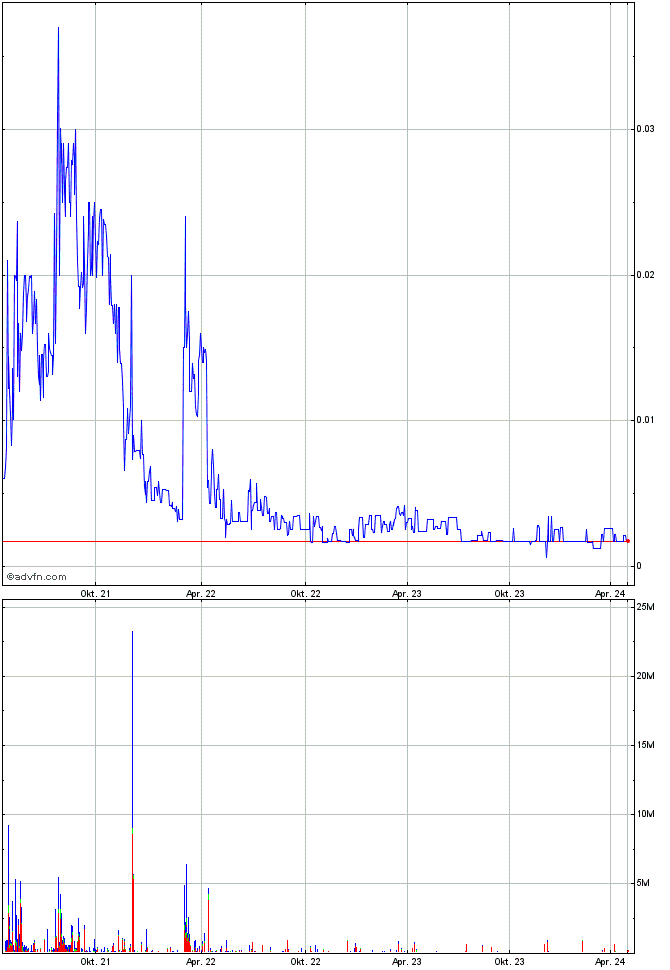
......allllll investierten noch VIEL freude/ erfolg mit diesem URALT- baby, das das
krabbel- stadium verlassen will
´charts´
moin HH & thx für das stetige follow UPPPP..............über die vergangenen jahre !!!das laaaaange HALTEN scheint sich auch HIER mal wieder auszuzahlen und teile deinen
eindruck, daß wir dabei sind in ein neues stadium der comp.- entwicklung einzutreten.
DIES wird u.a. auch durch die ausserordtl. kurs- und vol.- bewegungen in den letzten
tagen deutlich..................mit SK gestern von...........usd 0,029 ( nach TH 0,04 !! ).........
......allllll investierten noch VIEL freude/ erfolg mit diesem URALT- baby, das das
krabbel- stadium verlassen will
Antwort auf Beitrag Nr.: 57.543.969 von hbg55 am 14.04.18 17:05:27ja nach jahrelanger Stille wieder in aller Munde
https://investorshub.advfn.com/FEC-Resources-Inc-FECOF-6987/
eine Einigung zwischen China und den Philippinen ist erfolgt nun fehlt noch der
Startschuß
https://investorshub.advfn.com/FEC-Resources-Inc-FECOF-6987/
eine Einigung zwischen China und den Philippinen ist erfolgt nun fehlt noch der
Startschuß
Antwort auf Beitrag Nr.: 57.532.403 von hainholz am 13.04.18 01:08:50
DAZU findet sich im IH- board nachfolg. kalk. über faire bewertung von FEC.............
Thursday, 04/12/18 05:06:25 PM
Re: None 0 Post # 9393 of 9441
VALUATION IDEA: FECOF
--Page 41 of the 2017 PXP audited financial statements shows that 87% of the PXP net assets (not including FECOF) are attributable to Forum Energy Limited (FEL).
--87% * (PXP Share Price (16.72 on 4.11.18)* 1,700,000,000 PXP shares outstanding) = the Philippine Peso public market valuation of 72.18% of FEL.
--FECOF owns 6.8% of FEL.
16.72*1,700,000,000=28,424,000,000 PESO or $540,056,000 (yes that's over 500 million)
$540,056,000*87% = $469,848,720 valuation of 72.18% of FEL.
$469,848,720/72.18%=$650,940,315 valuation of 100% of FEL.
$650,940,315*6.8% = $44,263,941 valuation of 6.8% of FEL
FECOF has ~409,000,000 shares
$44,263,941/409,000,000 = $0.11/share today with no agreement between China and Phil.
We are going higher.
https://investorshub.advfn.com/boards/read_msg.aspx?message_…
denke, hier steckt noch EINIGES an phantasie drin, um gaaaaaanz andres bewertungs- niv.
zu sehen, als akt. MK von knapp usd- mios 12,-
int. bewertungs- modell
jooo, spannende zeiten scheinen BEVOR zu stehen !!!!DAZU findet sich im IH- board nachfolg. kalk. über faire bewertung von FEC.............
Thursday, 04/12/18 05:06:25 PM
Re: None 0 Post # 9393 of 9441
VALUATION IDEA: FECOF
--Page 41 of the 2017 PXP audited financial statements shows that 87% of the PXP net assets (not including FECOF) are attributable to Forum Energy Limited (FEL).
--87% * (PXP Share Price (16.72 on 4.11.18)* 1,700,000,000 PXP shares outstanding) = the Philippine Peso public market valuation of 72.18% of FEL.
--FECOF owns 6.8% of FEL.
16.72*1,700,000,000=28,424,000,000 PESO or $540,056,000 (yes that's over 500 million)
$540,056,000*87% = $469,848,720 valuation of 72.18% of FEL.
$469,848,720/72.18%=$650,940,315 valuation of 100% of FEL.
$650,940,315*6.8% = $44,263,941 valuation of 6.8% of FEL
FECOF has ~409,000,000 shares
$44,263,941/409,000,000 = $0.11/share today with no agreement between China and Phil.
We are going higher.
https://investorshub.advfn.com/boards/read_msg.aspx?message_…
denke, hier steckt noch EINIGES an phantasie drin, um gaaaaaanz andres bewertungs- niv.
zu sehen, als akt. MK von knapp usd- mios 12,-
Antwort auf Beitrag Nr.: 57.546.324 von hbg55 am 15.04.18 11:30:46ja es wird noch ganz spannend in der kommenden Zeit , vor allem , wenn die geplante Exploration beginnt .
Antwort auf Beitrag Nr.: 57.546.324 von hbg55 am 15.04.18 11:30:46in der Tat , hier steppt heut der Bulle
Antwort auf Beitrag Nr.: 57.567.060 von hainholz am 17.04.18 20:08:55
....auch schon gesehen - NIX für schwache nerven, das ding...........gestern noch
absturz bis auf usd 0,008
hast DU ne idee, was dahinter steckt
....auch schon gesehen - NIX für schwache nerven, das ding...........gestern noch
absturz bis auf usd 0,008
hast DU ne idee, was dahinter steckt
Antwort auf Beitrag Nr.: 57.567.252 von hbg55 am 17.04.18 20:30:32gestern der Absturz auf 0,008 sollen Market Maker Deals gewesen sein
Der Anstieg heut hat damit zu tun , das der Deal mit China so gut wie durch ist .
tut aber nach den vielen Jahren mal richtig gut
Der Anstieg heut hat damit zu tun , das der Deal mit China so gut wie durch ist .
tut aber nach den vielen Jahren mal richtig gut
Auszug aus dem Ami Board
FECOF. Up 50% today and. 350% in 2 weeks!!! Fec resources= fecof
You've all heard about the crisis in the South China Sea between the philipines and China..... china actually rammed an exploratory boat on the reed bank 6 years ago and stopped a world class discovery in Sc72 from happening. Since then china and ph are in talks to finally make this happen. It's all over google news outlets. Search it. Pres Xi of China meets PH Duterte to sign a framework contract to go drill sc72 together. Maybe a few weeks away more or less. Sc72 is estimated at 8tcf to 20tcf ( wetherford research. And us energy dept. research)which is gigantic and primed to replace the world class malampaya oil/gas field next to it. Malampaya was a 2.7tcf and according to a few reports , malampaya has produced about 90 billion net profits and about 180 billion net profits by the time it's done in 10 years.
I'm here to bring attention to a micro cap huuuuuige oil play. Fecof has a 6.8% position of forum energy, and forum energy controls 70% of the sc72 contract. Pxp energy owns a large 72% position in forum energy, as well as being fecof' parent company.. pxp is a large 600 million market cap company trading on the pse, philipines. But fecof is a Canadian company in the pinks roughly a 15 million market cap.
When the reed bank deal with china was announced as probable, the stock of pxp went from 2.80 to 14 pesos in anticipation. When comparing pxp's equity in forum shares, it's clear that fecofs 6.8% in forum is at a huge discount and besides that when the deal is done and the contract announced, this 15 million dollar market cap company fecof will be sitting on a possible 4 billion dollar value or more in its lifetime net profits. It's safe to guess this stock can easily reach 50 cents in a year with forward announcements and a contract. There are 100 of us on the fecof board and are holding this stock up very strong for a long term gain but we need new attention . We won't sell this 4 cent stock until a contract is announced soon and we get 50 cents minimum. Please come to out board where we have the research and valuations mapped out.
FECOF. Up 50% today and. 350% in 2 weeks!!! Fec resources= fecof
You've all heard about the crisis in the South China Sea between the philipines and China..... china actually rammed an exploratory boat on the reed bank 6 years ago and stopped a world class discovery in Sc72 from happening. Since then china and ph are in talks to finally make this happen. It's all over google news outlets. Search it. Pres Xi of China meets PH Duterte to sign a framework contract to go drill sc72 together. Maybe a few weeks away more or less. Sc72 is estimated at 8tcf to 20tcf ( wetherford research. And us energy dept. research)which is gigantic and primed to replace the world class malampaya oil/gas field next to it. Malampaya was a 2.7tcf and according to a few reports , malampaya has produced about 90 billion net profits and about 180 billion net profits by the time it's done in 10 years.
I'm here to bring attention to a micro cap huuuuuige oil play. Fecof has a 6.8% position of forum energy, and forum energy controls 70% of the sc72 contract. Pxp energy owns a large 72% position in forum energy, as well as being fecof' parent company.. pxp is a large 600 million market cap company trading on the pse, philipines. But fecof is a Canadian company in the pinks roughly a 15 million market cap.
When the reed bank deal with china was announced as probable, the stock of pxp went from 2.80 to 14 pesos in anticipation. When comparing pxp's equity in forum shares, it's clear that fecofs 6.8% in forum is at a huge discount and besides that when the deal is done and the contract announced, this 15 million dollar market cap company fecof will be sitting on a possible 4 billion dollar value or more in its lifetime net profits. It's safe to guess this stock can easily reach 50 cents in a year with forward announcements and a contract. There are 100 of us on the fecof board and are holding this stock up very strong for a long term gain but we need new attention . We won't sell this 4 cent stock until a contract is announced soon and we get 50 cents minimum. Please come to out board where we have the research and valuations mapped out.
Mr. Pangilinan said PXP Energy and CNOOC had been waiting for the two governments “to sort things out between the two of them,” although they appeared to be “moving positively in arriving at something.”
“From what we gathered, it’s a positive development,” he said, citing the recent visit of President Rodrigo R. Duterte to China to attend an economic forum, during which he met with Xi Jinping, China’s president.
Mr. Pangilinan also said the recent pronouncement of Mr. Duterte favoring a 60-40 sharing of the gas find in the area would be the government’s call.
“But at the end of the day, the proportion of sharing are numbers that the government will tell us what’s acceptable to them,” he said.
“If he’s happy with 60-40 then we’ll take it as marching orders,” he added.
“From what we gathered, it’s a positive development,” he said, citing the recent visit of President Rodrigo R. Duterte to China to attend an economic forum, during which he met with Xi Jinping, China’s president.
Mr. Pangilinan also said the recent pronouncement of Mr. Duterte favoring a 60-40 sharing of the gas find in the area would be the government’s call.
“But at the end of the day, the proportion of sharing are numbers that the government will tell us what’s acceptable to them,” he said.
“If he’s happy with 60-40 then we’ll take it as marching orders,” he added.
Metro Manila (CNN Philippines, November 20) — China wants state-owned China National Offshore Oil Corporation (CNOOC) to conduct oil and gas exploration in the disputed South China Sea – years after the firm's botched venture during the previous administration.
"China authorizes China National Offshore Oil Corporation as Chinese enterprise," according to a draft framework agreement penned by the Chinese government.
The document, titled "Framework Agreement on Joint Maritime Oil and Gas Exploration between China and the Philippines," was released to the media by opposition Senator Antonio Trillanes IV on Tuesday. It is not clear if changes have been made in the draft to date.
The document – marked as a Chinese draft – states that China and the Philippines have agreed to conduct joint oil and gas exploration in "relevant sea areas" in the South China Sea, but did not specify where.
The draft deal also leaves blank the company the Philippines has chosen to take on the joint exploration with China.
Businessman Manny Pangilinan, chairperson of PXP Energy, earlier said he hopes to restart talks with the CNOOC for a possible exploration in the West Philippine Sea. The two firms were earlier in talks to drill the disputed Reed Bank or Recto Bank, a disputed islet 85 nautical miles from Palawan.
The Department of Energy has since issued a moratorium on oil exploration and drilling works amid rising maritime tension with China. Duterte, as early as November 2017, said he may lift the moratorium.
Chinese President Xi Jinping is in the country to discuss plans for the joint exploration.
Meanwhile, Malacañang shrugged off concerns about the draft being prepared by China.
Presidential Spokesperson Salvador Panelo said he has not seen a copy of the draft, adding that he would ask the Foreign Affairs Department about it.
"It doesn't matter who drafted it. As far as we are concerned, you give us the draft, then we'll go over it. We have to see whether this is legal or not, whether it is beneficial to us or not," he said. "In the same manner that if we draft it, it will have to pass over them too."
Setting aside claims
Senators Trillanes and Kiko Pangilinan earlier called on the government to release the final draft of the joint exploration deal before it is signed.
They protest China's draft, saying it wants exploration, development and utilization of the resources to be jointly decided by Chinese and Filipino nationals. This is a violation of the Constitution, they argued, because it promotes a "co-ownership with China of the West Philippine Sea" when the Constitution states that "exploration, development and utilization of natural resources shall be under the full control and supervision of the state."
READ: Senators push for release of draft joint exploration deal with China
The Permanent Court of Arbitration in The Hague in July 2016 recognized the Philippines' sovereign rights in the West Philippine Sea, or areas of the South China Sea that lie within the country's 200-mile exclusive economic zone. China, however, rejects the ruling and continues to claim virtually the entire global waterway---parts of which are contested by the Philippines, Vietnam, Malaysia, Brunei and Taiwan.
The draft framework sets aside these claims.
"The joint oil and gas exploration shall not affect the respective position on sovereignty and maritime rights and interests of the two parties," the draft framework read.
China also wants to make things confidential amid the clamor for transparency.
"Any document, information or data concerning the joint maritime oil and gas exploration between the two parties shall be kept confidential, unless the two parties decide otherwise," it states.
CNN Philippines' Joyce Ilas and Eimor Santos contributed to this report.
"China authorizes China National Offshore Oil Corporation as Chinese enterprise," according to a draft framework agreement penned by the Chinese government.
The document, titled "Framework Agreement on Joint Maritime Oil and Gas Exploration between China and the Philippines," was released to the media by opposition Senator Antonio Trillanes IV on Tuesday. It is not clear if changes have been made in the draft to date.
The document – marked as a Chinese draft – states that China and the Philippines have agreed to conduct joint oil and gas exploration in "relevant sea areas" in the South China Sea, but did not specify where.
The draft deal also leaves blank the company the Philippines has chosen to take on the joint exploration with China.
Businessman Manny Pangilinan, chairperson of PXP Energy, earlier said he hopes to restart talks with the CNOOC for a possible exploration in the West Philippine Sea. The two firms were earlier in talks to drill the disputed Reed Bank or Recto Bank, a disputed islet 85 nautical miles from Palawan.
The Department of Energy has since issued a moratorium on oil exploration and drilling works amid rising maritime tension with China. Duterte, as early as November 2017, said he may lift the moratorium.
Chinese President Xi Jinping is in the country to discuss plans for the joint exploration.
Meanwhile, Malacañang shrugged off concerns about the draft being prepared by China.
Presidential Spokesperson Salvador Panelo said he has not seen a copy of the draft, adding that he would ask the Foreign Affairs Department about it.
"It doesn't matter who drafted it. As far as we are concerned, you give us the draft, then we'll go over it. We have to see whether this is legal or not, whether it is beneficial to us or not," he said. "In the same manner that if we draft it, it will have to pass over them too."
Setting aside claims
Senators Trillanes and Kiko Pangilinan earlier called on the government to release the final draft of the joint exploration deal before it is signed.
They protest China's draft, saying it wants exploration, development and utilization of the resources to be jointly decided by Chinese and Filipino nationals. This is a violation of the Constitution, they argued, because it promotes a "co-ownership with China of the West Philippine Sea" when the Constitution states that "exploration, development and utilization of natural resources shall be under the full control and supervision of the state."
READ: Senators push for release of draft joint exploration deal with China
The Permanent Court of Arbitration in The Hague in July 2016 recognized the Philippines' sovereign rights in the West Philippine Sea, or areas of the South China Sea that lie within the country's 200-mile exclusive economic zone. China, however, rejects the ruling and continues to claim virtually the entire global waterway---parts of which are contested by the Philippines, Vietnam, Malaysia, Brunei and Taiwan.
The draft framework sets aside these claims.
"The joint oil and gas exploration shall not affect the respective position on sovereignty and maritime rights and interests of the two parties," the draft framework read.
China also wants to make things confidential amid the clamor for transparency.
"Any document, information or data concerning the joint maritime oil and gas exploration between the two parties shall be kept confidential, unless the two parties decide otherwise," it states.
CNN Philippines' Joyce Ilas and Eimor Santos contributed to this report.

 Durchsuchen
Beitrag zu dieser Diskussion schreiben
Zu dieser Diskussion können keine Beiträge mehr verfasst werden, da der letzte Beitrag vor mehr als zwei Jahren verfasst wurde und die Diskussion daraufhin archiviert wurde.
Bitte wenden Sie sich an feedback@wallstreet-online.de und erfragen Sie die Reaktivierung der Diskussion oder starten Sie eine neue Diskussion.
Investoren beobachten auch:
| Wertpapier | Perf. % |
|---|---|
| +1,81 | |
| 0,00 | |
| -3,45 | |
| 0,00 | |
| 0,00 | |
| -1,75 | |
| +1,54 | |
| -4,35 | |
| 0,00 | |
| -9,09 |
Meistdiskutiert
| Wertpapier | Beiträge | |
|---|---|---|
| 219 | ||
| 155 | ||
| 75 | ||
| 57 | ||
| 49 | ||
| 45 | ||
| 44 | ||
| 41 | ||
| 36 | ||
| 30 |


