






Irish Life - Gewinner der irischen Bankenkrise - 500 Beiträge pro Seite (Seite 15)
eröffnet am 29.11.10 17:56:43 von
neuester Beitrag 14.11.16 19:53:15 von
neuester Beitrag 14.11.16 19:53:15 von
Beiträge: 7.174
ID: 1.161.557
ID: 1.161.557
Aufrufe heute: 4
Gesamt: 727.438
Gesamt: 727.438
Aktive User: 0
ISIN: IE00BWB8X525 · WKN: A14P7U
1,5600
EUR
+0,48 %
+0,0075 EUR
Letzter Kurs 12:11:04 Lang & Schwarz
Werte aus der Branche Finanzdienstleistungen
| Wertpapier | Kurs | Perf. % |
|---|---|---|
| 3,0000 | +500,00 | |
| 0,6800 | +312,12 | |
| 10,360 | +19,91 | |
| 1,6800 | +15,87 | |
| 0,8000 | +11,16 |
| Wertpapier | Kurs | Perf. % |
|---|---|---|
| 2,5100 | -10,99 | |
| 11,690 | -11,51 | |
| 1,5000 | -23,08 | |
| 0,7500 | -25,00 | |
| 0,5338 | -31,13 |

 Feedback
Auszug aus:
http://www.wiwo.de/politik/europa/euro-krise-europas-aufschw…
„Irland: Die Regierung kann sich wieder am Kapitalmarkt finanzieren
Seit Irland im Dezember den Euro-Rettungsschirm verlassen hat, ist der Wohlstand der Bevölkerung ein wichtiges innenpolitisches Thema. Vielen Iren geht es angesichts der hohen Arbeitslosigkeit von 11,7 Prozent schlecht. 2013 war die Wirtschaft überraschend um 0,3 Prozent geschrumpft, auch weil der Output der Pharmabranche nach dem Auslaufen wichtiger Patente sank.
Für 2014 prognostiziert die EU-Kommission ein ordentliches Wachstum von 1,7 Prozent, das sich 2015 auf 3,0 Prozent beschleunigen dürfte. Irlands Zentralbank rechnet für 2014 sogar mit einem Plus von 2,1 Prozent. Sowohl Konsum als auch Exporte sollen in Schwung kommen, und die Arbeitslosenquote soll nächstes Jahr auf 10,2 Prozent fallen. Laut OECD dürfte das Haushaltsdefizit 2015 auf 3,1 Prozent (2013: 7,2 Prozent) vom BIP sinken und damit erstmals seit Langem wieder in die Reichweite der angestrebten Drei-Prozent-Grenze rücken. Ein großes Problem bleibt wie in Griechenland die Schuldenquote: Mit rund 121 Prozent vom BIP ist sie immer noch erdrückend hoch.
Risiken lauern zudem bei den Banken, die auf einem Berg fauler Immobilienkredite sitzen. Der Internationale Währungsfonds (IWF) mahnt daher, „gegen die hohe öffentliche Verschuldung und die faulen Kredite in den Büchern der irischen Banken vorzugehen“. Sorge macht dem IWF zudem, dass 61 Prozent der Arbeitslosen seit über einem Jahr ohne Job sind. Die Finanzmärkte allerdings bringen der Grünen Insel Vertrauen entgegen: Irland hat kürzlich zehnjährige Anleihen über 750 Millionen Euro begeben, deren Rendite bei nur 2,73 Prozent lag. „
http://www.wiwo.de/politik/europa/euro-krise-europas-aufschw…
„Irland: Die Regierung kann sich wieder am Kapitalmarkt finanzieren
Seit Irland im Dezember den Euro-Rettungsschirm verlassen hat, ist der Wohlstand der Bevölkerung ein wichtiges innenpolitisches Thema. Vielen Iren geht es angesichts der hohen Arbeitslosigkeit von 11,7 Prozent schlecht. 2013 war die Wirtschaft überraschend um 0,3 Prozent geschrumpft, auch weil der Output der Pharmabranche nach dem Auslaufen wichtiger Patente sank.
Für 2014 prognostiziert die EU-Kommission ein ordentliches Wachstum von 1,7 Prozent, das sich 2015 auf 3,0 Prozent beschleunigen dürfte. Irlands Zentralbank rechnet für 2014 sogar mit einem Plus von 2,1 Prozent. Sowohl Konsum als auch Exporte sollen in Schwung kommen, und die Arbeitslosenquote soll nächstes Jahr auf 10,2 Prozent fallen. Laut OECD dürfte das Haushaltsdefizit 2015 auf 3,1 Prozent (2013: 7,2 Prozent) vom BIP sinken und damit erstmals seit Langem wieder in die Reichweite der angestrebten Drei-Prozent-Grenze rücken. Ein großes Problem bleibt wie in Griechenland die Schuldenquote: Mit rund 121 Prozent vom BIP ist sie immer noch erdrückend hoch.
Risiken lauern zudem bei den Banken, die auf einem Berg fauler Immobilienkredite sitzen. Der Internationale Währungsfonds (IWF) mahnt daher, „gegen die hohe öffentliche Verschuldung und die faulen Kredite in den Büchern der irischen Banken vorzugehen“. Sorge macht dem IWF zudem, dass 61 Prozent der Arbeitslosen seit über einem Jahr ohne Job sind. Die Finanzmärkte allerdings bringen der Grünen Insel Vertrauen entgegen: Irland hat kürzlich zehnjährige Anleihen über 750 Millionen Euro begeben, deren Rendite bei nur 2,73 Prozent lag. „
Was geht denn hier ab? Aus heiterem Himmel mal 12 % Plus!
Weiss jemand was?
Weiss jemand was?
Antwort auf Beitrag Nr.: 47.016.968 von berma am 20.05.14 21:38:44 Brauche leider dringend Geld für ein neues Auto und da sich leider bei Permanent nichts tut und sogar mit Kursrückgängen zu rechnen ist , verkaufe ich erst mal meine Anteile . grüsse
 Brauche leider dringend Geld für ein neues Auto und da sich leider bei Permanent nichts tut und sogar mit Kursrückgängen zu rechnen ist , verkaufe ich erst mal meine Anteile . grüsse
Das könnte Irland's Banken noch mal so richtig weh tun:
http://www.faz.net/aktuell/wirtschaft/netzwirtschaft/apple-s…
http://www.faz.net/aktuell/wirtschaft/netzwirtschaft/apple-s…
Trading Spotlight
Antwort auf Beitrag Nr.: 47.069.930 von berma am 29.05.14 17:17:04hallo. bin unverhofft zu etwas Geld gekommen . Hagelschaden . Damit steige ich jetzt wieder bei Permanent ein .Hat eigendlich keiner mitbekommen das Permanent Werte für 3.9 Mrd. abgeben will. Zwar ist das nur der Buchwert , aber das ist auf dem Papier 3 X der Wert von Permanent .
hallo. bin unverhofft zu etwas Geld gekommen . Hagelschaden . Damit steige ich jetzt wieder bei Permanent ein .Hat eigendlich keiner mitbekommen das Permanent Werte für 3.9 Mrd. abgeben will. Zwar ist das nur der Buchwert , aber das ist auf dem Papier 3 X der Wert von Permanent .
!
Dieser Beitrag wurde von CloudMOD moderiert. Grund: auf eigenen Wunsch des Users
Antwort auf Beitrag Nr.: 47.454.244 von derneureiche am 07.08.14 10:46:33Das ist Irish Life. Wir sind hier permanent. Haben wir nichts mit zu tun. Unsere Zahlen kommen am 19.8.
Antwort auf Beitrag Nr.: 47.455.627 von Pfandbrief am 07.08.14 12:28:07 Hallo !. Was erwartst Du von den Zahlen . Die Wirtschaft in Irland brummt ja , aber reicht dass schon aus , Permanent schwarze Zahlen zu bringen .? Habe zur Zeit ein paar Aktien unter Beobachtung , aber keine läuft so richtig , oder ist mir zu heiß . z.B DNO Kurden ISSIS , tolle Aktie aber brandgefährlich .
Hallo !. Was erwartst Du von den Zahlen . Die Wirtschaft in Irland brummt ja , aber reicht dass schon aus , Permanent schwarze Zahlen zu bringen .? Habe zur Zeit ein paar Aktien unter Beobachtung , aber keine läuft so richtig , oder ist mir zu heiß . z.B DNO Kurden ISSIS , tolle Aktie aber brandgefährlich .
Antwort auf Beitrag Nr.: 47.466.838 von cabblestones am 08.08.14 11:26:56Sorry aber ich glaube kaum dass wir etwas spektakuläres zu sehen bekommen. Bank of Ireland hatte schwarze Zahlen, aber das war dort auch erwartet worden, und hat den Kurs nicht beeinflußt. Wir sind noch nicht so weit, es wird irgendwas um die Nulllinie herum.
Antwort auf Beitrag Nr.: 47.466.913 von Pfandbrief am 08.08.14 11:34:27 Danke . Hauptsache Permanent hält sich so, wie sie jetzt stehen .Mit Kursen zwischen 8 bis 10 Cent bin ich schon zufrieden . Im nächsten Jahr hoffe ich aber auf bessere Kurse . Schönes Wochenende !!
Antwort auf Beitrag Nr.: 47.467.786 von cabblestones am 08.08.14 12:47:52Habe mir gerade mal die Zahlen von AIB und Danske Bank angesehen , danach besteht große Hoffnung , dass Permanent schon dieses Jahr mit einem Gewinn abschließt . Er sollte mindestens so hoch wie von der Danske Bank sein . Hoffe natürlich auf mehr Gewinn . 
Habe mir gerade mal die Zahlen von AIB und Danske Bank angesehen , danach besteht große Hoffnung , dass Permanent schon dieses Jahr mit einem Gewinn abschließt . Er sollte mindestens so hoch wie von der Danske Bank sein . Hoffe natürlich auf mehr Gewinn . 
Antwort auf Beitrag Nr.: 47.479.219 von cabblestones am 10.08.14 14:23:29 Danske Bank 45 Mill. Pfund !! ,Ulster Bank 55 Mill. Pfund !!- , ca. 60 Mill.- Euro , Permannent ????? ,Ich tippe auf 20 bis 40 Mill Euro !!! Gewinn !!!
Bin sehr auf die Zahlen am 19. gespannt. Ich denke, die werden gut. Mal sehen, ob sich schon in den "Vorkäufen" abzeichnet.
Wenn nicht, spätetens am Dienstag!
Weiß jemand, zu welcher Uhrzeit man damit rechnen kann?
Wenn nicht, spätetens am Dienstag!
Weiß jemand, zu welcher Uhrzeit man damit rechnen kann?
Ich war die letzten 2 Wochen in Irland (Dublin/Cork/Süd - und Westküste) unterwegs und man muss auf jeden Fall sagen, dass es ein riesiger spürbarer Unterschied zu meinem letzten Aufenthalt (vor knapp 3 Jahren) war.
Damals gab es immer noch ganze Straßenzüge mit "zu verkaufen"-Schildern an den Immobilien - diesmal gab es das quasi überhaupt nicht mehr, sondern haufenweise "sale-agreed"-Schilder und auch viel mehr (allerdings noch nicht sehr viel) Bautätigkeit. Zudem wirkten die Geschäfte viel voller, es gab viel mehr Galerien und gut gefüllte Cafes.
Beim letzten Mal habe ich noch bei vielen Immobilienmaklern ins Schaufenster gestarrt und mich geärgert, dass ich kein Geld habe, mir da mal eine Immobilie zuzulegen - von den Preisen von damals sind wir auf jeden Fall weit entfernt.
Zudem habe ich 3 Mal für jeweils 5€ Gebühren Geld am Automaten geholt - aber die 15 € kommen dann ja erst im nächsten Halbjahr zu tragen.
Das ist jetzt sicher keine Basis für eine Investitionsentscheidung, aber vielleicht interessiert es ja jemanden.
Damals gab es immer noch ganze Straßenzüge mit "zu verkaufen"-Schildern an den Immobilien - diesmal gab es das quasi überhaupt nicht mehr, sondern haufenweise "sale-agreed"-Schilder und auch viel mehr (allerdings noch nicht sehr viel) Bautätigkeit. Zudem wirkten die Geschäfte viel voller, es gab viel mehr Galerien und gut gefüllte Cafes.
Beim letzten Mal habe ich noch bei vielen Immobilienmaklern ins Schaufenster gestarrt und mich geärgert, dass ich kein Geld habe, mir da mal eine Immobilie zuzulegen - von den Preisen von damals sind wir auf jeden Fall weit entfernt.
Zudem habe ich 3 Mal für jeweils 5€ Gebühren Geld am Automaten geholt - aber die 15 € kommen dann ja erst im nächsten Halbjahr zu tragen.

Das ist jetzt sicher keine Basis für eine Investitionsentscheidung, aber vielleicht interessiert es ja jemanden.
http://www.permanenttsbgroup.ie/investor-relations/media-cen…
und hier in lang - 70 Seiten
http://www.permanenttsbgroup.ie/~/media/Files/I/Irish-Life-A…
schönen Tag noch
dijean
und hier in lang - 70 Seiten
http://www.permanenttsbgroup.ie/~/media/Files/I/Irish-Life-A…
schönen Tag noch
dijean
Antwort auf Beitrag Nr.: 47.550.838 von dijean am 19.08.14 08:34:12 Leider sind die Zahlen überhaupt nicht so , wie ich sie erwartet habe . Hatte viel bessere Zahlen erwartet .
Leider sind die Zahlen überhaupt nicht so , wie ich sie erwartet habe . Hatte viel bessere Zahlen erwartet .
Antwort auf Beitrag Nr.: 47.550.838 von dijean am 19.08.14 08:34:12 Na ja , 4 Mill. Betriebsgewinn , nicht sehr viel , aber es wird im zweiten Halbjahr noch besser .
Na ja , 4 Mill. Betriebsgewinn , nicht sehr viel , aber es wird im zweiten Halbjahr noch besser .
Hoppla! In München 2x zu 0,083 gekauft! Das sind doch mal klare Zeichen!
Antwort auf Beitrag Nr.: 47.603.775 von harrywepper am 25.08.14 17:10:06In IRL ist der Höchstkurs 0,08 heute.
wenn die 0,08 überwunden wird, ist wieder Luft nach Oben.
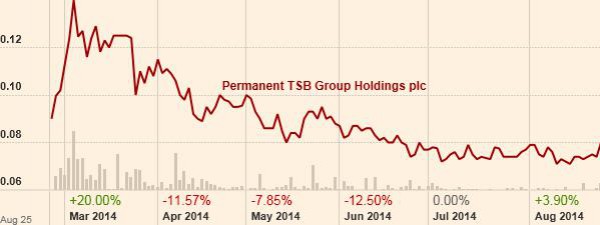
wenn die 0,08 überwunden wird, ist wieder Luft nach Oben.

Antwort auf Beitrag Nr.: 47.604.255 von derneureiche am 25.08.14 17:38:40 Dublin heute 0,081 , wartet noch mit Käufen , mein Weihnachtsgeld kommt erst im Dezember !!!
Dublin heute 0,081 , wartet noch mit Käufen , mein Weihnachtsgeld kommt erst im Dezember !!!
Antwort auf Beitrag Nr.: 47.610.168 von cabblestones am 26.08.14 12:00:24Dem Wetter nach zu urteilen dürfte es bald soweit sein.
Antwort auf Beitrag Nr.: 47.610.312 von schmunzel12 am 26.08.14 12:16:37 Es haben viele wahrscheinlich noch nicht richtig gelesen , die Banken in Europa bekommen im September ca. 400 Milliarden !!!!! zu 0.15 % plus einem Miniaufschlag und im Dezember nochmals bis zu 850 Milliarden . !!!! Hoffendlich bekommt Permanent auch etwas davon ab .!! Aber egal , welche Bankaktie man hält , die Banken in Europa werden prächtig in den nächsten Jahren verdienen und das mit wenig Risiko .
Es haben viele wahrscheinlich noch nicht richtig gelesen , die Banken in Europa bekommen im September ca. 400 Milliarden !!!!! zu 0.15 % plus einem Miniaufschlag und im Dezember nochmals bis zu 850 Milliarden . !!!! Hoffendlich bekommt Permanent auch etwas davon ab .!! Aber egal , welche Bankaktie man hält , die Banken in Europa werden prächtig in den nächsten Jahren verdienen und das mit wenig Risiko .
Wie stehen eigentlich die Chancen, dass das von cabblestones angeführte Programm der EZB für PTSB die Möglichkeit eröffnet, Bares zu erlangen und durch ein Aktienrückkaufprogramm den irischen Staat auszulösen? Sind nach meiner Rechnung nur ca. 2 Mrd. €, die aufgebracht werden müssten. Den Verkauf an einen privaten Investor sehe ich ohnehin nicht, da zu viele Iren Anteile an PTSB halten und die völlige Entwertung deren Anteile politisch wohl nicht durchsetzbar ist.
Antwort auf Beitrag Nr.: 47.658.099 von newPortos am 31.08.14 21:24:41Bitte versucht, Fremdkapital von Eigenkapital auseinanderzuhalten. Was man von der EZB bekommt (wenn man's denn überhaupt nimmt!) ist Fremdkapital. Das ist verzinslich und rückzahlbar (okay verzinslich ist es heutzutage eigentlich nicht mehr wirklich ). Genausowenig wie eine Bank mit hereingekommenen Spareinlagen irgendwelche Aktionäre auszahlen kann, kann sie es mit solchen Mitteln auch nicht, denn eine Bank muss eine gewisse Quote an Eigenkapital halten, die Passivseite kann nicht völlig aus Fremdkapital bestehen. Man muss im Gegenteil froh sein, wenn es nicht notwendig ist, etwa aufgrund des Stresstests, noch mehr Eigenkapital aufzunehmen. Von Aktienrückkäufen ist daher derzeit und auf absehbare Zukunft überhaupt keine Rede.
). Genausowenig wie eine Bank mit hereingekommenen Spareinlagen irgendwelche Aktionäre auszahlen kann, kann sie es mit solchen Mitteln auch nicht, denn eine Bank muss eine gewisse Quote an Eigenkapital halten, die Passivseite kann nicht völlig aus Fremdkapital bestehen. Man muss im Gegenteil froh sein, wenn es nicht notwendig ist, etwa aufgrund des Stresstests, noch mehr Eigenkapital aufzunehmen. Von Aktienrückkäufen ist daher derzeit und auf absehbare Zukunft überhaupt keine Rede.
Antwort auf Beitrag Nr.: 47.658.099 von newPortos am 31.08.14 21:24:41 Sieht ja nicht gur aus zur Zeit . In Dablin wird Permanent verkauft und alle kaufen BOI und AIB . Boi läuft ja auch wirklich gut .
Sieht ja nicht gur aus zur Zeit . In Dablin wird Permanent verkauft und alle kaufen BOI und AIB . Boi läuft ja auch wirklich gut .
Antwort auf Beitrag Nr.: 47.695.329 von cabblestones am 04.09.14 16:16:41Schlusskurs in Dublin 9 Cent, es läuft doch
Na ja, es ist ja immer noch etwas Unklarheit über die Auswirkungen der derzeitigen EZB-Aktionen im Markt. Wie sind denn so die Prognosen für PTSB so bis Jahresende und Mitte nächsten Jahres? Irgendwie fehlt mir derzeit eine "Hausnummer".
Antwort auf Beitrag Nr.: 47.708.400 von newPortos am 05.09.14 20:06:59 Hätte ich genug Geld über , würde ich den größeren Teil in Boi investieren , persönlich hätte ich mir von Permanent mehr erwartet . .
Hätte ich genug Geld über , würde ich den größeren Teil in Boi investieren , persönlich hätte ich mir von Permanent mehr erwartet . .
Antwort auf Beitrag Nr.: 47.708.400 von newPortos am 05.09.14 20:06:59Wenn das jemand dir sagen könnte , wäre er schon reich und nicht mehr hier im Forum . Persönlich hoffe ich , dass Permanent in drei Jahren schuldenfrei ist und 2019 wieder Dividende zahlen kann . Bis dahin sind es aber noch 5 lange Jahre .
Wenn das jemand dir sagen könnte , wäre er schon reich und nicht mehr hier im Forum . Persönlich hoffe ich , dass Permanent in drei Jahren schuldenfrei ist und 2019 wieder Dividende zahlen kann . Bis dahin sind es aber noch 5 lange Jahre .
Antwort auf Beitrag Nr.: 47.724.261 von cabblestones am 08.09.14 17:17:47OK, vielen Dank erstmal. Bin derzeit am Überlegen, ob ich die Phase unter 10 Cent noch für einen massiven Einstieg nutze. Langfrisitg sehe ich hier durchaus Potenzial.
Antwort auf Beitrag Nr.: 47.724.261 von cabblestones am 08.09.14 17:17:47Es wird für mich zwar immer teurer ,da mein Geld erst im Dezember kommt , aber wenn man sieht wie BOI und AIB steigen , wird es nicht mehr lange dauern bis Permanent folgt . In Dublin waren heute nur Verkäufe und die lagen schon bei 9 Cent . Treten Käufer auf ist , der Kurs schnell über 10 Cent in Dublin .Wenn du vor hast , länger als 1 Jahr in Permanent zu bleiben , kanst du bestimmt nichst falsch machen .
Es wird für mich zwar immer teurer ,da mein Geld erst im Dezember kommt , aber wenn man sieht wie BOI und AIB steigen , wird es nicht mehr lange dauern bis Permanent folgt . In Dublin waren heute nur Verkäufe und die lagen schon bei 9 Cent . Treten Käufer auf ist , der Kurs schnell über 10 Cent in Dublin .Wenn du vor hast , länger als 1 Jahr in Permanent zu bleiben , kanst du bestimmt nichst falsch machen .
Antwort auf Beitrag Nr.: 47.725.398 von newPortos am 08.09.14 19:13:08 Habe mich umentschieden , bis Dezember ist es mir zu lange . Ich verkaufe ein paar andere Aktien und werde das Geld in Permanent investieren . Billiger als zur Zeit , kommt man wohl nicht mehr rein.
Habe mich umentschieden , bis Dezember ist es mir zu lange . Ich verkaufe ein paar andere Aktien und werde das Geld in Permanent investieren . Billiger als zur Zeit , kommt man wohl nicht mehr rein.
Antwort auf Beitrag Nr.: 47.745.006 von cabblestones am 10.09.14 16:34:02Ich habe mir jetzt das Ziel gesetzt, bei einer 0,07X meine Anteile nicht unbeträchtlich aufzustocken. Mal sehen... Hoffe dann spätestens 2016 auf 0,5X.
Antwort auf Beitrag Nr.: 47.748.927 von newPortos am 10.09.14 22:31:48 Falls nichts schlimmes in der Welt passiert , wirst du keine Aktien billig abstauben können .Die Alternativen fehlen einfach und wer Zeit und Geld hat ,kauft jetzt .Im Vergleich zu AIB ist PERMANENT DAS SCHÄPPCHEN :
Falls nichts schlimmes in der Welt passiert , wirst du keine Aktien billig abstauben können .Die Alternativen fehlen einfach und wer Zeit und Geld hat ,kauft jetzt .Im Vergleich zu AIB ist PERMANENT DAS SCHÄPPCHEN :
Antwort auf Beitrag Nr.: 47.748.927 von newPortos am 10.09.14 22:31:48 Habe jetzt meine Teile zusmmen .Hoffe wie du natürlich , das sich Permanent gut entwickelt . Für 2016 sehe ich zwar noch nicht die 5X Cent , aber 2017 will Permanent ja guten Gewinn erwirtschaften und dann ist alles möglich . 2017==70 Cent 2018 == 80 Cent 2019 == 90 Cent ???
Habe jetzt meine Teile zusmmen .Hoffe wie du natürlich , das sich Permanent gut entwickelt . Für 2016 sehe ich zwar noch nicht die 5X Cent , aber 2017 will Permanent ja guten Gewinn erwirtschaften und dann ist alles möglich . 2017==70 Cent 2018 == 80 Cent 2019 == 90 Cent ???
Antwort auf Beitrag Nr.: 47.770.647 von cabblestones am 12.09.14 20:40:10 Boi und Aib steigen , allso dürfte es nicht mehr lange dauern bis Permanent nachzieht . Auch habe ich Hoffnung ,das positive Nachrichten vom Gericht kommen .
Boi und Aib steigen , allso dürfte es nicht mehr lange dauern bis Permanent nachzieht . Auch habe ich Hoffnung ,das positive Nachrichten vom Gericht kommen .
Antwort auf Beitrag Nr.: 47.793.363 von cabblestones am 16.09.14 15:14:34 Kurse in Dublin , bei hohen Umsätzen ca. 300.000 Stück , ist der Kurs höher als in Deutschland -- 8.7 Cent .
Kurse in Dublin , bei hohen Umsätzen ca. 300.000 Stück , ist der Kurs höher als in Deutschland -- 8.7 Cent .
Antwort auf Beitrag Nr.: 47.846.096 von cabblestones am 22.09.14 19:17:35 8.8 Cent in Dublin , so kann es weitergehen !!!
8.8 Cent in Dublin , so kann es weitergehen !!!
Antwort auf Beitrag Nr.: 47.855.447 von cabblestones am 23.09.14 17:49:02: Falls jemand von Euch Aib Aktien hat , wechselt mal die Seite.
 Falls jemand von Euch Aib Aktien hat , wechselt mal die Seite.
Antwort auf Beitrag Nr.: 47.890.961 von cabblestones am 27.09.14 15:16:19 Vergleicht keiner die Kurse ??? In Dublin werden seit Tagen Kurse bis zu 8,8- 8,9 Cent bezahlt und in Stuttgart werden die Aktien für 8 Cent verschenkt . Habe mich leider schon bis zur Halskrause vollgesogen , aber zu diesen Kursen würde ich noch weiter aufstocken. Mal sehen irgendetwas wird mir noch einfallen !
Vergleicht keiner die Kurse ??? In Dublin werden seit Tagen Kurse bis zu 8,8- 8,9 Cent bezahlt und in Stuttgart werden die Aktien für 8 Cent verschenkt . Habe mich leider schon bis zur Halskrause vollgesogen , aber zu diesen Kursen würde ich noch weiter aufstocken. Mal sehen irgendetwas wird mir noch einfallen !
Antwort auf Beitrag Nr.: 47.985.571 von cabblestones am 09.10.14 14:41:09
????? Dublin aktuell 0,082
Quelle :
http://de.advfn.com/p.php?pid=staticchart&s=I^IL0&t=37&p=0&d…
Willst wohl welche in die Aktie reintreiben
Zitat von cabblestones:
????? Dublin aktuell 0,082
Quelle :
http://de.advfn.com/p.php?pid=staticchart&s=I^IL0&t=37&p=0&d…
Willst wohl welche in die Aktie reintreiben
Antwort auf Beitrag Nr.: 47.994.043 von Loewenpower am 10.10.14 09:47:48 Verstehe nur manche Anleger nicht ..Warum in Deutschland billig verkaufen , wenn ich woanders 800 - 900 Euro mehr bekomme . Übrigens reintreiben , jeder weiß , dass die AIB nur um die 3 Cent wert ist , trotzdem wird sie wie wild gekauft . Versucht man ein paar warnende Worte anzubringen , wird man noch verbal beschimpft .Da ist man bei Permanent oder BOI doch viel besser aufgehoben . Wenn der Kurs am Montag immer noch so gut ( billig ) ist , werde ich andere Aktien verkaufen und aufstocken .Ich habe noch ein paar Jahre bis zur Rente und nur der rechtzeitig Kauf sichert den Gewinn !!!
Verstehe nur manche Anleger nicht ..Warum in Deutschland billig verkaufen , wenn ich woanders 800 - 900 Euro mehr bekomme . Übrigens reintreiben , jeder weiß , dass die AIB nur um die 3 Cent wert ist , trotzdem wird sie wie wild gekauft . Versucht man ein paar warnende Worte anzubringen , wird man noch verbal beschimpft .Da ist man bei Permanent oder BOI doch viel besser aufgehoben . Wenn der Kurs am Montag immer noch so gut ( billig ) ist , werde ich andere Aktien verkaufen und aufstocken .Ich habe noch ein paar Jahre bis zur Rente und nur der rechtzeitig Kauf sichert den Gewinn !!!
Sind wohl durchgefallen. Das wird's morgen drücken.
Schade
War aber auch zu erwarten, oder?
War aber auch zu erwarten, oder?
Antwort auf Beitrag Nr.: 48.134.531 von Pfandbrief am 26.10.14 13:09:53http://www.ecb.europa.eu/ssm/assessment/shared/ca/IE-PTSB-EB…
1% im adversen Szenario.
1% im adversen Szenario.
Antwort auf Beitrag Nr.: 48.134.576 von Pfandbrief am 26.10.14 13:22:27
Magst du dazu einen Halbsatz zur erläuterung verlieren - ich verstehs leider nur so halb das *.pdf...
Im Grunde also äußerst knapp, oder?
Zitat von Pfandbrief: http://www.ecb.europa.eu/ssm/assessment/shared/ca/IE-PTSB-EB…
1% im adversen Szenario.
Magst du dazu einen Halbsatz zur erläuterung verlieren - ich verstehs leider nur so halb das *.pdf...
Im Grunde also äußerst knapp, oder?
Im Grunde nicht äußerst knapp, sondern es ergibt sich ein Fehlbetrag von über 800 Millionen Euro. Allerdings behaupten sie, den Großteil davon abdecken zu können, es müssen nur etwa ein Fünftel davon frisch aufgenommen werden. Allerdings wird sich wohl eine Konvertierung der CoCos nicht vermeiden lassen.
http://www.todayonline.com/business/irelands-ptsb-plans-capi…
Ich würde mal ganz grob damit rechnen dass 15 Milliarden Aktien dazukommen, im Bereich des Nominales. Interessant wird ob sie wirklich versuchen werden das von Privaten zu kriegen.
http://www.todayonline.com/business/irelands-ptsb-plans-capi…
Ich würde mal ganz grob damit rechnen dass 15 Milliarden Aktien dazukommen, im Bereich des Nominales. Interessant wird ob sie wirklich versuchen werden das von Privaten zu kriegen.
Im Grunde sollte ich nicht in Dinge investieren, die ich nicht (eher überhaupt nicht) verstehe habe ich das ungute Gefühl...
Das ist echt ein Wunder, dass das hier gut ausgegangen ist und ich nur noch Reste habe und das meiste mit erstaunlichem Gewinn verkaufen konnte.
Vielen Dank für deinen Kommentar - eigentlich sind 200 Millionen ja auch nicht die Welt.
Das ist echt ein Wunder, dass das hier gut ausgegangen ist und ich nur noch Reste habe und das meiste mit erstaunlichem Gewinn verkaufen konnte.
Vielen Dank für deinen Kommentar - eigentlich sind 200 Millionen ja auch nicht die Welt.
schon krass....wer gestern welche zu 0,051 erwischt hat.....hat gleich 50% plus....wie damals im neuen markt 

Moodys neue Ratings
Neueinstufung von Moodyshttps://www.moodys.com/research/Moodys-takes-rating-actions-…
Die Permanent betreffenden Passagen:
- Initiated review for downgrade of the long-term B3 deposit and the Caa1 senior unsecured debt and the (P)Ca senior subordinated ratings of Permanent tsb plc (PTSB)
...
PERMANENT tsb p.l.c. - RATINGS PLACED ON REVIEW FOR DOWNGRADE
The review on Permanent tsb's (PTSB) ratings was triggered by the bank's net shortfall of EUR855 million. The bank has reported that it has already covered over 80% of the shortfall through a combination of EUR400 million of convertible capital notes (held by the Irish government) as well as other management actions that provide a further EUR300 million. PTSB has stated that it expects to cover the remaining shortfall by raising capital from private investors. Moody's believes that these capital placements should be supported by the bank's improving metrics, the more favourable operating environment in Ireland and the relatively low adjustments recommended as a result of the AQR.
However, the bank has still not received approval from the European Commission regarding its restructuring plan, and any pending capital raising remains highly exposed to execution risk. Moody's notes that the Irish government, which is the majority owner, holding in excess of 99% of PTSB's issued capital, has publicly announced its support for the plan. Moody's will monitor and assess the feasibility and progress of these plans during the review period.
só habs mal wieder auf die Watch genommen...EK wäre 0,033 und dann bis max . 0,025 .
Wenns kommt..ja, wenn ein auch egal
Wenns kommt..ja, wenn ein auch egal
Antwort auf Beitrag Nr.: 48.328.789 von Expertchen007 am 15.11.14 11:40:28 Ich bleibe zuversichtlich . Wenn Permanent bis 2017 wieder Geld verdient , haben wir jetzt Traumkurse . Der Kurs wird um ein vielfaches höher sein als heute . Es muß natürlich alles positiv weiterlaufen . Deine Kurse von 2-3 Cent kann ich nicht nachvollziehen .!
Ich bleibe zuversichtlich . Wenn Permanent bis 2017 wieder Geld verdient , haben wir jetzt Traumkurse . Der Kurs wird um ein vielfaches höher sein als heute . Es muß natürlich alles positiv weiterlaufen . Deine Kurse von 2-3 Cent kann ich nicht nachvollziehen .!
Habs nur wieder auf Wazch werds aber nur Kurstechnisch verfolgen....der DEal war insgesamt gut..ich habs anderweitg investiert..u.a in langweilige Sachen wie Südzucker..BASF und Dividendenwerte...so ganz konservativ..lass es eh auslaufen...will meine 4 -5 K im Jahr ziehen und gut.
Antwort auf Beitrag Nr.: 48.330.139 von cabblestones am 15.11.14 16:37:25
Re: Mögliche Schäden von mindestens 1,8 € je Aktie erzielbaren in Bezug auf Ihre Aktien in PTSB GH
Sehr geehrte Aktionäre in Permanent TSB Group Holdings plc ("PTSB GH"),
Die in diesem Schreiben enthaltenen Informationen sind zu allgemeinen Informationszwecken zur Verfügung gestellt und nur tut
nicht als rechtliche oder professionelle Beratung oder ein Angebot oder eine Aufforderung jeglicher Art.
Ich bin, Sie als eine von einer Gruppe von etwa 200 größten Aktionäre in PTSB GH schreiben, die zusammen
vor der einseitigen Richtung, um durch erfolgen vertreten etwa 20% des stimmberechtigten Kapitals PTSB GH
der irische Finanzminister am 26. Juli 2011 (der "Juli 2011 Ex Parte Vorläufige Ordnung Richtung") 1.
Sie unterstützte die Bemühungen von Herrn Piotr Skoczylas von Scotchstone Capital Fund Ltd (Malta) in der außerordentlichen Hauptversammlung
von PTSB GH am 20. Juli 2011, als die Aktionäre mit überwältigender Mehrheit die Bedingungen der abgelehnt
Übernahme durch den irischen Finanzministers (die "Minister") der 99,2% des stimmberechtigten Grund PTSB GH
Kapital. Die Übernahme durch den Minister der 99,2% des stimmberechtigten Grundkapitals in PTSB GH war
anschließend mittels der Juli 2011 Ex Parte Vorläufige Ordnung Richtung gezwungen.
Eine kleine Gruppe der PTSB GH Aktionäre von Piotr Skoczylas (die "Aktionärsprozessparteien") geführt hat
in dem Bemühen, die unter anderem die Aufhebung der Juli wurde im Kampf gegen die Minister für Finanzen / irischen Staats
2011 Ex Parte Vorläufige Ordnung Richtung.
er Gerichtsverfahren gegen den Minister sind noch nicht abgeschlossen. Allerdings haben die Gesellschafter Prozessparteien
bereits einige wichtige Meilensteine, einschließlich unter anderem der folgenden erreicht:
Erstens, nach einem dreiwöchigen Studie, der irische High Court nicht gelungen ist, die wahren
Rechtmäßigkeit der Juli 2011 Ex Parte Vorläufige Ordnung Richtung. Am 12. November 2014 die
High Court ordnete an, dass der Gerichtshof der Europäischen Union ("EuGH") gestellt werden
festzustellen, Rechtmäßigkeit, dh Vereinbarkeit mit EU-Recht, der nationale Maßnahmen wie die genannte ex
parte vorläufigen Richtung um. Bezugnahmen auf die EuGH sind in Irland selten. Die nationalen Gerichte
müssen die EuGH Urteile folgen. Folglich ist die dem ex parte vorläufigen Ordnung Richtung der
Juli 2011 wird aufgehoben oder abgeändert eingestellt werden, wenn der Gerichtshof der Europäischen Union entscheidet gegen Position des Ministers.
Zweitens hat die irische High Court vor kurzem hielt eine Entscheidung (ein Rechtsbehelf eingelegt), der
zur Folge hat, dass, sollte der Juli 2011 Ex Parte Vorläufige Ordnung Richtung sein
bestimmt illegal wegen seiner Unvereinbarkeit mit dem EU-Recht, so der PTSB GH
Aktionäre, die von der Rechtswidrigkeit dieser Richtung Reihenfolge betroffen sind möglicherweise in der Lage sich zu bewerben
Für Schäden. Daher sollten Sie vom Juli 2011 Ex Parte Vorläufige betroffen sind
Ordnung Richtung, können Sie Anspruch auf Schadensersatz.
Genauer gesagt, wie detaillierter in www.ilpshareholders.com dargelegt, den aktuellen Zustand der Prozess
gegen die Ministerin eröffnete eine Möglichkeit für Sie, möglicherweise in den geschätzten gegebener Schadenersatzansprüche
mindestens 1,8 € pro Aktie für jedes Original Aktionär PTSB GH (ohne Schäden, die sind
nicht berechenbar). Auf dieser Grundlage können Sie erarbeiten sich Schäden, die möglicherweise wäre
, Sie erhalten (wenn Sie durch die genannte ex parte Richtung um betroffen sind). Unter der Annahme, dass alle
200 Sie nutzten diese Gelegenheit, und unter der Annahme, dass die entsprechende Klage ist
erfolgreich die gesamten Schäden, die auf der 200 von euch (dh auf die 200 größten betroffen
Aktionäre) kann gegebenenfalls zu ca. belaufen. 100.000.000 € (ohne Schäden, die noncalculable sind).
Unter der Annahme, dass alle betroffenen 135.000 PTSB GH Aktionäre (vor allem aus Irland)
trat der jeweiligen Rechtsverfahren und unter der Annahme, dass eine solche Klage erfolgreich ist, die Gesamt
Schäden, die auf alle betroffenen Aktionäre würden dann möglicherweise auf ca. belaufen.
500.000.000 € (ohne Schäden, die nicht berechenbar sind).
Nächste Schritte
Die Aktionärsstruktur Prozessparteien der Meinung, dass es von entscheidender Bedeutung, dass die betroffene PTSB GH
Anteilinhaber zu schließen Reihen. Je mehr vereint die betroffenen Aktionäre sind, desto effektiver können sie
gemeinsam bei der Beeinflussung der aktuellen Situation. Alle betroffenen Aktionäre profitieren
Verlängerung eines Aktionärs Koalition von gemeinsamem Interesse. Informieren Sie uns bitte, wenn nach dem anstehenden
Urteil des Gerichtshofs der Europäischen Union, das Sie interessiert, an, das wäre
oben genannten Schäden (unter der Annahme, unter anderem, dass der Gerichtshof der Vorschriften der Europäischen Union
zugunsten der Lage der betroffenen Aktionäre in PTSB GH).
Nachricht von Piotr
7. Januar 2015Re: Mögliche Schäden von mindestens 1,8 € je Aktie erzielbaren in Bezug auf Ihre Aktien in PTSB GH
Sehr geehrte Aktionäre in Permanent TSB Group Holdings plc ("PTSB GH"),
Die in diesem Schreiben enthaltenen Informationen sind zu allgemeinen Informationszwecken zur Verfügung gestellt und nur tut
nicht als rechtliche oder professionelle Beratung oder ein Angebot oder eine Aufforderung jeglicher Art.
Ich bin, Sie als eine von einer Gruppe von etwa 200 größten Aktionäre in PTSB GH schreiben, die zusammen
vor der einseitigen Richtung, um durch erfolgen vertreten etwa 20% des stimmberechtigten Kapitals PTSB GH
der irische Finanzminister am 26. Juli 2011 (der "Juli 2011 Ex Parte Vorläufige Ordnung Richtung") 1.
Sie unterstützte die Bemühungen von Herrn Piotr Skoczylas von Scotchstone Capital Fund Ltd (Malta) in der außerordentlichen Hauptversammlung
von PTSB GH am 20. Juli 2011, als die Aktionäre mit überwältigender Mehrheit die Bedingungen der abgelehnt
Übernahme durch den irischen Finanzministers (die "Minister") der 99,2% des stimmberechtigten Grund PTSB GH
Kapital. Die Übernahme durch den Minister der 99,2% des stimmberechtigten Grundkapitals in PTSB GH war
anschließend mittels der Juli 2011 Ex Parte Vorläufige Ordnung Richtung gezwungen.
Eine kleine Gruppe der PTSB GH Aktionäre von Piotr Skoczylas (die "Aktionärsprozessparteien") geführt hat
in dem Bemühen, die unter anderem die Aufhebung der Juli wurde im Kampf gegen die Minister für Finanzen / irischen Staats
2011 Ex Parte Vorläufige Ordnung Richtung.
er Gerichtsverfahren gegen den Minister sind noch nicht abgeschlossen. Allerdings haben die Gesellschafter Prozessparteien
bereits einige wichtige Meilensteine, einschließlich unter anderem der folgenden erreicht:
Erstens, nach einem dreiwöchigen Studie, der irische High Court nicht gelungen ist, die wahren
Rechtmäßigkeit der Juli 2011 Ex Parte Vorläufige Ordnung Richtung. Am 12. November 2014 die
High Court ordnete an, dass der Gerichtshof der Europäischen Union ("EuGH") gestellt werden
festzustellen, Rechtmäßigkeit, dh Vereinbarkeit mit EU-Recht, der nationale Maßnahmen wie die genannte ex
parte vorläufigen Richtung um. Bezugnahmen auf die EuGH sind in Irland selten. Die nationalen Gerichte
müssen die EuGH Urteile folgen. Folglich ist die dem ex parte vorläufigen Ordnung Richtung der
Juli 2011 wird aufgehoben oder abgeändert eingestellt werden, wenn der Gerichtshof der Europäischen Union entscheidet gegen Position des Ministers.
Zweitens hat die irische High Court vor kurzem hielt eine Entscheidung (ein Rechtsbehelf eingelegt), der
zur Folge hat, dass, sollte der Juli 2011 Ex Parte Vorläufige Ordnung Richtung sein
bestimmt illegal wegen seiner Unvereinbarkeit mit dem EU-Recht, so der PTSB GH
Aktionäre, die von der Rechtswidrigkeit dieser Richtung Reihenfolge betroffen sind möglicherweise in der Lage sich zu bewerben
Für Schäden. Daher sollten Sie vom Juli 2011 Ex Parte Vorläufige betroffen sind
Ordnung Richtung, können Sie Anspruch auf Schadensersatz.
Genauer gesagt, wie detaillierter in www.ilpshareholders.com dargelegt, den aktuellen Zustand der Prozess
gegen die Ministerin eröffnete eine Möglichkeit für Sie, möglicherweise in den geschätzten gegebener Schadenersatzansprüche
mindestens 1,8 € pro Aktie für jedes Original Aktionär PTSB GH (ohne Schäden, die sind
nicht berechenbar). Auf dieser Grundlage können Sie erarbeiten sich Schäden, die möglicherweise wäre
, Sie erhalten (wenn Sie durch die genannte ex parte Richtung um betroffen sind). Unter der Annahme, dass alle
200 Sie nutzten diese Gelegenheit, und unter der Annahme, dass die entsprechende Klage ist
erfolgreich die gesamten Schäden, die auf der 200 von euch (dh auf die 200 größten betroffen
Aktionäre) kann gegebenenfalls zu ca. belaufen. 100.000.000 € (ohne Schäden, die noncalculable sind).
Unter der Annahme, dass alle betroffenen 135.000 PTSB GH Aktionäre (vor allem aus Irland)
trat der jeweiligen Rechtsverfahren und unter der Annahme, dass eine solche Klage erfolgreich ist, die Gesamt
Schäden, die auf alle betroffenen Aktionäre würden dann möglicherweise auf ca. belaufen.
500.000.000 € (ohne Schäden, die nicht berechenbar sind).
Nächste Schritte
Die Aktionärsstruktur Prozessparteien der Meinung, dass es von entscheidender Bedeutung, dass die betroffene PTSB GH
Anteilinhaber zu schließen Reihen. Je mehr vereint die betroffenen Aktionäre sind, desto effektiver können sie
gemeinsam bei der Beeinflussung der aktuellen Situation. Alle betroffenen Aktionäre profitieren
Verlängerung eines Aktionärs Koalition von gemeinsamem Interesse. Informieren Sie uns bitte, wenn nach dem anstehenden
Urteil des Gerichtshofs der Europäischen Union, das Sie interessiert, an, das wäre
oben genannten Schäden (unter der Annahme, unter anderem, dass der Gerichtshof der Vorschriften der Europäischen Union
zugunsten der Lage der betroffenen Aktionäre in PTSB GH).
okay... 1,8 € je Aktie klingt fair!
nehme ich
nehme ich

Antwort auf Beitrag Nr.: 48.715.898 von SteveSusman am 07.01.15 14:19:25Würde ich auch nehmen es kommt wenigstens etwas Bewegung rein
es kommt wenigstens etwas Bewegung rein
Antwort auf Beitrag Nr.: 48.716.585 von Loewenpower am 07.01.15 15:20:16es fehlt hier einfach an käufer.....
der titel birgt ein wahnsinniges potenzial... doch leider fehlt die Popularität......
der titel birgt ein wahnsinniges potenzial... doch leider fehlt die Popularität......
Antwort auf Beitrag Nr.: 48.717.227 von SteveSusman am 07.01.15 16:08:08Die kommt schon noch
In Dublin sind wir schon bei 0,064 €
Quelle :
http://de.advfn.com/p.php?pid=staticchart&s=ISE%3AIL0&p=0&t=…" target="_blank" rel="nofollow ugc noopener">[/http://de.advfn.com/p.php?pid=staticchart&s=ISE%3AIL0&p=0&t=…
In Dublin sind wir schon bei 0,064 €
Quelle :
http://de.advfn.com/p.php?pid=staticchart&s=ISE%3AIL0&p=0&t=…" target="_blank" rel="nofollow ugc noopener">[/http://de.advfn.com/p.php?pid=staticchart&s=ISE%3AIL0&p=0&t=…
schnell alles rein...ÖL explodiert......

oh falscher Thread...sorry
Antwort auf Beitrag Nr.: 48.715.721 von Loewenpower am 07.01.15 14:03:17 wahrscheinlich bekommen aber nur die Aktionäre 1.8 Euro, die seit 2011 die Aktien besitzen und nicht zwischendurch ihre Anteile verkauft haben. Gönnen würde ich es allen .Vielleicht kommt ja auch für die anderen Aktionäre etwas dabei rüber , mal abwarten.
wahrscheinlich bekommen aber nur die Aktionäre 1.8 Euro, die seit 2011 die Aktien besitzen und nicht zwischendurch ihre Anteile verkauft haben. Gönnen würde ich es allen .Vielleicht kommt ja auch für die anderen Aktionäre etwas dabei rüber , mal abwarten.
Antwort auf Beitrag Nr.: 48.844.349 von cabblestones am 22.01.15 00:05:21
Falsch
Habe soeben von Piotr Skoczylas eine Mail mit folgenden Inhalt bekommen :
Sie waren Teil einer Gruppe von Aktionären in Irish Life & Permanent Group Holdings (umbenannt Permanent TSB Group Holdings), der durch eine Richtung, um von der irischen Finanzminister am 26. Juli 2011 gezwungen Das Gerichtsverfahren gegen den Finanzminister betroffen waren, wurde bezogen auf den Europäischen Gerichtshof (EuGH). Es ist sehr wahrscheinlich, dass der EuGH gegen den Minister regieren. Darüber hinaus hat eine aktuelle Entscheidung des irischen High Court eine Möglichkeit für potenzielle Schäden an betroffenen Aktionäre eröffnet. In diesem Zusammenhang wollte ich Ihre Aufmerksamkeit auf die Tatsache lenken, dass, auch wenn Sie Ihre Anteile in der Zwischenzeit verkauft haben, können Sie in der Lage, mögliche Schäden von mindestens EUR 1,8 je Aktie in Bezug auf die Anteile bei 26 Juli statt zu suchen 2011.
Zitat von cabblestones:
Falsch
Habe soeben von Piotr Skoczylas eine Mail mit folgenden Inhalt bekommen :
Sie waren Teil einer Gruppe von Aktionären in Irish Life & Permanent Group Holdings (umbenannt Permanent TSB Group Holdings), der durch eine Richtung, um von der irischen Finanzminister am 26. Juli 2011 gezwungen Das Gerichtsverfahren gegen den Finanzminister betroffen waren, wurde bezogen auf den Europäischen Gerichtshof (EuGH). Es ist sehr wahrscheinlich, dass der EuGH gegen den Minister regieren. Darüber hinaus hat eine aktuelle Entscheidung des irischen High Court eine Möglichkeit für potenzielle Schäden an betroffenen Aktionäre eröffnet. In diesem Zusammenhang wollte ich Ihre Aufmerksamkeit auf die Tatsache lenken, dass, auch wenn Sie Ihre Anteile in der Zwischenzeit verkauft haben, können Sie in der Lage, mögliche Schäden von mindestens EUR 1,8 je Aktie in Bezug auf die Anteile bei 26 Juli statt zu suchen 2011.
Jahresbericht 2014
Angesichts der guten BoI-Zahlen habe ich mal nachgeschaut: Es sind ja auch nur noch knapp zwei Wochen, bis hier der Jahresbericht für 2014 ansteht (11.März 2015). Ich bin mal gespannt, ob sich die halbwegs positive Entwicklung fortsetzt.

gehts hier jetzt los?
Antwort auf Beitrag Nr.: 49.285.655 von delacre am 10.03.15 10:32:23
Und morgen Zahlen!
Zitat von delacre: Es gibt zumindest mal News:
http://www.irishtimes.com/business/financial-services/ecb-ap…
Und morgen Zahlen!
Here we go - sieht doch sehr gut aus:
http://www.permanenttsbgroup.ie/~/media/Files/I/Irish-Life-A…
Wie schon bei der BoI auch hier der Hinweis: Einen großen Teil der Gewinne habe ich durch Gebühren verursacht, weil ich letzten Sommer fleißig Geld an Geldautomaten in Irland abgeholt habe. Immer im Wechsel BoI und PTSB!
http://www.permanenttsbgroup.ie/~/media/Files/I/Irish-Life-A…
Wie schon bei der BoI auch hier der Hinweis: Einen großen Teil der Gewinne habe ich durch Gebühren verursacht, weil ich letzten Sommer fleißig Geld an Geldautomaten in Irland abgeholt habe. Immer im Wechsel BoI und PTSB!
Antwort auf Beitrag Nr.: 49.294.520 von andthentherewerethree am 11.03.15 08:11:07hast du gut gemacht
Antwort auf Beitrag Nr.: 49.298.222 von hpturbo am 11.03.15 12:28:47
Vielen Dank - sobald ich ein paar Jahre lang Dividende bekommen haben werde, habe ich das ganz fix wieder raus!
Schade, dass die wirklich schlauen Investierten noch nichts zu den Zahlen geschrieben haben.
Zitat von hpturbo: hast du gut gemacht
Vielen Dank - sobald ich ein paar Jahre lang Dividende bekommen haben werde, habe ich das ganz fix wieder raus!
Schade, dass die wirklich schlauen Investierten noch nichts zu den Zahlen geschrieben haben.
Das Wichtige wird sein wie die Kapitalerhöhung läuft. Es wäre zu hoffen, dass der Abschlag nicht allzu hoch ausfällt. Dass die 0,8 % Streubesitz ein Bezugsrecht bekommen ist bereits fix.
Sollte binnen ein paar Wochen kommen.
Sollte binnen ein paar Wochen kommen.
Antwort auf Beitrag Nr.: 49.308.437 von Pfandbrief am 12.03.15 10:18:34Oh neue KE..muss ich mal lesen. Eventuell gibts ja wieder eine TIEF EK Chance mal .
Gott sei Dank - Menschen mit Wissen kehren in den Thread zurück!
Antwort auf Beitrag Nr.: 49.309.259 von andthentherewerethree am 12.03.15 11:33:09habs fast nicht mehr auf dem Radar..ausser wenn mal ne e-mail von Pior ( oder so ähnlich )kommt..aber auch schon wieder ne Weile her...
Wenns mal wieder reinpaast Zock ich ne Runde mit, ansonsten aber nicht..Ziel EK wäre um die 0,037 -0.033 , alles andere nix für mich.
Schau mal nach KE rein..oder wenns läuft..
Wenns mal wieder reinpaast Zock ich ne Runde mit, ansonsten aber nicht..Ziel EK wäre um die 0,037 -0.033 , alles andere nix für mich.
Schau mal nach KE rein..oder wenns läuft..
Antwort auf Beitrag Nr.: 49.308.437 von Pfandbrief am 12.03.15 10:18:34 Hallo Pfandbrief , Wie schäzt du den wert von Permanent z. Z . ein . Vor der Kapitalerhöhung verkaufen , oder abwarten und mitmacheb ??? . Danke
Hallo Pfandbrief , Wie schäzt du den wert von Permanent z. Z . ein . Vor der Kapitalerhöhung verkaufen , oder abwarten und mitmacheb ??? . Danke
Antwort auf Beitrag Nr.: 49.313.864 von cabblestones am 12.03.15 18:11:01Also, wenn man hält, sollte man jedenfalls darauf vorbereitet sein, mitzumachen. Denn die Aktien werden voraussichtlich mit Abschlag zum aktuellen Kurs kommen, und ob ein Verkauf der Bezugsrechte zu einem fairen Preis möglich sein wird, ist sehr zweifelhaft. Man sollte darauf vorbereitet sein, etwa ein Viertel bis ein Fünftel des Betrages, den die Aktien die man hat derzeit wert sind, bei der Kapitalerhöhung zeichnen zu müssen. Will man also kein frisches Geld investieren, könnte ein Teilverkauf angezeigt sein, mit dem man dann die Zeichnung finanziert.
Begeisterungsstürme sind angesichts des aktuellen Kurses jedenfalls nicht angesagt. Mir erscheint das ziemlich im fairen Bereich.
Begeisterungsstürme sind angesichts des aktuellen Kurses jedenfalls nicht angesagt. Mir erscheint das ziemlich im fairen Bereich.
Antwort auf Beitrag Nr.: 49.313.900 von Pfandbrief am 12.03.15 18:15:12 Vielen Dank für die schnelle Antwort . Dann werde ich mir mal ein paar Euro beiseite legen und die Kapitalerhöhung
mitmachen . Die EZB wirft ja Milliarden aus dem Fenster , warum sollte Permanent nicht auf irgend eine Weise auch davon profietieren .
Vielen Dank für die schnelle Antwort . Dann werde ich mir mal ein paar Euro beiseite legen und die Kapitalerhöhung mitmachen . Die EZB wirft ja Milliarden aus dem Fenster , warum sollte Permanent nicht auf irgend eine Weise auch davon profietieren .
meine Bank schreibt heute: Reserve Split:100:1
für jede Aktie dieser Gesellschaft zum Nennwert von 0,031 € die am 10.4.2015 abends (Stichtag) in Ihrem Bestand sind, erhalten Sie eine Aktie zum Nennwert von 0,50€. -............
Was haltet Ihr davon, Danke
JanaFee
für jede Aktie dieser Gesellschaft zum Nennwert von 0,031 € die am 10.4.2015 abends (Stichtag) in Ihrem Bestand sind, erhalten Sie eine Aktie zum Nennwert von 0,50€. -............
Was haltet Ihr davon, Danke
JanaFee
Antwort auf Beitrag Nr.: 49.389.599 von JanaFee am 21.03.15 14:52:48
da hab ich einen Fehler gemacht: sorry
richtig ist: für 100 Aktien dieser Gesellschaft zum Nennwert von 0,031€ die am 10.4.2016 in Ihrem Bestand sind, erhalten Sie eine Aktie zum Nennwert von 0,5€
Zitat von JanaFee: meine Bank schreibt heute: Reserve Split:100:1
für jede Aktie dieser Gesellschaft zum Nennwert von 0,031 € die am 10.4.2015 abends (Stichtag) in Ihrem Bestand sind, erhalten Sie eine Aktie zum Nennwert von 0,50€. -............
Was haltet Ihr davon, Danke
JanaFee
da hab ich einen Fehler gemacht: sorry
richtig ist: für 100 Aktien dieser Gesellschaft zum Nennwert von 0,031€ die am 10.4.2016 in Ihrem Bestand sind, erhalten Sie eine Aktie zum Nennwert von 0,5€
Antwort auf Beitrag Nr.: 49.389.635 von JanaFee am 21.03.15 15:02:55
heute habe ich einen schlechten Tag: richtig ist am 10.4.2015
Zitat von JanaFee:Zitat von JanaFee: meine Bank schreibt heute: Reserve Split:100:1
für jede Aktie dieser Gesellschaft zum Nennwert von 0,031 € die am 10.4.2015 abends (Stichtag) in Ihrem Bestand sind, erhalten Sie eine Aktie zum Nennwert von 0,50€. -............
Was haltet Ihr davon, Danke
JanaFee
da hab ich einen Fehler gemacht: sorry
richtig ist: für 100 Aktien dieser Gesellschaft zum Nennwert von 0,031€ die am 10.4.2016 in Ihrem Bestand sind, erhalten Sie eine Aktie zum Nennwert von 0,5€
heute habe ich einen schlechten Tag: richtig ist am 10.4.2015
habe meine letzte Wo verkauft.
warte RS und KE ab.
warte RS und KE ab.
Antwort auf Beitrag Nr.: 49.390.025 von derneureiche am 21.03.15 16:34:06wann wäre denn der RS und KE .??
Antwort auf Beitrag Nr.: 49.453.640 von erti am 30.03.15 11:22:08wenn es am 8.4. abgesegnet wird, irgendwann im April?
Es wird sicher dazu eine Meldung mit Details geben.
http://www.irishtimes.com/business/financial-services/perman…
Es wird sicher dazu eine Meldung mit Details geben.
http://www.irishtimes.com/business/financial-services/perman…
Antwort auf Beitrag Nr.: 49.390.025 von derneureiche am 21.03.15 16:34:06
Immer besser...wir kennen ja den Verfall nach solchen R/S , kann man relaxt abwarten.
Zitat von derneureiche: habe meine letzte Wo verkauft.
warte RS und KE ab.
Immer besser...wir kennen ja den Verfall nach solchen R/S , kann man relaxt abwarten.
RS 100:1 abgeschlossen.
Kurs heute 6€ -15% verglichen mit Ankündigung 0,069€
Fehlt nur noch die KE
Ein Datum wann die kommt konnte ich nicht finden. Sollte aber im April sein.
schau mer mal. Ist ja wieder viel Platz nach unten.
Kurs heute 6€ -15% verglichen mit Ankündigung 0,069€
Fehlt nur noch die KE
Ein Datum wann die kommt konnte ich nicht finden. Sollte aber im April sein.
schau mer mal. Ist ja wieder viel Platz nach unten.
Bin ebenfalls gespannt wie es verläuft ab jetzt, würde sogar mal Put testen - find aber nix ?
http://www.handelsblatt.com/finanzen/maerkte/aktien/ptsb-iri…
Klingt doch so übel nicht... ich behalte meine restlichen Aktien einfach mal die nächsten Jahre, sind ja eh nur noch Restbestände (um genau zu sein 200 Stück nach dem Re-Splitt, 20000 klang irgendwie besser...)
Klingt doch so übel nicht... ich behalte meine restlichen Aktien einfach mal die nächsten Jahre, sind ja eh nur noch Restbestände (um genau zu sein 200 Stück nach dem Re-Splitt, 20000 klang irgendwie besser...)
Jetzt wo man wieder Geld vom Markt will, ist auch wieder Zeit für ausführliche trading updates:
http://www.permanenttsbgroup.ie/~/media/Files/I/Irish-Life-A…
...die sich positiv lesen. Wie gesagt, man will ja Geld.
Die Altaktionäre sollen zu denselben Konditionen wie neueinsteigende Institutionelle zeichnen können. Ende Mai will man fertig sein damit.
http://www.permanenttsbgroup.ie/~/media/Files/I/Irish-Life-A…
...die sich positiv lesen. Wie gesagt, man will ja Geld.
Die Altaktionäre sollen zu denselben Konditionen wie neueinsteigende Institutionelle zeichnen können. Ende Mai will man fertig sein damit.
Antwort auf Beitrag Nr.: 49.559.624 von andthentherewerethree am 14.04.15 14:08:10 Hallo ist die Aktie ausgesetzt , finde eine Kurse mehr !!!
Hallo ist die Aktie ausgesetzt , finde eine Kurse mehr !!!
Antwort auf Beitrag Nr.: 49.567.340 von cabblestones am 15.04.15 11:11:50 keine Kurse mehr !!!
keine Kurse mehr !!!
Antwort auf Beitrag Nr.: 49.567.358 von cabblestones am 15.04.15 11:13:26
ich finde überall Kurse - Stuttgart, DüDo, sogar Frankfurt wieder? Und zur Not Dublin?
Zitat von cabblestones:
ich finde überall Kurse - Stuttgart, DüDo, sogar Frankfurt wieder? Und zur Not Dublin?
Antwort auf Beitrag Nr.: 49.567.430 von andthentherewerethree am 15.04.15 11:21:01 Der letzte Kurs den ich finde , wurde am Freitag in Berlin gemacht . Von gestern habe ich bei Ariva einen Kurs aus Amiland gefunden , der war aber wohl nur zum Angstmachen geeignet .
Antwort auf Beitrag Nr.: 49.568.228 von cabblestones am 15.04.15 12:30:35
Hab bei Cortal reingeguckt, guck doch im Zweifelsfall mal bei der Börse Dublin direkt...
Zitat von cabblestones: Der letzte Kurs den ich finde , wurde am Freitag in Berlin gemacht . Von gestern habe ich bei Ariva einen Kurs aus Amiland gefunden , der war aber wohl nur zum Angstmachen geeignet .
Hab bei Cortal reingeguckt, guck doch im Zweifelsfall mal bei der Börse Dublin direkt...
Antwort auf Beitrag Nr.: 49.568.420 von andthentherewerethree am 15.04.15 12:55:09Bitte den link .
Danke
Danke
Antwort auf Beitrag Nr.: 49.568.228 von cabblestones am 15.04.15 12:30:35guckst Du hier
http://markets.ft.com/research/Markets/Tearsheets/Summary?s=…
5,33€ grad eben
http://markets.ft.com/research/Markets/Tearsheets/Summary?s=…
5,33€ grad eben
Antwort auf Beitrag Nr.: 49.568.228 von cabblestones am 15.04.15 12:30:35neue Nummer A14P7U
Antwort auf Beitrag Nr.: 49.568.816 von bobo29 am 15.04.15 13:43:59 Danke .....
Danke .....
Die fällt jetzt erst mal vor sich hin...für mich erst wieder weit unter 1 € interessant , wenns mal kommt o,.k . wenn nein dann halt nicht .
Verlauf kann auch mal kurz rauf - Regelfall erfolgt nach und nach aber der Abschlag sobald wieder neue Anteile rauskommen ...dazu macht man das ja auch . Geld sammeln .
Verlauf kann auch mal kurz rauf - Regelfall erfolgt nach und nach aber der Abschlag sobald wieder neue Anteile rauskommen ...dazu macht man das ja auch . Geld sammeln .
Antwort auf Beitrag Nr.: 49.573.832 von Expertchen007 am 15.04.15 22:34:10
Korrektur - unter 3,30 € interessant ( o.k unter 1 wäre auch nicht schlecht )
Zitat von Expertchen007: Die fällt jetzt erst mal vor sich hin...für mich erst wieder weit unter 1 € interessant , wenns mal kommt o,.k . wenn nein dann halt nicht .
Verlauf kann auch mal kurz rauf - Regelfall erfolgt nach und nach aber der Abschlag sobald wieder neue Anteile rauskommen ...dazu macht man das ja auch . Geld sammeln .
Korrektur - unter 3,30 € interessant ( o.k unter 1 wäre auch nicht schlecht )
Antwort auf Beitrag Nr.: 49.573.862 von Expertchen007 am 15.04.15 22:36:46
Wo kommen denn jetzt die 3,30 her? Das sind ja 40% Kursverlust?
Zitat von Expertchen007:Zitat von Expertchen007: Die fällt jetzt erst mal vor sich hin...für mich erst wieder weit unter 1 € interessant , wenns mal kommt o,.k . wenn nein dann halt nicht .
Verlauf kann auch mal kurz rauf - Regelfall erfolgt nach und nach aber der Abschlag sobald wieder neue Anteile rauskommen ...dazu macht man das ja auch . Geld sammeln .
Korrektur - unter 3,30 € interessant ( o.k unter 1 wäre auch nicht schlecht )
Wo kommen denn jetzt die 3,30 her? Das sind ja 40% Kursverlust?
Antwort auf Beitrag Nr.: 49.574.138 von andthentherewerethree am 15.04.15 23:23:023,30 :100 = 0,033 - das wäre so mein Preis / alter Preis ...wenns geht natürlich auch deutlich darunter , hab schon genug R/S erlebt wo es auf Ausgangspunkt zurückging - das sind aber dann OTC Storys gewesen....aber mit unter 4 rechne ich auf jeden Fall...unter 3 wird man sehen .
Alles nur meine Meinung und Erfahrungswerte mir R/S- kann auch hier ganz anders sein( 1 % CHance drauf )
Alles nur meine Meinung und Erfahrungswerte mir R/S- kann auch hier ganz anders sein( 1 % CHance drauf )
Antwort auf Beitrag Nr.: 49.575.584 von Expertchen007 am 16.04.15 09:03:35warum so bescheiden .
50/ 50 das es runter geht auf die 3,30 euro .
50/ 50 das es runter geht auf die 3,30 euro .
Für solche Kurse sind die Märkte zu stark und die letzten Zahlen zu gut. Ich tippe auf einen Emissionskurs für die neuen Aktien im Bereich 4-4,50 Euro. Der Kurs wird wohl bis zum exBR-Abschlag etwas darüberbleiben.
Antwort auf Beitrag Nr.: 49.576.613 von Pfandbrief am 16.04.15 10:30:04liegt nur dran ob neue Anteile kommen - Verwässerung = fallender Kurs, aber das ist noch offen .
Antwort auf Beitrag Nr.: 49.577.267 von Expertchen007 am 16.04.15 11:27:35Ja, es kommen neue Anteile, im Umfang von 400 Millionen Euro, das ist FIX -- schon seit längerem. Durchgeführt wird das in den nächsten paar Wochen. Der Ausgabepreis wird sich daran orientieren, was neuinvestierende Institutionelle zu zahlen bereit sind. Die bisherigen Aktionäre können diese Kapitalerhöhung natürlich nicht stemmen, weil ja der mit 99,2 % beteiligte Staat Irland nicht mitziehen will.
Es ist klar dass in so einer Situation der Aktienangebotsüberhang zu fallenden Kursen führt, jedoch hat das Ganze seine Grenzen da, wo der Kauf der Aktie lukrativ genug erscheint. Wo das ist, werden wir in den nächsten Wochen sehen, ich tippe wie gesagt auf einen Bereich von 4-4,50 Euro. Bei 3 Euro erschiene die Aktie schon sehr, sehr preiswert, und ich würde dann wahrscheinlich auch wieder kaufen.
Solche Situationen haben sich in der Vergangenheit schon oft als gute Gelegenheiten erwiesen, man wird sehen ob es hier auch wieder der Fall ist.
Es ist klar dass in so einer Situation der Aktienangebotsüberhang zu fallenden Kursen führt, jedoch hat das Ganze seine Grenzen da, wo der Kauf der Aktie lukrativ genug erscheint. Wo das ist, werden wir in den nächsten Wochen sehen, ich tippe wie gesagt auf einen Bereich von 4-4,50 Euro. Bei 3 Euro erschiene die Aktie schon sehr, sehr preiswert, und ich würde dann wahrscheinlich auch wieder kaufen.
Solche Situationen haben sich in der Vergangenheit schon oft als gute Gelegenheiten erwiesen, man wird sehen ob es hier auch wieder der Fall ist.
ja alles richtig - also warten wir halt mal ab...der Wert ist in D ja kein Massenwert , insofern regelt sich das eh über Dublin zumeist.
W. O bitte Wert auf neue WKN Angleichen....sende Nachricht....
Antwort auf Beitrag Nr.: 49.578.596 von Expertchen007 am 16.04.15 13:07:56Die Kapitalerhöhung hat freilich auch den Vorteil, dass hier wieder ein liquiderer Wert entsteht, in den Institutionelle auch investieren können. Das war bisher aufgrund des vernachlässigbaren Streubesitzes nicht der Fall. Nach dem Resplit sind nur etwa 3 Millionen Stück tatsächlich an den Börsen, inklusive Dublin, im Umlauf. Für so etwas können sich nur kleine Private interessieren, das wird nun anders, denn nach der Emission wird sich der Freefloat doch wieder auf etwa 25 % belaufen.
Es wurde übrigens auch der Handel an den anderen deutschen Börsen, inklusive Frankfurt, wieder aufgenommen, was das schon vorwegnimmt.
Es wurde übrigens auch der Handel an den anderen deutschen Börsen, inklusive Frankfurt, wieder aufgenommen, was das schon vorwegnimmt.
Rasselt schon ordentlich runter
08:03:27
4,50
€
-0,593 €
-11,64 %
08:03:27
4,50
€
-0,593 €
-11,64 %
steigt wieder leicht..aber mit grossem Spread
Antwort auf Beitrag Nr.: 49.612.727 von Expertchen007 am 21.04.15 18:40:11das ding hier wird doch wohl noch was runter gehen . hoffe ich
Der Spread mit bis 8 -12 % ist das Problem..kauft doch keiner so derzeit 4,36 zu 4,86
"The 400 million euro issuance will be priced at 3.90 to 4.50 euros per ordinary share, Ireland's third-largest domestically owned bank said in a statement."
http://www.reuters.com/article/2015/04/23/permanent-tsb-equi…
http://www.reuters.com/article/2015/04/23/permanent-tsb-equi…
Antwort auf Beitrag Nr.: 49.634.192 von boersenkeks am 24.04.15 08:42:55Na bitte...genau in der erwarteten Range.
Wenn das rum ist, und der Preis sich günstig entwickelt, wird dann irgendwann auch ein Komplettausstieg des Staates auf der Agenda stehen. Ist aber sicher noch mehr als ein Jahr hin.
Wenn das rum ist, und der Preis sich günstig entwickelt, wird dann irgendwann auch ein Komplettausstieg des Staates auf der Agenda stehen. Ist aber sicher noch mehr als ein Jahr hin.
Antwort auf Beitrag Nr.: 49.634.513 von Pfandbrief am 24.04.15 09:10:04Na das wäre doch einmal etwas, die BoI ist schon ausgelutscht und die Phantasie schon weg, die AIB ist mehr tot als lebendig und 500 Milliarden Argumente sprechen dagegen.....bleibt in Irland nur mehr die Permanent übrig
Ich frage mich, warum ich meinen Restbestand nicht verkauft habe... irgendwie scheint es allen klar gewesen zu sein, dass das soweit runter geht.
sollte heute nicht der Kurs der neuen aktien feststehen ?!
Antwort auf Beitrag Nr.: 49.664.718 von erti am 28.04.15 18:57:04Kam schon am 27. raus: 4,50 pro Aktie. 88,8 Mio neue Aktien, plus 21,8 Mio aus dem Bestand des Staates, sodass dieser auf exakt 75 % fällt. Gestern war exBR Tag, also wer sie seit mindestens vorgestern hat, hat auch das Bezugsrecht.
Die Frage ist ob man beziehen sollte, weil's doch der höchste Preis aus dem Band ist. Aber derzeit stehts noch drüber, also wohl ja...
Die Frage ist ob man beziehen sollte, weil's doch der höchste Preis aus dem Band ist. Aber derzeit stehts noch drüber, also wohl ja...
Antwort auf Beitrag Nr.: 49.667.880 von Pfandbrief am 29.04.15 09:04:08könnte auch künstlich hochgehalten werden um die KE bestmöglich abzuschließen.
denke man weis es erst wenn es vorbei ist ob man hätte kaufen sollen oder warten.
ich warte noch auf die Tage danach.
denke man weis es erst wenn es vorbei ist ob man hätte kaufen sollen oder warten.
ich warte noch auf die Tage danach.
Antwort auf Beitrag Nr.: 49.667.880 von Pfandbrief am 29.04.15 09:04:08
Eingebucht sind die bezugsrechte bei mir noch nicht... verkaufen wird bestimmt schwierig, also werde ich die einfach mal wahrnehmen.
Dann wird die Position halt wieder ein wenig größer. Genug Gewinne aus dem vorherigen Verlauf sind ja vorhanden.
Ich bin ja immer noch optimistisch, dass das hier alles einst ein gutes Ende nehmen wird.
Zitat von Pfandbrief: Kam schon am 27. raus: 4,50 pro Aktie. 88,8 Mio neue Aktien, plus 21,8 Mio aus dem Bestand des Staates, sodass dieser auf exakt 75 % fällt. Gestern war exBR Tag, also wer sie seit mindestens vorgestern hat, hat auch das Bezugsrecht.
Die Frage ist ob man beziehen sollte, weil's doch der höchste Preis aus dem Band ist. Aber derzeit stehts noch drüber, also wohl ja...
Eingebucht sind die bezugsrechte bei mir noch nicht... verkaufen wird bestimmt schwierig, also werde ich die einfach mal wahrnehmen.
Dann wird die Position halt wieder ein wenig größer.
Genug Gewinne aus dem vorherigen Verlauf sind ja vorhanden. Ich bin ja immer noch optimistisch, dass das hier alles einst ein gutes Ende nehmen wird.
was geht ab hier ? nix ?
Antwort auf Beitrag Nr.: 49.668.627 von andthentherewerethree am 29.04.15 10:14:34consors schreibt, es gibt keinen bezugsrechtehandel. die verfallen wertlos ohne ausübung.
wie lange gillt denn der ausgabe preis von 4,50 ?
12.05.2015
ist denn in deutschland wirklich kaum oder kein handel ?
so wie ich im wo chart sehen kann .
so wie ich im wo chart sehen kann .
kann bitte jemand den dublin chart einstellen !?
Antwort auf Beitrag Nr.: 49.741.524 von erti am 08.05.15 15:33:39http://markets.ft.com/research/Markets/Tearsheets/Summary?s=…
Antwort auf Beitrag Nr.: 49.743.318 von derneureiche am 08.05.15 19:02:15Dankeschön .
habe mir heute 450 stück gekauft
habe mir heute 450 stück gekauft
Antwort auf Beitrag Nr.: 49.743.423 von erti am 08.05.15 19:17:32Ich warte noch.
Viel Erfolg
Viel Erfolg
ich nehme meine grandiosen Bezugsrechte war - mal sehen, was draus wird
nochmal ein paar nachgelegt .
morgen ist ist die KE abgesclossen ?
dann gehts aufwärts ; )
morgen ist ist die KE abgesclossen ?
dann gehts aufwärts ; )
Wann passiert denn hier endlich mal wieder was? Die KE ist doch schon seit ner Woche abgeschlossen.
Langsam müsste sich doch hier alles normalisieren und der Kurs wieder in die alte Richtung gehen...
Langsam müsste sich doch hier alles normalisieren und der Kurs wieder in die alte Richtung gehen...
Das Bezugsrechtsangebot wurde nur in sehr geringem Umfang überhaupt genutzt. Lediglich 479.954 Aktien wurden da an die bisherigen Altaktionäre verkauft, d.h. nur 17,5 % haben wahrgenommen. Glücklicherweise war die Kapitalerhöhung davon nicht abhängig!
Der Kurs war fast die ganze Bezugsfrist lang über 4,50, wenn auch nur leicht. Warum da nicht mehr zeichnen (wo sie doch Altbestand geben können) ist ein Rätsel, oder auch wieder keins, weil Retailpublikum halt immer so beschaffen ist...
Neue Gesamtzahl der Aktien, und das wird jetzt hoffentlich längere Zeit so bleiben: 454,695.492 Stück.
Der Kurs war fast die ganze Bezugsfrist lang über 4,50, wenn auch nur leicht. Warum da nicht mehr zeichnen (wo sie doch Altbestand geben können) ist ein Rätsel, oder auch wieder keins, weil Retailpublikum halt immer so beschaffen ist...
Neue Gesamtzahl der Aktien, und das wird jetzt hoffentlich längere Zeit so bleiben: 454,695.492 Stück.
sollte man Bank of ireland switschen in permanent ?
evtl mehr potenzial , auch kurzfristig ?
evtl mehr potenzial , auch kurzfristig ?
Antwort auf Beitrag Nr.: 49.813.515 von Pfandbrief am 20.05.15 12:03:58Kaufdruck sieht anders aus. Warum Zeichnet kaum jemand?
Warscheinlich weil der Depotanteil schon hoch genug ist. Also ein gesättigter Markt.
Wenn jetzt keine interessanten news kommen wir der Kurs weiter abbröckeln.
Werde weiter abwarten.
Warscheinlich weil der Depotanteil schon hoch genug ist. Also ein gesättigter Markt.
Wenn jetzt keine interessanten news kommen wir der Kurs weiter abbröckeln.
Werde weiter abwarten.
Antwort auf Beitrag Nr.: 49.814.529 von erti am 20.05.15 13:46:21Diese Fragen mußt du dir selbst beantworten.
Ist eine Frage deines Risikoprofils und Depotdiversifikation.
Ich schätze das Potential bei Permanet höher ein. Die BoI aber sicherer.
Aber was ist schon sicher an der Börse.
Ist eine Frage deines Risikoprofils und Depotdiversifikation.
Ich schätze das Potential bei Permanet höher ein. Die BoI aber sicherer.
Aber was ist schon sicher an der Börse.
wenn wir bei oi nur noch auf die 40 cent warten ( quasi ende der fahnenstange )
möchte ich doch eigentlich zur permanent .
möchte ich doch eigentlich zur permanent .
quasi ende der fahnenstange
meine ich erst mal
meine ich erst mal
wenn wir bei oi nur noch auf die 40 cent warten ( quasi ende der fahnenstange )
möchte ich doch eigentlich zur permanent .
möchte ich doch eigentlich zur permanent .
frage : wer verkauft jetzt eigentlich . es gab doch keine aktien im freefloat . heisst doch alle die verkaufen haben verlust ? oder wie sehe ich das ? mfg
meine neuen Aktien sind übrigens noch nicht eingebucht und die Anrechte lungern immernoch im Depot rum...
Es scheint bei den Großen Playern interesse an PST Aktien vorhanden zu sein.
Wenn die wirklich letzte Woche in free float so viele Aktien gekauft haben, warum geht der Kurs dann trotzdem runter?
Was bedeutet das jetzt, wenn sie ihre Käufe eingestellt haben und auch sonst kein Großer kauft? Wann verkauft der Staat weiter?
Wo könnte der Boden liegen? Wo die Kaufzone für unsereinen unbedeutenden kleinen Aktienfischer?
Geldleihen hat auch funktioniert, wenn auch eine vergleichweise kleine Summe.
Seit meinem Verkauf vor der KE ist sie schon 40% weniger wert.
Meine billigsten Stück die ich gekauft hatte waren 2012 0,025 also heute 2,50€.
spätestens dann schlag ich wieder zu.
http://www.independent.ie/business/irish/ameriprise-builds-u…
Ameriprise, the world's biggest financial planning company, has built up a 3pc stake in recently floated Permanent TSB. Last week, the €20bn valued US investor bought shares in the lender led by Jeremy Masding.
Permanent TSB shares slumped to well below the €4.50 issue price meaning that all those who bought shares in the IPO are now nursing large paper losses. Shares rose to €5.14 soon after the new listing but have fallen steadily since then. Last Friday Permanent TSB shares had fallen to just €4.15, about 7pc below the market debut. The state's remaining 75pc stake is now worth around €1.4bn. Permanent TSB boss Jeremy Masding has suggested that the mortgage lender could return to full private ownership and repay its state bail out of €2.7bn by 2018.
Ameriprise is the first major new investor to be identified since Permanent TSB raised €400m when the state sold off a 25pc stake in an IPO late last month. Other smaller investors include US and global institutions such as John Hancock Financial, MTB Funds, Wells Fargo funds, Principal Financial Group and Crystal Fund Management. Permanent TSB's shareholder base will provide an insight into investor appetite for Irish bank assets, such as the upcoming AIB flotation.
Last week Permanent TSB raised €300m in debt on markets. This is the first time in eight years that Permanent TSB has raised unsecured debt on the market. Permanent TSB's group treasurer Paul Byrne said the move was "another very positive step in the group's re-engagement with the markets, having been away from the unsecured market for over eight years.
"It further builds on the momentum of last week's positive actions by the ratings agencies, the successful execution of the capital raise and the strides we have made in deleveraging our non-core assets," he added.
Sunday Indo Business
Wenn die wirklich letzte Woche in free float so viele Aktien gekauft haben, warum geht der Kurs dann trotzdem runter?
Was bedeutet das jetzt, wenn sie ihre Käufe eingestellt haben und auch sonst kein Großer kauft? Wann verkauft der Staat weiter?
Wo könnte der Boden liegen? Wo die Kaufzone für unsereinen unbedeutenden kleinen Aktienfischer?
Geldleihen hat auch funktioniert, wenn auch eine vergleichweise kleine Summe.
Seit meinem Verkauf vor der KE ist sie schon 40% weniger wert.
Meine billigsten Stück die ich gekauft hatte waren 2012 0,025 also heute 2,50€.
spätestens dann schlag ich wieder zu.
http://www.independent.ie/business/irish/ameriprise-builds-u…
Ameriprise, the world's biggest financial planning company, has built up a 3pc stake in recently floated Permanent TSB. Last week, the €20bn valued US investor bought shares in the lender led by Jeremy Masding.
Permanent TSB shares slumped to well below the €4.50 issue price meaning that all those who bought shares in the IPO are now nursing large paper losses. Shares rose to €5.14 soon after the new listing but have fallen steadily since then. Last Friday Permanent TSB shares had fallen to just €4.15, about 7pc below the market debut. The state's remaining 75pc stake is now worth around €1.4bn. Permanent TSB boss Jeremy Masding has suggested that the mortgage lender could return to full private ownership and repay its state bail out of €2.7bn by 2018.
Ameriprise is the first major new investor to be identified since Permanent TSB raised €400m when the state sold off a 25pc stake in an IPO late last month. Other smaller investors include US and global institutions such as John Hancock Financial, MTB Funds, Wells Fargo funds, Principal Financial Group and Crystal Fund Management. Permanent TSB's shareholder base will provide an insight into investor appetite for Irish bank assets, such as the upcoming AIB flotation.
Last week Permanent TSB raised €300m in debt on markets. This is the first time in eight years that Permanent TSB has raised unsecured debt on the market. Permanent TSB's group treasurer Paul Byrne said the move was "another very positive step in the group's re-engagement with the markets, having been away from the unsecured market for over eight years.
"It further builds on the momentum of last week's positive actions by the ratings agencies, the successful execution of the capital raise and the strides we have made in deleveraging our non-core assets," he added.
Sunday Indo Business
immer noch über der 4 €..wenn auch nur leicht...mal abwarten
4,30 euro .
viel. gut das ich eingestiegen bin und nicht auf noch tiefer gewartet habe .
viel. gut das ich eingestiegen bin und nicht auf noch tiefer gewartet habe .
4,42 euro
wars das mit dem tief ?
lalala ; )
wars das mit dem tief ?
lalala ; )
Nach Bodenbildung sieht das noch nicht aus.

alles speculation .
hätte ich gewartet ....
hätte ich gewartet ....
positioniert euch mal langsam .
sonst lauft ihr hinterher ; )
sonst lauft ihr hinterher ; )
4,52 euro .
hat sich bis jetzt geloht schon reinzuhuschen .
hat sich bis jetzt geloht schon reinzuhuschen .
4,58 euro
Antwort auf Beitrag Nr.: 49.992.849 von erti am 17.06.15 15:26:58
Wir werden alle soooo reich sein
Zitat von erti: 4,58 euro
Wir werden alle soooo reich sein
4,70 euro
4,77 euro
darf man sagen der Boden ward gefunden ?!
darf man sagen der Boden ward gefunden ?!
hoffe ich nerve nicht .
4,88 euro
4,88 euro
solange es nur hochgeht, nervst du nicht
5,02 euro....
5,14 euro ....
5,31 euro .......
Antwort auf Beitrag Nr.: 50.213.892 von erti am 18.07.15 02:55:30 Nicht schlecht , sie steigen weiter . Trotzdem bin ich erst beim Kurs von ca. 7 Euro im grünen Bereich .
Nicht schlecht , sie steigen weiter . Trotzdem bin ich erst beim Kurs von ca. 7 Euro im grünen Bereich .
bin mit 6000 euro zu ek 4,40 rein .
habe ich glaube gut gemacht ,
habe ich glaube gut gemacht ,
Antwort auf Beitrag Nr.: 50.222.814 von erti am 20.07.15 12:31:51Hätte ich auch mal machen sollen . Da der Kurs in Dublin auch gut steigt ,habe ich mir auch noch mal ein paar Stücke nachgekauft zu 5.385 Euro .
Hätte ich auch mal machen sollen . Da der Kurs in Dublin auch gut steigt ,habe ich mir auch noch mal ein paar Stücke nachgekauft zu 5.385 Euro .
Halbjahresergebnis 29.07.15
Sollte das gut ausfallen sehe ich einen fairen Preis
bei etwas unter 10 Euro.
Sollte das gut ausfallen sehe ich einen fairen Preis
bei etwas unter 10 Euro.
Antwort auf Beitrag Nr.: 50.255.772 von Ruegener am 24.07.15 09:24:08 in welchem Jahr ?????
in welchem Jahr ?????
wie waren denn die zahlen ?
kann man zufrieden sein ?
kann man zufrieden sein ?
Antwort auf Beitrag Nr.: 50.304.615 von erti am 31.07.15 08:43:41
http://www.permanenttsbgroup.ie/investor-relations/reports-a…
Da kann man das auch selber nachlesen und schauen ob man zufrieden ist.
Wie meistens bei so einem Bericht war das Unternehmen natürlich "erfolgreich" hehe.
Hier konkret: der operative Gewinn (also vor Sondereffekten) im 1. HJ 2015 beträgt 1 Mio. EUR (im Vorjahreszeitraum war da ein Verlust von 171 Mio.) Gesamt wurde ein Verlust von 410 Mio. ausgewiesen, wegen a) Abschreibungen auf veräusserte non-core Assets in Höhe von 380 Mio. und b) Verlusten durch Rückkauf von CoCo-Bonds.
Zum Operativen noch: Die Zinserträge sind gefallen von 453 Mio. auf 378. Mio was auf Reduzierung der Assets und auf niedrigere Erträge aus ECB-Trackern zurückgeht... allerdings sind die Kosten für die Refinanzierung entsprechend noch stärker gefallen.
Simpel gesprochen: operativ ist also der Break-even erreicht, der Effekt eines Invests hängt hier aber im Prinzip daran was am Ende noch "übrig" ist, wenn der ganze Trash bzw. die non-core bzw. non-performing assets aus den Büchern sind.

Zitat von erti: wie waren denn die zahlen ?
kann man zufrieden sein ?
http://www.permanenttsbgroup.ie/investor-relations/reports-a…
Da kann man das auch selber nachlesen
und schauen ob man zufrieden ist.Wie meistens bei so einem Bericht war das Unternehmen natürlich "erfolgreich" hehe.
Hier konkret: der operative Gewinn (also vor Sondereffekten) im 1. HJ 2015 beträgt 1 Mio. EUR (im Vorjahreszeitraum war da ein Verlust von 171 Mio.) Gesamt wurde ein Verlust von 410 Mio. ausgewiesen, wegen a) Abschreibungen auf veräusserte non-core Assets in Höhe von 380 Mio. und b) Verlusten durch Rückkauf von CoCo-Bonds.
Zum Operativen noch: Die Zinserträge sind gefallen von 453 Mio. auf 378. Mio was auf Reduzierung der Assets und auf niedrigere Erträge aus ECB-Trackern zurückgeht... allerdings sind die Kosten für die Refinanzierung entsprechend noch stärker gefallen.
Simpel gesprochen: operativ ist also der Break-even erreicht, der Effekt eines Invests hängt hier aber im Prinzip daran was am Ende noch "übrig" ist, wenn der ganze Trash bzw. die non-core bzw. non-performing assets aus den Büchern sind.

Unglaublich. Setzt sind die Zahlen und der letzte Post schon fast 3 Monate her und was hat sich getan. Der Kurs schleicht so vor sich und interessante News lassen auch auf sich warten.
Auf dass demnächst mal was passieren möge......
Auf dass demnächst mal was passieren möge......
keine ahnung was hier los ist .
bisschen enttäuschend
bisschen enttäuschend
nach 20% hoch sind wir wieder am ausgabekurs .
was für ein mist hier .
Antwort auf Beitrag Nr.: 51.012.933 von erti am 05.11.15 12:20:59 80 Millionen Euro Gewinn nach 6 Monaten , nach Steuern . Nicht schlecht . !!! Viel besser als bei der Deutschen Bank .
80 Millionen Euro Gewinn nach 6 Monaten , nach Steuern . Nicht schlecht . !!! Viel besser als bei der Deutschen Bank .
Antwort auf Beitrag Nr.: 52.949.701 von cabblestones am 29.07.16 21:06:58 Endlich gute Umsätze in Dublin ,
Endlich gute Umsätze in Dublin ,
Antwort auf Beitrag Nr.: 53.573.970 von cabblestones am 28.10.16 13:34:00 am 10.11 2016 kommen neue Zahlen .
Antwort auf Beitrag Nr.: 53.578.239 von cabblestones am 28.10.16 21:41:00 so kann es weitergehen , in Dublin werden jeden Tag große Packete gekauft , immer so 150.000 bis 500.000 Stück . es haben wohl noch viele Leute Geld über , was weg muß .
so kann es weitergehen , in Dublin werden jeden Tag große Packete gekauft , immer so 150.000 bis 500.000 Stück . es haben wohl noch viele Leute Geld über , was weg muß . 
 Durchsuchen
Beitrag zu dieser Diskussion schreiben
Zu dieser Diskussion können keine Beiträge mehr verfasst werden, da der letzte Beitrag vor mehr als zwei Jahren verfasst wurde und die Diskussion daraufhin archiviert wurde.
Bitte wenden Sie sich an feedback@wallstreet-online.de und erfragen Sie die Reaktivierung der Diskussion oder starten Sie eine neue Diskussion.
Investoren beobachten auch:
| Wertpapier | Perf. % |
|---|---|
| +0,38 | |
| -0,54 | |
| -0,60 | |
| -0,68 | |
| -1,96 | |
| +2,84 | |
| 0,00 | |
| +0,63 | |
| +1,32 | |
| +0,94 |
Meistdiskutiert
| Wertpapier | Beiträge | |
|---|---|---|
| 184 | ||
| 125 | ||
| 89 | ||
| 73 | ||
| 52 | ||
| 48 | ||
| 47 | ||
| 35 | ||
| 34 | ||
| 34 |
Irish Life - Gewinner der irischen Bankenkrise


