






US-Dollar-Gold-US-Zahlen - 500 Beiträge pro Seite
eröffnet am 27.06.02 10:29:52 von
neuester Beitrag 24.03.03 15:44:49 von
neuester Beitrag 24.03.03 15:44:49 von
Beiträge: 23
ID: 602.143
ID: 602.143
Aufrufe heute: 0
Gesamt: 3.196
Gesamt: 3.196
Aktive User: 0
Top-Diskussionen
| Titel | letzter Beitrag | Aufrufe |
|---|---|---|
| vor 21 Minuten | 5773 | |
| heute 18:05 | 4380 | |
| vor 45 Minuten | 4002 | |
| heute 18:00 | 3089 | |
| vor 23 Minuten | 2381 | |
| vor 35 Minuten | 1929 | |
| vor 21 Minuten | 1839 | |
| vor 29 Minuten | 1463 |
Meistdiskutierte Wertpapiere
| Platz | vorher | Wertpapier | Kurs | Perf. % | Anzahl | ||
|---|---|---|---|---|---|---|---|
| 1. | 1. | 17.691,89 | -0,35 | 191 | |||
| 2. | 2. | 147,28 | -1,77 | 98 | |||
| 3. | 7. | 6,6400 | -1,31 | 71 | |||
| 4. | 8. | 3,7650 | +0,67 | 67 | |||
| 5. | 5. | 0,1795 | -2,71 | 67 | |||
| 6. | 17. | 7,3000 | -0,07 | 47 | |||
| 7. | 4. | 2.397,67 | +0,77 | 42 | |||
| 8. | Neu! | 724,00 | -22,02 | 33 |

 Feedback
Quelle:
http://www.economist.com/agenda/displayStory.cfm?story_id=11…
America’s large current-account deficit, at more than 4% of GDP and growing, looks unsustainable. If the dollar stays roughly where it is as the economy rebounds, then the deficit will grow. As a rule, once a country’s external deficit approaches 5% of GDP, its currency tends to fall.
For Japan, however, a weaker dollar would be bad news, threatening to choke a nascent recovery. With interest rates already close to zero, the exchange rate is one of the few policy tools left for the Bank of Japan.
Yet intervention rarely has much effect unless it is carried out jointly with other central banks. A new paper by Takatoshi Ito, an economist at the University of Tokyo, finds that joint intervention in the 1990s was 20-50 times more effective than intervention by the Bank of Japan alone
Foreigners own fully two-fifths (40%) of US-Treasury bonds
a quarter (25%)of US-corporate bonds and
13% of US-equities.
These are the same forecasters who in 2000 failed to predict a bear market in shares (the S&P 500 is now one-third (-30%) below its peak)
From its 1985 peak, the dollar fell by half against the D-mark within two years.
Currencies almost always overshoot, downwards as well as upwards
http://www.economist.com/agenda/displayStory.cfm?story_id=11…
America’s large current-account deficit, at more than 4% of GDP and growing, looks unsustainable. If the dollar stays roughly where it is as the economy rebounds, then the deficit will grow. As a rule, once a country’s external deficit approaches 5% of GDP, its currency tends to fall.
For Japan, however, a weaker dollar would be bad news, threatening to choke a nascent recovery. With interest rates already close to zero, the exchange rate is one of the few policy tools left for the Bank of Japan.
Yet intervention rarely has much effect unless it is carried out jointly with other central banks. A new paper by Takatoshi Ito, an economist at the University of Tokyo, finds that joint intervention in the 1990s was 20-50 times more effective than intervention by the Bank of Japan alone
Foreigners own fully two-fifths (40%) of US-Treasury bonds
a quarter (25%)of US-corporate bonds and
13% of US-equities.
These are the same forecasters who in 2000 failed to predict a bear market in shares (the S&P 500 is now one-third (-30%) below its peak)
From its 1985 peak, the dollar fell by half against the D-mark within two years.
Currencies almost always overshoot, downwards as well as upwards
Thema: Märkte (3. Teil) - und die Zukunft der Weltwirtschaft
#3403
Frankfurter Allgemeine Zeitung, 25.06.2002, Nr. 144 / Seite 13
Und kauft auch ab und zu mal eine Frankfurter Allgemeine Zeitung
Als Dankeschön für diesen Artikel !!!
Als Ergänzung zu den obigen Langzeitcharts.
Dem amerikanischen Staat droht die Zahlungsunfähigkeit
O`Neill: Verschuldungsgrenze erhöhen / Steigende Ausgaben und sinkende Steuern trüben die Haushaltslage
ctg. WASHINGTON, 24. Juni. Der amerikanische Finanzminister Paul O`Neill hat das Repräsentantenhaus in Washington eindringlich aufgefordert, noch in dieser Woche die Grenze für die höchstens zulässige Staatsverschuldung heraufzusetzen. Geschehe dies nicht und bleibe die Verschuldungsgrenze bei 5,95 Billionen Dollar, dann könne die Regierung fällige Zahlungen an die gesetzliche Rentenversicherung von 67 Milliarden Dollar am kommenden Sonntag nicht leisten. "Es besteht kein Zweifel, daß etwas getan werden muß. Sonst fahren wir bald gegen die Wand. Ich kann mir nicht vorstellen, daß die Abgeordneten unser Land im Stich lassen", sagte O`Neill in einem Fernsehinterview.
In dem von den Republikanern dominierten Repräsentantenhaus gibt es bisher erhebliche Vorbehalte gegen eine höhere Staatsverschuldung. Die demokratische Opposition wirft den Republikanern vor, sie hätten mit ihrer Unterstützung für die umfangreichen Steuersenkungen des vergangenen Jahres die schlechte Finanzlage zu verantworten. Darum bestehe kein Anlaß, diese unverantwortliche Politik auf diese Weise gutzuheißen, heißt es bei den Demokraten. Einige republikanische Abgeordnete lehnen eine höhere Verschuldungsgrenze ebenfalls ab. Sie fürchten um ihre Wiederwahl in den Kongreßwahlen im Herbst.
"Bisher haben wir die notwendigen Stimmen noch nicht zusammen", sagte der Sprecher des Repräsentantenhauses, Dennis Hastert. Er habe die Hoffnung aber noch nicht aufgegeben, daß dies in den kommenden Tagen gelingen werde. Der Senat, die andere Kammer im Kongreß, hatte bereits Mitte des Monats einem Gesetzentwurf zugestimmt, der die Höchstgrenze der Staatsverschuldung um 450 Milliarden Dollar erhöhen würde. Nach den aktuellen Schätzungen der Regierung würde dies reichen, um bis Dezember dieses Jahres - einen Monat nach den Kongreßwahlen - die fälligen Verbindlichkeiten zu bedienen.
Die Haushaltslage der amerikanischen Regierung hat sich in den vergangenen Monaten erheblich verschlechtert. Zum einen sind die Steuereinnahmen geringer ausgefallen als erwartet. Vor allem die Einnahmen aus der Kapitalertragsteuer, die beispielsweise auf Kursgewinne am Aktienmarkt fällig wird, sind eingebrochen. Auf der anderen Seite stiegen die Staatsausgaben kräftig um bisher 125 Milliarden Dollar an. Die Verteidigungsausgaben liegen schon um 12 Prozent höher als im Jahr zuvor. Zusätzliche Ausgaben über einige Milliarden Dollar sollen noch bewilligt werden.
Das amerikanische Budgetdefizit betrug Ende Mai02 rund 149 Milliarden Dollar. Im vergangenen Jahr(2001) hatte der Haushalt zu dieser Zeit noch einen Überschuß von 137 Milliarden Dollar ausgewiesen. Zum Ende des laufenden Fiskaljahres am 30. September könne ein Fehlbetrag von rund 165 Milliarden Dollar stehen, sagen Ökonomen voraus. Eine Rückkehr zu Haushaltsüberschüssen, wie sie von der Regierung in Aussicht gestellt werde, sei nicht abzusehen.
Frankfurter Allgemeine Zeitung, 25.06.2002, Nr. 144 / Seite 13
#3403
Frankfurter Allgemeine Zeitung, 25.06.2002, Nr. 144 / Seite 13
Und kauft auch ab und zu mal eine Frankfurter Allgemeine Zeitung
Als Dankeschön für diesen Artikel !!!
Als Ergänzung zu den obigen Langzeitcharts.
Dem amerikanischen Staat droht die Zahlungsunfähigkeit
O`Neill: Verschuldungsgrenze erhöhen / Steigende Ausgaben und sinkende Steuern trüben die Haushaltslage
ctg. WASHINGTON, 24. Juni. Der amerikanische Finanzminister Paul O`Neill hat das Repräsentantenhaus in Washington eindringlich aufgefordert, noch in dieser Woche die Grenze für die höchstens zulässige Staatsverschuldung heraufzusetzen. Geschehe dies nicht und bleibe die Verschuldungsgrenze bei 5,95 Billionen Dollar, dann könne die Regierung fällige Zahlungen an die gesetzliche Rentenversicherung von 67 Milliarden Dollar am kommenden Sonntag nicht leisten. "Es besteht kein Zweifel, daß etwas getan werden muß. Sonst fahren wir bald gegen die Wand. Ich kann mir nicht vorstellen, daß die Abgeordneten unser Land im Stich lassen", sagte O`Neill in einem Fernsehinterview.
In dem von den Republikanern dominierten Repräsentantenhaus gibt es bisher erhebliche Vorbehalte gegen eine höhere Staatsverschuldung. Die demokratische Opposition wirft den Republikanern vor, sie hätten mit ihrer Unterstützung für die umfangreichen Steuersenkungen des vergangenen Jahres die schlechte Finanzlage zu verantworten. Darum bestehe kein Anlaß, diese unverantwortliche Politik auf diese Weise gutzuheißen, heißt es bei den Demokraten. Einige republikanische Abgeordnete lehnen eine höhere Verschuldungsgrenze ebenfalls ab. Sie fürchten um ihre Wiederwahl in den Kongreßwahlen im Herbst.
"Bisher haben wir die notwendigen Stimmen noch nicht zusammen", sagte der Sprecher des Repräsentantenhauses, Dennis Hastert. Er habe die Hoffnung aber noch nicht aufgegeben, daß dies in den kommenden Tagen gelingen werde. Der Senat, die andere Kammer im Kongreß, hatte bereits Mitte des Monats einem Gesetzentwurf zugestimmt, der die Höchstgrenze der Staatsverschuldung um 450 Milliarden Dollar erhöhen würde. Nach den aktuellen Schätzungen der Regierung würde dies reichen, um bis Dezember dieses Jahres - einen Monat nach den Kongreßwahlen - die fälligen Verbindlichkeiten zu bedienen.
Die Haushaltslage der amerikanischen Regierung hat sich in den vergangenen Monaten erheblich verschlechtert. Zum einen sind die Steuereinnahmen geringer ausgefallen als erwartet. Vor allem die Einnahmen aus der Kapitalertragsteuer, die beispielsweise auf Kursgewinne am Aktienmarkt fällig wird, sind eingebrochen. Auf der anderen Seite stiegen die Staatsausgaben kräftig um bisher 125 Milliarden Dollar an. Die Verteidigungsausgaben liegen schon um 12 Prozent höher als im Jahr zuvor. Zusätzliche Ausgaben über einige Milliarden Dollar sollen noch bewilligt werden.
Das amerikanische Budgetdefizit betrug Ende Mai02 rund 149 Milliarden Dollar. Im vergangenen Jahr(2001) hatte der Haushalt zu dieser Zeit noch einen Überschuß von 137 Milliarden Dollar ausgewiesen. Zum Ende des laufenden Fiskaljahres am 30. September könne ein Fehlbetrag von rund 165 Milliarden Dollar stehen, sagen Ökonomen voraus. Eine Rückkehr zu Haushaltsüberschüssen, wie sie von der Regierung in Aussicht gestellt werde, sei nicht abzusehen.
Frankfurter Allgemeine Zeitung, 25.06.2002, Nr. 144 / Seite 13

Kleiner Auszug aus dem „special report“ von „Ned Schmidt“
Historical experience
One major and important difference exists between the situation in Japan and Russia,
the current account balance before the bust. Japan had surplus due to that nation´s favorable trade situation.
When the bust came, Japan did not have to rely on foreign investors for financing.
Interest rates fell in that nation.
Russia, on the other hand, was relying on foreign investors to finance their nation.
Interest rates rose dramatically in Russia after the bust as foreign sources of money damanded higher interest rates.
As the central banks reacted to events in each country one, Japan, was able to lower interest rates and one, Russia, had to raise interest rates dramatically.
The fundamental situation of the U.S. is that of a current account deficit, like Russia, and therefore we can expect dramatically higher interest rates after the stock market bust.
Historical experience
One major and important difference exists between the situation in Japan and Russia,
the current account balance before the bust. Japan had surplus due to that nation´s favorable trade situation.
When the bust came, Japan did not have to rely on foreign investors for financing.
Interest rates fell in that nation.
Russia, on the other hand, was relying on foreign investors to finance their nation.
Interest rates rose dramatically in Russia after the bust as foreign sources of money damanded higher interest rates.
As the central banks reacted to events in each country one, Japan, was able to lower interest rates and one, Russia, had to raise interest rates dramatically.
The fundamental situation of the U.S. is that of a current account deficit, like Russia, and therefore we can expect dramatically higher interest rates after the stock market bust.
Quelle: www.boerse.de
http://nachrichten.boerse.de/anzeige.php3?id=25aee8ca
Extrem sinkender Nettokapitalzufluss in die USA
deshalb wird der US-Dollar an Wert verlieren.
wenn der US-Dollar an Wert verliert so steigt in letzter Zeit zumindest der Goldpreis
Chart:

http://nachrichten.boerse.de/anzeige.php3?id=25aee8ca
Extrem sinkender Nettokapitalzufluss in die USA
deshalb wird der US-Dollar an Wert verlieren.
wenn der US-Dollar an Wert verliert so steigt in letzter Zeit zumindest der Goldpreis
Chart:
Trading Spotlight
10-jährige US-Staatsanleihen
hier mal der Zinssatz
schön zu sehen das double-bottom
den aktuellen Zinssatz bekommt ihr bei
http://www.stockcharts.com
Kürzel: TNX Zeit: all data , weekly
Quelle: www.boerse.de
http://nachrichten.boerse.de/anzeige.php3?id=2280031e
Was passiert wenn die Zinsen steigen ???
Chart:
10-jährige US-Staatsanleihen mit double-bottom

hier mal der Zinssatz
schön zu sehen das double-bottom
den aktuellen Zinssatz bekommt ihr bei
http://www.stockcharts.com
Kürzel: TNX Zeit: all data , weekly
Quelle: www.boerse.de
http://nachrichten.boerse.de/anzeige.php3?id=2280031e
Was passiert wenn die Zinsen steigen ???
Chart:
10-jährige US-Staatsanleihen mit double-bottom
http://www.321gold.com/editorials/chapman_d/chapman_d_061202…
The $24 Trillion Derivatives Monster
Es geht um JP-Morgan
JP-Morgan ist ja überall dabei
bei Enron u.s.w.

The $24 Trillion Derivatives Monster
Es geht um JP-Morgan
JP-Morgan ist ja überall dabei
bei Enron u.s.w.
Foreigners own fully two-fifths of American Treasury bonds, a quarter of corporate bonds and 13% of American equities. Share prices around the world would probably be hit.
Foreigners own fully two-fifths (40%) of US-Treasury bonds
a quarter (25%)of US-corporate bonds and
13% of US-equities.
13% halten die Ausländer am US-Aktienmarkt
40% halten die Ausländer an US-Treasury bonds
wenn die Ausländer erstmal anfangen US-Treassury bonds zu verkaufen
z.B. weil der US-Dollar an Wert verliert
dann dürfte die Party erst richtig losgehen.
Foreigners own fully two-fifths (40%) of US-Treasury bonds
a quarter (25%)of US-corporate bonds and
13% of US-equities.
13% halten die Ausländer am US-Aktienmarkt
40% halten die Ausländer an US-Treasury bonds
wenn die Ausländer erstmal anfangen US-Treassury bonds zu verkaufen
z.B. weil der US-Dollar an Wert verliert
dann dürfte die Party erst richtig losgehen.
Soviel zum Wirtschaftsaufschwung in den USA!
http://www.contraryinvestor.com/mo.htm
Die USA als Trigger
„Annual Growth Rate“ der privaten Haushalte siehe Chart unten
Jahr 1976 starker Anstieg „Annual Growth Rate“ auch der Goldpreis stieg damals
Jahr 1985 starker Anstieg „ Annual Growth Rate“ auch der Goldpreis stieg damals
Jahr 2002 stetiger Anstieg der „Annual Growth Rate“ seit ca. 1997
Das dürfte sich günstig auf den Goldpreis auswirken.
Oder unterliege ich hier einer Sinnestäuschung ???
Schulden-der-privat-Haushalte-Quelle:
http://www.contraryinvestor.com/mo.htm

Gold-Chart-Quelle:
http://www.the-privateer.com/

http://www.contraryinvestor.com/mo.htm
Die USA als Trigger
„Annual Growth Rate“ der privaten Haushalte siehe Chart unten
Jahr 1976 starker Anstieg „Annual Growth Rate“ auch der Goldpreis stieg damals
Jahr 1985 starker Anstieg „ Annual Growth Rate“ auch der Goldpreis stieg damals
Jahr 2002 stetiger Anstieg der „Annual Growth Rate“ seit ca. 1997
Das dürfte sich günstig auf den Goldpreis auswirken.
Oder unterliege ich hier einer Sinnestäuschung ???
Schulden-der-privat-Haushalte-Quelle:
http://www.contraryinvestor.com/mo.htm
Gold-Chart-Quelle:
http://www.the-privateer.com/
<http://www.faz.net/IN/INtemplates/faznet/img/leer.gif> S&P Analyse
Gewinn ist nicht gleich Gewinn
27. Juni 2002
Wie viel Gewinn machen Unternehmen wirklich? Eine Frage, die sich Investoren nicht erst seit dem Worldcom-Debakel stellen. Bereits seit Enron zweifeln immer mehr Anleger die ausgewiesenen Geschäftsergebnisse an. Hatten Gesellschaften in den vergangenen Jahren doch mit so genannten ?Pro-Forma-Ausweisen? ihre Aktienkurse nach oben gehievt.
Der Finanzdienstleister Standard & Poor`s hat darauf reagiert und eigene Standards entwickelt, um die Gewinne realitätsnäher zu ermitteln. Diese sind künftig die Basis für ihre Aktienanalysen. Dabei wurden vor allem drei Änderungen zu der traditionellen Ermittlung des Geschäftsergebnisses vorgenommen: Gewinne der Pensionsfonds werden aus der Gewinn- und Verlustrechnung heraus genommen und die Kosten für Aktienoptionen werden aufgenommen. Abschreibungen für überteuerte Unternehmensakquisitionen addiert S&P dagegen wieder zu den Gewinnen hinzu.
Das Ergebnis für den S&P 500 ist beachtlich, die Lücke zwischen den gemeldeten Gewinnen und den von S&P ermittelten ?Core Earnings? ist teilweise immens. Bei Cisco beispielsweise ist der S&P-Verlust anderthalb Mal so groß wie ausgewiesen. Bei der Modekette GAP wird nach den Bereinigungen von S&P der Verlust gar elf Mal so hoch. Bei ChevronTexaco steigt dagegen der von S&P berechnete Gewinn im Vergleich zum gemeldeten Ergebnis. Unten stehende Tabelle zeigt eine Auswahl von Unternehmen aus dem S&P 500, bei denen große Lücken entstehen.
Gibt es in den USA kein Finanzamt das die Firmenangaben überprüft.
Wenn die US-Firmen schon solch eine kreative Buchführung machen,
dann dürfte die Buchführung der US-Staatsfinanzen noch viel kreativer sein.

Gewinn ist nicht gleich Gewinn
27. Juni 2002
Wie viel Gewinn machen Unternehmen wirklich? Eine Frage, die sich Investoren nicht erst seit dem Worldcom-Debakel stellen. Bereits seit Enron zweifeln immer mehr Anleger die ausgewiesenen Geschäftsergebnisse an. Hatten Gesellschaften in den vergangenen Jahren doch mit so genannten ?Pro-Forma-Ausweisen? ihre Aktienkurse nach oben gehievt.
Der Finanzdienstleister Standard & Poor`s hat darauf reagiert und eigene Standards entwickelt, um die Gewinne realitätsnäher zu ermitteln. Diese sind künftig die Basis für ihre Aktienanalysen. Dabei wurden vor allem drei Änderungen zu der traditionellen Ermittlung des Geschäftsergebnisses vorgenommen: Gewinne der Pensionsfonds werden aus der Gewinn- und Verlustrechnung heraus genommen und die Kosten für Aktienoptionen werden aufgenommen. Abschreibungen für überteuerte Unternehmensakquisitionen addiert S&P dagegen wieder zu den Gewinnen hinzu.
Das Ergebnis für den S&P 500 ist beachtlich, die Lücke zwischen den gemeldeten Gewinnen und den von S&P ermittelten ?Core Earnings? ist teilweise immens. Bei Cisco beispielsweise ist der S&P-Verlust anderthalb Mal so groß wie ausgewiesen. Bei der Modekette GAP wird nach den Bereinigungen von S&P der Verlust gar elf Mal so hoch. Bei ChevronTexaco steigt dagegen der von S&P berechnete Gewinn im Vergleich zum gemeldeten Ergebnis. Unten stehende Tabelle zeigt eine Auswahl von Unternehmen aus dem S&P 500, bei denen große Lücken entstehen.
Gibt es in den USA kein Finanzamt das die Firmenangaben überprüft.
Wenn die US-Firmen schon solch eine kreative Buchführung machen,
dann dürfte die Buchführung der US-Staatsfinanzen noch viel kreativer sein.
The risk of the US-dollar
- foreign ownership of U.S.-Equties ca. 11%
- foreign holdings of U.S.-Treasuries ca. 40%
as % of privately held total
Japan hält ja auch noch irgendwie US-Treasuries
nunja
wenn von den 40% erstmal einige Privatleute verkaufen
dann geht die Party los.
Wer hält schon als Ausländer US-Treasuries wenn der
US-Dollar um ca. 20% fällt.
Wenn dann halten die Ausländer nur US-Treasuries
wenn sie dafür mehr Zinsen bekommen als
US-Wertverfall-Ausgleich
Bitte hier anklicken:
hier sind die bunten Charts.
http://www.prudentbear.com/Bear%20Case%20Library/Bear_Case_i…
- foreign ownership of U.S.-Equties ca. 11%
- foreign holdings of U.S.-Treasuries ca. 40%
as % of privately held total
Japan hält ja auch noch irgendwie US-Treasuries
nunja
wenn von den 40% erstmal einige Privatleute verkaufen
dann geht die Party los.
Wer hält schon als Ausländer US-Treasuries wenn der
US-Dollar um ca. 20% fällt.
Wenn dann halten die Ausländer nur US-Treasuries
wenn sie dafür mehr Zinsen bekommen als
US-Wertverfall-Ausgleich
Bitte hier anklicken:
hier sind die bunten Charts.
http://www.prudentbear.com/Bear%20Case%20Library/Bear_Case_i…
Es ist nicht nur die USA die wirtschaftliche Problemzonen hat
Heute stelle ich mal was von Japan rein
Jeder kennt das Problem aber nur mal als Erinnerung
Warum vielleicht die Japaner auch Goldmünzen kaufen werden oder schon zu Hause haben.
Steht alles im Thread von wo-member: Harry Schotter
Thread-Titel: Warum die Indizes fallen werden
Board: Charttechnik
Thread-Nr. #152
Quelle:
www.manager-magazin.de
http://www.manager-magazin.de
Staatsverschuldung in % des Bruttoinlandsprodukts

Kapitalrendite (Veränderung in Prozent zum Vorjahr)

Investitionen der öffentlichen Hand

Heute stelle ich mal was von Japan rein
Jeder kennt das Problem aber nur mal als Erinnerung
Warum vielleicht die Japaner auch Goldmünzen kaufen werden oder schon zu Hause haben.
Steht alles im Thread von wo-member: Harry Schotter
Thread-Titel: Warum die Indizes fallen werden
Board: Charttechnik
Thread-Nr. #152
Quelle:
www.manager-magazin.de
http://www.manager-magazin.de
Staatsverschuldung in % des Bruttoinlandsprodukts
Kapitalrendite (Veränderung in Prozent zum Vorjahr)
Investitionen der öffentlichen Hand
Hallo Keepitshort,
vielen Dank für den Hinweis auf zu diesen Thread.
Dürfte für alle anderen hier im Board auch interessant sein.
Gruß
aneises2
vielen Dank für den Hinweis auf zu diesen Thread.
Dürfte für alle anderen hier im Board auch interessant sein.
Gruß
aneises2
http://www.speculative-investor.com/new/article.html
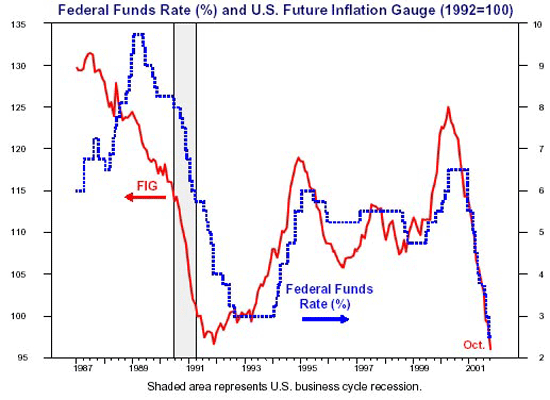
Fed-Rate-Decisions (fed-fund-rate)
Dez 01 1,75%
Jan 02 1,75%
März 02 1,75%
Mai 02 1,75%
Juni 02 1,75%
Das sieht aus wie der Zeitraum 1992-1993 danach ging die fed-funds-rate aber hoch
Fed-Rate-Decisions (fed-fund-rate)
Dez 01 1,75%
Jan 02 1,75%
März 02 1,75%
Mai 02 1,75%
Juni 02 1,75%
Das sieht aus wie der Zeitraum 1992-1993 danach ging die fed-funds-rate aber hoch
Die US-Job-Maschine einmal als Graphik
Quelle: http://www.financialsense.com/series2/tactics4/complete.htm

Wichtig:
Für jeden der sich seine Makro-Ökonomischen Chart selbst „kostenlos“ interaktiv erstellen will:
http://www.ecowin.com/charts.asp
Quelle: http://www.financialsense.com/series2/tactics4/complete.htm
Wichtig:
Für jeden der sich seine Makro-Ökonomischen Chart selbst „kostenlos“ interaktiv erstellen will:
http://www.ecowin.com/charts.asp
http://www.gold-eagle.com/editorials_02/klombies052302pv.htm…
please remember
US-Dollar versus S&P500

please remember
US-Dollar versus S&P500
Wer glaubt "Allan Greenspan" kann noch mal die
"fed-funds-rate"
senken
der sollte sich den obigen Chart zur "Fed-funds-rate"
ansehen.
Crash-Gefahr so wie es die "gold-bugs" wollen.
"fed-funds-rate"
senken
der sollte sich den obigen Chart zur "Fed-funds-rate"
ansehen.
Crash-Gefahr so wie es die "gold-bugs" wollen.
Den Rohölpreis sollte man nie vergessen
#87 von Harry Schotter
Thread: Warum die Indizes fallen werden
im Board-Charttechnik

#87 von Harry Schotter
Thread: Warum die Indizes fallen werden
im Board-Charttechnik
zur Erinnerung noch mal die
Fundamental-Daten
fürs Auge ohne lange zu lesen.
Fundamental-Daten
fürs Auge ohne lange zu lesen.
www.gold-eagle.com
A Tale of Two Deficits 25.Juli2002
http://www.gold-eagle.com/editorials_02/ing072502pv.html
A Tale of Two Deficits 25.Juli2002
http://www.gold-eagle.com/editorials_02/ing072502pv.html
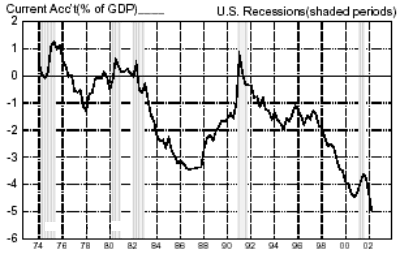
With the U.S. current-account deficit hitting a record 5 percent of GDP in the second quarter and with the risks pointing to still wider deficits in the future, the dollar would appear to be highly vulnerable
Fazit: das U.S. current account Balance
gibt "Ned Schmidt" für den gleichen Zeitraum
ebenfalls mir ca. minus 5,0% in
Prozent zum GDGP an
Der Bezug zum GDP ist doch irgendwie aussagekräftig
auch wenn ich wenig von Volkswirtschaft verstehe.
http://www.gold-eagle.com/gold_digest_02/consensus102802.htm…
Fazit: das U.S. current account Balance
gibt "Ned Schmidt" für den gleichen Zeitraum
ebenfalls mir ca. minus 5,0% in
Prozent zum GDGP an
Der Bezug zum GDP ist doch irgendwie aussagekräftig
auch wenn ich wenig von Volkswirtschaft verstehe.
http://www.gold-eagle.com/gold_digest_02/consensus102802.htm…
Quelle: http://www.gold-eagle.com/gold_digest_02/powell120602pv.html
Nachhilfe für alle Zinssenkungs-Optimisten
Was bewirken Zinssenkungen ???
An Overview of Japan`s Economy 1985-2000
After the September 1985 Plaza Accord, the yen`s appreciation hit the export sector hard, reducing economic growth from 4.4 percent in 1985 to 2.9 percent in 1986 (EIU 2001). The government attempted to offset the stronger yen by drastically easing monetary policy between January 1986 and February 1987. During this period, the Bank of Japan (BOJ) cut the discount rate in half from 5 percent to 2.5 percent. Following the economic stimulus, asset prices in the real estate and stock markets inflated, creating one of the biggest financial bubbles in history. The government responded by tightening monetary policy, raising rates five times, to 6 percent in 1989 and 1990. After these increases, the market collapsed.
The Nikkei stock market index fell more than 60 percent-from a high of 40,000 at the end of 1989 to under 15,000 by 1992.
der Nikkei war in Japan der Hauptmarkt-Index
in den USA dürfte der S&P500 der Hauptmarkt-Index sein.
Nachhilfe für alle Zinssenkungs-Optimisten
Was bewirken Zinssenkungen ???
An Overview of Japan`s Economy 1985-2000
After the September 1985 Plaza Accord, the yen`s appreciation hit the export sector hard, reducing economic growth from 4.4 percent in 1985 to 2.9 percent in 1986 (EIU 2001). The government attempted to offset the stronger yen by drastically easing monetary policy between January 1986 and February 1987. During this period, the Bank of Japan (BOJ) cut the discount rate in half from 5 percent to 2.5 percent. Following the economic stimulus, asset prices in the real estate and stock markets inflated, creating one of the biggest financial bubbles in history. The government responded by tightening monetary policy, raising rates five times, to 6 percent in 1989 and 1990. After these increases, the market collapsed.
The Nikkei stock market index fell more than 60 percent-from a high of 40,000 at the end of 1989 to under 15,000 by 1992.
der Nikkei war in Japan der Hauptmarkt-Index
in den USA dürfte der S&P500 der Hauptmarkt-Index sein.
hier nochmal was so alles an Fundamentaldaten
zusammenkommt.
zusammenkommt.

 Durchsuchen
Beitrag zu dieser Diskussion schreiben
Zu dieser Diskussion können keine Beiträge mehr verfasst werden, da der letzte Beitrag vor mehr als zwei Jahren verfasst wurde und die Diskussion daraufhin archiviert wurde.
Bitte wenden Sie sich an feedback@wallstreet-online.de und erfragen Sie die Reaktivierung der Diskussion oder starten Sie eine neue Diskussion.
Meistdiskutiert
| Wertpapier | Beiträge | |
|---|---|---|
| 191 | ||
| 98 | ||
| 71 | ||
| 67 | ||
| 67 | ||
| 47 | ||
| 42 | ||
| 33 | ||
| 28 | ||
| 27 |
| Wertpapier | Beiträge | |
|---|---|---|
| 27 | ||
| 24 | ||
| 22 | ||
| 20 | ||
| 20 | ||
| 19 | ||
| 19 | ||
| 18 | ||
| 16 | ||
| 16 |


