


EQS-News
 249
 0 Kommentare
Live 4K Isn't Always Really 4K: Beamr Delivers What Viewers Expect - And Lets Them Confirm It
- Beamr upscales live feeds to viewer-ready 4K
- CABR cuts 4K delivery bitrates by up to half
- VISTA validates quality with real viewers in days
|
EQS-News: Benzinga / Key word(s): Financial By Beamr |
DETROIT, MICHIGAN - August 7, 2026 (NEWMEDIAWIRE) - The Beamr (NASDAQ: BMR) stack turns lower-resolution feeds into the 4K viewers expect - without the delivery-cost penalty upscaling normally carries. Real viewers confirm the result
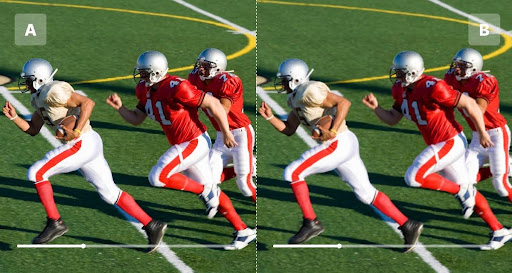
Billions of viewers spent this summer watching the World Cup, and many of them did it on 4K screens. They carry that expectation to everything they watch next, but what they don't always know is how often the "4K" they see is actually upscaled 4K.
A large share of premium live sports still leaves the venue as a lower-resolution feed. The jump to 4K happens somewhere else, often inside the television set itself, without production control over the result. Rebuilding contribution infrastructure to native 4K is a multi-year process. The gap between what leaves the venue and what viewers expect needs closing now.
Beamr closes this gap on the broadcaster's existing infrastructure, and without the delivery-cost penalty. AI super resolution upscales the lower-resolution feed up to 4K. Then Beamr's Emmy Award-winning content-adaptive bitrate (CABR) technology holds the result at up to 50% lower bitrate than a standard solution. That difference matters: HD to 4K can mean up to nine times the pixels, and CABR is what keeps that from becoming nine times the bandwidth - the difference between a 4K stream a broadcaster can actually ship and one that breaks delivery economics.
Visual improvement is only half the story. Whether an upscaled stream actually looks better to viewers depends on the source - the motion, lighting, and on-screen graphics of the specific content. That is the question Beamr VISTA is built to answer. VISTA is a subjective quality-testing platform that compares two versions using real viewers rather than an algorithm. It runs on the broadcaster's own footage and returns the confirmation in days, unlike traditional testing that takes weeks.
Diskutieren Sie über die enthaltenen Werte


 Google bevorzugen.Sie erhalten mehr Inhalte von uns in Ihren Suchergebnissen


 URL kopieren
 Per E-Mail teilen
 Artikel drucken
