


 185
 0 Kommentare
HireID Launches Interview Integrity Platform (AI Interview Platform) and Candidate Intake to Detect Candidate Fraud Before and During Interviews

New platform verifies candidate identity, screens submitted documents for fraud indicators, monitors 20+ signals during live interviews, and maintains identity continuity through day one
South Plainfield, New Jersey--(Newsfile Corp. - August 17, 2026) - HireID, which is a candidate Fraud Detection Platform, Launched today its new Interview Integrity Platform and Candidate Intake, an integrated solutions that helps hiring teams detect candidate fraud before and during interviews. HireID verifies candidate identity, screens submitted documents for signs of fraud, and during interviews, it surfaces deepfake, impersonation, proxy-interview, and unauthorized AI-assistance signals.


Traditional background checks run at the end of the hiring process and answer a narrow question: is this person safe to hire? They do not answer the question that now matters more , is this the person who actually showed up to the interview? HireID closes that gap by verifying identity at the top of the funnel, before interviews begin, and carrying that verification through every subsequent stage.
To view an enhanced version of this graphic, please visit:
https://images.newsfilecorp.com/files/9405/309790_6ee305aa04762a93_001 ...
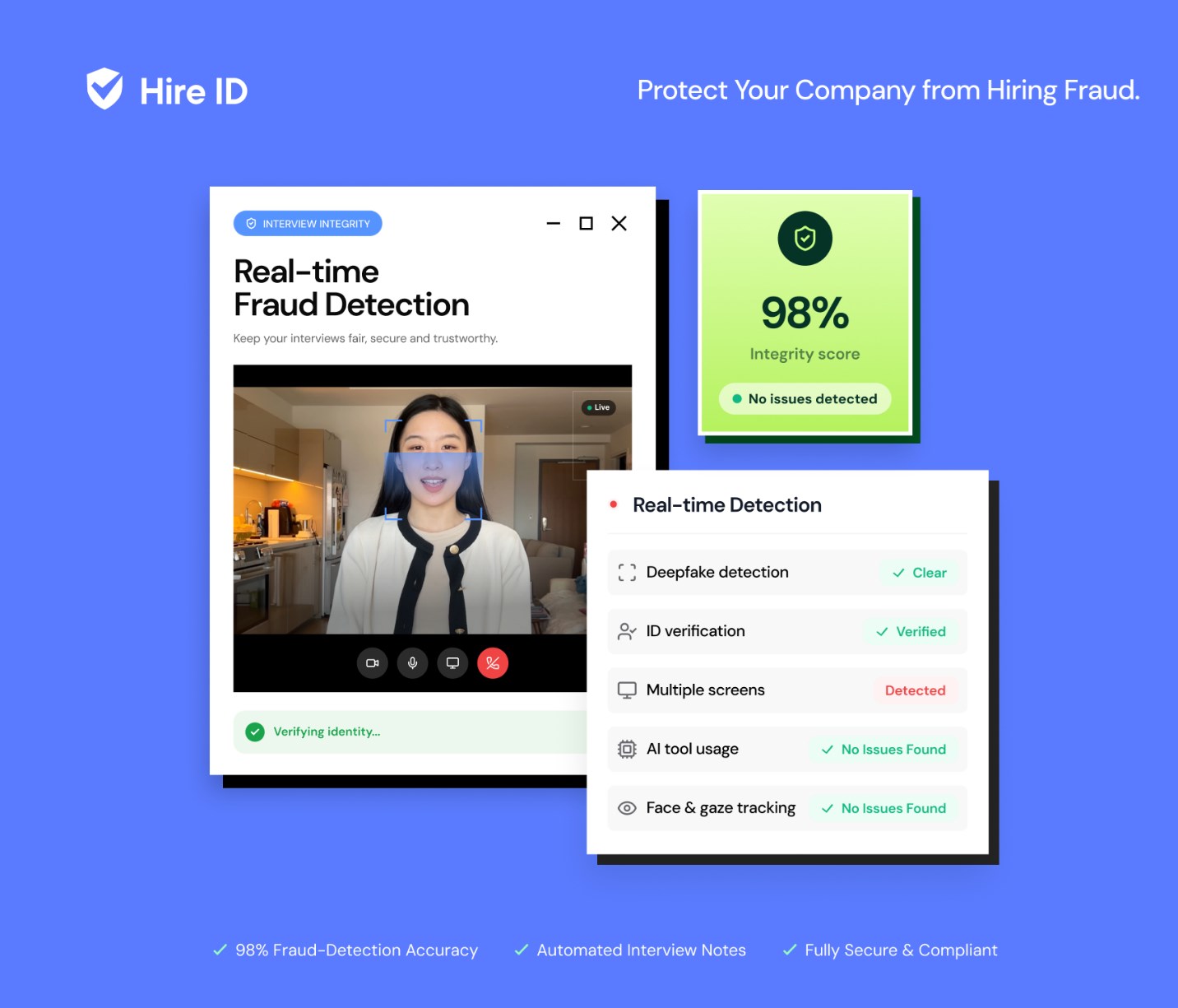
The Problem: The threat has outpaced the safeguards
Gartner projects that by 2028, one in four candidate profiles worldwide will be fake. In a Gartner survey of 3,000 job candidates, 6% admitted to interview fraud , either impersonating someone else or having someone else interview on their behalf.
The damage is already booked. GetReal Security's Deepfake Readiness Benchmark Report found that 41% of IT, cybersecurity, risk, and fraud leaders say their organization has hired and onboarded a fraudulent candidate. The same research found that 88% of organizations encounter deepfake or impersonation attacks at least occasionally.
The threat is not limited to resume inflation. U.S. agencies and more than a dozen foreign partner agencies issued a global alert on the risk North Korean remote IT workers pose to private companies and governments. The Department of Justice has since disclosed that facilitator networks helped DPRK operatives obtain remote employment at more than 136 U.S. companies using stolen and synthetic identities, and the FBI is now investigating a case in which such a worker reached a federal agency.
Diskutieren Sie über die enthaltenen Werte


 URL kopieren
 Per E-Mail teilen
 Artikel drucken
