


Care Within Reach: How the Bristol Myers Squibb Foundation Is Strengthening Health Systems Across Africa
 153
 0 Kommentare
Originally published by the Bristol Myers Squibb Foundation NORTHAMPTON, MA / ACCESS Newswire / September 28, 2026 / Francis Kwoba is a 68-year-old retired policeman from Bungoma County, Kenya. During one of his usual morning runs, he experienced a …

Originally published by the Bristol Myers Squibb Foundation
NORTHAMPTON, MA / ACCESS Newswire / September 28, 2026 / Francis Kwoba is a 68-year-old retired policeman from Bungoma County, Kenya. During one of his usual morning runs, he experienced a sudden sharp pain in his chest. Concerned by the symptoms, he sought medical attention at the nearest health facility and was prescribed an anti-tuberculosis medication for treatment. After three months, Francis's chest pain persisted and he began experiencing breathlessness. At Moi Teaching and Referral Hospital (MTRH), doctors found fluid in his lungs and a chest CT scan revealed aggressive lung cancer.


In much of sub-Saharan Africa, that diagnosis can be a death sentence, not because treatment doesn't exist, but because cancer is so often caught too late.
Through the Bristol Myers Squibb Foundation (BMS Foundation) Multinational Lung Cancer Control Program (MLCCP) in partnership with Academic Model Providing Access to Healthcare (AMPATH) at MTRH, Francis received targeted treatment, patient navigation and psychosocial support that, in his words, helped "strengthen my spirit."
As MLCCP Principal Investigator Prof. Lameck Diero shared, "Once you are in the program, you are family."
Today, Francis is a survivor and an advocate, showing others there can be a second act.
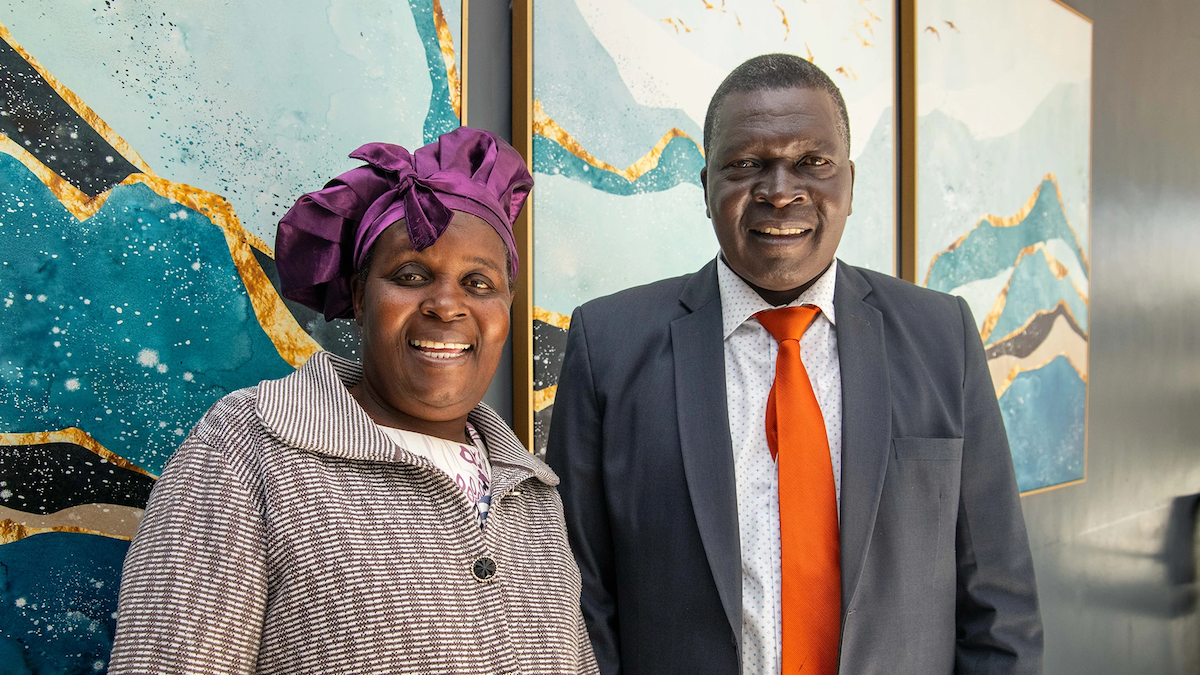
Francis Kwoba and his wife Susan
A 25-year commitment to systems that last
Stories like Francis' are what the BMS Foundation has spent more than 25 years working to make possible in Africa, and in other geographies around the world. What began with the HIV/AIDS crisis in sub-Saharan Africa now spans lung cancer, cervical cancer, pediatric cancers and pediatric blood disorders across multiple countries.
"What 25 years has taught us is that sustainable impact comes from strengthening local systems from within - building the capacity that remains long after any single program ends, so care can reach patients earlier and keep reaching them over time," says Catharine Grimes, president of the BMS Foundation.
When care comes to you
The same philosophy shapes the fight against cervical cancer in western Kenya. Through Cure Cervical Cancer Kenya's Mobile Health for Mamas program, trained Community Health Promoters (CHPs) reach women where they are - at home and at mobile treatment outreach sites - guiding them from HPV self-collection through treatment. A portable, solar-powered mobile laboratory processes samples on-site and returns results in roughly 90 minutes.
Diskutieren Sie über die enthaltenen Werte


 URL kopieren
 Per E-Mail teilen
 Artikel drucken
