


RMTG Broadens Longevity Footprint With New ISSCA Certification Across Adjunctive Therapies
 169
 0 Kommentare
New ISSCA curriculum covers multiple adjunctive technologies used in longevity-focused practices and is intended to complement clinical capabilities Cellular Hope Institute is developing. MIAMI, FL / ACCESS Newswire / October 5, 2026 / Regenerative …

New ISSCA curriculum covers multiple adjunctive technologies used in longevity-focused practices and is intended to complement clinical capabilities Cellular Hope Institute is developing.
MIAMI, FL / ACCESS Newswire / October 5, 2026 / Regenerative Medical Technology Group, Inc. (the "Company" or "RMTG") (OTCID:RMTG), a regenerative medicine company operating through its wholly owned subsidiary Global Stem Cells Group, today announced a new Longevity and Adjunctive Therapies Certification from its ISSCA division. The program is focused on complementary and adjunctive technologies increasingly discussed in longevity and regenerative medicine practices.
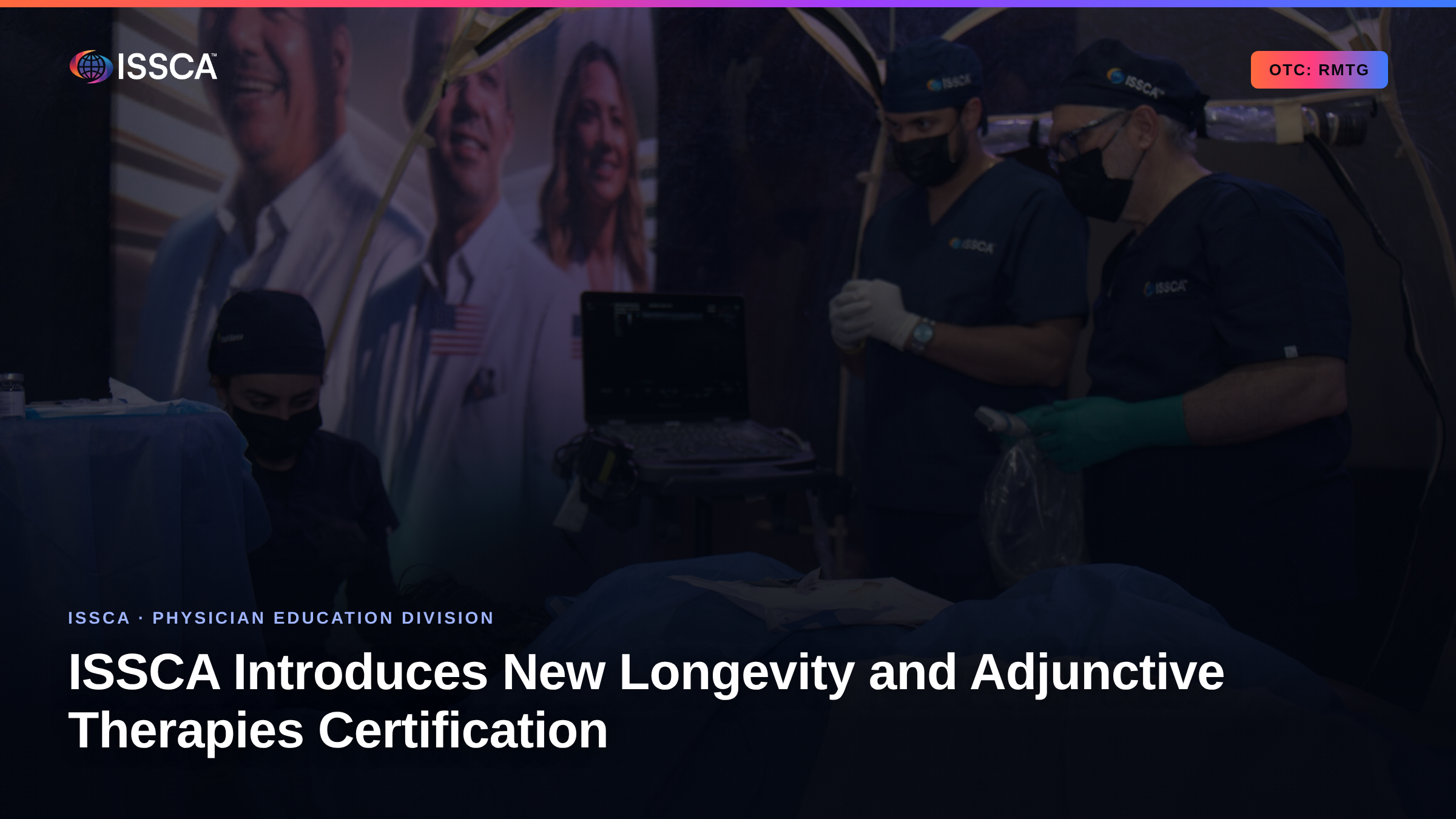
The curriculum addresses therapeutic plasma exchange, EBOO/EVO, peptide medicine, IV therapy, artificial intelligence tools, PEMF, photobiomodulation, red-light technologies, hyperbaric medicine, and other emerging approaches increasingly incorporated into longevity-focused medical practices. ISSCA indicates the program is designed to help physicians understand how multiple adjunctive technologies may fit within a comprehensive medical practice, rather than certifying any single modality in isolation.
The certification is among the broader multi-modality curricula currently offered by ISSCA and is intended to complement clinical capabilities that Cellular Hope Institute, the Company's Cancún clinic, is separately evaluating or developing. It does not mean that every technology covered in the curriculum is currently offered, authorized, or available at Cellular Hope Institute.
Education and Clinical Complement
David Christensen, Chief Executive Officer and President of Regenerative Medical Technology Group, Inc., commented:
"Longevity medicine is rapidly moving toward comprehensive programs that combine multiple technologies. Our goal is to position RMTG across that evolution, both in how physicians learn about these therapies and, where permitted, in how related services may be delivered in clinical practice."
Christensen continued:
"This program gives ISSCA a broader educational presence in longevity medicine and is designed to complement capabilities we are developing at Cellular Hope Institute."
The launch expands the range of topics addressed by ISSCA and is intended to align physician education more closely with technologies relevant to the Company's clinical operations. The Company believes this combination may create additional avenues for physician engagement as interest in longevity-focused care continues to develop.


 URL kopieren
 Per E-Mail teilen
 Artikel drucken
