


From Forest Trails to Wildlife Habitats: A Robot Dog of DEEP Robotics Joins a Mountain Research Expedition
 149
 0 Kommentare
Yuxi, China--(Newsfile Corp. - October 17, 2026) - DEEP Robotics is pleased to announce it has deployed its Lynx M20S wheeled-legged robot in the Ailao Mountains. Stretching for hundreds of
kilometers along the eastern edge of the Hengduan Mountains in southwestern China, the Ailao Mountains contain extensive subtropical evergreen broadleaf forests and rich biodiversity. Their dense
vegetation and relatively undisturbed habitats offer valuable opportunities for ecological research. But the terrain also makes fieldwork difficult: steep slopes, fallen trees, tangled vines and
slippery moss can slow progress and increase risks for researchers.
Working alongside researchers, the robot assisted with route reconnaissance, wildlife observation, visual documentation and supply transport. The deployment offered a practical test of how mobile
robotics can support biodiversity research in difficult-to-access environments.
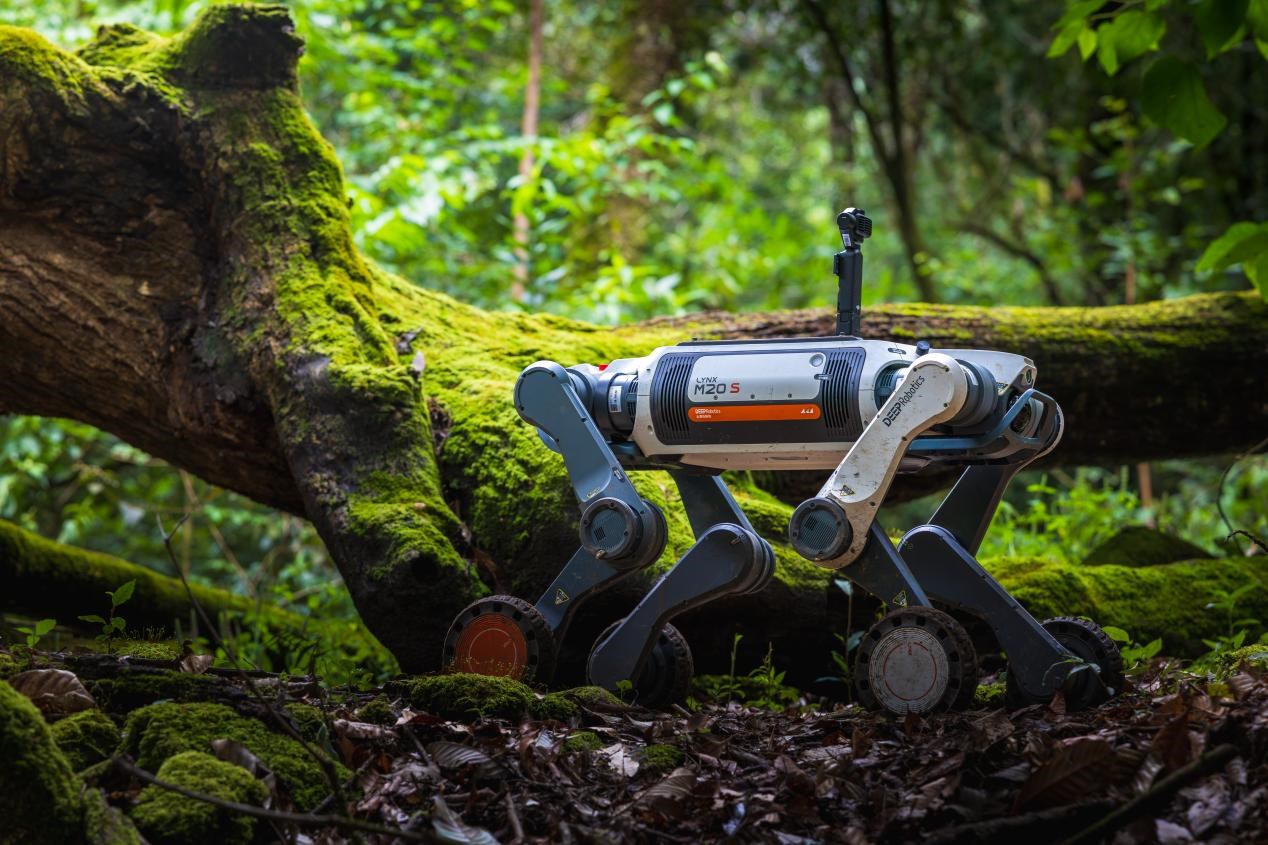
DEEP Robotics' Lynx M20S navigates mossy fallen logs and leaf litter in the Ailao Mountains.
Navigating Rapid Weather Changes and Dense Forest
Conditions in the Ailao Mountains can change quickly. Rain, fog and thunderstorms may develop with little warning, and temperatures can fall from the mid-20s Celsius to single digits, a change of more than 10°C. For field teams, dependable equipment is essential. The Lynx M20S has an IP67 ingress-protection rating and a specified operating temperature range of −30°C to 55°C. These specifications are designed to support operation in wet conditions and across wide temperature variations, both relevant to fieldwork in the mountain forest.
Deep in the Ailao Mountains, established trails are scarce. Steep slopes, thorny vegetation and fallen trees make route selection a challenge. The robot helped scout unfamiliar sections ahead of the team. Its wheeled-legged design allows it to switch movement modes according to the terrain: wheels support efficient travel along passable forest paths and muddy streambanks, while articulated legs help it negotiate fallen timber and uneven rocky ground. This flexibility can help researchers assess routes before entering potentially hazardous areas.
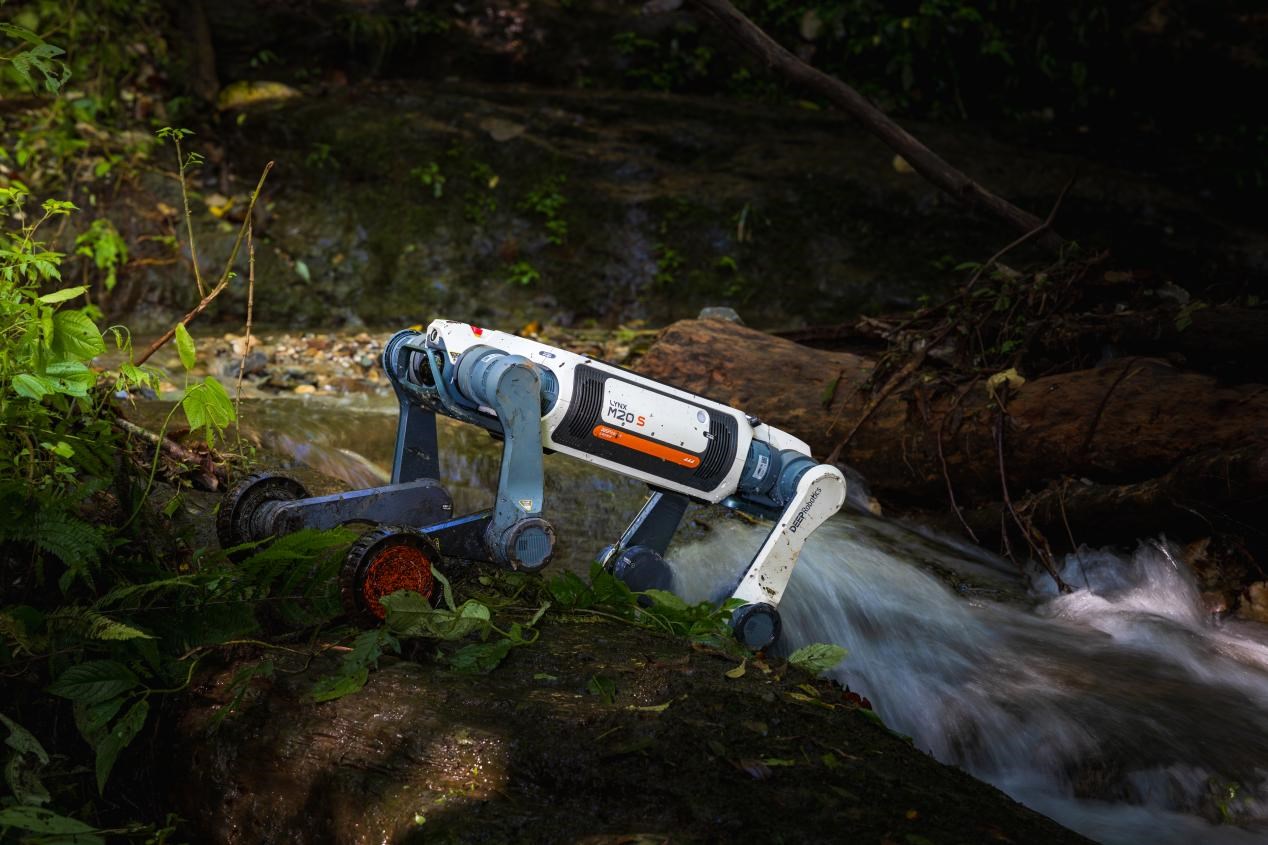
The Lynx M20S crosses slippery rocks and fallen timber beside a stream while scouting the route ahead.
Visibility presents another challenge. Layers of trees, shrubs and undergrowth can block sightlines, while fog may reduce visibility to around 20-30 meters. The robot's wide-angle camera provided live footage to researchers' devices, allowing them to inspect obstacles and terrain beyond their immediate view. This scouting-first approach gave the team additional information before moving forward, potentially reducing exposure to unseen hazards.


 URL kopieren
 Per E-Mail teilen
 Artikel drucken