






PENNYSTOCK REPORTs : Uranium Energy - KZ 12€ - Die letzten 30 Beiträge
eröffnet am 04.05.06 06:09:02 von
neuester Beitrag 09.05.24 07:24:53 von
neuester Beitrag 09.05.24 07:24:53 von
Beiträge: 12.166
ID: 1.057.727
ID: 1.057.727
Aufrufe heute: 4
Gesamt: 1.439.314
Gesamt: 1.439.314
Aktive User: 0
ISIN: US9168961038 · WKN: A0JDRR · Symbol: UEC
7,2700
USD
+2,97 %
+0,2100 USD
Letzter Kurs 02:04:00 Nasdaq
Meistbewertete Beiträge
| Datum | Beiträge | Bewertungen |
|---|---|---|
| 09.05.24 |
| Datum | Beiträge | Bewertungen |
|---|---|---|
| 09.05.24 |
| Datum | Beiträge | Bewertungen |
|---|---|---|
| 16.04.24 | ||
| 02.05.24 | ||
| 09.05.24 | ||
| 15.04.24 |
Werte aus der Branche Rohstoffe
| Wertpapier | Kurs | Perf. % |
|---|---|---|
| 3,3300 | +21,53 | |
| 0,8434 | +16,86 | |
| 4,6900 | +15,52 | |
| 1,4340 | +14,35 | |
| 65,12 | +14,25 |
| Wertpapier | Kurs | Perf. % |
|---|---|---|
| 9,3300 | -14,17 | |
| 10,320 | -15,27 | |
| 7,8100 | -15,93 | |
| 0,6601 | -26,22 | |
| 46,34 | -98,00 |
Beitrag zu dieser Diskussion schreiben

 Feedback
Die Aussichten sind rosig
Das wird der Kick für Uranium Energy
https://www.wallstreet-online.de/nachricht/18046881-uranium-…
https://www.wallstreet-online.de/nachricht/18046881-uranium-…
Uranium Energy ist Teil des neuen Swiss Resource Capital Uranreports: https://www.resource-capital.ch/de/reports/
Wenn ich mir den aktuellen Chart in USD ansehe, dann glaub ich das ein Ausbruch nach oben kommen könnte. Schaut selbst bei finviz.com
Antwort auf Beitrag Nr.: 75.563.647 von xwin am 04.04.24 10:55:00
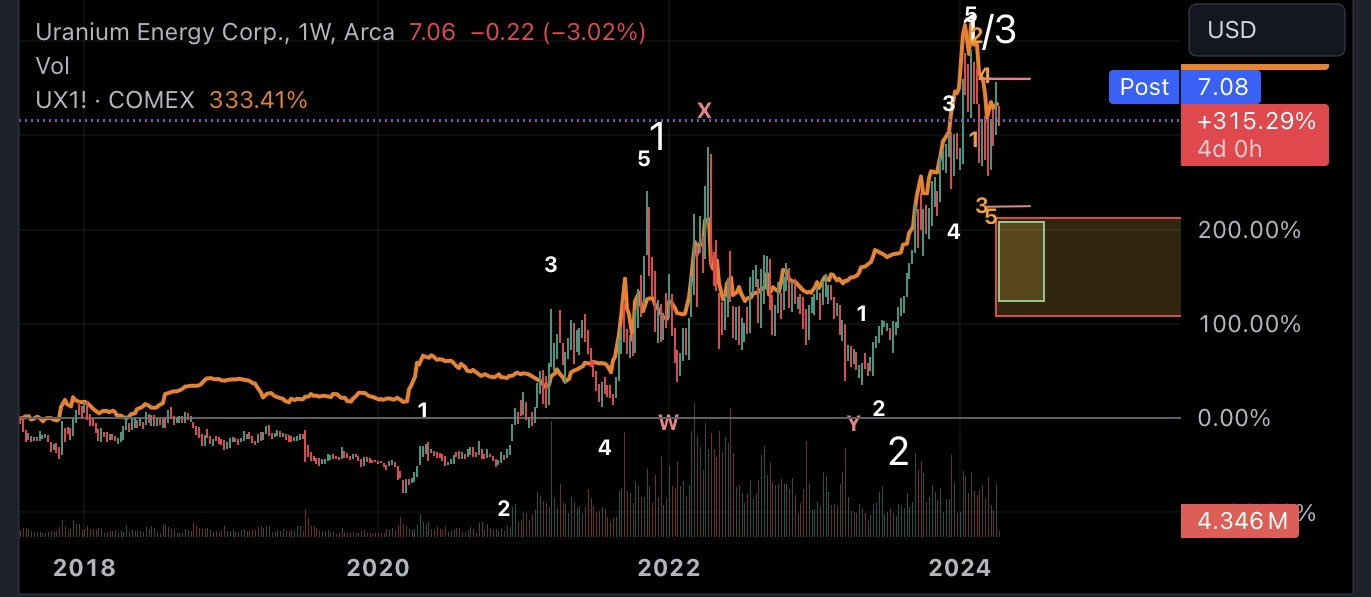
Hmmm. Vgl Mit dem Uran Future.
Nur mal so als Anregung.
So Long doc

Hmmm. Vgl Mit dem Uran Future.
Nur mal so als Anregung.
So Long doc
Zitat von xwin:Zitat von DoktorB:
Die zwischenkorrektur war zu erwarten.
Noch kein Grund zur Entwarnung.
Immer auch Uran Future im Auge behalten….
Mein Ziel steht weiter
So Long doc
Momentan entkoppeln sich die meisten Uranwerte vom Uran Future / Spot während sie das im ersten Move noch nicht getan hatten oder hinterher hingen. Vielleicht solltest du das mal im Auge behalten ... nur so als Anregung ;-)
Trading Spotlight
Mayday mayday 😳
Es bleibt irgendwie fragil
Antwort auf Beitrag Nr.: 75.561.877 von DoktorB am 03.04.24 23:46:55
Momentan entkoppeln sich die meisten Uranwerte vom Uran Future / Spot während sie das im ersten Move noch nicht getan hatten oder hinterher hingen. Vielleicht solltest du das mal im Auge behalten ... nur so als Anregung ;-)
Zitat von DoktorB:
Die zwischenkorrektur war zu erwarten.
Noch kein Grund zur Entwarnung.
Immer auch Uran Future im Auge behalten….
Mein Ziel steht weiter
So Long doc
Momentan entkoppeln sich die meisten Uranwerte vom Uran Future / Spot während sie das im ersten Move noch nicht getan hatten oder hinterher hingen. Vielleicht solltest du das mal im Auge behalten ... nur so als Anregung ;-)
TA Analysen auf Englisch
Für mich mit einer der Besten wenns um Charts geht..Uran GOLD SilberGibt noch zwei, drei andere...
https://m.youtube.com/@uselinkinv/videos
Antwort auf Beitrag Nr.: 75.560.362 von Venshu am 03.04.24 19:35:06
hihihi..yes...sieht so aus...wie so oft😀
Zitat von Venshu:Zitat von Kingstontown196903: Es gab mal ein Experiment bei dem einige Analysten, Charttechniker und Affen gegeneinander antraten.
Aktuell scheint der Affe wieder vorne zu liegen.
hihihi..yes...sieht so aus...wie so oft😀
Antwort auf Beitrag Nr.: 75.558.433 von Kingstontown196903 am 03.04.24 15:51:42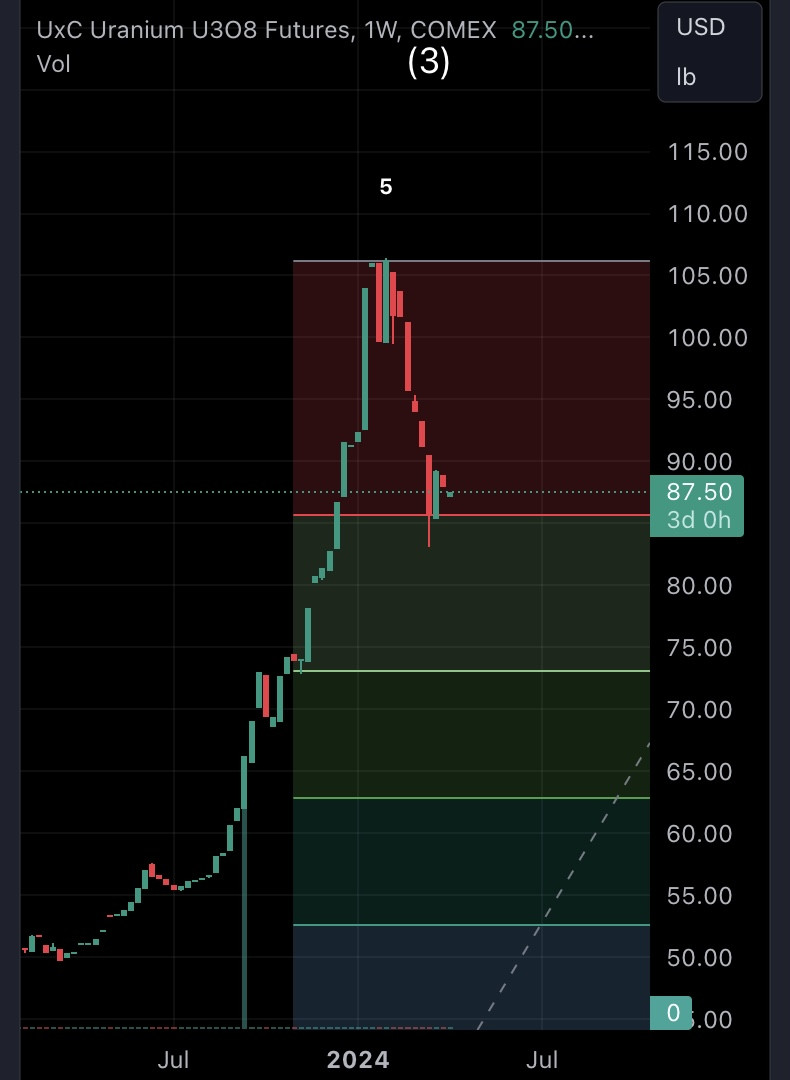
Die zwischenkorrektur war zu erwarten.
Noch kein Grund zur Entwarnung.
Immer auch Uran Future im Auge behalten….
Mein Ziel steht weiter
So Long doc

Die zwischenkorrektur war zu erwarten.
Noch kein Grund zur Entwarnung.
Immer auch Uran Future im Auge behalten….
Mein Ziel steht weiter
So Long doc
Antwort auf Beitrag Nr.: 75.446.319 von Kingstontown196903 am 13.03.24 15:50:02
Aktuell scheint der Affe wieder vorne zu liegen.
Zitat von Kingstontown196903: Es gab mal ein Experiment bei dem einige Analysten, Charttechniker und Affen gegeneinander antraten.
Aktuell scheint der Affe wieder vorne zu liegen.
bäähmm...7,64 USD
mag Alles sein...Ihr habt alle Recht...aber, wenn ich mir die Fundamentaldaten betrachte, die Firmenstruktur, Assets, Cash (hier teilweise in Uranbeständen gebunden) und die Erwartungen an den Uranpreis in den nächsten Jahren (Uranmangel), sehe ich hier ebenso wie der CEO eine goldene Zukunft.hier nochmal der Link mit dem Vice-CEO...hörenswert
https://www.commodity-tv.com/play/uranium-energy-uranium-mar…
Gruß
K.
Chart hin, Volumen her…
Ich erinnere nur mal kurz an Plug Power, die stiegen seinerzeit innerhalb von 7 Monaten von 4 auf über 60….
Um jetzt wieder unter 3 zu stehen, was sagt uns das : alles ist möglich ! Prost
Ich erinnere nur mal kurz an Plug Power, die stiegen seinerzeit innerhalb von 7 Monaten von 4 auf über 60….
Um jetzt wieder unter 3 zu stehen, was sagt uns das : alles ist möglich ! Prost
Antwort auf Beitrag Nr.: 75.556.342 von wilmore am 03.04.24 10:53:18
Da gebe ich Dir absolut Recht.
U.E. ist quasi das Salz in der eigenen Depot-Suppe. Der Wert ist in der Lage, " wunderbare Würze " ins Depot zu bringen, wie in den letzten Monaten geschehen, aber man sollte die Suppe auch nicht versalzen, d.h. , den Wert nicht zu hoch gewichten.
Immerhin stand der Kurs vor einem knappen Jahr noch bei ca. Kurs 2,20, obwohl die Zukunftsaussichten auch damals bereits hervorragend waren. So tief werden wir m. E. natürlich nicht mehr sinken, aber eine stimmungsgetriebene sehr hohe Volitalität war schon immer diesem Wert mitgegeben.
https://www.comdirect.de/inf/aktien/detail/chart_big.html?PO…
Zitat von wilmore: Chart hin oder her das gehandelte Volumen ist seit einiger Zeit (1 Monat+) sehr schwach …. Wie seht ihr das? Unter den Umständen ist ein Rücksetzer auf die genannten 4,xx oder 5,xx sehr schnell passiert.
Da gebe ich Dir absolut Recht.
U.E. ist quasi das Salz in der eigenen Depot-Suppe. Der Wert ist in der Lage, " wunderbare Würze " ins Depot zu bringen, wie in den letzten Monaten geschehen, aber man sollte die Suppe auch nicht versalzen, d.h. , den Wert nicht zu hoch gewichten.
Immerhin stand der Kurs vor einem knappen Jahr noch bei ca. Kurs 2,20, obwohl die Zukunftsaussichten auch damals bereits hervorragend waren. So tief werden wir m. E. natürlich nicht mehr sinken, aber eine stimmungsgetriebene sehr hohe Volitalität war schon immer diesem Wert mitgegeben.
https://www.comdirect.de/inf/aktien/detail/chart_big.html?PO…
Chart hin oder her das gehandelte Volumen ist seit einiger Zeit (1 Monat+) sehr schwach …. Wie seht ihr das? Unter den Umständen ist ein Rücksetzer auf die genannten 4,xx oder 5,xx sehr schnell passiert.
Antwort auf Beitrag Nr.: 75.547.387 von DoktorB am 01.04.24 18:01:04
dass UEC einen stabilen Boden bei ca. 6,40 USD gebildet hat und seit Tagen steigt.
Du hast Kurse lt. "ausgeklügelter" Charttechnik von 5 oder 4 Euro vorhergesehen. Viele, die nicht eingestiegen sind, schauen jetzt dem Kurs hinterher. Du hattest ja ausdrücklich gewarnt, auf mich zu hören u einzusteigen. Der Uranpreis wird voraussichtlich weiter steigen in den nächsten Jahren u UEC ist hervorragend positioniert + beginnt im August mit der Förderung!
https://investor-magazin.de/0159uranium-energy-vom-steigende…
Gruss
K.
ich sehe
Zitat von DoktorB: Nix bääähhmm. Erkläre uns doch mal, wo du jetzt Chart -technisch den großen Durchbruch siehst?? Das würde mich mal interessieren
DOC
dass UEC einen stabilen Boden bei ca. 6,40 USD gebildet hat und seit Tagen steigt.
Du hast Kurse lt. "ausgeklügelter" Charttechnik von 5 oder 4 Euro vorhergesehen. Viele, die nicht eingestiegen sind, schauen jetzt dem Kurs hinterher. Du hattest ja ausdrücklich gewarnt, auf mich zu hören u einzusteigen. Der Uranpreis wird voraussichtlich weiter steigen in den nächsten Jahren u UEC ist hervorragend positioniert + beginnt im August mit der Förderung!
https://investor-magazin.de/0159uranium-energy-vom-steigende…
Gruss
K.
Antwort auf Beitrag Nr.: 75.547.387 von DoktorB am 01.04.24 18:01:04
Charttechnisch vielleicht nicht. Aber die Goldmänner scheinen sich für Cameco zu interessieren. Scheint so, als wenn grossen Uran Aktien wieder in den Blick der Wallstreet geraten. Das hat heute alle Uran-Aktien mehr oder weniger angehoben. Mal gucken ob es hält.
https://twitter.com/quakes99/status/1774848313139061012
Zitat von DoktorB: Nix bääähhmm. Erkläre uns doch mal, wo du jetzt Chart -technisch den großen Durchbruch siehst?? Das würde mich mal interessieren
DOC
Charttechnisch vielleicht nicht. Aber die Goldmänner scheinen sich für Cameco zu interessieren. Scheint so, als wenn grossen Uran Aktien wieder in den Blick der Wallstreet geraten. Das hat heute alle Uran-Aktien mehr oder weniger angehoben. Mal gucken ob es hält.
https://twitter.com/quakes99/status/1774848313139061012
Antwort auf Beitrag Nr.: 75.546.964 von Kingstontown196903 am 01.04.24 15:45:18Nix bääähhmm. Erkläre uns doch mal, wo du jetzt Chart -technisch den großen Durchbruch siehst?? Das würde mich mal interessieren
DOC
DOC
Bääähmmm
7 USD gefallen...das sieht doch jetzt charttechnisch gar nicht mal so schlecht aus
https://finance.yahoo.com/news/1-us-energy-secretary-encoura…
vielleicht mit ein Grund für den Anstieg Uranpreises in den letzten 2 Tagen
vielleicht mit ein Grund für den Anstieg Uranpreises in den letzten 2 Tagen
Beim Wiederanfahren der Kernkraftwerke in Japan gibt es nun Bewegung. Bei Kashiwazaki-Kariwa, dem größten Kernkraftwerk der Welt (7 Reaktoren und 8.000 MW), wirbt der japanische Wirtschaftsminister persönlich beim zuständigen Gouverneur für das Wiederanfahren von 2 Reaktoren. Wenn sich das nun als Trend in Japan entwickelt, wird das die Nachfrage nach Uran (aus westlichen Ländern) merklich erhöhen.
https://www.powermag.com/japan-could-be-nearing-restart-of-w…
https://www.powermag.com/japan-could-be-nearing-restart-of-w…
zwei Artikel zu UEC
Uranium Energy Stock Has 53% Upside, According to 1 Wall Street Analysthttps://www.fool.com/investing/2024/03/13/uranium-energy-sto…
---------------------
Uranium Energy (UEC) Q2 Earnings Meet Mark, Revenues Down Y/Y
https://www.zacks.com/stock/news/2240054/uranium-energy-uec-…
Antwort auf Beitrag Nr.: 75.448.410 von schlafmuetze29 am 13.03.24 20:11:52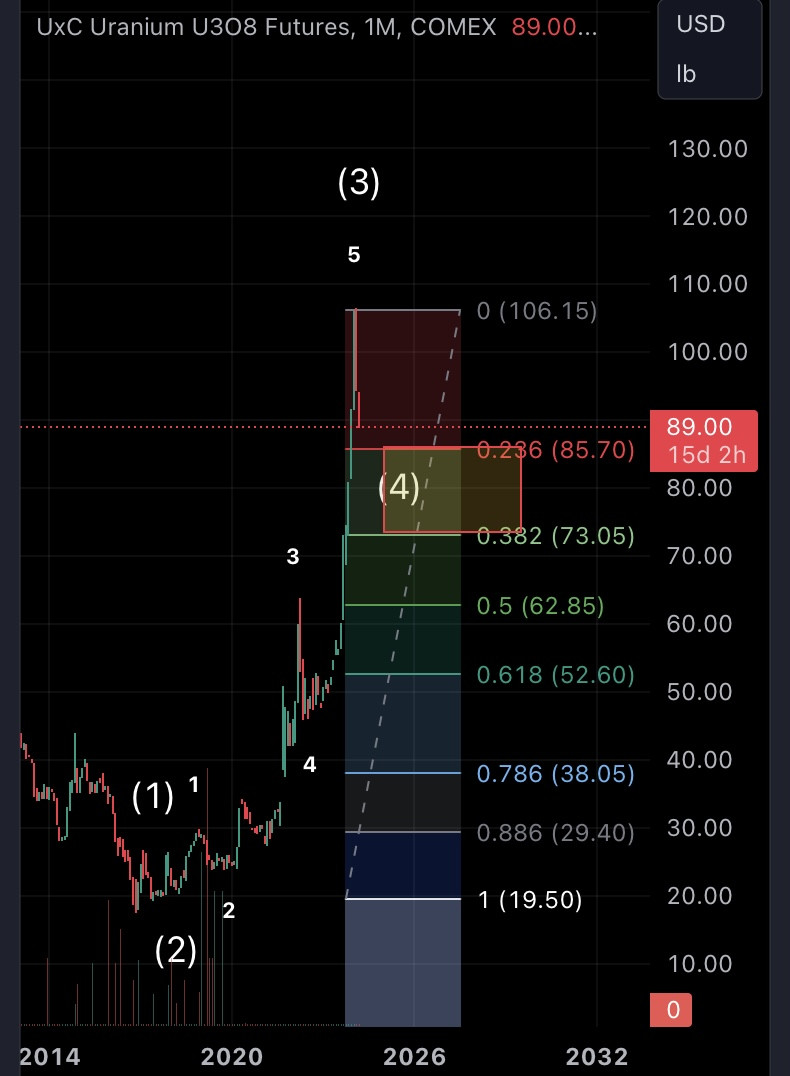
Zumindest, was Wahrscheinlichkeiten angeht. Wenn meine Annahme richtig ist, haben wir beim Uran Future eine Welle 3 abgeschlossen. Das bedeutet die nachfolgende Welle 4 korrigiert in der Regel um 38,2 % (häufigste Wahrscheinlichkeit). Erlaubt sind aber auch 61,8 %. Darunter sollte es aber nicht fallen.
Macht euch selbst ein Bild, wo wir gerade stehen….
Aber natürlich kann man das

Zumindest, was Wahrscheinlichkeiten angeht. Wenn meine Annahme richtig ist, haben wir beim Uran Future eine Welle 3 abgeschlossen. Das bedeutet die nachfolgende Welle 4 korrigiert in der Regel um 38,2 % (häufigste Wahrscheinlichkeit). Erlaubt sind aber auch 61,8 %. Darunter sollte es aber nicht fallen.
Macht euch selbst ein Bild, wo wir gerade stehen….
Zitat von schlafmuetze29: kann man beim Uranpreis auch einigermaßen mit Charttechnik eine Tendenz voraussagen?
Antwort auf Beitrag Nr.: 75.448.215 von Grisuu am 13.03.24 19:41:29kann man beim Uranpreis auch einigermaßen mit Charttechnik eine Tendenz voraussagen?
Spotpreis fällt auf 83$.
Rückgang der Kurse auf breiter Front
Rückgang der Kurse auf breiter Front
Antwort auf Beitrag Nr.: 75.446.319 von Kingstontown196903 am 13.03.24 15:50:02Da fühlt sich wohl jemand ertappt. Oder warum so aggressiv ??? 😎😄🤣💪
Du hast doch mit dem Chart angefangen…..
Ich stehe zu meinem Ziel. Kann ja jeder nachlesen. Die Korrektur ist nicht vorbei.
Ich möchte nur, dass du begründest. Dann kann jeder hier frei schreiben.
Aber haltloses Geschwurbel bringt keinen weiter. Nur populismus und Stimmungsmache.
Reg dich ab und lies was zu Bodenbildung
Du hast doch mit dem Chart angefangen…..
Ich stehe zu meinem Ziel. Kann ja jeder nachlesen. Die Korrektur ist nicht vorbei.
Ich möchte nur, dass du begründest. Dann kann jeder hier frei schreiben.
Aber haltloses Geschwurbel bringt keinen weiter. Nur populismus und Stimmungsmache.
Reg dich ab und lies was zu Bodenbildung
Antwort auf Beitrag Nr.: 75.446.319 von Kingstontown196903 am 13.03.24 15:50:02mag ja inhaltlich richtig sein, aber dein Ton ist absolut unangemessen
hör mal du Pfeiffe
wer hier rumschwurbelt bis ja wohl du.Les Dir mal Deinen Post vom 02.03.24 durch...Kursziel 5,32 USD bis 4,60 USD....das ich nicht lache!!
und tu mal nicht so, als hättest Du die Wahrheit und die Deutung des Charts für Dich gepachtet.
Es gab mal ein Experiment bei dem einige Analysten, Charttechniker und Affen gegeneinander antraten. Die Affen bekamen Pfeile und bewarfen regelmäßig eine Wand gespickt mit Zetteln von Aktien. Die getroffenen Aktien wurden gekauft bzw. auch verkauft. Die Analysten und Charttechniker agierten nach ihren Analysten bzw. Einschätzungen der Chartverläufe.
Nach 12 Monaten wurde ausgewertet und die Affen hatten mit großem Abstand gewonnen.
Aber wahrscheinlich war Dr. B. bei den Affen dabei...hahahaha...
Gruß
K.

 DurchsuchenBeitrag schreiben


01.05.24 · IRW Press · Uranium Energy |
29.04.24 · Der Finanzinvestor · Bannerman Energy |
29.04.24 · Der Finanzinvestor · Cameco |