






Wohin geht der EUR? - 500 Beiträge pro Seite (Seite 34)
eröffnet am 05.08.02 20:26:53 von
neuester Beitrag 13.01.21 16:01:22 von
neuester Beitrag 13.01.21 16:01:22 von
Beiträge: 16.900
ID: 616.006
ID: 616.006
Aufrufe heute: 24
Gesamt: 1.390.806
Gesamt: 1.390.806
Aktive User: 0
ISIN: EU0009652759 · WKN: 965275 · Symbol: EUR/USD
1,0742
USD
-0,14 %
-0,0015 USD
Letzter Kurs 06:32:15 Forex berechnet
Neuigkeiten
07.05.24 · wallstreetONLINE Redaktion |
07.05.24 · dpa-AFX |
07.05.24 · dpa-AFX |
07.05.24 · dpa-AFX |
 Forex-Woche: EUR / USD - auf diese Spanne achten, kleine Währungen profitieren
 Feedback
Gibt es hier neue Meinungen zum Euro? Ist ja in letzter Zeit stark angestiegen..
EUR/USD Prognose für die nächste Woche
"Die technischen Indikatoren im Wochenchart haben bereits eine Korrektur nach oben, aus ihren zuletzt extrem überverkauften Zonen vollzogen, während der Kurs im Tageschart bereits den Rückwärtsgang eingelegt hat und..."
http://www.fxstreet.de.com/news/forex-news/article.aspx?stor…
"Die technischen Indikatoren im Wochenchart haben bereits eine Korrektur nach oben, aus ihren zuletzt extrem überverkauften Zonen vollzogen, während der Kurs im Tageschart bereits den Rückwärtsgang eingelegt hat und..."
http://www.fxstreet.de.com/news/forex-news/article.aspx?stor…
Wie ist heute die Stimmung rund um den EUR/USD?
"Der EUR/USD erholte sich in die Nähe der 1,1320/30, nach dem er zuvor negativ unter 1,1300 startete. Karen Jones, die Leiterin FICC Technische Analyse bei der Commerzbank..."
http://www.fxstreet.de.com/news/forex-news/article.aspx?stor…
"Der EUR/USD erholte sich in die Nähe der 1,1320/30, nach dem er zuvor negativ unter 1,1300 startete. Karen Jones, die Leiterin FICC Technische Analyse bei der Commerzbank..."
http://www.fxstreet.de.com/news/forex-news/article.aspx?stor…
Euro wird zerbrechen wenn 'Grexit' kommt
Varoufakis sagte: "Der Euro ist zerbrechlich. Er ist wie ein Kartenhaus und wenn die griechische Karte fällt werden die übrigen mitgerissen."...
http://www.fxstreet.de.com/news/forex-news/article.aspx?stor…
Varoufakis sagte: "Der Euro ist zerbrechlich. Er ist wie ein Kartenhaus und wenn die griechische Karte fällt werden die übrigen mitgerissen."...
http://www.fxstreet.de.com/news/forex-news/article.aspx?stor…
Trading Spotlight
Erhöhte Spekulationen um Grexit belasten den Euro
"Die heutige Rede des griechischen PM zeigt, dass sich das Land nun auf Kollisionskurs mit seinen internationalen Gläubigern befindet. Der linke PM Alexis Tsipras sagte am Sonntag, dass das "grausame" Sparprogramm Griechenlands abgebaut wird, jedoch ohne Erweiterung der Rettungsaktion..."
http://www.fxstreet.de.com/news/forex-news/article.aspx?stor…
"Die heutige Rede des griechischen PM zeigt, dass sich das Land nun auf Kollisionskurs mit seinen internationalen Gläubigern befindet. Der linke PM Alexis Tsipras sagte am Sonntag, dass das "grausame" Sparprogramm Griechenlands abgebaut wird, jedoch ohne Erweiterung der Rettungsaktion..."
http://www.fxstreet.de.com/news/forex-news/article.aspx?stor…
Wie ist heute die Stimmung rund um den EUR/USD? - OCBC Bank und Commerzbank
"Über der kleinen 1,1262 Unterstützung besteht eine leichte Aufwärtstendenz in Richtung des 20-Tage-MA..."
http://www.fxstreet.de.com/news/forex-news/article.aspx?stor…
"Über der kleinen 1,1262 Unterstützung besteht eine leichte Aufwärtstendenz in Richtung des 20-Tage-MA..."
http://www.fxstreet.de.com/news/forex-news/article.aspx?stor…
EURUSD Breakout
Der EUR/USD hat seinen Abwärtstrend seit Beginn des Jahres mit erhöhter Geschwindigkeit fortgesetzt. Dabei traf das Devisenpaar an der Ebene bei 1.1096 auf eine Unterstützung die eine kurzfristige Erholung hervorgebracht hat. Die nach unten gerichtete Trendlinie wurde durchbrochen. Daran konnte auch die starke Lesung zu den US - NFPs nichts ändern. Sofern der EUR/USD aus seiner Range nach oben ausbrechen sollte, wäre eine Erholung bis zur Ebene bei 1.1520 durchaus möglich. Danach könnte das Level bei 1.1670 unter Beschuss genommen werden. Die rot eingezeichnete Area dient als Angebotszone. Zusammen mit der nach unten verlaufenden Trendlinie, dient sie als starker Widerstand. Hier warten die Verkäufer auf eine Fortsetzung des langfristigen Abwärtstrends.Sofern die Griechenland Krisese allerdings eskalieren sollte, wäre eine direkte Fortsetzung des Abwärtstrends durchaus denkbar. Um diese Szenario zu bestätigen, benötigen wir einen Ausbruch aus der kürzlich entstandenen Range. Erstes Ziel wäre dabei das Jahrestief bei 1.1096. Danach ist mit einem rasanten Wertverlust bis zur Ebene bei 1.0770 zu rechnen.
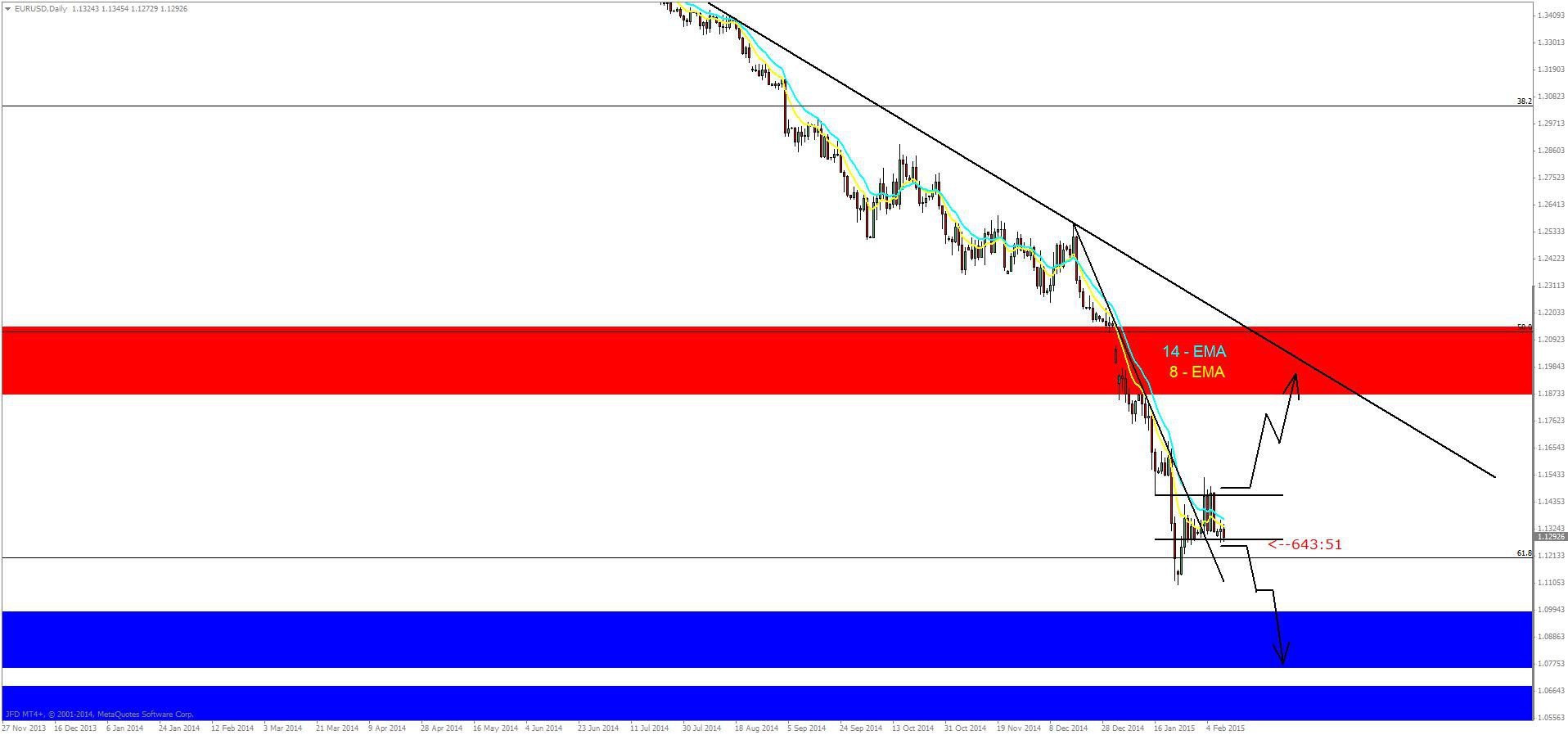
Antwort auf Beitrag Nr.: 49.029.326 von ThomasSchwager am 10.02.15 14:26:26Auch hier bestätigt sich, der USD kommt wieder in Fahrt. Im übrigen betragen die Währungsstärken:
Daily:
USD: +1
EUR: -3
Weekly:
EUR: - 3
USD: + 3
Dazu noch ein kleiner interessanter Artikel
http://www.fxstreet.de.com/news/forex-news/article.aspx?stor…
Daily:
USD: +1
EUR: -3
Weekly:
EUR: - 3
USD: + 3
Dazu noch ein kleiner interessanter Artikel
http://www.fxstreet.de.com/news/forex-news/article.aspx?stor…
EUR/USD wird wahrscheinlich nach unten ausbrechen
"Der FXStreet Autor und Analyst Omkar Godbole geht davon aus, dass der EUR/USD wahrscheinlich nach unten aus seiner 1,1350 bis 1,1270 Range in Richtung 1,1220 ausbrechen wird..."
http://www.fxstreet.de.com/news/forex-news/article.aspx?stor…
Wird heute aber wohl eher zäh werden, da keine Wirtschaftsdaten anstehen. Ich glaube auch nicht, dass die Eurogruppe uns heute schon was interessantes präsentieren wird.
"Der FXStreet Autor und Analyst Omkar Godbole geht davon aus, dass der EUR/USD wahrscheinlich nach unten aus seiner 1,1350 bis 1,1270 Range in Richtung 1,1220 ausbrechen wird..."
http://www.fxstreet.de.com/news/forex-news/article.aspx?stor…
Wird heute aber wohl eher zäh werden, da keine Wirtschaftsdaten anstehen. Ich glaube auch nicht, dass die Eurogruppe uns heute schon was interessantes präsentieren wird.
"Das Paar zeigte keine Reaktion, nach dem die deutschen Verbraucherpreise im Januar auf Monatsbasis um -1,1% und auf Jahresbasis um -0,4% gefallen sind. Beide Ergebnisse liegen unter den Prognosen von -1,0% und -0,3%. Der harmonisierte Verbraucherpreisindex fällt auf Monatsbasis um -1,3% und auf Jahresbasis um -0,5%, was den jeweiligen Erwartungen entspricht."
http://www.fxstreet.de.com/news/forex-news/article.aspx?stor…
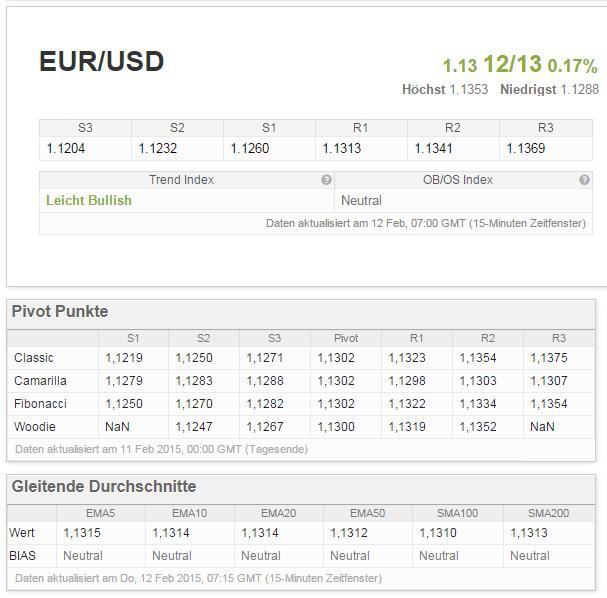
http://www.fxstreet.de.com/news/forex-news/article.aspx?stor…

Deutschlands Wirtschaft verzeichnet im Q4 2014 einen Zuwachs
"Die vorläufigen Q4 2014 BIP Daten Deutschlands zeigen einen Zuwachs vom 0,7% (Quartal), während auf Jahresbasis 1,6% zu verzeichnen sind. Beide Ergebnisse sind besser als die Prognosen von 0,3% und 1,0%."
http://www.fxstreet.de.com/news/forex-news/article.aspx?stor…
Wie ist heute die Stimmung im EUR/USD?
"Das Paar hat den 20-Tage-MA von 1,1385 erodiert, der den Markt seit Mitte Dezember begrenzte und dies legt nahe, dass ein Retracement zur 1,1520/34 (23,6% Retracement der Abwärtsbewegung seit Oktober 2014) möglich ist. Solange wir uns über der 1,1262 Unterstützung befinden ist eine Fortführung der Aufwärtsbewegung nicht auszuschließen..."
http://www.fxstreet.de.com/news/forex-news/article.aspx?stor…
"Die vorläufigen Q4 2014 BIP Daten Deutschlands zeigen einen Zuwachs vom 0,7% (Quartal), während auf Jahresbasis 1,6% zu verzeichnen sind. Beide Ergebnisse sind besser als die Prognosen von 0,3% und 1,0%."
http://www.fxstreet.de.com/news/forex-news/article.aspx?stor…
Wie ist heute die Stimmung im EUR/USD?
"Das Paar hat den 20-Tage-MA von 1,1385 erodiert, der den Markt seit Mitte Dezember begrenzte und dies legt nahe, dass ein Retracement zur 1,1520/34 (23,6% Retracement der Abwärtsbewegung seit Oktober 2014) möglich ist. Solange wir uns über der 1,1262 Unterstützung befinden ist eine Fortführung der Aufwärtsbewegung nicht auszuschließen..."
http://www.fxstreet.de.com/news/forex-news/article.aspx?stor…
Technische Analyse des EUR/USD
"Die Indikatoren halten sich im neutralen Bereich mit einem milden negativen Ton auf. Die Indikatoren im 4 – Stundenchart haben ihr Aufwärtspotential verloren, aber sie können sich weiter über ihren Mittellinien halten..."
http://www.fxstreet.de.com/news/forex-news/article.aspx?stor…
"Die Indikatoren halten sich im neutralen Bereich mit einem milden negativen Ton auf. Die Indikatoren im 4 – Stundenchart haben ihr Aufwärtspotential verloren, aber sie können sich weiter über ihren Mittellinien halten..."
http://www.fxstreet.de.com/news/forex-news/article.aspx?stor…
EUR/USD könnte oberen Bereich seiner Range von 1,1542 testen - Scotiabank
"Der MACD und die gleitenden Durchschnitte unterstützen unsere Ansicht, dass der EUR/USD den oberen Bereich seiner 1,1098 bis 1,1542 Range testen könnte..."
http://www.fxstreet.de.com/news/forex-news/article.aspx?stor…
"Der MACD und die gleitenden Durchschnitte unterstützen unsere Ansicht, dass der EUR/USD den oberen Bereich seiner 1,1098 bis 1,1542 Range testen könnte..."
http://www.fxstreet.de.com/news/forex-news/article.aspx?stor…
Wie ist heute die Stimmung im EUR/USD? - Commerzbank und OCBC Bank
"Aktuell notiert der Markt über der 1,1262 und damit besteht Spielraum zur 1,1520/34 (23,6% Retracement der Abwärtsbewegung seit Oktober 2014)… Für jetzt hegen wir..."
http://www.fxstreet.de.com/news/forex-news/article.aspx?stor…
"Aktuell notiert der Markt über der 1,1262 und damit besteht Spielraum zur 1,1520/34 (23,6% Retracement der Abwärtsbewegung seit Oktober 2014)… Für jetzt hegen wir..."
http://www.fxstreet.de.com/news/forex-news/article.aspx?stor…
Wie ist heute die Stimmung im EUR/USD? - Commerzbank und Westpac
"Der EUR/USD wird in einer Range gehandelt und in den letzten Tagen gab es Bewegungen in beide Richtungen… Es ist unwahrscheinlich, dass es zu einem größeren Ausbruch über 1,1500 kommen wird. Im Bereich dieser Ebenen sind mittelfristige Shorts vorzuziehen..."http://www.fxstreet.de.com/news/forex-news/article.aspx?stor…
EUR/USD begleitet von Sorgen aus Griechenland - Deutschland sagt "Nein" zur Verlängerung!
"Griechenland stellte heute einen Antrag für eine 6-monatige Verlängerung des Kreditvertrages, während die deutsche Bundesregierung die Anfrage Griechenlands zur..."
http://www.fxstreet.de.com/news/forex-news/article.aspx?stor…
"Griechenland stellte heute einen Antrag für eine 6-monatige Verlängerung des Kreditvertrages, während die deutsche Bundesregierung die Anfrage Griechenlands zur..."
http://www.fxstreet.de.com/news/forex-news/article.aspx?stor…
Wie tief geht es kurzfristig noch mit dem EURO???
Dr. Doom shortet halt so gern.
Dr. Doom shortet halt so gern.
EURUSD folgt dem Zirkus
http://www.fxstreet.de.com/news/forex-news/article.aspx?stor…Das Devisenpaar gewinnt zunehmend an Aufwärtsdynamik und durchbrach den Widerstand bei 1.1280, nachdem die Investoren neue Spekulationsnahrung zum Gipfeltreffen zwischen der Eurogruppe und Griechenland erhalten haben. Die Verwirrung der Händler lässt sich leicht an der aktuellen Price Action im EUR/USD ablesen und ....
http://www.fxstreet.de.com/news/forex-news/article.aspx?stor…
Breiter Konsens über Griechenland - Deal
Ein Vertreter aus Griechenland sagte am Freitag, dass es eine weitgehende Einigung mit den europäischen Finanzministern gibt. Eine Bestätigung durch die Vertreter aus der Eurozone steht aber noch aus.
Die letzten Nachrichten weisen....
Breiter Konsens über Griechenland - Deal
Ein Vertreter aus Griechenland sagte am Freitag, dass es eine weitgehende Einigung mit den europäischen Finanzministern gibt. Eine Bestätigung durch die Vertreter aus der Eurozone steht aber noch aus.
Die letzten Nachrichten weisen....
Einigung zwischen Eurogruppe und Griechenland
Das Devisenpaar bewegt sich während der Pressekonferenz der Eurogruppen auf und ab, aber im Großen und Ganzen zeigt sich der EUR/USD stabil. Bis Montag muss die Regierung in Athen eine erste Liste mit Reformzielen vorlegen. Erachten die Vertreter der EZB, des IWF und der europäischen Kommission die Liste als akzeptabel, wird wahrscheinlich am Dienstag ein erneutes Eurogruppen – Treffen via Telefonkonferenz stattfinden. Eurogruppen Präsident...
http://www.fxstreet.de.com/news/forex-news/article.aspx?stor…
Das Devisenpaar bewegt sich während der Pressekonferenz der Eurogruppen auf und ab, aber im Großen und Ganzen zeigt sich der EUR/USD stabil. Bis Montag muss die Regierung in Athen eine erste Liste mit Reformzielen vorlegen. Erachten die Vertreter der EZB, des IWF und der europäischen Kommission die Liste als akzeptabel, wird wahrscheinlich am Dienstag ein erneutes Eurogruppen – Treffen via Telefonkonferenz stattfinden. Eurogruppen Präsident...
http://www.fxstreet.de.com/news/forex-news/article.aspx?stor…
Antwort auf Beitrag Nr.: 49.134.128 von ThomasSchwager am 20.02.15 21:33:38
Vor einem halben Jahr hies es noch, dass die Konjunktur in den Staaten brummt. eine Zinserhöhung und Aufwertung des Dollars stand zur Diskussion.
Dann kam der Ölpreisverfall und damit wird die fracking industry schwer getroffen werden. Ich sehe durchaus die Gefahr einer großen Finanzkrise in Amerika. 500 Mrd Hochzinsanleihen entfallen auf die Branche. Der Markt für Hochzinsanleihen ist doppelt so groß als vor dem LEHMAN-Kollaps.
Eine Kettenreaktion drocht und auch ein Aktiencrash wären denkbar.
Alles schwächt den Dollar und könnte den Trend umkehren.
Zeithorizont sehe ich für Jahresmitte.
@all Wie seht ihr das?
Wenn sich Europa beruhigt...
ziehen vielleicht Wiolken in Amerika auf.Vor einem halben Jahr hies es noch, dass die Konjunktur in den Staaten brummt. eine Zinserhöhung und Aufwertung des Dollars stand zur Diskussion.
Dann kam der Ölpreisverfall und damit wird die fracking industry schwer getroffen werden. Ich sehe durchaus die Gefahr einer großen Finanzkrise in Amerika. 500 Mrd Hochzinsanleihen entfallen auf die Branche. Der Markt für Hochzinsanleihen ist doppelt so groß als vor dem LEHMAN-Kollaps.
Eine Kettenreaktion drocht und auch ein Aktiencrash wären denkbar.
Alles schwächt den Dollar und könnte den Trend umkehren.
Zeithorizont sehe ich für Jahresmitte.
@all Wie seht ihr das?
Antwort auf Beitrag Nr.: 49.137.551 von kainza am 21.02.15 15:53:39
http://www.fxstreet.de.com/news/forex-news/article.aspx?stor…
EUR/USD dürfte auf Sicht von 6 Monaten zwischen 1,12 und 1,15 bleiben
"Auf Sicht von 12 Monaten sehen wir den EUR/USD im Bereich der 1,10. Auf Sicht von 6 Monaten sehen wir den EUR/USD überwiegend in der Range von 1,12 bis 1,15..."http://www.fxstreet.de.com/news/forex-news/article.aspx?stor…
EUR/USD nächster Halt 1,1200?
"Ein Bruch unter die 1,1300 sollte zu einer Annäherung der 1,1250 führen und wenn dies nicht mehr hält, dann wird es weiter zur 1,1200 bergab gehen..."http://www.fxstreet.de.com/news/forex-news/article.aspx?stor…
EUR/USD fokussiert sich auf Wirtschaftsdaten, Griechenland und Yellen
Dem EUR/USD steht ein interessanter Tag bevor. Die griechische Regierung hat der Eurogruppe versprochen, bis heute Abend eine Liste von Reformen zu verfassen, um das Land wieder auf Kurs zu bringen. Sofern die EZB, die Eurogruppe und der IWF den Vorschlägen aus Griechenland zustimmen, würde sich das aktuelle Rettungspaket um weitere vier Monate verlängern. Deutschland wird morgen die Zahlen für das Bruttoinlandsprodukt...
http://www.fxstreet.de.com/news/forex-news/article.aspx?stor…
Dem EUR/USD steht ein interessanter Tag bevor. Die griechische Regierung hat der Eurogruppe versprochen, bis heute Abend eine Liste von Reformen zu verfassen, um das Land wieder auf Kurs zu bringen. Sofern die EZB, die Eurogruppe und der IWF den Vorschlägen aus Griechenland zustimmen, würde sich das aktuelle Rettungspaket um weitere vier Monate verlängern. Deutschland wird morgen die Zahlen für das Bruttoinlandsprodukt...
http://www.fxstreet.de.com/news/forex-news/article.aspx?stor…
Bin voll vom eur frustriert. Der ist ja total leblos die Tage. Hatte eigentlich gedacht er würde sich dann mit entsprechendem Push von Greek Krise und fed wieder etwas nach oben Richtung 1.15 bewegen, aber nichts passiert. Was ist mit der charttechnik hier ?
Hoffnung aufgeben ?
Hoffnung aufgeben ?
EZB Sitzung: Auswirkungen der QE auf den EUR/USD
"Der Versuch nun von der Marktbewegung zu profitieren bevor die endgültige Nachricht kommt ist sehr riskant. Es ist nach der Ankündigung mit einem starken Befreiungsschlag des EUR/USD zu rechnen, vor allem da die Shorts in der Nähe ihrer Rekordhochs bleiben und der Wochen-Chart extrem überverkauft ist. Aber der vorherrschende Trend wird bearish bleiben..."http://www.fxstreet.de.com/news/forex-news/article.aspx?stor…
Antwort auf Beitrag Nr.: 49.163.714 von Sheikha am 24.02.15 19:21:02ich glaub der Drops ist jetzt gelutscht...
NFP Auswirkungen auf den EUR/USD und USD/JPY
"Der EUR/USD wird nur knapp über der psychologisch wichtigen Marke bei 1.1000 gehandelt, infolge der geldpolitischen Sitzung der Europäischen Zentralbank. Aus technischer Sicht befinden wir uns kurz- und langfristig in einem Abwärtstrend. Im Tageschart fielen die Trendindikatoren in den negativen Bereich, während sich der RSI bei 28 Punkten befindet..."http://www.fxstreet.de.com/news/forex-news/article.aspx?stor…
das war jetzt aber doch heftig am Freitag Nachmittag noch so einen Absturz des Euros zu sehen
die EZB fängt ja gearde erst an mit dem Ankauf der Anleihen
Griechenland ist auch eher nur bedingt beruhigt und liegt mehr den jäh in der intensivstation
charttechnisch spricht es eher weiter für fallenden euro - eventuell seitwärts
welches szenario würde dem euro auf die beine helfen?
Den eigentlich wollen die US doch auch keinen starken US$ oder etwa doch?
die EZB fängt ja gearde erst an mit dem Ankauf der Anleihen
Griechenland ist auch eher nur bedingt beruhigt und liegt mehr den jäh in der intensivstation
charttechnisch spricht es eher weiter für fallenden euro - eventuell seitwärts
welches szenario würde dem euro auf die beine helfen?
Den eigentlich wollen die US doch auch keinen starken US$ oder etwa doch?
Die USA sind vor allem darauf angewiesen,dass der Dollar Weltleitwährung bleibt.Das ist ihr Geschäftsmodel.In den meisten anderen Wirtschaftszweigen sind sie eher Mittelmass,sonst hätten sie nicht schon jahrzehntelang ein chronisches Handelsdefizit.Der American Way of Life lautet:Ich konsumiere,also bin ich.Wenn irgendwann dann daraus das Handelsdefizit zu gross oder der Dollar zu stark wird,zettelt man irgendwelche Kriege an(in jüngster Zeit ohne eigene Truppen)oder lässt eine Weltwirtschaftskrise vom Stapel!Die Möchtegern-Grossnotenbanken EZB,BOJ,BoE,PBoC, usw.werden dann jeweils auf ihre wahre Bedeutung zurechtgestutzt.Übrigens zeigt es keinerlei Stärke oder Überlegenheit,wenn man mit hemmungslosem Gelddrucken Wirtschaftspolitik betreibt.Der positiv anmutende Begriff"frisches Geld"ist entlarvt nur ungedecktes Fiatmoney!Irgendwann werdet ihr merken,dass man Papier nicht essen kann!
Ziel 1,0573
"Sollte es einen Schlusskurs unter dieser Marke geben, so wird sich der Rückgang in Richtung der Kanalbasis (30 Jahre) von 1,0573 erweitern..."http://www.fxstreet.de.com/news/forex-news/article.aspx?stor…
EUR/USD Spielraum für eine Korrektur in der Nähe der 1,0690? - FXStreet
"Die FXStreet Chefanalystin Valeria Bednarik stellt fest, dass der EUR/USD unter der kritischen 1,0760 notiert. Sie ist der Ansicht, dass der Gemeinschaftswährung nur wenig Spielraum für eine Aufwärtskorrektur zu Verfügung steht. Sollte die 1,0730 gebrochen werden so geht es weiter zur 1,0690..."http://www.fxstreet.de.com/news/forex-news/article.aspx?storyid=1cc18928-fe41-418a-82dc-b886e230aaa2
Weiterer Paukenschlag im EUR/USD - Neues 12 Jahrestief bei 1.0703!
Der EUR/USD geriet während der amerikanischen Sitzung erneut unter einen enormen Verkaufsdruck und fiel infolgedessen auf ein neues 12 – Jahrestief.
http://www.fxstreet.de.com/news/forex-news/article.aspx?stor…
Der EUR/USD geriet während der amerikanischen Sitzung erneut unter einen enormen Verkaufsdruck und fiel infolgedessen auf ein neues 12 – Jahrestief.
http://www.fxstreet.de.com/news/forex-news/article.aspx?stor…
Heftig, wie das Gelddrucken der EZB die Devisenmärkte beeinflusst.
Die Dynamik das Absturzes des Euros ist erschreckend.
Es ist nur einen Frage der Zeit, bis Turbulenzen durch Blasen hervortreten...
Unter normalen Gesichtspunkten sind Wechselkurse nicht mehr analysierbar.
Die Dynamik das Absturzes des Euros ist erschreckend.
Es ist nur einen Frage der Zeit, bis Turbulenzen durch Blasen hervortreten...
Unter normalen Gesichtspunkten sind Wechselkurse nicht mehr analysierbar.
Antwort auf Beitrag Nr.: 49.295.279 von Realist5 am 11.03.15 09:13:32Von den USA fairer und langfristig angestrebter Wert des € : 0,60. Darauf wird es hinauslaufen.
Antwort auf Beitrag Nr.: 49.298.051 von Abfischer am 11.03.15 12:20:16Das würde mich jetzt interessieren, wie du auf diese Aussage kommst. Quellen?...Insider Infos?...warum sollten die USA diesen "fairen" Wert anstreben?
würde Sie doch mit ins Verderben reissen
würde Sie doch mit ins Verderben reissen
Wie ist heute die Stimmung rund um den EUR/USD? - Commerzbank und OCBC Bank
"Der OCBC Bank Analyst Emmanuel Ng stellt fest: "Es sind weiterhin die Rendite Argumente welche die Preis-Aktion in der nächsten Zeit bestimmen werden. Es ist zu erwarten, dass die Investoren Rallyes für Verkäufe nutzen, während EZB Nowotny erfolglos versuchte die Märkte zu beruhigen. In der nächsten Woche steht die FOMC Sitzung an, mit der die Karten neue gemischt werden."http://www.fxstreet.de.com/news/forex-news/article.aspx?stor…
Auf 0,60 würde ich nicht spekulieren

Antwort auf Beitrag Nr.: 49.307.378 von Realianer am 12.03.15 08:59:08der fairer wert ist um die 1.25.mittelfristig werd er da hingehen.deine 0.60 wenn das oel wieder bei 100$ der beral ist den kostet der benzin um die 6 euro.

Antwort auf Beitrag Nr.: 49.316.528 von RPE am 13.03.15 04:39:25Ich glaube du hast das "nicht" nicht gelesen 
Wie ist heute die Stimmung im EUR/USD? - Commerzbank und UOB
"Die UOB Analysten sagen: "Der Euro fiel auf eine neues Tief knapp unter 1,05, bevor es zu einer Erholung von mehr als 180 Pips bis zur 1,0683 kam. Der starke Abwärtstrend scheint nun vorbei zu..."http://www.fxstreet.de.com/news/forex-news/article.aspx?stor…
wer hier von eurokursen weit unter parität träumt, und dann noch über einen langen zeitraum, der sollte sich mal folgende dinge vor augen führen:
1. die amer. industrie braucht dringend mehr export, da die eigene bevölkerung regelrecht im schnellprozess verarmt und kein geld mehr für ausgaben hat. wie lange werden sich apple & co. wohl noch mit einem für den export viel zu starken $ zufrieden geben?
2. wer auf die mantramäßig von presse und bänkstern wiederholten zinsanstiege als legitimation eines weiter erstarkenden $ setzt, der sollte sich mal die wahren, und wahrscheinlich noch extrem geschönten us wirtschaftsdaten anschauen - und das nicht nur im hinblick darauf, dass wir es hier mit der am höchsten verschuldeten nation der welt zu tun haben.
der $ ist gemessen an den fundamentaldaten schon jetzt massivst überteuert und rein spekulativ getrieben. sobald sich die us wirtschaft gegen die mit steigenden $ und fallen € satt verdienende finanzmafia auflehnt, wird es auch hier einen konsenz geben müssen.
ich sehe den € und $ mittelfristig zwar auch auf die parität zulaufen, da die finanzmafia samt ihren schergen aus den gesteuerten medien bis sommer/herbt immer wieder die steigenden zinsen und zum gefühlten 100ten male das europäische qe programm als grund nennen können, um den $ auf die viel genannte parität zum € zu bringen. aber was, wenn schon aus fundamentaler sicht keine zinserhöhung mehr in diesem jahr stattfindet, oder wenn sie ein wenig erhöht werden, um dann der minierholung der heimischen wirtschaft den garaus zu machen? folge wäre vermutlich ein weiteres qe...
ich bleibe dabei: parität ja, dann kurz und schmerzlos (vielleicht noch mal ein dipp bis maximal 0,95/0,98) ...und dann eine massive trendwende bis mittel-/langfristig in richtung 1,20, wo der euro auch zum jetzigen zeitpunkt hingehören würde.
sollte die eurowirtschaft vielleicht sogar noch anfangen zu boomen, die al-zahlen in den südländern geringer werden, und ein neues qe programm in den usa stattfinden, sogar noch weit darüber hinaus.
kurzfristig könnte von der unterstützung bei 1,05/1,055 ein kleiner pullback bis in den bereich 1,077 stattfinden. wenn ich mir den abstand zwischen jetzigem € kurs und 38-tage-durchschnitt so ansehe, der heute bei 1,165 verläuft, wäre kurzfristig sogar noch kurzfristig auf sicht von ein paar tagen ein pullback von rund 4-5 cent bis an die 1,10 drin, allein auch schon um die fast schon historische überverkauftheit des € wieder einigermaßen abzubauen.
viel erfolg allen...
gruss
streberleiche
1. die amer. industrie braucht dringend mehr export, da die eigene bevölkerung regelrecht im schnellprozess verarmt und kein geld mehr für ausgaben hat. wie lange werden sich apple & co. wohl noch mit einem für den export viel zu starken $ zufrieden geben?
2. wer auf die mantramäßig von presse und bänkstern wiederholten zinsanstiege als legitimation eines weiter erstarkenden $ setzt, der sollte sich mal die wahren, und wahrscheinlich noch extrem geschönten us wirtschaftsdaten anschauen - und das nicht nur im hinblick darauf, dass wir es hier mit der am höchsten verschuldeten nation der welt zu tun haben.
der $ ist gemessen an den fundamentaldaten schon jetzt massivst überteuert und rein spekulativ getrieben. sobald sich die us wirtschaft gegen die mit steigenden $ und fallen € satt verdienende finanzmafia auflehnt, wird es auch hier einen konsenz geben müssen.
ich sehe den € und $ mittelfristig zwar auch auf die parität zulaufen, da die finanzmafia samt ihren schergen aus den gesteuerten medien bis sommer/herbt immer wieder die steigenden zinsen und zum gefühlten 100ten male das europäische qe programm als grund nennen können, um den $ auf die viel genannte parität zum € zu bringen. aber was, wenn schon aus fundamentaler sicht keine zinserhöhung mehr in diesem jahr stattfindet, oder wenn sie ein wenig erhöht werden, um dann der minierholung der heimischen wirtschaft den garaus zu machen? folge wäre vermutlich ein weiteres qe...
ich bleibe dabei: parität ja, dann kurz und schmerzlos (vielleicht noch mal ein dipp bis maximal 0,95/0,98) ...und dann eine massive trendwende bis mittel-/langfristig in richtung 1,20, wo der euro auch zum jetzigen zeitpunkt hingehören würde.
sollte die eurowirtschaft vielleicht sogar noch anfangen zu boomen, die al-zahlen in den südländern geringer werden, und ein neues qe programm in den usa stattfinden, sogar noch weit darüber hinaus.
kurzfristig könnte von der unterstützung bei 1,05/1,055 ein kleiner pullback bis in den bereich 1,077 stattfinden. wenn ich mir den abstand zwischen jetzigem € kurs und 38-tage-durchschnitt so ansehe, der heute bei 1,165 verläuft, wäre kurzfristig sogar noch kurzfristig auf sicht von ein paar tagen ein pullback von rund 4-5 cent bis an die 1,10 drin, allein auch schon um die fast schon historische überverkauftheit des € wieder einigermaßen abzubauen.
viel erfolg allen...
gruss
streberleiche
Antwort auf Beitrag Nr.: 49.317.503 von Streberleiche am 13.03.15 08:57:21
"Ein klarer Bruch unter 1,05/04 bestätigt die Fortführung des Abwärtstrends und das es nicht nur eine Korrektur der Aufwärtsbewegung seit 2000 ist. In diesem Fall wird es nicht nur in Richtung Parität weitergehen, sondern in Richtung der..."
http://www.fxstreet.de.com/news/forex-news/article.aspx?stor…
EUR/USD ist die Parität nicht das Ende der Fahnenstange?
Schöner Beitrag..."Ein klarer Bruch unter 1,05/04 bestätigt die Fortführung des Abwärtstrends und das es nicht nur eine Korrektur der Aufwärtsbewegung seit 2000 ist. In diesem Fall wird es nicht nur in Richtung Parität weitergehen, sondern in Richtung der..."
http://www.fxstreet.de.com/news/forex-news/article.aspx?stor…
sehr lesenswerter (heute erschienener) artikel zum €/$:
Spekulation mit Euro/US-Dollar: Aktien und Gold
http://www.goldseiten.de/artikel/236792--Spekulation-mit-Eur…
Stützt meine These, dass wir schon bald vor einer trendwende stehen. allerdings sieht der autor diese trendwende schon sehr zeitnah, was er plausibel erklärt.
Spekulation mit Euro/US-Dollar: Aktien und Gold
http://www.goldseiten.de/artikel/236792--Spekulation-mit-Eur…
Stützt meine These, dass wir schon bald vor einer trendwende stehen. allerdings sieht der autor diese trendwende schon sehr zeitnah, was er plausibel erklärt.
ist schon amüsant: jetzt fällt der € schon massivst trotz schlechter verbrauchervertrauenszahlen und der damit verbundenen geringeren wahrscheinlichkeit einer schnellen zinswende. lol
das spiel ist mittlerweile doch sehr durchschaubar. institutionelle sind scheinbar massivst short im euro und schaffen es sogar, den € in dieser jetzigen situation der extremsten überverkauftheit, die es bei einer der drei großen währungen jemals gegeben hat, entgegen fundamentaldaten, die intraday klar für einen €-anstieg sprechen, massivst zu drücken.
hut ab. da leisten sie wirklch ganze arbeit. der short squeeze wird bald gewaltig sein. deshalb habe ich mich soeben bei 1,051 mit einer weiteren position long im € positioniert. sollte die währung wider erwarten weiterfallen, werde ich weitere zukäufe tätigen.
alles selbstverständlich nur als kurzfristiger trade, da die parität in 2015 wohl längst beschlossene sache ist und die großen short adressen wohl erst im bereich 1/1 oder etwas oberhalb davon aussteigen werden.
das spiel ist mittlerweile doch sehr durchschaubar. institutionelle sind scheinbar massivst short im euro und schaffen es sogar, den € in dieser jetzigen situation der extremsten überverkauftheit, die es bei einer der drei großen währungen jemals gegeben hat, entgegen fundamentaldaten, die intraday klar für einen €-anstieg sprechen, massivst zu drücken.
hut ab. da leisten sie wirklch ganze arbeit. der short squeeze wird bald gewaltig sein. deshalb habe ich mich soeben bei 1,051 mit einer weiteren position long im € positioniert. sollte die währung wider erwarten weiterfallen, werde ich weitere zukäufe tätigen.
alles selbstverständlich nur als kurzfristiger trade, da die parität in 2015 wohl längst beschlossene sache ist und die großen short adressen wohl erst im bereich 1/1 oder etwas oberhalb davon aussteigen werden.
Der Preis für die Hausse ist viel zu hoch. Dafür wird der Euro geopfert. Das Ganze wird in einen gewaltigen Crash enden. Das ist meine Vermutung. Wir haben eine ausgeprägte Aktien- Immobilienblase. Dieses mal wird es noch schlimmer kommen, wie damals zur Lehman-Pleite.
Antwort auf Beitrag Nr.: 49.325.096 von Amphibie am 13.03.15 18:54:35damit rechne ich auch.und zwar felsenfest. all das wird sehr böse enden. sämtliche märkte spielen verrückt und die bankrotten kriegstreiber aus den USA versuchen mit aller macht einen neuen WW zu konstruieren, mittels dem sie ihren A...sch retten können. Die vorzeichen ähneln sehr denen der vorangegangenen Wweltkriege.
vielleicht ist dieser unverhältnismäßig rasante verfall des euros auch mit einem solchen ereignis verbunden bzw. er nimmt das ereignis vorweg - s.h., die großen adressen wissen von einem baldigen, längst feststehendem krieg innerhalb europas.
anders lässt sich dieser auch heute stattfindende extreme downmove - und das völlig ohne gegenwehr - nach einem vorangegangenen wertverfall von 10 cent in ein paar tagen, einem wertverfall von knapp 30% in 10 monaten - ohne einen auch nur ansatzweise ordentlichen pullback - nicht erklären. dass der euroverfall heute sogar noch trotz grottiger us daten, die eine zinswende (die ja immer wieder hervorgekramt wird, um den euro runterzureden) in weiter ferne rücken lässt, weitergeht, und das mit weiteren satten 1,4% minus, ist die krönung der irrationalität.
wie gesagt: entweder ist hier bald kriegsbeginn in europa, oder wir erleben bald einen short squeeze, wie man ihn bei einer großen währung selten gesehen hat. so meine vermutung.
vielleicht ist dieser unverhältnismäßig rasante verfall des euros auch mit einem solchen ereignis verbunden bzw. er nimmt das ereignis vorweg - s.h., die großen adressen wissen von einem baldigen, längst feststehendem krieg innerhalb europas.
anders lässt sich dieser auch heute stattfindende extreme downmove - und das völlig ohne gegenwehr - nach einem vorangegangenen wertverfall von 10 cent in ein paar tagen, einem wertverfall von knapp 30% in 10 monaten - ohne einen auch nur ansatzweise ordentlichen pullback - nicht erklären. dass der euroverfall heute sogar noch trotz grottiger us daten, die eine zinswende (die ja immer wieder hervorgekramt wird, um den euro runterzureden) in weiter ferne rücken lässt, weitergeht, und das mit weiteren satten 1,4% minus, ist die krönung der irrationalität.
wie gesagt: entweder ist hier bald kriegsbeginn in europa, oder wir erleben bald einen short squeeze, wie man ihn bei einer großen währung selten gesehen hat. so meine vermutung.
Antwort auf Beitrag Nr.: 49.325.591 von Streberleiche am 13.03.15 19:41:10Glückwunsch an Dich. Du hast es kapiert. Auch dann, wenn es nicht so kommen wird. Dich würde ich gerne mal kennenlernen.
Antwort auf Beitrag Nr.: 49.325.591 von Streberleiche am 13.03.15 19:41:10
Stell' die schiefliegenden Posis glatt, positionier dich entgegengesetzt und vielleicht gewinnst einen Teil deiner Verluste zurück.
Ja das ist bitter, wenn der Markt gegen einen läuft...
... aber lass dir gesagt sein: Mit Wunschträumen und Verschwörungstheorien kannst vielleicht dein schlechtes Gefühl ein bißchen überdecken, die Realität hölt dich aber immer ein.Stell' die schiefliegenden Posis glatt, positionier dich entgegengesetzt und vielleicht gewinnst einen Teil deiner Verluste zurück.
Antwort auf Beitrag Nr.: 49.328.444 von Vitaquelle am 14.03.15 12:19:02Genau Leute wie Du Vitaquelle, die andere als Verschwörungstheoretiker bezeichnen sind der Grund, dass die Großfinanz Ihre Pläne der NWO umsetzen kann. Ist Dir eigentlich klar, dass Mario Draghi mit 200 Mio Abfindung von Goldman kam, bevor er EZB-Chef wurde?? Ich mache mir ebenfalls große Sorgen, dass diese machtgeile Elite Ihre Ziele schneller umsetzen kann, als uns recht ist... NWO und damit natürlich auch eine neue WW. Gute Nacht. Ebenfalls verstehe ich Leute gut, die rechtzeitig am Preppen sind.. So long Cyberworker
Antwort auf Beitrag Nr.: 49.328.444 von Vitaquelle am 14.03.15 12:19:02Bei den Geschehen der letzten Jahre - sowohl finanztechnisch als auch politisch - finde ich es immer wieder amüsant, wenn Leute Mutmaßungen, die nicht systemkonform sind, als Verschwörungstheorien bezeichnen.
In der heutigen Welt ist doch nun wirklich nichts mehr außergewöhnlich. Denn wenn es schon zur Normalheit wird, dass ein Land auf seiner Eroberungstour völkerrechtswidrig den halben Nahen Osten zerbomben kann (die Betonung liegt auf völkerrechtswidrig!), ohne dabei auch nur die geringsten Sanktionen zu befürchten, ein anderes aber seine Interessen waren will, indem es einen für ihn militärisch-wirtschaftlich strategisch äußerst wichtigen Landzipfel dabei unterstützt, sich für die Zugehörigkeit zu seinem Land oder zur ausbeuterischen EU zu entscheiden, dieses genau dafür aber von etlichen Ländern mit einer niemals dagewesenen und für die EU Sanktionierer selbstzerstörerischen Sanktionskette bestraft wird, dann nehm ich diese Welt nicht mehr für voll und gehe gern als Verschwörungstheoretiker in die w:o Geschichte ein, in dem ich behaupte, dass es angehen könnte, dass große Adressen von einem eventuell bald stattfindenden großen Krieg in Europa wissen, und schon deshalb so vehement aus der Währung flüchten.
Was den Euro angeht, hatte ich ja schon am Freitag geschrieben, dass vom Bereich um die 1,05 aus die längst überfällige Zwischenerholung einsetzen könnte. Wichtig ist, diesen Bereich zu verteidigen und bestenfalls nicht mehr unter das TT vom Freitag bei 1,0462 zu fallen. Im Grunde würde es mich nicht wundern, wenn der erstarkte $ dankend von der FED am Mittwoch als Grund für die wahrscheinliche Verschiebung einer Zinserhöhung herangezogen wird. Dass die allg. Wirtschaftssituation eine Zinserhöhung gar nicht zuließe, ohne der Ökonomie dabei den Garaus zu machen, wird wohl wie immer verschwiegen.
Von der Investitionsseite aus habe ich am Freitag Kurse um 1,05 für Long-Käufe genutzt. Aber nur zu Tradingzwecken. Ich rate jedem noch mal, sich den Spread zwischen 38er und dem jetzigen Kurs anzuschauen. So etwas findet man selten...
In der heutigen Welt ist doch nun wirklich nichts mehr außergewöhnlich. Denn wenn es schon zur Normalheit wird, dass ein Land auf seiner Eroberungstour völkerrechtswidrig den halben Nahen Osten zerbomben kann (die Betonung liegt auf völkerrechtswidrig!), ohne dabei auch nur die geringsten Sanktionen zu befürchten, ein anderes aber seine Interessen waren will, indem es einen für ihn militärisch-wirtschaftlich strategisch äußerst wichtigen Landzipfel dabei unterstützt, sich für die Zugehörigkeit zu seinem Land oder zur ausbeuterischen EU zu entscheiden, dieses genau dafür aber von etlichen Ländern mit einer niemals dagewesenen und für die EU Sanktionierer selbstzerstörerischen Sanktionskette bestraft wird, dann nehm ich diese Welt nicht mehr für voll und gehe gern als Verschwörungstheoretiker in die w:o Geschichte ein, in dem ich behaupte, dass es angehen könnte, dass große Adressen von einem eventuell bald stattfindenden großen Krieg in Europa wissen, und schon deshalb so vehement aus der Währung flüchten.
Was den Euro angeht, hatte ich ja schon am Freitag geschrieben, dass vom Bereich um die 1,05 aus die längst überfällige Zwischenerholung einsetzen könnte. Wichtig ist, diesen Bereich zu verteidigen und bestenfalls nicht mehr unter das TT vom Freitag bei 1,0462 zu fallen. Im Grunde würde es mich nicht wundern, wenn der erstarkte $ dankend von der FED am Mittwoch als Grund für die wahrscheinliche Verschiebung einer Zinserhöhung herangezogen wird. Dass die allg. Wirtschaftssituation eine Zinserhöhung gar nicht zuließe, ohne der Ökonomie dabei den Garaus zu machen, wird wohl wie immer verschwiegen.
Von der Investitionsseite aus habe ich am Freitag Kurse um 1,05 für Long-Käufe genutzt. Aber nur zu Tradingzwecken. Ich rate jedem noch mal, sich den Spread zwischen 38er und dem jetzigen Kurs anzuschauen. So etwas findet man selten...
Wie ist heute die Stimmung im EUR/USD?
"Der Danske Bank Senior Analyst Morten Helt sagt: "Der EUR/USD ist sowohl technisch als auch nach unserem kurzfristigen Finanzmodell überverkauft. Es ist jedoch damit zu rechnen, dass die Abwärtsdynamik anhält. Die wirtschaftlichen Aussichten werden zwar besser, aber der "heiße Kartoffel Effekt"..."http://www.fxstreet.de.com/news/forex-news/article.aspx?stor…
Aus Sicht der technischen Analyse stellt die europäische Einheitswährung zwar unverändert ein "fallendes Messer" dar, aber das jüngste 12-Jahres-Tief bedeutet gleichzeitig das Ausloten einer interessanten Unterstützung. Gemeint ist die Parallele (akt. bei 1,05 USD) zum Abwärtstrend seit Sommer 2008. Möglicherweise kommt es auf dieser Basis zu einer Gegenbewegung, die inzwischen z. B. durch den RSI begünstigt wird, der in allen von uns betrachteten Zeitebenen (Tag, Woche, Monat) im überverkauften Bereich notiert. Gleichzeitig ist der Abstand zwischen der 200-Wochen-Linie (akt. bei knapp 1,32 USD) und der eigentlichen Kursnotierung auf ein historisch hohes Ausmaß angeschwollen. Zu guter letzt weisen die aktuellen CoT-Daten weiterhin ein hohes Niveau an spekulativen EUR-Shortpositionen aus.
http://www.wallstreet-online.de/nachricht/7461419-hsbc-eur-u…
http://www.wallstreet-online.de/nachricht/7461419-hsbc-eur-u…
Wie ist heute die Stimmung rund um den EUR/USD?
"Der EZB QE Effekt auf den EUR war negativer als erwartet. Wir gehen nun davon aus, dass die EZB QE den EUR/USD auf 3-6 Monate weiter belastet und es zu einem Warm-up der Fed Normalisierung kommt. Auf Sicht von 6 Monaten liegt unser Ziel nun bei 0,99, nach 1,05 bisher..."http://www.fxstreet.de.com/news/forex-news/article.aspx?stor…
HSBC heute zum €/$:
In der Geschichte des Euros noch niemals da gewesener Spread zwischen 200er und Realttimekurs, RSI massivst überverkauft. Tradingziele 1,076 und 1,10/1,11.
https://www.youtube.com/watch?v=Wgqn_SJYP2I&feature=youtu.be
Ich bleibe mit engem SL long investiert...
In der Geschichte des Euros noch niemals da gewesener Spread zwischen 200er und Realttimekurs, RSI massivst überverkauft. Tradingziele 1,076 und 1,10/1,11.
https://www.youtube.com/watch?v=Wgqn_SJYP2I&feature=youtu.be
Ich bleibe mit engem SL long investiert...
Folker Hellmeyer spiegelt heute meine Meinung zu einer viel beschworenen Zinserhöhung in den Staaten wider:
"Die Bank of England macht vor wie es nicht geht. Als es Ernst wurde, wurden die Gründe für eine expansive Politik in den Vordergrund gestellt und die Risiken von Zinserhöhungen betont.
Zwar wird die US-Notenbank deutlich vorsichtiger vorgehen, aber der sehr starke Dollar und die sich abschwächende Konjunktur sind nicht zu leugnen. Zwar wird nur von einer kurzen Schwächeperiode ausgegangen (u.a. wegen des kalten Winters), aber unsere Erwartungen an einen Zinserhöhungszyklus sind mittelfristig deutlich hinter denen des Marktes. Vor allem die exorbitanten Schuldenberge ("Subprime KfZ", Studentenkredite, Staatsschulden usw.) erlauben keine deutlichen Schritte hin zu mehreren Zinsschritten."
Ganzer Artikel: http://www.goldseiten.de/artikel/237201--USA-Zahlen-liefern-…
"Die Bank of England macht vor wie es nicht geht. Als es Ernst wurde, wurden die Gründe für eine expansive Politik in den Vordergrund gestellt und die Risiken von Zinserhöhungen betont.
Zwar wird die US-Notenbank deutlich vorsichtiger vorgehen, aber der sehr starke Dollar und die sich abschwächende Konjunktur sind nicht zu leugnen. Zwar wird nur von einer kurzen Schwächeperiode ausgegangen (u.a. wegen des kalten Winters), aber unsere Erwartungen an einen Zinserhöhungszyklus sind mittelfristig deutlich hinter denen des Marktes. Vor allem die exorbitanten Schuldenberge ("Subprime KfZ", Studentenkredite, Staatsschulden usw.) erlauben keine deutlichen Schritte hin zu mehreren Zinsschritten."
Ganzer Artikel: http://www.goldseiten.de/artikel/237201--USA-Zahlen-liefern-…
FOMC Prognose
Wie wird der EUR/USD reagieren?http://www.fxstreet.de.com/news/forex-news/article.aspx?stor…
Stellvertretend für eine Reihe von zukünftigen Meldungen großer US Unternehmensergebnissen hier die Q-Ergebnisse von Oracle. Wenn man bedenkt, dass der Durchschnittskurs des USD i.V. zum Euro und anderen wichtigen Währungen über das gesamte 1. Quartal bis Ende Februar bis zu 10% niedrier lag als zur Zeit, lässt sich ausmalen, was Oracle & Co. für Ergebnisse liefern werden, wenn der USD auf diesem bereits viel zu hohen Niveau bleibt oder gar, wie manche Bankster gern hätten, er noch weiter an Stärke gewinnt:
17.03.2015 21:38:56
Starker Dollar drückt Oracle-Gewinn
REDWOOD SHORES (dpa-AFX) - Der starke Dollar hat dem US-Softwareriesen Oracle
einen Strich durch die Rechnung gemacht. Im dritten Geschäftsquartal bis Ende
Februar sank der Nettogewinn zum Vorjahr um drei Prozent auf 2,5 Milliarden
Dollar (2,4 Mrd Euro), wie der Konzern am Dienstag mitteilte. Ohne
Wechselkurseffekte wäre das Ergebnis um sieben Prozent gestiegen. Oracle ist
international aufgestellt und macht viel Geschäft im Ausland, deshalb belastet
die starke US-Währung die Bilanz.
Der Umsatz blieb zuletzt unverändert bei 9,3 Milliarden Dollar. An der Wall
Street waren etwas höhere Erlöse erwartet worden. Die Aktie drehte nachbörslich
dennoch ins Plus. Oracle hatte zudem eine Erhöhung der Dividende
angekündigt./hbr/DP/he
17.03.2015 21:38:56
Starker Dollar drückt Oracle-Gewinn
REDWOOD SHORES (dpa-AFX) - Der starke Dollar hat dem US-Softwareriesen Oracle
einen Strich durch die Rechnung gemacht. Im dritten Geschäftsquartal bis Ende
Februar sank der Nettogewinn zum Vorjahr um drei Prozent auf 2,5 Milliarden
Dollar (2,4 Mrd Euro), wie der Konzern am Dienstag mitteilte. Ohne
Wechselkurseffekte wäre das Ergebnis um sieben Prozent gestiegen. Oracle ist
international aufgestellt und macht viel Geschäft im Ausland, deshalb belastet
die starke US-Währung die Bilanz.
Der Umsatz blieb zuletzt unverändert bei 9,3 Milliarden Dollar. An der Wall
Street waren etwas höhere Erlöse erwartet worden. Die Aktie drehte nachbörslich
dennoch ins Plus. Oracle hatte zudem eine Erhöhung der Dividende
angekündigt./hbr/DP/he
Wie ist heute die Stimmung rund um den EUR/USD?
"Karen Jones, die Leiterin FICC Technische Analyse bei der Commerzbank, stellt fest: "Auf längere haben wir einen Wochenschlusskurs unter der Basis des 30-Jahres-Kanals gesehen. Damit liegt der Fokus nun auf der 1,0080, 1,00/0,99 und möglicherweise..."http://www.fxstreet.de.com/news/forex-news/article.aspx?stor…
Auszug aus einem Interview mit dem legendären James Turk - heute auf goldseiten.de erschienen:
Daily Bell: Janet Yellen sagt, die USA befänden sich in einer konjunkturellen Erholung. Was meinen Sie dazu?
James Turk:
Einige Teile der US-Wirtschaft haben sich in den letzten Jahren besser entwickelt. Allerdings nur punktuell und nicht flächendeckend. Yellen verbreitet also nur Jubelmeldungen, was wir früher auch mal Propaganda nannten.
Heute gibt es mehr Arbeitslose in den USA als 2007 vor dem Finanzcrash, in den vergangenen Monaten haben zudem mehr US-Bürger Lebensmittelmarken beantragt als US-Bürger Arbeitsplätze bekommen haben. Alle Anzeichen deuten darauf hin, dass die Wirtschaft kaum vom Fleck kommt, und das trifft auf große Teile der Welt zu.
Daily Bell: Yellen behauptet, sie werden die Zinssätze erhöhen, Sie sagen hingegen, Yellen werden das nicht tun. Bislang lagen Sie richtig. Wie konnten Sie das wissen?
James Turk:
Die Fed kann die Zinssätze nicht erhöhen, weil die US-Regierung nicht die Mittel hat, einen fairen Zinssatz für ihren Schuldenberg zu bezahlen. Der hat sich inzwischen zu unglaublichen 18,1 Billionen aufgetürmt - und er wächst weiter. Ganz nützlich ist in diesem Zusammenhang ein Blick auf das Verhältnis zwischen aufgetürmten Schuldenlasten und den Jahreseinnahmen der US-Bundesregierung, die bei ungefähr 3 Billionen $ liegen.
Nun könnte man sich vorstellen, was passiert, wenn die Bundesregierung vernünftige Zinssätze zahlen würde - sagen wir 5%, also 5% mehr als die T-Bills gerade bringen. Würde die Regierung 5% auf 18,1 Billionen $ zahlen, müsste sie pro Jahr rund 900 Mrd. $ an zusätzlichen Zinszahlungen schultern. In der Folge würde Haushaltsdefizit steigen, die Bundesregierung müsste daher noch mehr Geld leihen. Diese neuen Kredite würden die Zinssätze dann noch weiter in die Höhe treiben, weil diese Kredite ein Indikator dafür wären, dass die Bundesregierung völlig überschuldet ist und ihre Schulden wahrscheinlich nie zurückzahlen könnte.
Hier beschreibe ich im Grunde nur, wie Währungen in eine hyperinflationäre Spirale geraten und letztendlich zerstört werden, da sich ihre Kaufkraft auflöst. Sprich: Zentralbanken verwandeln Staatsschulden in Währung. Seit Ende des Zweiten Weltkriegs wurden auf diese Weise schon dutzende Währungen zerstört. Auch der Dollar ist dorthin unterwegs. Früher oder später wird auch er dort ankommen und dann abstürzen, so wie es schon der alten kontinentalen Währung erging.
Daily Bell: Janet Yellen sagt, die USA befänden sich in einer konjunkturellen Erholung. Was meinen Sie dazu?
James Turk:
Einige Teile der US-Wirtschaft haben sich in den letzten Jahren besser entwickelt. Allerdings nur punktuell und nicht flächendeckend. Yellen verbreitet also nur Jubelmeldungen, was wir früher auch mal Propaganda nannten.
Heute gibt es mehr Arbeitslose in den USA als 2007 vor dem Finanzcrash, in den vergangenen Monaten haben zudem mehr US-Bürger Lebensmittelmarken beantragt als US-Bürger Arbeitsplätze bekommen haben. Alle Anzeichen deuten darauf hin, dass die Wirtschaft kaum vom Fleck kommt, und das trifft auf große Teile der Welt zu.
Daily Bell: Yellen behauptet, sie werden die Zinssätze erhöhen, Sie sagen hingegen, Yellen werden das nicht tun. Bislang lagen Sie richtig. Wie konnten Sie das wissen?
James Turk:
Die Fed kann die Zinssätze nicht erhöhen, weil die US-Regierung nicht die Mittel hat, einen fairen Zinssatz für ihren Schuldenberg zu bezahlen. Der hat sich inzwischen zu unglaublichen 18,1 Billionen aufgetürmt - und er wächst weiter. Ganz nützlich ist in diesem Zusammenhang ein Blick auf das Verhältnis zwischen aufgetürmten Schuldenlasten und den Jahreseinnahmen der US-Bundesregierung, die bei ungefähr 3 Billionen $ liegen.
Nun könnte man sich vorstellen, was passiert, wenn die Bundesregierung vernünftige Zinssätze zahlen würde - sagen wir 5%, also 5% mehr als die T-Bills gerade bringen. Würde die Regierung 5% auf 18,1 Billionen $ zahlen, müsste sie pro Jahr rund 900 Mrd. $ an zusätzlichen Zinszahlungen schultern. In der Folge würde Haushaltsdefizit steigen, die Bundesregierung müsste daher noch mehr Geld leihen. Diese neuen Kredite würden die Zinssätze dann noch weiter in die Höhe treiben, weil diese Kredite ein Indikator dafür wären, dass die Bundesregierung völlig überschuldet ist und ihre Schulden wahrscheinlich nie zurückzahlen könnte.
Hier beschreibe ich im Grunde nur, wie Währungen in eine hyperinflationäre Spirale geraten und letztendlich zerstört werden, da sich ihre Kaufkraft auflöst. Sprich: Zentralbanken verwandeln Staatsschulden in Währung. Seit Ende des Zweiten Weltkriegs wurden auf diese Weise schon dutzende Währungen zerstört. Auch der Dollar ist dorthin unterwegs. Früher oder später wird auch er dort ankommen und dann abstürzen, so wie es schon der alten kontinentalen Währung erging.
Short EUR/USD, Ziel 1,0400
"Der EUR/USD notiert in einer engen Range und das rückläufige Momentum ist intakt. Wir sind vor kurzem bei 1,0630 Short eingestiegen..." http://www.fxstreet.de.com/news/forex-news/article.aspx?stor… DJ MARKT/Kurssprung im Bund-Future Vorbote für Euro-Anstieg
Anzeichen für Änderung der Markterwartung an die US-Notenbank sehen Händler im starken Kursplus des Bund-Futures. Der Zinskontrakt hat seit dem Morgen in der Spitze 100 Ticks zugelegt. "Andere fundamentale Gründe außer den Zinserwartungen sehe ich nicht", sagt ein Händler. Das Kursplus sei ein Zeichen, dass mit einer Fortsetzung der lockeren Geldpolitik auch in den USA gerechnet wird. Da sich die Zinsdifferenzen zum Euro damit nicht so weit wie zuvor angenommen ausdehnten, dürfte sich auch der Euro-Kurs zum Dollar erholen. Käufe von Euro-denominierten Staatsanleihen seien dann "quasi ein Euro-Long" für Euro-Ausländer, so der Händler. Dies könne ein Vorbote für einen kräftigen Sprung in der europäischen Devise nach oben sein.
Kontakt zum Autor: maerkte.de@dowjones.com
DJG/mod/flf
(END) Dow Jones Newswires
March 18, 2015 09:48 ET (13:48 GMT)
Copyright (c) 2015 Dow Jones & Company, Inc.
Quelle
 ow Jones 18.03.2015 14:48
*DJ Fed: Straffung bei April-Sitzung "unwahrscheinlich"
*DJ Fed: Zinserhöhungen erst, wenn Inflation auf dem Weg zu Inflationsziel
*DJ Fed: Inflation ist weiter zurückgegangen, Hauptgrund ist Energie
*DJ Fed: Inflation dürfte auf kurze Sicht niedrig bleiben
Und das Wichtigste:
*DJ Fed-Vertreter rechnen mit flacherem Zinspfad
Alles in allem so wie ich es erwartet habe. Außer ein Hinweis auf den viel zu starken USD. Aber der wird zumindest jetzt schon nach den Aussagen zur potenziellen Zinserhöhung gehörig Luft ablassen. Wenn man bedenkt, was der USD aufgrund der Erwartungen auf die viel posaunte heute verlautete Zinserhöhung die letzten 2 - 3 Wochen gestiegen ist, rechne ich mit einem stärkeren Pullback ...beim Euro womöglich bis an die 1,10.
*DJ Fed: Zinserhöhungen erst, wenn Inflation auf dem Weg zu Inflationsziel
*DJ Fed: Inflation ist weiter zurückgegangen, Hauptgrund ist Energie
*DJ Fed: Inflation dürfte auf kurze Sicht niedrig bleiben
Und das Wichtigste:
*DJ Fed-Vertreter rechnen mit flacherem Zinspfad
Alles in allem so wie ich es erwartet habe. Außer ein Hinweis auf den viel zu starken USD. Aber der wird zumindest jetzt schon nach den Aussagen zur potenziellen Zinserhöhung gehörig Luft ablassen. Wenn man bedenkt, was der USD aufgrund der Erwartungen auf die viel posaunte heute verlautete Zinserhöhung die letzten 2 - 3 Wochen gestiegen ist, rechne ich mit einem stärkeren Pullback ...beim Euro womöglich bis an die 1,10.
So schnell kann's gehen. Laut meinem System eben ein TH bei 1,10625 und damit Tradingziel erreicht. Habe 2/3 meiner euro longs (etwas tiefer) bei 1,0975 gegeben.
Was war das nur für ein lehrbuchreicher short sqeeze... Da sind einige Shorties kräftig gegrillt worden. Für sie bleibt nur zu sagen: man sollte einfach nicht zu viel wollen. Nach einem Downmove dieser Art noch auf Parität zu warten, war einfach zu viel des guten...
Eine Parität ist jetzt erst mal wieder in weite Ferne gerückt ...ganz zu schweigen von solch für mich irrationalen Kurszielen von 80 Cent.
Was war das nur für ein lehrbuchreicher short sqeeze... Da sind einige Shorties kräftig gegrillt worden. Für sie bleibt nur zu sagen: man sollte einfach nicht zu viel wollen. Nach einem Downmove dieser Art noch auf Parität zu warten, war einfach zu viel des guten...
Eine Parität ist jetzt erst mal wieder in weite Ferne gerückt ...ganz zu schweigen von solch für mich irrationalen Kurszielen von 80 Cent.
Wie ist heute die Stimmung im EUR/USD?
"In der letzten Nacht ist der Kurs zum 3-Monats Abwärtstrend gestiegen, von wo aus er ordnungsgemäß nach unten abprallte. Heute liegt der Abwärtstrend bei 1,1037 und die Tages Elliott-Wellen-Zählung signalisiert, dass das Ende der Aufwärtskorrektur gekommen ist, so dass wir dazu neigen unsere Shorts wieder aufzunehmen...."http://www.fxstreet.de.com/news/forex-news/article.aspx?stor…
1/2 Teilrückkauf der gestern veräußerten Longs bei 1,06860.
Überhitzung von gestern ist mittlerweile abgebaut...
Überhitzung von gestern ist mittlerweile abgebaut...
Antwort auf Beitrag Nr.: 49.369.283 von Streberleiche am 19.03.15 08:49:58mal ne blöde Frage.. ich mach recht wenig an der Börse (was sich ändern sollte ;-).. wie setzt Du auf Kurse?? Knockouts?? CFD's??
Antwort auf Beitrag Nr.: 49.369.610 von Cyberworker am 19.03.15 09:15:50Ich nutze in diesem Fall CFDs. Stehe nicht so auf Knock Out Zertis.
PS: ...Rückkauf der restlichen gestern verkauften Portion zu 1,06380.
Gruß
SL
PS: ...Rückkauf der restlichen gestern verkauften Portion zu 1,06380.
Gruß
SL
Wahnsinn, der 6 Stunden Chart in Zeiteinheit 1 Min:
Gestern um 19.00 bei der FED Rede 1,065 dann Gap mit Run bis auf über 1,10 und eben zurück auf unter 1,065 ...damit Gap Close. Jetzt sollte es eigentlich erst mal etwas gen Norden gehen.
Gestern um 19.00 bei der FED Rede 1,065 dann Gap mit Run bis auf über 1,10 und eben zurück auf unter 1,065 ...damit Gap Close. Jetzt sollte es eigentlich erst mal etwas gen Norden gehen.
QE führt zur Lockerung der finanziellen Bedingungen
"Die Europäische Zentralbank (EZB) veröffentlichte heute ihren Monatsbericht. Diesem ist zu entnehmen, dass nach dem Start des QE Programm am Anfang des Monat nun bereits eine Lockerung der finanziellen Bedingungen in der Eurozone zu erkennen ist..."http://www.fxstreet.de.com/news/forex-news/article.aspx?stor…
Antwort auf Beitrag Nr.: 49.371.101 von Realianer am 19.03.15 10:59:31@SL vielen Dank für die Info. mit CFD's kenn ich mich noch nicht aus.. Werde mich mal einlesen 

Antwort auf Beitrag Nr.: 49.371.260 von Cyberworker am 19.03.15 11:08:23Gerne.
US-Notenbank drückt sich vor klarer Entscheidung
Premium: Matthias Schomber
| 19.03.2015, 09:29 | 207 Aufrufe | 0 | druckversion
Guten Morgen, wie wir ihnen schon in den letzten Wochen immer wieder geschrieben haben, drückt sich die FED um die Zinserhöhung herum. Jetzt wurde das Wort „geduldig“ aus dem Statement gestrichen. Dies soll uns weiß machen, dass die US-Notenbank möglicherweise einen Zinsschritt vorbereitet. Ich glaube nicht so recht daran und wenn ein Zinsschritt im Juni oder September oder wann auch immer kommt, so dürfte dies meiner Ansicht nach eher eine homöopathische Dosis sein, damit die Notenbank wenigstens ihr Gesicht wahrt. Meine Überlegungen dahinter sind nämlich die: Wie wollen in US-Dollar hochverschuldete Nationen, einschließlich der USA selbst bei einem steigenden Zinsniveau ihre Schulden, bzw. die Zinsen darauf bedienen? Wie soll die US-Exportindustrie mit einem dann noch stärker werdenden US-Dollar umgehen? Wer federt bei Zinserhöhungen den Absturz an den Aktienmärkten und Bondmärkten ab? Zu viele Fragezeichen und zu wenig klare Antworten darauf. Der Patient ist dem Tode geweiht und sein Leben wurde nur durch den manipulativen Eingriff der QE-Programme verlängert. Ich halte daher auch ein weiteres QE-Programm für nicht gänzlich ausgeschlossen, jedoch wird dessen Wirkung noch schneller verpuffen, als die seiner Vorgänger. Steigende Zinsen sind jedenfalls auf breiter Front Gift für die Märkte und werden die Krankheit, das Krebsgeschwür wieder zum Ausbrechen bringen.
http://www.wallstreet-online.de/nachricht/7472588-us-notenba…
US-Notenbank drückt sich vor klarer Entscheidung
Premium: Matthias Schomber
| 19.03.2015, 09:29 | 207 Aufrufe | 0 | druckversion
Guten Morgen, wie wir ihnen schon in den letzten Wochen immer wieder geschrieben haben, drückt sich die FED um die Zinserhöhung herum. Jetzt wurde das Wort „geduldig“ aus dem Statement gestrichen. Dies soll uns weiß machen, dass die US-Notenbank möglicherweise einen Zinsschritt vorbereitet. Ich glaube nicht so recht daran und wenn ein Zinsschritt im Juni oder September oder wann auch immer kommt, so dürfte dies meiner Ansicht nach eher eine homöopathische Dosis sein, damit die Notenbank wenigstens ihr Gesicht wahrt. Meine Überlegungen dahinter sind nämlich die: Wie wollen in US-Dollar hochverschuldete Nationen, einschließlich der USA selbst bei einem steigenden Zinsniveau ihre Schulden, bzw. die Zinsen darauf bedienen? Wie soll die US-Exportindustrie mit einem dann noch stärker werdenden US-Dollar umgehen? Wer federt bei Zinserhöhungen den Absturz an den Aktienmärkten und Bondmärkten ab? Zu viele Fragezeichen und zu wenig klare Antworten darauf. Der Patient ist dem Tode geweiht und sein Leben wurde nur durch den manipulativen Eingriff der QE-Programme verlängert. Ich halte daher auch ein weiteres QE-Programm für nicht gänzlich ausgeschlossen, jedoch wird dessen Wirkung noch schneller verpuffen, als die seiner Vorgänger. Steigende Zinsen sind jedenfalls auf breiter Front Gift für die Märkte und werden die Krankheit, das Krebsgeschwür wieder zum Ausbrechen bringen.
http://www.wallstreet-online.de/nachricht/7472588-us-notenba…
Antwort auf Beitrag Nr.: 49.371.434 von Streberleiche am 19.03.15 11:21:53@SL mein lieber Mann!, habe mal die Tage Deinen (netterweise) zur Verfügung gestellten Tradingsverlauf beobachtet.. Du bist ja richtig gut!! woher kennst Du Dich marktökonomisch so gut aus?? Bist Du einfach nur interessiert, oder gehört der Sektor zu Deinem Beruf??
woher kennst Du Dich marktökonomisch so gut aus?? Bist Du einfach nur interessiert, oder gehört der Sektor zu Deinem Beruf??
Antwort auf Beitrag Nr.: 49.372.262 von Cyberworker am 19.03.15 12:42:27Vielen Dank für die Blumen, Cyberworker.
Aber zum Traden gehört auch immer eine Portion Glück dazu. Besonders in dieser Zeit. Auf jeden Fall bin ich interessiert - interessiert daran, Gewinne einzufahren.
Und da bot sich dieser extreme Downmove des Euros in Anbetracht der charttechnischen Indikatoren und auch der fundamentals zu sehr für einen Trade an. Auch heute und die nächsten Tage, Wochen und Monate wird es interessant sein, wie sich die Währung auf diesem niedrigen Niveau verhält. Vielleicht sehen wir noch mal die 1,05, und vielleicht auch noch mal von unten. An eine zu schnelle Parität, s.h. die nächsten Tage, glaube ich allerdings nicht mehr.
Meine beiden Trades von heute habe ich zu 1,0718 und 1,0698 mit Gewinn glatt gestellt. Das letzte Drittel des Kaufs bei rund 1,05 bleibt mit SL erst mal im Depot.
Gruß
SL
Aber zum Traden gehört auch immer eine Portion Glück dazu. Besonders in dieser Zeit. Auf jeden Fall bin ich interessiert - interessiert daran, Gewinne einzufahren.
Und da bot sich dieser extreme Downmove des Euros in Anbetracht der charttechnischen Indikatoren und auch der fundamentals zu sehr für einen Trade an. Auch heute und die nächsten Tage, Wochen und Monate wird es interessant sein, wie sich die Währung auf diesem niedrigen Niveau verhält. Vielleicht sehen wir noch mal die 1,05, und vielleicht auch noch mal von unten. An eine zu schnelle Parität, s.h. die nächsten Tage, glaube ich allerdings nicht mehr.
Meine beiden Trades von heute habe ich zu 1,0718 und 1,0698 mit Gewinn glatt gestellt. Das letzte Drittel des Kaufs bei rund 1,05 bleibt mit SL erst mal im Depot.
Gruß
SL
DJ BLICKPUNKT/Ohne schwachen Euro fehlt den Aktienbullen das Futter
Von Benjamin Krieger
Der starke Rückenwind des Euro für die europäischen Aktienmärkte, allen voran für den DAX, könnte abflauen. Denn die US-Notenbank ist zunehmend besorgt über das Tempo, in dem der Dollar gegen viele Währungen aufwertet. Sie sorgt sich um eine zu geringe Inflation und schwache Exporte. "Das war ein klares Signal der Fed an den Devisenmarkt: Übertreibt es nicht mit der Aufwertungsgeschwindigkeit", sagt Ulrich Leuchtmann von der Commerzbank. Die Zinsen dürfte die Fed nun wohl erst im September erhöhen.
Der Euro wertete nach der Veröffentlichung des Fed-Statements in nur zwei Stunden um 4 US-Cent auf. Die Handelsspanne des Euro zum Dollar am Mittwoch war die größte der vergangenen fünf Jahre. "Der Devisenmarkt hat offensichtlich verstanden. So schnell wie in jüngster Zeit dürfte der Dollar nun erstmal nicht mehr zulegen", sagt Leuchtmann.
Für Europas Aktienmärkte wäre das keine gute Nachricht. Denn die Korrelation des schwachen Euro einerseits und des auf immer neue Rekordhochs steigenden DAX andererseits war zuletzt auffällig hoch und wurde in den Marktkommentaren ausführlich thematisiert.
Klassischer Profiteur eines schwachen Euro ist der Automobilsektor. Seit Jahresbeginn sind die Kurse europäischer Auto-Exporteure im Schnitt um fast 40 Prozent nach oben geschnellt. Sie könnten nun einen Gang zurückschalten. "Unsere Sicht war seit Langem, dass europäische Aktien die in den USA während des ganzen Jahres 2015 hinter sich lassen. Wenn die Fed nun aber Zinserhöhungen immer weiter hinausschiebt, geht dieser Trade immer weniger auf", sagt Jim Reid von der Deutschen Bank.
Für die jüngste Kursrally in Europa waren vor allem Käufe von US-Anlegern verantwortlich. Allen voran die spekulativen Akteure, auch "Fast Money" genannt, könnten sich nun wieder verabschieden. Angesichts des drohenden "Zinsschocks" in den USA setzten sie auf Europas Blue-Chips. "Europa hat geboomt dank eines niedrigen Ölpreises, eines niedrigen Euro und niedriger Zinsen", sagt Michael Hartnett von der Bank of America-Merrill Lynch. Der DAX sei so "überkauft" wie seit 15 Jahren nicht mehr. Doch nun, wo eine Zinserhöhung in den USA erst einmal aufgeschoben scheint, könnte Fast Money weiterziehen.
"Wir raten, in Europa Kursgewinne mitzunehmen", sagt Hartnett. Und diese in China anzulegen, wo die großen geldpolitischen Lockerungen erst noch bevorstünden, inklusive eines dann abwertenden Yuan. Oder auch in Brasilien, wo der Leitindex Bovespa auf Dollar-Basis so niedrig handele wie letztmals im März 2009.
Bricht in Europa ohne einen schwachen Euro nun die Baisse aus? Gegen einen Kurseinbruch sprechen die erst seit kurzem laufenden Anleihekäufe der EZB. Sie dürften die Zinsen sehr niedrig halten und Investoren Aktien weiter favorisieren. Und es gibt auch Profiteure eines erstarkenden Dollar. Vor allem den Öl- und Bergwerkskonzernen kämen steigende Preise der in Dollar gehandelten Rohstoffe Öl, Gas, Kupfer und Eisenerz zugute. Ihre Kurse hinken wegen der eingebrochenen Rohstoffpreise schon länger hinterher. Anleger könnten nun "rotieren" und aus Automobil- und Industriewerten in diese Sektoren umschichten.
Kontakt zum Autor: benjamin.krieger@dowjones.com
DJG/bek/flf
(END) Dow Jones Newswires
March 19, 2015 09:18 ET (13:18 GMT)
Copyright (c) 2015 Dow Jones & Company, Inc.
Quelle ow Jones 19.03.2015 14:18
Von Benjamin Krieger
Der starke Rückenwind des Euro für die europäischen Aktienmärkte, allen voran für den DAX, könnte abflauen. Denn die US-Notenbank ist zunehmend besorgt über das Tempo, in dem der Dollar gegen viele Währungen aufwertet. Sie sorgt sich um eine zu geringe Inflation und schwache Exporte. "Das war ein klares Signal der Fed an den Devisenmarkt: Übertreibt es nicht mit der Aufwertungsgeschwindigkeit", sagt Ulrich Leuchtmann von der Commerzbank. Die Zinsen dürfte die Fed nun wohl erst im September erhöhen.
Der Euro wertete nach der Veröffentlichung des Fed-Statements in nur zwei Stunden um 4 US-Cent auf. Die Handelsspanne des Euro zum Dollar am Mittwoch war die größte der vergangenen fünf Jahre. "Der Devisenmarkt hat offensichtlich verstanden. So schnell wie in jüngster Zeit dürfte der Dollar nun erstmal nicht mehr zulegen", sagt Leuchtmann.
Für Europas Aktienmärkte wäre das keine gute Nachricht. Denn die Korrelation des schwachen Euro einerseits und des auf immer neue Rekordhochs steigenden DAX andererseits war zuletzt auffällig hoch und wurde in den Marktkommentaren ausführlich thematisiert.
Klassischer Profiteur eines schwachen Euro ist der Automobilsektor. Seit Jahresbeginn sind die Kurse europäischer Auto-Exporteure im Schnitt um fast 40 Prozent nach oben geschnellt. Sie könnten nun einen Gang zurückschalten. "Unsere Sicht war seit Langem, dass europäische Aktien die in den USA während des ganzen Jahres 2015 hinter sich lassen. Wenn die Fed nun aber Zinserhöhungen immer weiter hinausschiebt, geht dieser Trade immer weniger auf", sagt Jim Reid von der Deutschen Bank.
Für die jüngste Kursrally in Europa waren vor allem Käufe von US-Anlegern verantwortlich. Allen voran die spekulativen Akteure, auch "Fast Money" genannt, könnten sich nun wieder verabschieden. Angesichts des drohenden "Zinsschocks" in den USA setzten sie auf Europas Blue-Chips. "Europa hat geboomt dank eines niedrigen Ölpreises, eines niedrigen Euro und niedriger Zinsen", sagt Michael Hartnett von der Bank of America-Merrill Lynch. Der DAX sei so "überkauft" wie seit 15 Jahren nicht mehr. Doch nun, wo eine Zinserhöhung in den USA erst einmal aufgeschoben scheint, könnte Fast Money weiterziehen.
"Wir raten, in Europa Kursgewinne mitzunehmen", sagt Hartnett. Und diese in China anzulegen, wo die großen geldpolitischen Lockerungen erst noch bevorstünden, inklusive eines dann abwertenden Yuan. Oder auch in Brasilien, wo der Leitindex Bovespa auf Dollar-Basis so niedrig handele wie letztmals im März 2009.
Bricht in Europa ohne einen schwachen Euro nun die Baisse aus? Gegen einen Kurseinbruch sprechen die erst seit kurzem laufenden Anleihekäufe der EZB. Sie dürften die Zinsen sehr niedrig halten und Investoren Aktien weiter favorisieren. Und es gibt auch Profiteure eines erstarkenden Dollar. Vor allem den Öl- und Bergwerkskonzernen kämen steigende Preise der in Dollar gehandelten Rohstoffe Öl, Gas, Kupfer und Eisenerz zugute. Ihre Kurse hinken wegen der eingebrochenen Rohstoffpreise schon länger hinterher. Anleger könnten nun "rotieren" und aus Automobil- und Industriewerten in diese Sektoren umschichten.
Kontakt zum Autor: benjamin.krieger@dowjones.com
DJG/bek/flf
(END) Dow Jones Newswires
March 19, 2015 09:18 ET (13:18 GMT)
Copyright (c) 2015 Dow Jones & Company, Inc.
Quelle
ow Jones 19.03.2015 14:18 USD Optimismus bleibt unverändert
"Wir glauben weiterhin an die Stärke des USD und auch die gestrige FOMC Sitzung hat daran nichts geändert..."http://www.fxstreet.de.com/news/forex-news/article.aspx?stor…
Scheinbar will der Markt die implizite Ansage des Offenmarktausschusses bezüglich des zu hohen USD testen. Ähnliches geschah nach den letzten Äußerungen Draghis bezüglich des vor knapp einem Jahr für die Südländer zu hohen Euros. Auch hier testete der Markt die Aussagen mit erneutem Kaufdruck.
Es wird spannend, ob und falls ja, welche Maßnahmen ergriffen werden, um den für die Exportwirtschaft sehr schädlichen hohen USD wieder gen Süden zu treiben. Noch haben die Spekulanten das Zepter in der Hand.
Wichtige Marken nach unten sind die 1,062, 1,06 und 1,0581. Danach kommen schon die 1,055 und das letzte Low unterhalb der 1,05.
HSBC erwartet das Ende der Dollar-Stärke und eine Stabilisierung beim Euro
Nachrichtenagentur: dpa-AFX
| 19.03.2015, 18:50 | 144 Aufrufe | 0 | druckversion
LONDON (dpa-AFX) - Die britische Großbank HSBC rechnet nach der rasanten Talfahrt des Euro wieder mit besseren Zeiten für die Gemeinschaftswährung. "Während die ganze Welt die Erwartungen für den Eurokurs nach unten schraubt, gehen wir in die entgegengesetzte Richtung", hieß es in einer am Donnerstag veröffentlichten Analyse. Die HSBC-Experten erwarten den Kurs des Euro Ende 2016 bei 1,10 US-Dollar. Im Verlauf des Jahres 2017 sei ein Anstieg bis auf 1,20 Dollar möglich. In den vergangenen Wochen hatte die entgegengesetzte Geldpolitik in den USA und der Eurozone die Gemeinschaftswährung zeitweise bis unter die Marke von 1,05 Dollar gedrückt.
Die Experten der HSBC widersprechen mit ihrer Prognose der Einschätzung zahlreicher anderer Experten. So hatte beispielsweise die Deutsche Bank jüngst einen Fall des Euro unter die Parität zum Dollar prognostiziert und bis Ende 2017 sogar ein Abrutschen bis auf 85 Cent erwartet.
Nach Einschätzung der HSBC steht der US-Dollar kurz vor dem Ende seiner Kursrallye. Als Begründung führten die Experten unter anderem die zuletzt schwachen US-Konjunkturdaten an. Zudem dürfte die Toleranz der USA für einen starken Dollars seine Grenzen haben.
Immerhin räumten die HSBC-Experten aber ein, dass bestimmte Ereignisse den Euro auch weiter belasten könnten. Hierzu zählten sie auch den Austritt eines Landes aus der Eurozone oder ein starker Einbruch des japanischen Yen, der dem Dollar neuen Auftrieb gegen könnte./jkr/jsl
Es wird spannend, ob und falls ja, welche Maßnahmen ergriffen werden, um den für die Exportwirtschaft sehr schädlichen hohen USD wieder gen Süden zu treiben. Noch haben die Spekulanten das Zepter in der Hand.
Wichtige Marken nach unten sind die 1,062, 1,06 und 1,0581. Danach kommen schon die 1,055 und das letzte Low unterhalb der 1,05.
HSBC erwartet das Ende der Dollar-Stärke und eine Stabilisierung beim Euro
Nachrichtenagentur: dpa-AFX
| 19.03.2015, 18:50 | 144 Aufrufe | 0 | druckversion
LONDON (dpa-AFX) - Die britische Großbank HSBC rechnet nach der rasanten Talfahrt des Euro wieder mit besseren Zeiten für die Gemeinschaftswährung. "Während die ganze Welt die Erwartungen für den Eurokurs nach unten schraubt, gehen wir in die entgegengesetzte Richtung", hieß es in einer am Donnerstag veröffentlichten Analyse. Die HSBC-Experten erwarten den Kurs des Euro Ende 2016 bei 1,10 US-Dollar. Im Verlauf des Jahres 2017 sei ein Anstieg bis auf 1,20 Dollar möglich. In den vergangenen Wochen hatte die entgegengesetzte Geldpolitik in den USA und der Eurozone die Gemeinschaftswährung zeitweise bis unter die Marke von 1,05 Dollar gedrückt.
Die Experten der HSBC widersprechen mit ihrer Prognose der Einschätzung zahlreicher anderer Experten. So hatte beispielsweise die Deutsche Bank jüngst einen Fall des Euro unter die Parität zum Dollar prognostiziert und bis Ende 2017 sogar ein Abrutschen bis auf 85 Cent erwartet.
Nach Einschätzung der HSBC steht der US-Dollar kurz vor dem Ende seiner Kursrallye. Als Begründung führten die Experten unter anderem die zuletzt schwachen US-Konjunkturdaten an. Zudem dürfte die Toleranz der USA für einen starken Dollars seine Grenzen haben.
Immerhin räumten die HSBC-Experten aber ein, dass bestimmte Ereignisse den Euro auch weiter belasten könnten. Hierzu zählten sie auch den Austritt eines Landes aus der Eurozone oder ein starker Einbruch des japanischen Yen, der dem Dollar neuen Auftrieb gegen könnte./jkr/jsl
Ende der Dollar Rallye?
"Die Währungsanalysten der HSBC, David Bloom und Daragh Maher, rechnen in kürze mit einem Ende der Aufwärtsbewegung im US - Dollar..."http://www.fxstreet.de.com/news/forex-news/article.aspx?stor…
Hier mal ein paar Unternehmensmeldungen großer US Unternehmen aus diesem Quartal
Starker Dollar bremst Procter & Gamble
http://www.handelsblatt.com/unternehmen/handel-konsumgueter/…
Starker Dollar bremst Novartis
http://www.wiwo.de/unternehmen/industrie/generika-konkurrenz…
Starker Dollar bremst US-Pharmakonzern Merck aus
http://www.finanztreff.de/news/starker-dollar-bremst-us-phar…" target="_blank" rel="nofollow ugc noopener">
http://www.finanztreff.de/news/starker-dollar-bremst-us-phar…
Die oberen drei Meldungen sich nur ein paar von vielen zur negativen Auswirkung des starken USD für die Vielzahl von exportabhängigen US Unternehmen. Und hierbei handelt es sich um Zahlen, die bei einem USD von über 1,20 Euro zustandegekommen sind. Wie die Zahlen der Unternehmen im aktuellen Quartal aussehen werden, kann man sich ausmalen.
Auch Nike hat heute nach Börsenschluss Zahlen gemeldet:
DJ Starker Dollar bremst Umsatzwachstum von Nike
FRANKFURT (Dow Jones)--Nike hat im dritten Geschäftsquartal Umsatz und Gewinn gesteigert. Während der Gewinn die Erwartungen des Marktes übertraf, enttäuschte das Umsatzwachstum. Der Adidas-Konkurrent machte dafür den starken Dollar verantwortlich. Gleichwohl wurden die Zahlen von den Anlegern positiv aufgenommen. Die Aktie legte auf der Handelsplattform nasdaq.com zunächst um 1,1 Prozent zu.
Im dritten Quartal, das am 28. Februar endete, steigerte der Sportartikelhersteller den Umsatz um 7 Prozent auf 7,46 Milliarden US-Dollar nach 6,97 Milliarden Dollar im Vorjahr. Vom US-Finanzdatenunternehmen FactSet befragte Analysten hatten aber im Schnitt mit Erlösen von 7,62 Milliarden Dollar gerechnet. Nike gab an, ohne den negativen Währungseffekt hätte das Umsatzwachstum 13 Prozent betragen. Der Gewinn je Aktie erhöhte sich auf 89 nach 75 Cent im Vorjahr und lag damit über den Analystenprognosen von 85 Cent.
Nike erzielt zwar den größten Teil des Gewinns in Nordamerika und mit Schuhen, doch kommt mehr als die Hälfte des Umsatzes aus anderen Weltregionen. Das macht das Unternehmen anfällig für die Folgen einer negativen Wirtschaftslage in diesen Ländern oder ungünstiger Wechselkurse.
Auch in den kommenden Monaten wird Nike die Folgen der Dollar-Aufwertung zu spüren bekommen. Vorbestellungen von Kleidung und Schuhen für die kommenden fünf Monate seien um 2 Prozent gestiegen, ohne den Einfluss des starken Dollar würde das Plus hier aber 11 Prozent betragen, teilte das Unternehmen mit. Analysten hatten bei den Auftragseingängen bislang einen Anstieg um 9 bis 10 Prozent erwartet. Im vergleichbaren Vorjahreszeitraum waren die Vorbestellungen um 12 Prozent gestiegen, im zweiten Quartal des laufenden Geschäftjahrs um 7 Prozent.
Die Daten zu den Vorbestellungen geben nicht zwingend Aufschluss über den tatsächlich zu erwartenden Umsatz. Sie werden von Analysten aber gerne als Indikator für die Nachfrage nach den Produkten des Sportartikelherstellers herangezogen.
Nike hat Adidas in den USA noch weiter hinter sich gelassen. Allerdings konnte die Nummer zwei, Under Armour, gegenüber dem Branchenprimus Boden gut machen. Einer diese Woche veröffentlichten Umfage des Finanzdienstleisters William Blair zufolge ist Nike zwar nach wie vor das Lieblingslabel bei Sportbekleidungen unter Teenagern und jungen Erwachsenen, doch der Prozentsatz derjenigen, die Nike favorisieren, ist in den vergangenen fünf Jahren zurückgegangen, während Under Armour zugelegt hat. Allerdings konnte Nike mit seinem Converse-Label Marktanteile hinzugewinnen.
Adidas rangiert in den USA auf Platz drei hinter Under Armour.
Kontakt zum Autor: unternehmen.de@dowjones.com
DJG/DJN/cln
(END) Dow Jones Newswires
March 19, 2015 16:58 ET (20:58 GMT)
Copyright (c) 2015 Dow Jones & Company, Inc.
Quelleow Jones 19.03.2015 21:58
Starker Dollar bremst Procter & Gamble
http://www.handelsblatt.com/unternehmen/handel-konsumgueter/…
Starker Dollar bremst Novartis
http://www.wiwo.de/unternehmen/industrie/generika-konkurrenz…
Starker Dollar bremst US-Pharmakonzern Merck aus
http://www.finanztreff.de/news/starker-dollar-bremst-us-phar…" target="_blank" rel="nofollow ugc noopener">
http://www.finanztreff.de/news/starker-dollar-bremst-us-phar…
Die oberen drei Meldungen sich nur ein paar von vielen zur negativen Auswirkung des starken USD für die Vielzahl von exportabhängigen US Unternehmen. Und hierbei handelt es sich um Zahlen, die bei einem USD von über 1,20 Euro zustandegekommen sind. Wie die Zahlen der Unternehmen im aktuellen Quartal aussehen werden, kann man sich ausmalen.
Auch Nike hat heute nach Börsenschluss Zahlen gemeldet:
DJ Starker Dollar bremst Umsatzwachstum von Nike
FRANKFURT (Dow Jones)--Nike hat im dritten Geschäftsquartal Umsatz und Gewinn gesteigert. Während der Gewinn die Erwartungen des Marktes übertraf, enttäuschte das Umsatzwachstum. Der Adidas-Konkurrent machte dafür den starken Dollar verantwortlich. Gleichwohl wurden die Zahlen von den Anlegern positiv aufgenommen. Die Aktie legte auf der Handelsplattform nasdaq.com zunächst um 1,1 Prozent zu.
Im dritten Quartal, das am 28. Februar endete, steigerte der Sportartikelhersteller den Umsatz um 7 Prozent auf 7,46 Milliarden US-Dollar nach 6,97 Milliarden Dollar im Vorjahr. Vom US-Finanzdatenunternehmen FactSet befragte Analysten hatten aber im Schnitt mit Erlösen von 7,62 Milliarden Dollar gerechnet. Nike gab an, ohne den negativen Währungseffekt hätte das Umsatzwachstum 13 Prozent betragen. Der Gewinn je Aktie erhöhte sich auf 89 nach 75 Cent im Vorjahr und lag damit über den Analystenprognosen von 85 Cent.
Nike erzielt zwar den größten Teil des Gewinns in Nordamerika und mit Schuhen, doch kommt mehr als die Hälfte des Umsatzes aus anderen Weltregionen. Das macht das Unternehmen anfällig für die Folgen einer negativen Wirtschaftslage in diesen Ländern oder ungünstiger Wechselkurse.
Auch in den kommenden Monaten wird Nike die Folgen der Dollar-Aufwertung zu spüren bekommen. Vorbestellungen von Kleidung und Schuhen für die kommenden fünf Monate seien um 2 Prozent gestiegen, ohne den Einfluss des starken Dollar würde das Plus hier aber 11 Prozent betragen, teilte das Unternehmen mit. Analysten hatten bei den Auftragseingängen bislang einen Anstieg um 9 bis 10 Prozent erwartet. Im vergleichbaren Vorjahreszeitraum waren die Vorbestellungen um 12 Prozent gestiegen, im zweiten Quartal des laufenden Geschäftjahrs um 7 Prozent.
Die Daten zu den Vorbestellungen geben nicht zwingend Aufschluss über den tatsächlich zu erwartenden Umsatz. Sie werden von Analysten aber gerne als Indikator für die Nachfrage nach den Produkten des Sportartikelherstellers herangezogen.
Nike hat Adidas in den USA noch weiter hinter sich gelassen. Allerdings konnte die Nummer zwei, Under Armour, gegenüber dem Branchenprimus Boden gut machen. Einer diese Woche veröffentlichten Umfage des Finanzdienstleisters William Blair zufolge ist Nike zwar nach wie vor das Lieblingslabel bei Sportbekleidungen unter Teenagern und jungen Erwachsenen, doch der Prozentsatz derjenigen, die Nike favorisieren, ist in den vergangenen fünf Jahren zurückgegangen, während Under Armour zugelegt hat. Allerdings konnte Nike mit seinem Converse-Label Marktanteile hinzugewinnen.
Adidas rangiert in den USA auf Platz drei hinter Under Armour.
Kontakt zum Autor: unternehmen.de@dowjones.com
DJG/DJN/cln
(END) Dow Jones Newswires
March 19, 2015 16:58 ET (20:58 GMT)
Copyright (c) 2015 Dow Jones & Company, Inc.
Quelle
ow Jones 19.03.2015 21:58 Wie ist heute die Stimmung im EUR/USD?
"Die Tages Elliott-Wellen-Zählung zeigt, dass der Anstieg zur 1,1062 am Mittwoch das Ende der Aufwärtskorrektur ist und nun sind unserer Aussichten negativ. Wir rechnen mit einem weiteren Test der Basis des 30-Jahres-Kanals bei 1,0573 und dem letzten Tief von 1,0457..."http://www.fxstreet.de.com/news/forex-news/article.aspx?stor…
Nach gestrigem Austesten der Äußerungen des Offenmarktausschusses durch den Markt und die Vielzahl von immer noch Short investierten Investoren/Institutionellen, geht es heute wieder in die richtige Richtung. Nach dem Austesten der Unterstützung bei 1,062 und dem danach linienförmigem intraday-Chart Richtung 1,066 hätte man fast vermuten können, dass die ersten größeren Adressen ihre Shortpositionen glatt gestellt haben.
Scheinbar preist der Markt jetzt endlich wieder nachhaltig die fundamentals ein, die ich oft erwähnt habe: nämlich den viel zu hohen USD für die US Wirtschaft, der über kurz und lang zu einer Revolte zwischen den betroffenen Firmen und der Fed/Politik führen würde, was die Fed zwingen würde, andere, USD schädigende Töne einzuschlagen.
Für mich sieht es danach aus, als wenn der USD die nächsten Tage erst mal ein ordenliches Stück korrigieren wird - auch, oder besonders gegen den massivst verprügelten Euro, in dem mittlerweile durch den Fall von 1,40 auf 1,046 in 10 Monaten, und den Fall von 1,145 auf 1,046 in nicht einmal 2 Wochen fast das gesamte QE Programm vorweg eingepreist scheint.
Das Griechenland Problem sehe ich nur am Rande als langfristig Euro beeinflussend. Sollte GR austreten, würde zwar kurzfristig Druck auf den Euro kommen, aber mittel- bis langfristig wäre es sogar positiv, da ein Anfang gemacht werden würde, die schwachen Länder peu a peu auszugliedern.
Allgemein lohnt auch mal ein Blick auf die ebenso massivst verprügelten Rohstoffe (wie z.B. Öl) und Edelmetalle, insbesondere Silber. Hier scheint sich auch eine Korrektur gen Norden anzubahnen. Interessant finde ich zudem Zucker, das unfassbar günstig ist (und wenn ich recht sehe auf 10-Jahres-Low). Ich kann zwar nicht sagen, wo die Reise dort mittelfristig hingeht, aber kurzfrig sehe ich auch hier Potenzial.
Viel Erfolg allen!
Gruß
SL
Scheinbar preist der Markt jetzt endlich wieder nachhaltig die fundamentals ein, die ich oft erwähnt habe: nämlich den viel zu hohen USD für die US Wirtschaft, der über kurz und lang zu einer Revolte zwischen den betroffenen Firmen und der Fed/Politik führen würde, was die Fed zwingen würde, andere, USD schädigende Töne einzuschlagen.
Für mich sieht es danach aus, als wenn der USD die nächsten Tage erst mal ein ordenliches Stück korrigieren wird - auch, oder besonders gegen den massivst verprügelten Euro, in dem mittlerweile durch den Fall von 1,40 auf 1,046 in 10 Monaten, und den Fall von 1,145 auf 1,046 in nicht einmal 2 Wochen fast das gesamte QE Programm vorweg eingepreist scheint.
Das Griechenland Problem sehe ich nur am Rande als langfristig Euro beeinflussend. Sollte GR austreten, würde zwar kurzfristig Druck auf den Euro kommen, aber mittel- bis langfristig wäre es sogar positiv, da ein Anfang gemacht werden würde, die schwachen Länder peu a peu auszugliedern.
Allgemein lohnt auch mal ein Blick auf die ebenso massivst verprügelten Rohstoffe (wie z.B. Öl) und Edelmetalle, insbesondere Silber. Hier scheint sich auch eine Korrektur gen Norden anzubahnen. Interessant finde ich zudem Zucker, das unfassbar günstig ist (und wenn ich recht sehe auf 10-Jahres-Low). Ich kann zwar nicht sagen, wo die Reise dort mittelfristig hingeht, aber kurzfrig sehe ich auch hier Potenzial.
Viel Erfolg allen!
Gruß
SL
US Dollar is extremely overbought and sentiment overly bullish
http://shortsideoflong.com/2015/03/fomc-decision/
http://shortsideoflong.com/2015/03/fomc-decision/
Wie ist heute die Stimmung im EUR/USD?
"Das Paar bleibt unter seiner 3-Monats-Abwärtstrendlinie von 1,0991. Solange das Hoch der letzten Woche bei 1,1037 nicht überwunden wird sind unsere Aussichten bearish..."http://www.fxstreet.de.com/news/forex-news/article.aspx?stor…
23.03.2015 16:47:38
Devisen: Euro steigt über 1,09 Dollar - kräftige Schwankungen
FRANKFURT (dpa-AFX) - Der Euro hat am Montag seine Gewinne der vergangenen Woche
ausgebaut. Zeitweise stieg die Gemeinschaftswährung bis auf 1,0946 US-Dollar. Am
Nachmittag fiel der Euro wieder zurück und stand zuletzt bei 1,0899 Dollar. Die
Europäische Zentralbank (EZB) hatte den Referenzkurs gegen Mittag auf 1,0912
(Freitag: 1,0776) Dollar festgesetzt. Der Dollar kostete damit 0,9164 (0,9280)
Euro.
Neben dem Euro konnten auch zahlreiche andere wichtige Währungen im Handel mit
dem Dollar zulegen. Die US-Währung setzte damit die Korrektur der vergangenen
Handelstage fort. Nach Einschätzung von Experten spekuliert der Markt verstärkt
darauf, dass es doch nicht zu einer schnellen Zinserhöhung in den USA kommen
wird. Außerdem hatten sich zuletzt mehrere Mitglieder der US-Notenbank besorgt
über den starken Dollar gezeigt.
Zuletzt hatte die US-Notenbank zwar signalisiert, dass die erste Zinserhöhung
seit der schweren Wirtschafts- und Finanzkrise in diesem Jahr kommen wird.
Allerdings haben die Währungshüter nach wie vor keine Eile bei der Zinswende.
Neben dem schwächeren Dollar sorgte aber auch EZB-Präsident Mario Draghi mit
positiven Aussagen zur Konjunktur der Eurozone für etwas Rückenwind beim Euro:
"Jüngste Daten und Umfrageergebnisse zeigen, dass das Wachstum an Fahrt
gewinnt", sagte Draghi am Nachmittag vor dem Ausschuss für Wirtschaft und
Währung des EU-Parlaments.
Zu anderen wichtigen Währungen legte die EZB die Referenzkurse für einen Euro
auf 0,7318 (0,7255) britische Pfund , 130,80 (130,26) japanische Yen und 1,0561
(1.0552) Schweizer Franken fest. Die Feinunze Gold wurde in London am Nachmittag
bei 1186,25 (1183,10 Dollar) gefixt. Ein Kilogramm Gold kostete 34 370,00 (34
650,00) Euro./jkr/bgf/stb
--------------------------------------
Wie spätestens Mitte letzer Woche gemutmaßt, erleben wir derzeit eine über mehrere Tage andauernde Erholung der Euros, einhergehend mit einer USD Schwäche gegen sämtliche große Währungen. Es hätte mich sehr gewundert, wenn die Euro Shorties dem Druck der geäußerten Sorge um den viel zu hohen USD (insbesondere aufgrund der Last auf die Export-abhängigen großen US Unternehmen) standgehalten und den Euro in einem Zug auf Parität gedrückt hätten.
Der Markt wird gegebenfalls Signale senden, ob und wann die USD Schwäche/Euro Stärke ein Ende hat. Kurzfristig sind meiner Meinung nach aber durchaus noch Kurse von 1,10 oder auch darüber realistisch (wenns ganz gut läuft sogar bis in den Bereich von 1,12-1,145). Besonders, wenn man sich intraday die Stärke des Euros ansieht, zuletzt beim Fall unter die 1,09, damit verbunden aus dem heutigen Aufwärtstrendkanal und der schnellen Rückerberung der Marke / Aufwärtstrend.
Fundmantal ist der USD meiner Meinung nach wie vor massiv überbewertet. Aber das rückt immer solange in den Hintergrund, solang große Adressen sich an einem Trend satt verdienen.
Wie hingewiesen, sehen wir mit der Schwäche des USD auch eine Erholung von etwaigen Rohstoffen wie Öl, Zucker etc... oder Edelmetallen wie Silber.
Devisen: Euro steigt über 1,09 Dollar - kräftige Schwankungen
FRANKFURT (dpa-AFX) - Der Euro hat am Montag seine Gewinne der vergangenen Woche
ausgebaut. Zeitweise stieg die Gemeinschaftswährung bis auf 1,0946 US-Dollar. Am
Nachmittag fiel der Euro wieder zurück und stand zuletzt bei 1,0899 Dollar. Die
Europäische Zentralbank (EZB) hatte den Referenzkurs gegen Mittag auf 1,0912
(Freitag: 1,0776) Dollar festgesetzt. Der Dollar kostete damit 0,9164 (0,9280)
Euro.
Neben dem Euro konnten auch zahlreiche andere wichtige Währungen im Handel mit
dem Dollar zulegen. Die US-Währung setzte damit die Korrektur der vergangenen
Handelstage fort. Nach Einschätzung von Experten spekuliert der Markt verstärkt
darauf, dass es doch nicht zu einer schnellen Zinserhöhung in den USA kommen
wird. Außerdem hatten sich zuletzt mehrere Mitglieder der US-Notenbank besorgt
über den starken Dollar gezeigt.
Zuletzt hatte die US-Notenbank zwar signalisiert, dass die erste Zinserhöhung
seit der schweren Wirtschafts- und Finanzkrise in diesem Jahr kommen wird.
Allerdings haben die Währungshüter nach wie vor keine Eile bei der Zinswende.
Neben dem schwächeren Dollar sorgte aber auch EZB-Präsident Mario Draghi mit
positiven Aussagen zur Konjunktur der Eurozone für etwas Rückenwind beim Euro:
"Jüngste Daten und Umfrageergebnisse zeigen, dass das Wachstum an Fahrt
gewinnt", sagte Draghi am Nachmittag vor dem Ausschuss für Wirtschaft und
Währung des EU-Parlaments.
Zu anderen wichtigen Währungen legte die EZB die Referenzkurse für einen Euro
auf 0,7318 (0,7255) britische Pfund , 130,80 (130,26) japanische Yen und 1,0561
(1.0552) Schweizer Franken fest. Die Feinunze Gold wurde in London am Nachmittag
bei 1186,25 (1183,10 Dollar) gefixt. Ein Kilogramm Gold kostete 34 370,00 (34
650,00) Euro./jkr/bgf/stb
--------------------------------------
Wie spätestens Mitte letzer Woche gemutmaßt, erleben wir derzeit eine über mehrere Tage andauernde Erholung der Euros, einhergehend mit einer USD Schwäche gegen sämtliche große Währungen. Es hätte mich sehr gewundert, wenn die Euro Shorties dem Druck der geäußerten Sorge um den viel zu hohen USD (insbesondere aufgrund der Last auf die Export-abhängigen großen US Unternehmen) standgehalten und den Euro in einem Zug auf Parität gedrückt hätten.
Der Markt wird gegebenfalls Signale senden, ob und wann die USD Schwäche/Euro Stärke ein Ende hat. Kurzfristig sind meiner Meinung nach aber durchaus noch Kurse von 1,10 oder auch darüber realistisch (wenns ganz gut läuft sogar bis in den Bereich von 1,12-1,145). Besonders, wenn man sich intraday die Stärke des Euros ansieht, zuletzt beim Fall unter die 1,09, damit verbunden aus dem heutigen Aufwärtstrendkanal und der schnellen Rückerberung der Marke / Aufwärtstrend.
Fundmantal ist der USD meiner Meinung nach wie vor massiv überbewertet. Aber das rückt immer solange in den Hintergrund, solang große Adressen sich an einem Trend satt verdienen.
Wie hingewiesen, sehen wir mit der Schwäche des USD auch eine Erholung von etwaigen Rohstoffen wie Öl, Zucker etc... oder Edelmetallen wie Silber.
Wie ist heute die Stimmung im EUR/USD?
"Der EUR hält sich über der 1,0750 Unterstützung, während der Swing zur 1,0971 unerwartet kam. Eine weitere Aufwärtsbewegung kann nun nicht mehr ausgeschlossen werden, aber..."http://www.fxstreet.de.com/news/forex-news/article.aspx?stor…
Tradingziel bei 1,10 erreicht. Weiterer Teilverkauf.
Der Euro ist nicht tot, er riecht nur komisch!
http://www.goldseiten.de/artikel/237967--Der-Euro-ist-nicht-…
http://www.goldseiten.de/artikel/237967--Der-Euro-ist-nicht-…
EUR/USD Long, Ziel 1,1180
"Unsere Long Order liegt bei 1,0920, knapp über dem 21-Tage-MA von 1,0909 und der 1,0905 (Stundentief 24. März). Das nächste Ziel ist dann die 1,1180 (Hoch 4. März)..."http://www.fxstreet.de.com/news/forex-news/article.aspx?stor…
Wie ist heute die Stimmung im EUR/USD?
"Wir rechnen weiterhin mit einem erneuten Test des Basis des 30-Jahres-Kanals bei 1,0573 und..."http://www.fxstreet.de.com/news/forex-news/article.aspx?stor…
Wie ist heute die Stimmung im EUR/USD?
"Die 1,1000 wird jedoch weiterhin argwöhnisch betrachtet. Wir bleiben bei unserer Haltung mit Rücksetzern zu kaufen..."http://www.fxstreet.de.com/news/forex-news/article.aspx?stor…
Wie ist heute die Stimmung im EUR/USD?
"Der EUR/USD testete den 1,1037/98 Widerstand bevor er von diesem Bereich zurückgewiesen wurde. Hier liegen das Hoch vom 18. März und das Januar Tief. Solange..."http://www.fxstreet.de.com/news/forex-news/article.aspx?stor…
Wie ist heute die Stimmung im EUR/USD?
"Das Paar bleibt in einer Range gefangen, nach dem der Ausbruch über 1,1000 scheiterte. Eine kurzfristige Unterstützung liegt in Richtung 1,08..."http://www.fxstreet.de.com/news/forex-news/article.aspx?stor…
Wie ist heute die Stimmung im EUR/USD?
"Berichten zufolge werden Griechenland und die Eurogruppe ihre Gespräche am Mittwoch fortsetzen. Vor diesem Hintergrund ist es wahrscheinlich, dass der EUR unter Druck bleibt. Heute erwarten uns die Eurozonen CPI Daten für März und bis dahin sollte sich das Paar ruhig verhalten..."http://www.fxstreet.de.com/news/forex-news/article.aspx?stor…
Wie ist heute die Stimmung im EUR/USD?
"Nach dem die 1,0800 gebrochen wurde wird es das Paar kurzfristig schwer haben wieder auf die Beine zu kommen. Es besteht somit das Risiko eines Rückgangs zur 1,0665..."http://www.fxstreet.de.com/news/forex-news/article.aspx?stor…
Wie ist heute die Stimmung im EUR/USD?
"Die Schlagzeilen rund um Griechenland werden vermutlich erneute durchblicken lassen, dass die neueste Reformliste am Mittwoch noch immer nicht genug Details..."http://www.fxstreet.de.com/news/forex-news/article.aspx?stor…
US-NFP und die Auswirkungen
"Was können wir nun von der bevorstehenden Veröffentlichung erwarten? Die Marktprognose liegt mit 244K leicht unter dem Durchschnitt. Die ADP Umfrage brachte am Mittwoch eine riesige Enttäuschung mit sich, da im..."http://www.fxstreet.de.com/news/forex-news/article.aspx?stor…
Wie ist heute die Stimmung im EUR/USD?
"Das gestrige Hoch von 1,1035 hatte die 1,1050 zum Ziel, aber diese konnte nicht erreicht werden. Der starke Rückgang signalisiert, dass die 1,1035 ein temporär kurzfristiges Hoch ist. Die aktuelle Bewegung scheint das frühe Stadium einer Konsolidierung zu sein. Es ist damit zu rechnen, dass die 1,1035 jeder Erholung begrenzt und nach unten liegen die Ziele bei 1,0980/85 und 1,0880."http://www.fxstreet.de.com/news/forex-news/article.aspx?stor…
Wie ist heute die Stimmung im EUR/USD?
"Über Nacht wirkten sich die Renditedifferenzen zugunsten des USD aus. Inmitten der griechischen Bedenken ist mit einer Range von 1,08 bis 1,10 zu rechnen..."http://www.fxstreet.de.com/news/forex-news/article.aspx?stor…
Antwort auf Beitrag Nr.: 49.514.222 von Realianer am 08.04.15 09:07:39
Kommt die angekündigte Parität wegen Draghi und Griechenland ?
Hi Realiner
und wo geht der € mittelfristig hin?Kommt die angekündigte Parität wegen Draghi und Griechenland ?
Antwort auf Beitrag Nr.: 49.514.276 von kainza am 08.04.15 09:11:35
Es wird mit Sicherheit noch einmal ordentlich bergab gehen
Da schon viele Shorts im Markt liegen wird es aber nicht einfach die Parität zu erreichen. Man sollte auch mit keinem schnellen Durchmarsch rechnen.
Antwort auf Beitrag Nr.: 49.517.654 von Realianer am 08.04.15 15:13:24
Danke für die Einschätzung
welchen Einfluß hat die hinausgeschobene Zinserhöhung in en U.S.A.?
Antwort auf Beitrag Nr.: 49.517.768 von kainza am 08.04.15 15:23:13Die aktuelle Erholung ist ja schon die Spekulation auf eine verzögerte Zinserhöhung.
Ob es wirklich so kommt weis keiner. Es gibt einige Fed Mitglieder die eine Zinserhöhung im Juni bevorzugen, damit die gesamte Zinserhöhung dann langsamer über die Bühne gehen kann. Je später die Zinserhöhung kommt, je schneller müssen die Zinsen dann erhöht werden, was sich wiederum negativ auf die Wirtschaft auswirken wird...
Ob es wirklich so kommt weis keiner. Es gibt einige Fed Mitglieder die eine Zinserhöhung im Juni bevorzugen, damit die gesamte Zinserhöhung dann langsamer über die Bühne gehen kann. Je später die Zinserhöhung kommt, je schneller müssen die Zinsen dann erhöht werden, was sich wiederum negativ auf die Wirtschaft auswirken wird...
Antwort auf Beitrag Nr.: 49.518.362 von Realianer am 08.04.15 16:19:58
Zuammen mit der Zinserhöhung kann es rumpeln.
Auf die Wirtschaft kommt auch ...
die Energieanleihenkrise hinzu. Dadurch kommt im April und Oktober Druck auf die Börsen zu. Zuammen mit der Zinserhöhung kann es rumpeln.
Wie ist heute die Stimmung im EUR/USD?
"Kurzfristig ist das Paar daran gescheitert den 1,1036/98 (18. März Hoch und Januar Tief) zu überwinden."http://www.fxstreet.de.com/news/forex-news/article.aspx?stor…
Antwort auf Beitrag Nr.: 49.522.427 von Realianer am 09.04.15 08:11:43
Themen: Euro
Der Euro fällt und fällt – seit Jahresbeginn hat die Gemeinschaftswährung bereits rund 13 Prozent an Wert eingebüßt, ein Ende ist nicht in Sicht. Vor einigen Tagen erreichte der Euro den tiefsten Stand seit zwölf Jahren und fiel auf weniger als 1,05 Dollar.
Noch im vergangenen Frühsommer hatte man für einen Euro noch 1,40 Dollar auf den Tisch legen müssen. Die jetzige Angleichung geht schnell, schneller als von vielen prognostiziert.
Mit einer Parität, also einem 1:1-Verhältnis, hatten die meisten Experten erst im kommenden Jahr gerechnet. Nun wurden die Vorhersagen korrigiert. Nach dem rasanten Absturz der vergangenen Wochen geht beispielsweise die Investmentbank Goldman Sachs davon aus, dass die Parität womöglich sogar noch in diesem Jahr erreicht werde.
Euro-Absturz auf 0,80 Dollar befürchtet
Für die nächsten Jahre sagen die Großbanken voraus, dass sich das Verhältnis von Euro zu Dollar umkehren wird. Die Deutsche Bank hält einen Rückgang auf 0,85 Dollar für realistisch. Goldman Sachs schätzt die Situation noch drastischer ein: Bis Ende 2017 könnte der Euro demnach auf ein Rekordtief von 0,80 Dollar zurückfallen.
-----------------------------------------------------------------------------
Es gibt gute Argumente für diese Prognose. Denn die Notenbanken sowohl der USA als auch der Euro-Zone haben ihre Finger im Spiel und lenken die Kurse bewusst in bestimmte Richtungen.
Während die Federal Reserve in den vergangenen Jahren mit ihrer expansiven Geldpolitik die Abwertung des Dollar beschleunigte, hat sie inzwischen ihre Richtung geändert. Das Anleihekaufprogramm ist im vergangenen Herbst ausgelaufen, noch in diesem Jahr könnte der Leitzins angehoben werden. Dadurch würde der Dollar wieder steigen.
Umgekehrt setzt nun die Europäische Zentralbank auf „Quantitative Easing“ (QE) und öffnet ihre Geldschleusen. Anfang März begann sie ihrerseits, Geld in den Markt zu pumpen. Bis mindestens Herbst 2016 soll das Programm fortgesetzt werden, das den Euro noch deutlich weiter schwächen dürfte.
Exportnation Deutschland profitiert? Nicht nur!
Wenn nun also gleichzeitig der Dollar steigt und der Euro fällt, wird dadurch die Annäherung und letztlich die Umkehrung im Wertverhältnis beschleunigt. Ist das gut oder schlecht für Deutschland?
Als Exportnation profitiert der Standort davon, seine Waren im Ausland günstiger verkaufen zu können, je weiter der Euro an Wert verliert. Doch was sich für die Unternehmen als Segen erweisen kann, dürfte für viele Verbraucher höhere Kosten mit sich bringen. Importierte Güter wie etwa exotische Lebensmittel werden dadurch teurer.
An der Zapfsäule ist der Effekt ebenfalls spürbar: Öl wird in Dollar abgerechnet. Selbst bei einem weiterhin niedrigen Ölpreis wird also das Benzin wieder teurer, wenn der Euro fällt.
Und auch das Konjunkturprogramm kann mitunter nur begrenzt seine Wirkung entfalten: Viele exportorientierte Unternehmen haben in Zeiten des starken Euro Produktionsstätten ins Ausland verlegt, um eben solche Währungseffekte zu minimieren. Nach anfänglichem Jubel droht also womöglich ein ernüchterndes Erwachen.
Euro: Goldman Sachs verblüfft mit dieser Euro-Prognose
Themen: Euro
Der Euro fällt und fällt – seit Jahresbeginn hat die Gemeinschaftswährung bereits rund 13 Prozent an Wert eingebüßt, ein Ende ist nicht in Sicht. Vor einigen Tagen erreichte der Euro den tiefsten Stand seit zwölf Jahren und fiel auf weniger als 1,05 Dollar.
Noch im vergangenen Frühsommer hatte man für einen Euro noch 1,40 Dollar auf den Tisch legen müssen. Die jetzige Angleichung geht schnell, schneller als von vielen prognostiziert.
Mit einer Parität, also einem 1:1-Verhältnis, hatten die meisten Experten erst im kommenden Jahr gerechnet. Nun wurden die Vorhersagen korrigiert. Nach dem rasanten Absturz der vergangenen Wochen geht beispielsweise die Investmentbank Goldman Sachs davon aus, dass die Parität womöglich sogar noch in diesem Jahr erreicht werde.
Euro-Absturz auf 0,80 Dollar befürchtet
Für die nächsten Jahre sagen die Großbanken voraus, dass sich das Verhältnis von Euro zu Dollar umkehren wird. Die Deutsche Bank hält einen Rückgang auf 0,85 Dollar für realistisch. Goldman Sachs schätzt die Situation noch drastischer ein: Bis Ende 2017 könnte der Euro demnach auf ein Rekordtief von 0,80 Dollar zurückfallen.
-----------------------------------------------------------------------------
Es gibt gute Argumente für diese Prognose. Denn die Notenbanken sowohl der USA als auch der Euro-Zone haben ihre Finger im Spiel und lenken die Kurse bewusst in bestimmte Richtungen.
Während die Federal Reserve in den vergangenen Jahren mit ihrer expansiven Geldpolitik die Abwertung des Dollar beschleunigte, hat sie inzwischen ihre Richtung geändert. Das Anleihekaufprogramm ist im vergangenen Herbst ausgelaufen, noch in diesem Jahr könnte der Leitzins angehoben werden. Dadurch würde der Dollar wieder steigen.
Umgekehrt setzt nun die Europäische Zentralbank auf „Quantitative Easing“ (QE) und öffnet ihre Geldschleusen. Anfang März begann sie ihrerseits, Geld in den Markt zu pumpen. Bis mindestens Herbst 2016 soll das Programm fortgesetzt werden, das den Euro noch deutlich weiter schwächen dürfte.
Exportnation Deutschland profitiert? Nicht nur!
Wenn nun also gleichzeitig der Dollar steigt und der Euro fällt, wird dadurch die Annäherung und letztlich die Umkehrung im Wertverhältnis beschleunigt. Ist das gut oder schlecht für Deutschland?
Als Exportnation profitiert der Standort davon, seine Waren im Ausland günstiger verkaufen zu können, je weiter der Euro an Wert verliert. Doch was sich für die Unternehmen als Segen erweisen kann, dürfte für viele Verbraucher höhere Kosten mit sich bringen. Importierte Güter wie etwa exotische Lebensmittel werden dadurch teurer.
An der Zapfsäule ist der Effekt ebenfalls spürbar: Öl wird in Dollar abgerechnet. Selbst bei einem weiterhin niedrigen Ölpreis wird also das Benzin wieder teurer, wenn der Euro fällt.
Und auch das Konjunkturprogramm kann mitunter nur begrenzt seine Wirkung entfalten: Viele exportorientierte Unternehmen haben in Zeiten des starken Euro Produktionsstätten ins Ausland verlegt, um eben solche Währungseffekte zu minimieren. Nach anfänglichem Jubel droht also womöglich ein ernüchterndes Erwachen.
Long mit Ziel 1,1030
"Unsere Strategie ist es bei 1,0720, direkt über dem Tagestief des 31. März, Long einzusteigen und das Ziel ist die 1,1030..."http://www.fxstreet.de.com/news/forex-news/article.aspx?stor…
Antwort auf Beitrag Nr.: 49.525.919 von Realianer am 09.04.15 13:58:59
Hast du en ee Einschätzung?
Hi, der EURO
geht wieder stark nach Süden.Hast du en ee Einschätzung?
Antwort auf Beitrag Nr.: 49.525.919 von Realianer am 09.04.15 13:58:59Chart trading ist zum Glück nicht jedermanns Sache.
Wie ist heute die Stimmung im EUR/USD?
"mit einer schwankenden Dollarstimmung kann der EUR/USD sich in seiner Range nach oben bewegen. Die nächste wichtige Unterstützung liegt bei 1,06..."http://www.fxstreet.de.com/news/forex-news/article.aspx?stor…
Antwort auf Beitrag Nr.: 49.532.198 von Realianer am 10.04.15 08:27:58
Glaubst du , dass es jetzt nachhaltig nach unten geht?
orientierst du dich nur am Chart od auch an zusätzlichen Infos?
Antwort auf Beitrag Nr.: 49.532.276 von kainza am 10.04.15 08:34:07Ich nutze den Chart + Fundamental und sehe die Lage so wie die Commerzbank...
Crashtest-Sieger Währungsfonds„Wir bleiben Dollar-Bullen und Euro-Bären“
Adrian Owens managt den GAM Star Discretionary FXBessere Wirtschaftsdaten in Europa versus erwartete Zinserhöhungen in den USA – der Wechselkurs von Euro und US-Dollar ist zurzeit wohl das meistbeachtete Devisenpaar. Adrian Owens, Manager des Währungsfonds GAM Star Discretionary FX (ISIN IE00B5B2QS94), sieht aber auch noch weitere interessante Anlagethemen.
in Mitteilen.
GAM Star Discretionary FX USD Acc
Alles zum Fonds >>
DER FONDS: Seit Jahresbeginn hat der US-Dollar gegenüber dem Euro weiter kräftig aufgewertet. Den Ergebnissen Ihres Fonds zufolge haben Sie diesen Trend voll mitgenommen. Sind Sie immer noch entsprechend aufgestellt?
Adrian Owens: Long-Positionen im US-Dollar, vor allem gegenüber einem handelsgewichteten Währungskorb ohne Schweizer Franken, haben tatsächlich wesentlich zur guten Performance im Januar beigetragen. Ende Januar haben wir uns allerdings in Erwartung einer Konsolidierungsphase entschieden, diese Positionen taktisch etwas zu reduzieren.
Die besten Währungs-Fonds
Fonds
Punkte
Gesamt
Pkt.
Perfor-
mance
Pkt.
Stress-
test
Pkt.
Rating
Vol. in
Mio. €
1
Absolute Insight Currency Fund GBP
200
85
81
34
251
2
GAM Star Discretionary FX USD
164
70
62
32
100
3
Goldman Sachs Global Currency Plus Portfolio Base
164
74
75
15
18
4
Rendite FX Plus
161
51
86
24
11
5
Investec Emerging Markets Currency Alpha Fund USD
150
63
70
17
17
8 weitere Fonds >>
Sortierkriterium: Punkte Gesamt, Quelle: Testverfahren DER FONDS, Berechnung und Daten: FWW Fundservices (Stichtag: 12. März 2015), Wertentwicklung auf Euro-Basis
Was spricht für, was gegen eine weitere Aufwertung des US-Dollars?
Wir erwarten, dass sich die wirtschaftliche Lage in der Eurozone in den kommenden Monaten verbessert, unterstützt durch die sehr stimulierenden Maßnahmen der Notenbank, den günstigen Ölpreis und die jüngste Währungsschwäche. Größere Sorgen machen uns die politischen Entwicklungen und die wachsende Unzufriedenheit mit der aktuellen Situation. Solange das Wachstum nicht wieder stark anzieht, wird sich dies auch kaum ändern. In den USA fühlen wir uns bestärkt durch anhaltende Anzeichen für eine Stabilisierung im Arbeitsmarkt. Andererseits ist es angesichts der jüngsten, von der Fed geäußerten Bedenken über die Dollar-Stärke riskant, sich in diesem Bereich weiter long zu positionieren.
Sie tun es aber trotzdem?
Wir glauben fest daran, dass der mittelfristige Trend zu einem stärkeren US-Dollar geht. Die Wirtschaftsdaten in der Eurozone verbessern sich zwar und jüngste Daten übertreffen die Markterwartungen. Allerdings hat sich dies – zumindest bisher – nicht auf den Euro ausgewirkt. Kurzfristig sind bessere Daten nur relevant für die Währung, wenn sie sich auf die Überkapazitäten und in Folge dessen auf die Geldpolitik auswirken. Da noch ausreichend Kapazitäten in der Eurozone vorhanden sind, und die EZB ihr Ankaufprogramm gerade erst begonnen hat, wird es voraussichtlich Monate dauern, bis eine Verbesserung der Zahlen die Geldpolitik beeinflusst. Daher bleiben wir vorerst mäßige Dollar-Bullen und Euro-Bären.
Mitte Januar hat die Schweizer Notenbank überraschend den Mindestkurs von 1,20 Schweizer Franken pro Euro aufgehoben. Wie haben Sie darauf reagiert?
Einige Tage vor der Verkündung der Schweizerischen Nationalbank hatten wir alle unsere Short-Positionen im Schweizer Franken geschlossen. Wir waren beunruhigt durch die schwachen Kursbewegungen und das anstehende Quantitative Easing der EZB. Die Short-Positionen haben wir vor allem gegen US-Dollar-Long-Positionen gehalten. Auf den Fonds hatte das allerdings keine Auswirkungen.
Für Ihren Fonds identifizieren Sie mehrere Anlagethemen. Welches sind zurzeit die wichtigsten?
Wir bleiben zuversichtlich für den US-Dollar und den mexikanischen Peso, die wir gegen Körbe anderer Währungen handeln. Kürzlich haben wir Gewinne mitgenommen aus unseren langfristigen Long-Positionen im Pfund Sterling gegenüber dem Euro. Dieses Thema haben wir über ein Jahr lang gespielt. Zwar halten wir es auch langfristig für attraktiv, allerdings sprechen die besseren Zahlen in der Eurozone und die anstehenden Wahlen in Großbritannien dafür, es hier in der nächsten Zeit etwas vorsichtiger angehen zu lassen.
Was machen Sie stattdessen?
Wir haben unter anderem weitere Positionen in der Schwedischen Krone gegen Euro und Pfund Sterling aufgebaut. Unsere Short-Position in der Schwedischen Krone gegenüber der Long-Position im mexikanischen Peso haben wir geschlossen. Außerdem haben wir Gewinne beim Währungspaar Australischer Dollar short und mexikanischer Peso long mitgenommen.
EUR/USD Shortposition im Euro bitte absichern und aufstocken!
Premium: Stefan Salomon
10.04.2015, 08:26 | 326 Aufrufe | 0 |
Der Euro stand gestern zum Tagesbeginn vor einem kurzfristigen Verkaufssignal: Dem Ausbruch aus einem Dreieck nach unten. Dieses Signal setzte sich im gestrigen Handelsverlauf auch durch. Der Euro fiel kräftig und tendiert heute Morgen bei ca. 1,0665 EUR/USD. Grundsätzlich darf mit weiter fallenden Kursen gerechnet werden - die gestrige Shortposition ist aber natürlich abzusichern. Solange zudem der Abwärtstrendkanal in den Stundenkerzen intakt ist, darf die Position auch aufgestockt werden. So würde ein neues Tief in der seit Anfang dieser Woche laufenden Abwärtsbewegung ein neues Verkaufssignal darstellen - zudem würde eine Erholung in Richtung 1.0708/09 aufmerksam zu beobachten sein. An diesem kurzfristigen Widerstandsniveau wäre auf Verkaufssignale in den sehr kurzfristigen Zeitebenen, so den 5min und 60min-Kerzen, zu achten.
Premium: Stefan Salomon
10.04.2015, 08:26 | 326 Aufrufe | 0 |
Der Euro stand gestern zum Tagesbeginn vor einem kurzfristigen Verkaufssignal: Dem Ausbruch aus einem Dreieck nach unten. Dieses Signal setzte sich im gestrigen Handelsverlauf auch durch. Der Euro fiel kräftig und tendiert heute Morgen bei ca. 1,0665 EUR/USD. Grundsätzlich darf mit weiter fallenden Kursen gerechnet werden - die gestrige Shortposition ist aber natürlich abzusichern. Solange zudem der Abwärtstrendkanal in den Stundenkerzen intakt ist, darf die Position auch aufgestockt werden. So würde ein neues Tief in der seit Anfang dieser Woche laufenden Abwärtsbewegung ein neues Verkaufssignal darstellen - zudem würde eine Erholung in Richtung 1.0708/09 aufmerksam zu beobachten sein. An diesem kurzfristigen Widerstandsniveau wäre auf Verkaufssignale in den sehr kurzfristigen Zeitebenen, so den 5min und 60min-Kerzen, zu achten.
Wie ist heute die Stimmung im EUR/USD?
"In der letzten Wochen kam zeigte das Paar einen zunehmenden Abwärtsdruck. Es scheiterte erneute daran den 1,1036/98 (Hoch 18. März und Januar Tief) Widerstandsbereich..."http://www.fxstreet.de.com/news/forex-news/article.aspx?stor…
Nach meinem latzten EUR/USD Trade mit Käufen bei +-1,05 und Verkäufen zwischen 1,095 und 1,102 habe ich eben eine erste Position Eurocalls zu 1,0525 zurückgekauft.
Wir sind bereits wieder in direkter Nähe zum 12-Jahrelow (ca. 1,046) und der Bereich zwischen 1,05 und dem 12-JL dürfte eine sehr gute Unterstützungszone bieten. Zudem wird von fundamentaler Seite in Balde die im weiteren Verlauf höchstwahrscheinlich schlechte US Berichtssaison (u.a. hervorgerufen durch den viel zu starken USD) auf der US Währung lasten.
Heute hat nun auch China grottige Zahlen gemeldet - besonders im Hinblick auf den Export. Man spricht bereits von Wirtschaftseinbruch. Dies führt die chinesische Regierung auch, oder insbesondere auf den enorm schwachen Euro zurück. Auch hier dürfte in Kürze entgegengesteuert werden. Z.B. über Eurokäufe aus China.
Für mich ist der Euro sowohl aus charttechnischer Sicht als auch (oder vielmehr insbesondere) aus fundamentaler Sicht massivst unterbewertet. An Kursziele von weit unter Parität glaube ich auch nach den neuesten Verlautbarungen von der Goldman Sachs Mafia niemals, die schon Kurse von 80 Cent/USD sehen. Als Maximum und spätesten Wendepunkt gehe ich von 0,95 Ct./USD im Dip aus. Fundamental frage ich mich, wie solche Kurse gehalten werden könnten, wenn ich auf die US Wirtschaft sehe. Denn auch eine nachhaltige Zinswende ist nur Träumerei.
Ein erster Nachkauf würde beim 12-Jahreslow stattfinden. Geht es kurzfritig darunter, wird peu a peu weiter eingesammelt, selbst bis bei einem kurzfristigen Fall auf oder sogar unter 1 Euro.
Grüße und viel Erfolg
SL
Wir sind bereits wieder in direkter Nähe zum 12-Jahrelow (ca. 1,046) und der Bereich zwischen 1,05 und dem 12-JL dürfte eine sehr gute Unterstützungszone bieten. Zudem wird von fundamentaler Seite in Balde die im weiteren Verlauf höchstwahrscheinlich schlechte US Berichtssaison (u.a. hervorgerufen durch den viel zu starken USD) auf der US Währung lasten.
Heute hat nun auch China grottige Zahlen gemeldet - besonders im Hinblick auf den Export. Man spricht bereits von Wirtschaftseinbruch. Dies führt die chinesische Regierung auch, oder insbesondere auf den enorm schwachen Euro zurück. Auch hier dürfte in Kürze entgegengesteuert werden. Z.B. über Eurokäufe aus China.
Für mich ist der Euro sowohl aus charttechnischer Sicht als auch (oder vielmehr insbesondere) aus fundamentaler Sicht massivst unterbewertet. An Kursziele von weit unter Parität glaube ich auch nach den neuesten Verlautbarungen von der Goldman Sachs Mafia niemals, die schon Kurse von 80 Cent/USD sehen. Als Maximum und spätesten Wendepunkt gehe ich von 0,95 Ct./USD im Dip aus. Fundamental frage ich mich, wie solche Kurse gehalten werden könnten, wenn ich auf die US Wirtschaft sehe. Denn auch eine nachhaltige Zinswende ist nur Träumerei.
Ein erster Nachkauf würde beim 12-Jahreslow stattfinden. Geht es kurzfritig darunter, wird peu a peu weiter eingesammelt, selbst bis bei einem kurzfristigen Fall auf oder sogar unter 1 Euro.
Grüße und viel Erfolg
SL
EUR/USD könnte eine schnelle Bewegung zur 1,04 machen
"Am Mittwoch erwartet uns das EZB Treffen und Mario Draghi wird uns hier zeigen, wie der erste Monat des Anleihenkaufprogramms gelaufen ist..."http://www.fxstreet.de.com/news/forex-news/article.aspx?stor…
Antwort auf Beitrag Nr.: 49.551.863 von Realianer am 13.04.15 15:27:45Was haltet ihr vom Setting für den morgigen Tag:
EUR/USD Long mit Stop Kauf 1,063, OCO SL=1,04, Take Profit bei 1,095
EUR/USD Short mit Stop Verkauf 1,04, OCO SL=1,06, TK laufen lassen
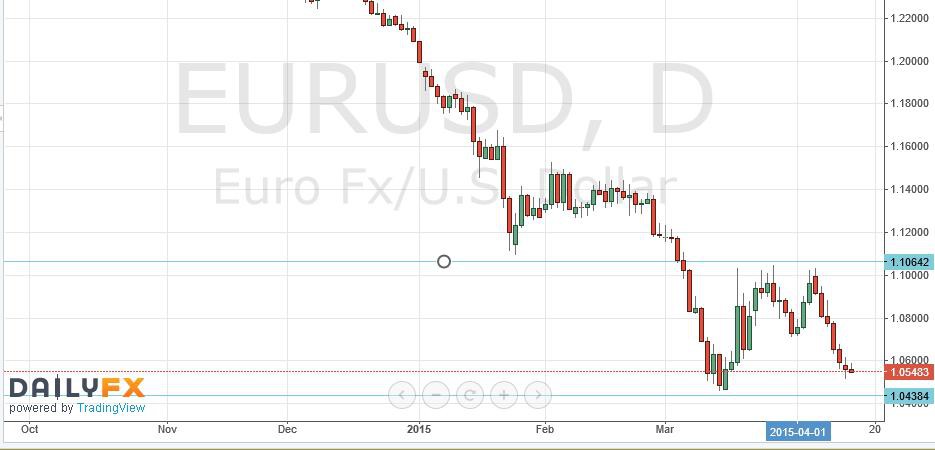
EUR/USD Long mit Stop Kauf 1,063, OCO SL=1,04, Take Profit bei 1,095
EUR/USD Short mit Stop Verkauf 1,04, OCO SL=1,06, TK laufen lassen

Wie ist heute die Stimmung im EUR/USD?
"Unter 1,0500 sehen wir weitere Verluste zur 1,0457 (März Tief), 1,0080 und sogar 1,000/0,9900 sowie der 0,9610 (61,8% Retracement der Aufwärtsbewegung seit 1985)."http://www.fxstreet.de.com/news/forex-news/article.aspx?stor…
Morgen ist EZB, da lasse ich die Finger vom EUR.
14.04.2015 14:37:35
Starker Dollar belastet Johnson & Johnson
NEW BRUNSWICK (dpa-AFX) - Der US-Konzern Johnson & Johnson hat den starken
Dollar im ersten Quartal zu spüren bekommen. Der Umsatz sank durch die
ungünstigen Währungseffekte um 4,1 Prozent auf 17,4 Milliarden Dollar (16,5 Mrd
Euro), wie der Konzern am Dienstag mitteilte. Im Ausland brachen die Erlöse
zweistellig ein...
Diese Art von Meldungen sind es, die mich extrem bärish bezüglich der weiteren Entwicklung des USD machen. Wie schon die letzte Berichtssaison (Q4/2014) zeigte, litten eine Vielzahl von US Unternehmen unter dem damals noch weitaus höher stehenden USD (durchschnittlich oberhalb der 1,20 EUR-Marke). Jetzt, wo man während des ersten Quartals mit einem USD "zu kämpfen" hatte, der z.B. i.V. zum Euro bei durchschnittlich ca. 1,13-1,14 lag, sehen wir, wie diese Unternehmen exhorbitante Exporteinbrüche zu verzeichnen haben. Wie wird dann erst das zweite Quartal ausfallen, wenn der Euro auf dem jetzigen Niveau, also weitere 7-8% bleibt und die Chinesen ihre Währung ebenso gezwungenermaßen abwerten?
Und dann kommen Kabalbanken wie Goldman Sachs, die DB und eine Vielzahl von auf den Zug aufspringenden Möchtegern-Analysten, die den USD schon bei weiteren 25% Wertsteigerung sehen.
Für mich ist und bleibt dieser USD-Upmove und Euroverfall weniger fundamental als spekulativ getrieben...
Starker Dollar belastet Johnson & Johnson
NEW BRUNSWICK (dpa-AFX) - Der US-Konzern Johnson & Johnson hat den starken
Dollar im ersten Quartal zu spüren bekommen. Der Umsatz sank durch die
ungünstigen Währungseffekte um 4,1 Prozent auf 17,4 Milliarden Dollar (16,5 Mrd
Euro), wie der Konzern am Dienstag mitteilte. Im Ausland brachen die Erlöse
zweistellig ein...
Diese Art von Meldungen sind es, die mich extrem bärish bezüglich der weiteren Entwicklung des USD machen. Wie schon die letzte Berichtssaison (Q4/2014) zeigte, litten eine Vielzahl von US Unternehmen unter dem damals noch weitaus höher stehenden USD (durchschnittlich oberhalb der 1,20 EUR-Marke). Jetzt, wo man während des ersten Quartals mit einem USD "zu kämpfen" hatte, der z.B. i.V. zum Euro bei durchschnittlich ca. 1,13-1,14 lag, sehen wir, wie diese Unternehmen exhorbitante Exporteinbrüche zu verzeichnen haben. Wie wird dann erst das zweite Quartal ausfallen, wenn der Euro auf dem jetzigen Niveau, also weitere 7-8% bleibt und die Chinesen ihre Währung ebenso gezwungenermaßen abwerten?
Und dann kommen Kabalbanken wie Goldman Sachs, die DB und eine Vielzahl von auf den Zug aufspringenden Möchtegern-Analysten, die den USD schon bei weiteren 25% Wertsteigerung sehen.
Für mich ist und bleibt dieser USD-Upmove und Euroverfall weniger fundamental als spekulativ getrieben...
Konjunktur USA Die Stunde der Wahrheit für die US-Wirtschaft
Gastautor: Alessandro Bee
14.04.2015, 13:21 | 603 Aufrufe | 0 | druckversion
Die makroökonomischen Daten der USA haben im ersten Quartal durchs Band enttäuscht. Für die schwache Entwicklung der amerikanischen Wirtschaft gibt es eine Reihe von Erklärungen.
Das Wetter ist die erste. Die Kaltwetterperiode und die Winterstürme Ende Februar/Anfangs März haben das wirtschaftliche Umfeld stark beeinträchtigt. Der Arbeitsmarktbericht des März weist darauf hin, dass 40.000 Arbeitnehmer mehr als üblich wegen des Wetters nicht beschäftigt werden konnten. Der Streik der Hafenarbeiter an der Westküste ist ein anderer Grund, selbst wenn dieser Streik bereits Ende Februar beendet wurde. Die US-Handelsbilanz zeigte im März, dass sowohl Exporte als auch Importe in den letzten drei Monaten um 8% gefallen sind – ein vergleichbarer Rückgang wurde nur in der Großen Rezession des Jahres 2008 registriert. Die Nachwehen der Streiks haben die Handelsbilanz verzehrt – und wahrscheinlich auch die exportorientierte Industrie belastet. Die asymmetrische Wirkung des tiefen Ölpreises ist der dritte Grund für die momentane Schwäche der US-Konjunktur. Auf der einen Seite hat die US-Ölindustrie rasch auf den eingetrübten Ausblick reagiert und in den letzten Monaten mehr als 40% ihrer Förderanlagen stillgelegt. Auf der anderen Seite blieben die Ausgaben der US-Konsumenten vom tieferen Ölpreis bisher unberührt. Die realen Einkommen sind zwar stark angestiegen, davon konnte jedoch der Detailhandeln nicht profitieren, weil sich gleichzeitig die Sparrate der Haushalte signifikant erhöht hat. Der vierte Grund für das schlechte Abschneiden des US-Wachstums ist der starke Dollar, der im ersten Quartal handelsgewichtet um fast 9% teurer wurde. Das hat in der Folge die Exportaussichten der Industrie beeinträchtigt. Umfragen beim verarbeitenden Gewerbe deuten auf einen Rückgang der Auslands-Aufträge in den letzten drei Monaten hin.
Der starke US-Dollar dürfte auch längerfristig eine Belastung für das Wachstum bleiben. Die restriktivere Geldpolitik der USA im Vergleich zu Europa und Japan hat das Fundament für einen starken US-Dollar in den nächsten Jahren gelegt. Der Einfluss der anderen drei Faktoren – Wetter, Streiks und Öl – sollte jedoch bald nachlassen oder sich gar zu einem Rückenwind für die Konjunktur entwickeln. Allerdings müssen die Wirtschaftsdaten möglichst bald besser werden, ansonsten wird die Annahme, dass temporäre Faktoren das Wachstum nur kurz belasten, je länger je mehr zu verblassen beginnen. Bleiben die Daten schlecht, muss davon ausgegangen werden, dass wir es mit einer echten Schwächephase zu tun haben, nicht nur mit einem kurzfristigen Nachlassen der Dynamik. Für die US-Wirtschaft schlägt im April die Stunde der Wahrheit.
--------------------
Etwas schmunzeln muss ich immer wieder bei solchen Aussagen wie "Die restriktivere Geldpolitik der USA im Vergleich zu Europa und Japan hat das Fundament für einen starken US-Dollar in den nächsten Jahren gelegt."
Welche restriktivere Geldpolitik ist denn hier gemeint? Also zum einen haben die USA sich mit 3! massiven QE-Programmen weltweit zum Schuldenstaat Nummer 1 katapultiert. Und zum anderen ist eine Abkehr vom Gelddrucken zu einer Zinswende bislang doch nichts anderes als Phrasenschreierei. Also sind die letzten 25% Wertzuwachs, die der USD aufgrund der mantramäßigen "wir erhöhen bald die Zinsen, aber wann das ist dann doch nicht klar"-Schreierei zu verzeichnen hatten, doch nichts weiter als heiße Luft und nicht fundamental untermauert.
Selbst wenn man sich nun zu einem oder zwei Zinsschrittchen entschließen sollte, was man der Glaubwürdigkeit halber wohl irgendwann tun muss, dann bedeutet dies doch noch lange nicht, dass eine echte Zinswende stattfindet.
Ich möchte einmal sehen, wie die marode US Wirtschaft bei einem schon jetzt viel zu hohen USD und ein durch einen Zinsanstieg weiter steigender USD sowie die durch gestiegene Zinsen ins unermessliche steigende Verschuldung, den Bach runter geht. Dann wird meiner Meinung nach viel schneller ein neues QE Programm auferlegt sein, als manchen lieb ist. Was daraufhin mit dem USD, den Rohstoffen und Edelmetallen geschieht, dürfte jedem klar sein... Das eine crasht, das andere hausiert...
Grüße
SL
Gastautor: Alessandro Bee
14.04.2015, 13:21 | 603 Aufrufe | 0 | druckversion
Die makroökonomischen Daten der USA haben im ersten Quartal durchs Band enttäuscht. Für die schwache Entwicklung der amerikanischen Wirtschaft gibt es eine Reihe von Erklärungen.
Das Wetter ist die erste. Die Kaltwetterperiode und die Winterstürme Ende Februar/Anfangs März haben das wirtschaftliche Umfeld stark beeinträchtigt. Der Arbeitsmarktbericht des März weist darauf hin, dass 40.000 Arbeitnehmer mehr als üblich wegen des Wetters nicht beschäftigt werden konnten. Der Streik der Hafenarbeiter an der Westküste ist ein anderer Grund, selbst wenn dieser Streik bereits Ende Februar beendet wurde. Die US-Handelsbilanz zeigte im März, dass sowohl Exporte als auch Importe in den letzten drei Monaten um 8% gefallen sind – ein vergleichbarer Rückgang wurde nur in der Großen Rezession des Jahres 2008 registriert. Die Nachwehen der Streiks haben die Handelsbilanz verzehrt – und wahrscheinlich auch die exportorientierte Industrie belastet. Die asymmetrische Wirkung des tiefen Ölpreises ist der dritte Grund für die momentane Schwäche der US-Konjunktur. Auf der einen Seite hat die US-Ölindustrie rasch auf den eingetrübten Ausblick reagiert und in den letzten Monaten mehr als 40% ihrer Förderanlagen stillgelegt. Auf der anderen Seite blieben die Ausgaben der US-Konsumenten vom tieferen Ölpreis bisher unberührt. Die realen Einkommen sind zwar stark angestiegen, davon konnte jedoch der Detailhandeln nicht profitieren, weil sich gleichzeitig die Sparrate der Haushalte signifikant erhöht hat. Der vierte Grund für das schlechte Abschneiden des US-Wachstums ist der starke Dollar, der im ersten Quartal handelsgewichtet um fast 9% teurer wurde. Das hat in der Folge die Exportaussichten der Industrie beeinträchtigt. Umfragen beim verarbeitenden Gewerbe deuten auf einen Rückgang der Auslands-Aufträge in den letzten drei Monaten hin.
Der starke US-Dollar dürfte auch längerfristig eine Belastung für das Wachstum bleiben. Die restriktivere Geldpolitik der USA im Vergleich zu Europa und Japan hat das Fundament für einen starken US-Dollar in den nächsten Jahren gelegt. Der Einfluss der anderen drei Faktoren – Wetter, Streiks und Öl – sollte jedoch bald nachlassen oder sich gar zu einem Rückenwind für die Konjunktur entwickeln. Allerdings müssen die Wirtschaftsdaten möglichst bald besser werden, ansonsten wird die Annahme, dass temporäre Faktoren das Wachstum nur kurz belasten, je länger je mehr zu verblassen beginnen. Bleiben die Daten schlecht, muss davon ausgegangen werden, dass wir es mit einer echten Schwächephase zu tun haben, nicht nur mit einem kurzfristigen Nachlassen der Dynamik. Für die US-Wirtschaft schlägt im April die Stunde der Wahrheit.
--------------------
Etwas schmunzeln muss ich immer wieder bei solchen Aussagen wie "Die restriktivere Geldpolitik der USA im Vergleich zu Europa und Japan hat das Fundament für einen starken US-Dollar in den nächsten Jahren gelegt."
Welche restriktivere Geldpolitik ist denn hier gemeint? Also zum einen haben die USA sich mit 3! massiven QE-Programmen weltweit zum Schuldenstaat Nummer 1 katapultiert. Und zum anderen ist eine Abkehr vom Gelddrucken zu einer Zinswende bislang doch nichts anderes als Phrasenschreierei. Also sind die letzten 25% Wertzuwachs, die der USD aufgrund der mantramäßigen "wir erhöhen bald die Zinsen, aber wann das ist dann doch nicht klar"-Schreierei zu verzeichnen hatten, doch nichts weiter als heiße Luft und nicht fundamental untermauert.
Selbst wenn man sich nun zu einem oder zwei Zinsschrittchen entschließen sollte, was man der Glaubwürdigkeit halber wohl irgendwann tun muss, dann bedeutet dies doch noch lange nicht, dass eine echte Zinswende stattfindet.
Ich möchte einmal sehen, wie die marode US Wirtschaft bei einem schon jetzt viel zu hohen USD und ein durch einen Zinsanstieg weiter steigender USD sowie die durch gestiegene Zinsen ins unermessliche steigende Verschuldung, den Bach runter geht. Dann wird meiner Meinung nach viel schneller ein neues QE Programm auferlegt sein, als manchen lieb ist. Was daraufhin mit dem USD, den Rohstoffen und Edelmetallen geschieht, dürfte jedem klar sein... Das eine crasht, das andere hausiert...
Grüße
SL
Wie ist heute die Stimmung im EUR/USD?
"Inmitten der schwächeren Bundesanleihen, der geldpolitischen EZB Entscheidung um 13.45 Uhr und den Warnungen des IWF in Bezug auf Griechenland wird es der EUR/USD schwer haben eine größere Erholung einzuleiten..."http://www.fxstreet.de.com/news/forex-news/article.aspx?stor…
Wie ist heute die Stimmung im EUR/USD?
"Es ist weiterhin mit einer dovish "Diktatur" zu rechnen und die Aussichten auf eine..."http://www.fxstreet.de.com/news/forex-news/article.aspx?stor…
Wie ist heute die Stimmung im EUR/USD?
"Die Aufwärtskorrektur ist kurzfristig und sie ermöglicht eine Erholung in Richtung der 1,0861 (5-Monats Widerstandslinie). Dies hat auf die negative Ausrichtung..."http://www.fxstreet.de.com/news/forex-news/article.aspx?stor…
EUR/USD Prognose: Angriff ist die beste Verteidigung
Der Kurs im Tageschart befindet sich in der Nähe des 20 – SMA, während sich die technischen Indikatoren über ihre Mittellinien zurückerholen konnten. Der Preis im Wochenchart zeigt wiederum, dass sich der 20 – SMA weit entfernt über der aktuellen Notierung befindet. Für die nächste Woche wird dieser keinen Einfluss auf den Kursverlauf haben, dennoch ist darauf hinzuweisen, dass wir uns weiterhin in einem Abwärtstrend befinden. Die Indikatoren im ....
http://www.fxstreet.de.com/news/forex-news/article.aspx?stor…
Der Kurs im Tageschart befindet sich in der Nähe des 20 – SMA, während sich die technischen Indikatoren über ihre Mittellinien zurückerholen konnten. Der Preis im Wochenchart zeigt wiederum, dass sich der 20 – SMA weit entfernt über der aktuellen Notierung befindet. Für die nächste Woche wird dieser keinen Einfluss auf den Kursverlauf haben, dennoch ist darauf hinzuweisen, dass wir uns weiterhin in einem Abwärtstrend befinden. Die Indikatoren im ....
http://www.fxstreet.de.com/news/forex-news/article.aspx?stor…
Wie ist heute die Stimmung im EUR/USD?
"Die Aufwärtskorrektur erreichte die 5-Monats Widerstandslinie von 1,0842. Solange das Geschehen auf dieses Niveau begrenzt bleibt ist mit einem erneuten..."http://www.fxstreet.de.com/news/forex-news/article.aspx?stor…
Inflationsziel wird ohne Verzögerung erreicht - Draghi
"Ich bin zuversichtlich, dass die schwache und ungleichmäßige Erholung des Jahres 2014 nun in einem nachhaltigen Aufschwung übergehen wird. Die Inflation wird das EZB Ziel ohne unnötige Verzögerungen erreichen, so dass..."http://www.fxstreet.de.com/news/forex-news/article.aspx?stor…
Wie ist heute die Stimmung im EUR/USD?
"Der Anstieg zur 1,0870 verblasst zusehends und mit dem Bruch der 1,0700 ist der Weg zur 1,0640 frei..."http://www.fxstreet.de.com/news/forex-news/article.aspx?stor…
Wie ist heute die Stimmung im EUR//USD?
"Zwischenzeitlich ist damit zu rechnen, dass Anstiege in Richtung 1,0870 verblassen, während eine Bruch der 1,0700..."http://www.fxstreet.de.com/news/forex-news/article.aspx?stor…
EUR/USD wird wohl in Range von 1,0686 bis 1,0767 bleiben
"Aktuell steckt das Paar am 100-Stunden-MA von 1,0745 fest, während der Stunden RSI bei 54,58 bullish ist. Ein Bruch der 1,0755 (50% Fib. Retrc..."http://www.fxstreet.de.com/news/forex-news/article.aspx?stor…
EUR/USD Augen auf 1,0820 gerichtet
"Die FXStreet Chefanalystin Valeria Bednarik sieht für den EUR/USD weiteres Aufwärtspotenzial in Richtung 1,0820 und sogar 1,0850, wenn die 1,0770 hält..."http://www.fxstreet.de.com/news/forex-news/article.aspx?stor…
Wie ist heute die Stimmung im EUR/USD?
"Wir bleiben für das Paar neutral und das Scheitern über 1,08 signalisiert einen Rangehandel von 1,06 - 1,08..."http://www.fxstreet.de.com/news/forex-news/article.aspx?stor…
EUR/USD Verkäufer bei 1,0800
"Auf dem 4-Stundenchart steigen die technischen Indikatoren über ihren Mittellinien, was die kurzfristigen Aussichten zusätzlich unterstützt..."http://www.fxstreet.de.com/news/forex-news/article.aspx?stor…
Wie ist heute die Stimmung im EUR/USD?
"Der 5-Monats-Abwärtstrend wurde erodiert und dies ermöglich eine Korrektur zum 55-Tage-MA von 1,0946. Bis jetzt konnte der Markt das 1,0849 Hoch der ..."http://www.fxstreet.de.com/news/forex-news/article.aspx?stor…
EUR/USD Prognose: Charttechnik gibt grünes Licht für Test auf 1.1000/50
Nichtsdestotrotz wird der EUR/USD die turbulenten letzten 5 Tage mit einem Wochengewinn von ca. 60 Pips beenden können. Der Wochenchart bildete dabei ein höheres Tief und ein höheres Hoch aus. Normalerweise deutet das....
http://www.fxstreet.de.com/news/forex-news/article.aspx?stor…
Nichtsdestotrotz wird der EUR/USD die turbulenten letzten 5 Tage mit einem Wochengewinn von ca. 60 Pips beenden können. Der Wochenchart bildete dabei ein höheres Tief und ein höheres Hoch aus. Normalerweise deutet das....
http://www.fxstreet.de.com/news/forex-news/article.aspx?stor…
Wie ist heute die Stimmung im EUR/USD?
"Die Intraday-Elliott-Wellen-Zählung ist relativ neutral und dies signalisiert dass der 55 Tage MA und die wichtigere 1,1027/98 (Januar Tief und März/April Hochs) halten werden..."http://www.fxstreet.de.com/news/forex-news/article.aspx?stor…
US-Dollar bullish netto Positionen auf dem niedrigsten Stand seit Dezember
"Die Dollar Long-Positionen lagen zum 21. April bei 37,87 Milliarden $. Dies entspricht einem wöchentlichen Rückgang von -1,81 Milliarden $. Damit wurde ..."http://www.fxstreet.de.com/news/forex-news/article.aspx?stor…
Wie ist heute die Stimmung im EUR/USD?
"der US-Dollar wurde gestern gegenüber den meisten G10 Währungen wieder verkauft, da der US PMI Dienstleistung schwächer als erwartet ausfiel… wir rechnen in dieser Woche noch mit..."http://www.fxstreet.de.com/news/forex-news/article.aspx?stor…
ich will die 0.85 cent sehen
Obwohl ich der Meinung bin, dass der USD immer noch massiv überteuert ist und durchaus noch Potenzial auf einen erneuten Test des Bereiches 1,10/1,105 und ein weiterer Run evtl. sogar noch bis auf 1,12/1,14 gehen könnte, habe ich soeben 1/3 meines Eur/USD Calls bei 1,0978 verkauft.
Die 80 ct. halte ich nach wie vor für Träumerei. Eher wird der USD mittelfristig crashen. Und zwar massivst. Die Gründe wurden oft genug aufgeführt.
Grüße
SL
Die 80 ct. halte ich nach wie vor für Träumerei. Eher wird der USD mittelfristig crashen. Und zwar massivst. Die Gründe wurden oft genug aufgeführt.
Grüße
SL
Die Experten von JP Morgan meinten, dass der EUR/USD den Widerstand bei 1.1053/98 aus dem Weg räumen muss, um seine Gewinne weiter ausbauen zu können.
Wichtige Zitate:
„Der EUR/USD bewegt sich ...
http://www.fxstreet.de.com/news/forex-news/article.aspx?stor…
Wichtige Zitate:
„Der EUR/USD bewegt sich ...
http://www.fxstreet.de.com/news/forex-news/article.aspx?stor…
Die Umschichtungen setzen sich fort. Anscheinend merken doch immer mehr Leutchen, dass der USD Upmove nichts anderes als heiße Luft und rein spekulativ getrieben war. Denn von wirtschaftliches Erholung war in den Staatn NIEMALS wirklich etwas zu sehen. Wenn man bedenkt, dass der USD einzig aufgrund der "Fantasie" auf eine Minizinserhöhung in nicht einmal 1 Jahr um 25% zugelegt hat, kann man sich ausmalen, dass er durchaus noch Luft nach unten hat. Für mich bleiben die 1,14 das nächste Ziel.
Die exportabhängigen US Unternehmen werden dadurch wenigstens ein wenig aufatmen. Letztendlich müsste hinsichtlich dieser Firmen der USD aber noch weitau schwächer notieren.
Rest des Eurocalls (2/3) bleibt nun drinnen...
Die exportabhängigen US Unternehmen werden dadurch wenigstens ein wenig aufatmen. Letztendlich müsste hinsichtlich dieser Firmen der USD aber noch weitau schwächer notieren.
Rest des Eurocalls (2/3) bleibt nun drinnen...
Die Gemeinschaftswährung schafft es am Dienstag eine Aufwärtsbewegung im Wert von 2 Cent zu vollziehen. Aktuell wird der EUR/USD mit einem Tagesgewinn von 1.50% bei 1.1145 gehandelt. Dabei hat er ein Tageshoch bei 1.1189 und ein Tief bei 1.0959 ausgebildet.
EUR/USD unterstützt von miserablen US Daten
Der Grund für die US-Dollar....
http://www.fxstreet.de.com/news/forex-news/article.aspx?stor…
EUR/USD unterstützt von miserablen US Daten
Der Grund für die US-Dollar....
http://www.fxstreet.de.com/news/forex-news/article.aspx?stor…
Wie ist heute die Stimmung im EUR/USD?
"Die kurzfristige Stabilisierung des EUR/USD ist wahrscheinlich auf die allgemeine Verbesserung der Risikostimmung zurückzuführen. Die nächste Abwärtsbewegung ..."http://www.fxstreet.de.com/news/forex-news/article.aspx?stor…
EUR/USD Prognose: Nach Kursexplosion nun langsamerer Anstieg erwartet
Der EUR/USD konnte in dieser Woche eine atemberaubende Rallye gen Norden vollziehen, obwohl die Verhandlungen zwischen Griechenland und seinen Gläubigern nur schleppend vorangingen. Des Weiteren beließ die US Notenbank ihre Geldpolitik unverändert, aber eine Zinserhöhung im Juni ist noch nicht vom Tisch.
Das Devisenpaar erlitt am letzten Tag der Handelswoche einen Rücksetzer. Dennoch befindet sich der EUR/USD auf dem besten Weg, die dritte....
http://www.fxstreet.de.com/news/forex-news/article.aspx?stor…
Der EUR/USD konnte in dieser Woche eine atemberaubende Rallye gen Norden vollziehen, obwohl die Verhandlungen zwischen Griechenland und seinen Gläubigern nur schleppend vorangingen. Des Weiteren beließ die US Notenbank ihre Geldpolitik unverändert, aber eine Zinserhöhung im Juni ist noch nicht vom Tisch.
Das Devisenpaar erlitt am letzten Tag der Handelswoche einen Rücksetzer. Dennoch befindet sich der EUR/USD auf dem besten Weg, die dritte....
http://www.fxstreet.de.com/news/forex-news/article.aspx?stor…
Antwort auf Beitrag Nr.: 49.691.709 von ThomasSchwager am 01.05.15 20:17:52Liebe wallstreet-online-community,
ich muss meine nächste Urlaubsreise bis Ende 2015 in USD bezahlen.
Da sich der Euro derzeit ja etwas erholt hat und die Prognosen vor 1-2 Monaten auf 1:1 bis Ende 2015 gestanden sind, bin ich am Überlegen ob ich den ganzen Betrag (ca. 8.000 USD) jetzt bezahle.
Würdet ihr mir eher raten noch abzuwarten und hoffen, dass sich der Euro weiter erholt oder asap bezahlen?
danke & lg
Andreas
ich muss meine nächste Urlaubsreise bis Ende 2015 in USD bezahlen.
Da sich der Euro derzeit ja etwas erholt hat und die Prognosen vor 1-2 Monaten auf 1:1 bis Ende 2015 gestanden sind, bin ich am Überlegen ob ich den ganzen Betrag (ca. 8.000 USD) jetzt bezahle.
Würdet ihr mir eher raten noch abzuwarten und hoffen, dass sich der Euro weiter erholt oder asap bezahlen?
danke & lg
Andreas
Antwort auf Beitrag Nr.: 49.694.745 von Taranga am 02.05.15 17:03:55Hi Taranga,
ich würde jetzt bezahlen.
LG
ich würde jetzt bezahlen.
LG
Antwort auf Beitrag Nr.: 49.694.745 von Taranga am 02.05.15 17:03:55
http://www.fxstreet.de.com/news/forex-news/article.aspx?stor…
Wie ist heute die Stimmung im EUR/USD?
"das Paar kommt vom 38,2 % Retracement der Abwärtsbewegung vom 14. Dezember, welches bei 1,1264 liegt. Kurzfristig liegt das Hoch vom 26. März bei 1,1052 im Fokus. Solange..."http://www.fxstreet.de.com/news/forex-news/article.aspx?stor…
Wie ist heute die Stimmung im EUR/USD?
"die Elliott Wellen Zählung deutet darauf hin, dass das aktuelle Mai Hoch bei 1,1290 das Ende der Korrektur ist. Sollte es dennoch zu einem Ausbruch ..."http://www.fxstreet.de.com/news/forex-news/article.aspx?stor…
EUR/USD Blick auf 1,1035/30?
"Unter 1,1109 ist der Markt in arger Bedrängnis… was einen Rückgang in das Zielgebiet von 1,1035/30 zulässt… "http://www.fxstreet.de.com/news/forex-news/article.aspx?stor…
Antwort auf Beitrag Nr.: 49.694.745 von Taranga am 02.05.15 17:03:55
schwirige Sache, aber interessant,
ich wills nicht hoffen und glaube nicht dass der Euro so tief bleibt.
Zitat von Taranga: Würdet ihr mir eher raten noch abzuwarten und hoffen, dass sich der Euro weiter erholt oder asap bezahlen?
danke & lg
Andreas
schwirige Sache, aber interessant,
ich wills nicht hoffen und glaube nicht dass der Euro so tief bleibt.
Antwort auf Beitrag Nr.: 49.709.097 von Nobudo am 05.05.15 09:51:17vermute auch, dass der Euro steigen wird. Vor allem in Anbetracht der 5-Jahres-Chartes ist dies doch eine sehr ungewöhnliche Situation. Es wird wohl viel mit der Entscheidung der FED abhängen. Wenn Yellen die Zinswende ausruft, wird es noch härter für den Euro. Wird diese vertagt, gehe ich von einem Trend der Aufwertung des Euros aus.
Aber wie so oft, Währungen sind schwer einzuschätzen, deswegen bleibe ich bei Aktien und anderen Anteilen.
Aber wie so oft, Währungen sind schwer einzuschätzen, deswegen bleibe ich bei Aktien und anderen Anteilen.
ja, aber doch auch ein wenig Gold/Silber
da wär die Eurostärke wieder wichtig
da wär die Eurostärke wieder wichtig
EUR/USD Verluste könnten durch 1,1190 begrenzt werden
"Die damit verbundenen Verluste sollten jedoch durch die 1,1190 (5 Tage MA) begrenzt werden. Ein Bruch unter diese Ebene wird den Verkaufsdruck in Richtung 1,1110 erhöhen..."http://www.fxstreet.de.com/news/forex-news/article.aspx?stor…
Wie ist heute die Stimmung im EUR/USD?
"ein Schlusskurs über der 1,1264 signalisiert eine tiefere Erholung in Richtung des Schlüsselwiderstands von 1,1513/34 ..."http://www.fxstreet.de.com/news/forex-news/article.aspx?stor…
2. Teilverkauf meines Eurolongs bei 1,1385. Das letzte Drittel meiner Longposition bleibt entweder bis 1,15 drin oder fliegt raus, sobald der kurzfristige Aufwärtstrend gebrochen wird.
Fundamental sollte der USD weiter abwerten. Aber die Gefahr besteht, dass größere Adressen ihre USD-Longpositionen/Euro-Shortpositionen immer noch nicht komplett abgebaut haben und bei der nächsten Chance noch mal zum Gegenangriff blasen.
Fundamental sollte der USD weiter abwerten. Aber die Gefahr besteht, dass größere Adressen ihre USD-Longpositionen/Euro-Shortpositionen immer noch nicht komplett abgebaut haben und bei der nächsten Chance noch mal zum Gegenangriff blasen.
US-NFP Szenarien und Auswirkungen auf den EUR/USD
"Zum 1. Mal seit Mai 2014 konnte der Kurs den 100 SMA überwinden. Dies alles unterstützt die Aussichten auf einen Anstieg zum 100 % Retracement von 1,1533..."http://www.fxstreet.de.com/news/forex-news/article.aspx?stor…
"EUR/USD: kaufen bei 1,1235 – Ziel 1,1450 – Stop 1,1135 – Risikofaktor**"
http://www.fxstreet.de.com/news/forex-news/article.aspx?stor… Unter 1,1250 sind weitere Verluste möglich
"Auf dem 1-Stundenchart ist der Preis unter den 20 SMA gefallen und dieser bietet nun einen kurzfristigen Widerstand um 1,1340..."http://www.fxstreet.de.com/news/forex-news/article.aspx?stor…
Wie ist heute die Stimmung im EUR/USD?
"der Tages RSI hat das neue Hoch bei 1,1392 noch nicht bestätigt, während die TD Perfektion auf dem Tageschart einen kurzfristigen Rücksetzer ermöglicht. Solange die Unterstützung bei 1,1052 (Hoch 26 März) hält, werden die EUR/USD Gebote bestehen bleiben..."http://www.fxstreet.de.com/news/forex-news/article.aspx?stor…
EUR/USD Prognose: Bullen können Kurs bis auf 1.1530 hochtreiben
"Der Kurs des EUR/USD hält sich im Tageschart über dem 100-DMA, nachdem er fast ein Jahr darunter notierte. Ein weiteres Indiz für die Erholung im EUR/USD ist, dass er sich über..."http://www.fxstreet.de.com/news/forex-news/article.aspx?stor…
Was erwartet uns nächste Woche?
"Die kommende Woche ist für Griechenland von zentraler Bedeutung. Die Gespräche zwischen Griechenland und seinen Gläubigern werden mit dem Treffen der Eurogruppe am Montag fortgesetzt. Mit einer endgültigen Einigung..."http://www.fxstreet.de.com/news/forex-news/article.aspx?stor…
Wie ist heute die Stimmung im EUR/USD?
"Das Paar erreichte sein Hoch bei 1,1392, welches durch den Tages RSI..."http://www.fxstreet.de.com/news/forex-news/article.aspx?stor…
Wie ist heute die Stimmung im EUR/USD?
"wir gehen davon aus, dass die Aufwärtskorrektur die wir seit März sahen beendet ist. Die Intraday Elliott Wellen Zählung ist negativ, aber wir brauchen noch eine weitere Bestätigung. Die Unterstützung..."http://www.fxstreet.de.com/news/forex-news/article.aspx?stor…
Der Euro ist dem Tod geweiht, dafür sorgt allein schon der Schäuble und die deutsche Regierung!
Antwort auf Beitrag Nr.: 49.750.185 von Realianer am 10.05.15 17:48:53
Ebenfalls von wirklich zentraler Bedeutung für Griechenland sind jährlich 50 weitere Wochen! Persönlich kann ich schon gar nicht mehr zusammenfassen, wie oft Griechenland seit 2011 schon am Scheideweg und die Euro-Währung als ganzes auf Kippe stand.
Motto: Aus der Geschichte lernen.
Sie werden es wieder schaffen sich zu einigen und Griechenland erhält Geld.
Zitat von Realianer: "Die kommende Woche ist für Griechenland von zentraler Bedeutung. Die Gespräche zwischen Griechenland und seinen Gläubigern werden mit dem Treffen der Eurogruppe am Montag fortgesetzt. Mit einer endgültigen Einigung..."
http://www.fxstreet.de.com/news/forex-news/article.aspx?stor…
Ebenfalls von wirklich zentraler Bedeutung für Griechenland sind jährlich 50 weitere Wochen! Persönlich kann ich schon gar nicht mehr zusammenfassen, wie oft Griechenland seit 2011 schon am Scheideweg und die Euro-Währung als ganzes auf Kippe stand.
Motto: Aus der Geschichte lernen.
Sie werden es wieder schaffen sich zu einigen und Griechenland erhält Geld.
EUR/USD hat weiteres Aufwärtspotenzial über 1,1270
"Über diesem Niveau sollte das Kaufinteresse erneuert werden, so dass Gewinne in den Bereich der 1,1330 möglich werden..."http://www.fxstreet.de.com/news/forex-news/article.aspx?stor…
@thesi68
Ich denke auch, dass es so kommen wird.
Wie ist heute die Stimmung im EUR/USD?
"In naher Zukunft werden die griechischen Bedenken die Verkäufe der Bundesanleihen beenden, doch bis dahin zeigt unser kurzfristiges Modell weiteres Aufwärtspotenzial für den EUR/USD. Kurzfristig sehen wir eine Unterstützung..."http://www.fxstreet.de.com/news/forex-news/article.aspx?stor…
Wie ist heute die Stimmung im EUR/USD?
"Am Freitag geriet das Paar ins schwanken, während es sich der 1,1513/34 (Februar Hoch und 50 % Retracement) annäherte. Dies ist ein Zwischenziel, welches gewisse Gewinnmitnahmen..."http://www.fxstreet.de.com/news/forex-news/article.aspx?stor…
EZB wird die ELA Unterstützung nicht einstellen
wenn das Land gegenüber dem IWF in Zahlungsverzug gerät..."http://www.fxstreet.de.com/news/forex-news/article.aspx?stor…
Wie ist heute die Stimmung im EUR/USD?
"Der starke Rückgang vom 1,1445/50 Hoch zeigt deutlich, dass ein Hoch gebildet worden ist. Die aktuelle Abwärtsbewegung scheint unvollständig zu sein und es ist mit weiteren Verlusten ..."http://www.fxstreet.de.com/news/forex-news/article.aspx?stor…
EUR/USD fällt mit Beschleunigung der QE unter 1,12
"Der EUR/USD wurde deutlich auf unter 1,12 geschwächt, nach dem EZB Coeure sagte, dass die Bank ihr QE Programm vor der saisonal bedingten Sommerschwäche vorantreiben wird..."http://www.fxstreet.de.com/news/forex-news/article.aspx?stor…
Antwort auf Beitrag Nr.: 49.803.327 von Realianer am 19.05.15 09:39:22
Sollen sie doch
dann kommt meine Position wieder in den grünen Bereich. EUR/USD hat weiteres Abwärtspotenzial unter 1,1120
"Auf dem 4 Stundenchart ist zu sehen, dass der Kurs unter dem starken Fibonacciwiderstand um 1,1120 liegt, während der 20 SMA über dem aktuellen Kurs stark fällt. Die technischen Indikatoren steigen innerhalb der überverkauften Niveaus etwas..."http://www.fxstreet.de.com/news/forex-news/article.aspx?stor…
Wie ist heute die Stimmung im EUR/USD?
"...kurzfristig wichtige Unterstützung von 1,1052 (Hoch 26 März) und der 1,1050 Unterstützungslinie bewegt. Ein Schlusskurs darunter wird benötigt, um den Aufwärtsdruck zu eliminieren und den Fokus auf die Abwärtsbewegung zu lenken."http://www.fxstreet.de.com/news/forex-news/article.aspx?stor…
EUR/USD könnte die 1,1047 erneut testen
"Sollte die 1,1138 nicht überwunden werden, so wird es zu erneutem Verkaufsdruck in Richtung 1,1082 (38,2 % Retracement von 1,0461-1,1464) und 1,1047 (100 Tage MA) kommen."http://www.fxstreet.de.com/news/forex-news/article.aspx?stor…
Wie ist heute die Stimmung im EUR/USD?
"Vorerst rechnen wir mit einem Seitwärtshandel zwischen 1,1075 und 1,1180. Ein unerwarteter Durchbruch unter 1,1050..."http://www.fxstreet.de.com/news/forex-news/article.aspx?stor…
US Inflationsdaten ebnen den Weg für US Zinserhöhung
"Obwohl die Mehrzahl der stimmberechtigten Mitglieder eine Zinserhöhung für Juni nahezu ausgeschlossen hat, stieg der US Dollar am Freitag wie der Phönix aus der Asche empor, nachdem die Zahlen zur US Inflation veröffentlicht wurden..."http://www.fxstreet.de.com/news/forex-news/article.aspx?stor…
was ist schwächer...
für mich geht es nur noch um die Frage welches die schwächere Währung ist...Und zur Zeit überwiegen die Probleme beim Euro - Griechenland und die Ansteckungsgefahr (Podemos) in Spanien (und danach evtl IT und FR)
In diesem Zusammenhang wäre also eine endgültige Klärung in Griechenland für mich die einzige Möglichkeit den Abwärtstrend nachhaltig zu stoppen. Und mit endgültiger Klärung meine ich kein weiteres Hilfsprogramm sondern eine neue, eigene Währung mit Hilfe derer GR wieder wettbewerbsfähig wird.
Da ich aber eine Klaren politischen Willen seitens der EU sehe, eine Pleite nicht zuzulassen werde ich bis auf weiteres "short" bleiben und mich entsprechend positionieren.
EUR/USD auf Sicht von 6 Monaten bei 1,02
"Aktuell wird das Paar durch 2 Hauptfaktoren belastet. Die Fed Vorsitzende Janet Yellen verwies am Freitag darauf, dass die 1. Fed Zinserhöhung näher liegt als allgemein erwartet wird, wobei das Timing nach wie vor von den Daten abhängig ist. Der Vizevorsitzende Stanley Fischer äußerte sich gestern ähnlich..."http://www.fxstreet.de.com/news/forex-news/article.aspx?stor…
Ich denke auch, dass selbst ein Zahlungsausfall Griechenlands nicht dazu führen wird, dass man das Land aus dem Würgegriff des Euro freilässt.
EUR/USD Risiko einer Abwärtsbewegung in Richtung 1,0738
"Wir rechnen vor erst mit einer Seitwärtsbewegun und aus unserer Sicht ist eine Positionierung auf Basis der Risiko/Rendite Aussichten nicht möglich ist. Der EUR/USD notiert in der Nähe der 1,0882..."http://www.fxstreet.de.com/news/forex-news/article.aspx?stor…
Wie ist heute die Stimmung im EUR/USD?
"Der US-Dollar kann von dieser Stimmung profitieren, so dass es zur Bildung eines neuen Tiefs kam. Nach dem jüngsten Scheitern an der 1,1400 des Wochencharts besteht nun die Gefahr eines nachhaltigen Bruch des 55 Tage MA (1,0930) in Richtung 1,0800..."http://www.fxstreet.de.com/news/forex-news/article.aspx?stor…
Wie ist heute die Stimmung im EUR/USD?
"dass das Paar: "sein erstes Ziel von 1,0843 (61,8 % Fibo der Aufwärtsbewegung seit März) leicht übertroffen hat, aber es kam noch zu keinem Schlusskurs unter diesem Niveau. Hinzu kommt der ..."http://www.fxstreet.de.com/news/forex-news/article.aspx?stor…
Wie ist heute die Stimmung im EUR/USD?
"Jede Aufwärtsbewegung wird wahrscheinlich nur ein Korrektur-Aufschwung sein und nicht der Beginn eines nachhaltigen Aufwärtstrends..."http://www.fxstreet.de.com/news/forex-news/article.aspx?stor…
Wie ist heute die Stimmung im EUR/USD?
"In dieser Woche stehen einiger Ereignisse ein, die die Richtung des Euro US-Dollar beeinflussen werden. Hierzu zählen die ISM Umfrage, die EZB Pressekonferenz am Mittwoch und der US Job-Bericht am Freitag..."http://www.fxstreet.de.com/news/forex-news/article.aspx?stor…
Wie ist heute die Stimmung im EUR/USD?
"gestern wurde der Euro recht uneinheitlich gehandelt, da es zu Swings vom 1,0890 Tief bis zur 1,0980 kam, bevor es zurück zur 1,0885/90 ging. Die Aussichten sind von hier aus..."http://www.fxstreet.de.com/news/forex-news/article.aspx?stor…
Wie ist heute die Stimmung im EUR/USD?
"...aber es wurde kein wichtiger Widerstand erodiert, so dass es nur eine Korrektur bleibt. Die gestrige Bewegung zeigte jedoch eine klare Richtung und nun sind wir vorsichtiger..."http://www.fxstreet.de.com/news/forex-news/article.aspx?stor…
EZB Sitzung und die Auswirkungen auf den EUR
"Es ist recht unwahrscheinlich, dass die EZB die ELA Unterstützung einstellt, da dies das Land zwangsläufig in dem Bankrott führen würde. Sollte es morgen dennoch zu solch einer Ankündigung kommen, so würde dies einer Bombe gleichen, die die Märkte..."http://www.fxstreet.de.com/news/forex-news/article.aspx?stor…
EUR/USD Prognose: Wie ist heute die Stimmung?
"...vor dem Hintergrund der Berichte europäischer Beamter zu der neuesten Version der griechischen Reformvorschläge wird der EUR/USD im Vorfeld der Tsipras-Merkel-Hollande Gespräche am heutigen Tag nur ungern im oberen Bereich seiner Tagesrange bleiben..."http://www.fxstreet.de.com/news/forex-news/article.aspx?stor…
Wie ist heute die Stimmung?
"...Es besteht das kurzfristige Risiko des Scheiterns und somit ist ein Rückgang zum 1,1082 Pivot und der 1,0845/19 möglich"...http://www.fxstreet.de.com/news/forex-news/article.aspx?stor…
Zahlungsunfähigkeit Griechenlands
"In Bezug auf Griechenland sagte Weidmann, dass die Gefahr der Zahlungsunfähigkeit Griechenlands täglich zunimmt..."http://www.fxstreet.de.com/news/forex-news/article.aspx?stor…
EUR/USD Prognose: Wie ist heute die Stimmung?
"Wenn die 1,1200 nachgibt ist mit einem Rückgang in Richtung des 100-Tage-MA von 1,1062 zu rechnen, während die 1,1400 noch immer nach oben das Geschehen begrenzt..."http://www.fxstreet.de.com/news/forex-news/article.aspx?stor…
Bullisches Momentum im EUR/USD verliert an Dynamik
"Mit dem Rückgang unter die Nulllinie, was zum letzten Mal vor einer Woche geschah, zeigt der MACD ein Verkaufssignal an. Trendfolger, welche genau auf ein solches Signal gewartet haben, könnten versuchen, neue Short-Positionen im EUR/USD zu eröffnen..."http://www.fxstreet.de.com/news/forex-news/article.aspx?stor…
EUR/USD Prognose: Bearish unter 1,1293
"Die Aussichten sind bearish, solange der Handel auf Tagesschlusskursbasis unter 1,1293 bleibt..."http://www.fxstreet.de.com/news/forex-news/article.aspx?stor…
Was ist von der FED zu erwarten?
"Die US-Notenbank wird am Mittwoch ihre geldpolitische Entscheidung bekanntgeben, während die aktuellen Marktbedingungen alles andere als gewöhnlich sind: Die Volatilität und Schwankungsbreite im Intraday-Handel nahm in den letzten zwei Wochen zu, nachdem Unmengen von Nachrichten über eine mögliche Einigung..."http://www.fxstreet.de.com/news/forex-news/article.aspx?stor…
Die Tragödie Griechenland: Ist Grexit unumkehrbar?
"Den letzten Berichten zufolge befinden sich die Verhandlungen jedoch an einem Punkt, wo solch eine Vereinbarung immer schwieriger wird. Für die griechische Regierung und die Mehrheit der Griechen ist die Grenze dessen, was man tun kann..."http://www.fxstreet.de.com/news/forex-news/article.aspx?stor…
EUR/USD Prognose: Eurogruppe im Blickfeld
"Die Intraday Elliott-Welle-Zählung ist negativer geworden und wir rechnen mit einer Rückkehr zur 1,1052 (Hoch 26. März) und der 2-Monats-Unterstützungslinie bei 1,1004. Zu beachten ist, dass der gestrige Abverkauf ..."http://www.fxstreet.de.com/news/forex-news/article.aspx?stor…
EUR/USD Prognose: Fokus auf Eurogruppe
"Der Abwärtsdruck wurde mit einer Erholung zum 1,1235 Hoch gemildert. Die aktuelle Bewegung ist wahrscheinlich Teil einer Konsolidierungsphase. Für heute ist mit ..."http://www.fxstreet.de.com/news/forex-news/article.aspx?stor…
EUR/USD Prognose: Leben nach der Zahlungsunfähigkeit Griechenlands
"Heute wird es eine Reihe von EWU PMI Ergebnissen geben. Mit einem Bruch des 55-Tage-MA von 1,1133 liegen die nächsten Ziele bei 1,1100 und dem 100-Tage-MA bei 1,1050..."http://www.fxstreet.de.com/news/forex-news/article.aspx?stor…
EUR/USD Prognose: Griechenland steht ganz oben auf der Tagesordnung
"...aber solange die Widerstandslinie bei 1,1069/95 auf Schlusskursbasis hält ist unser Ziel das Mai Tief bei 1,0819 und..."http://www.fxstreet.de.com/news/forex-news/article.aspx?stor…
EUR/USD angetrieben durch Chinas Schwäche
Wer hätte das gedacht, dass der Euro einmal von der globalen Risikoaversion profitieren wird. Ich jedenfalls nicht.Das 61,8% Retracement der letzten Aufwärtsbewegung bei 1,1280 sollte beachtet werden. Darüber ist das Ziel das 50% Retracement bei 1,1360 und darunter die 1,1200/20. http://bit.ly/1L2Qlj4
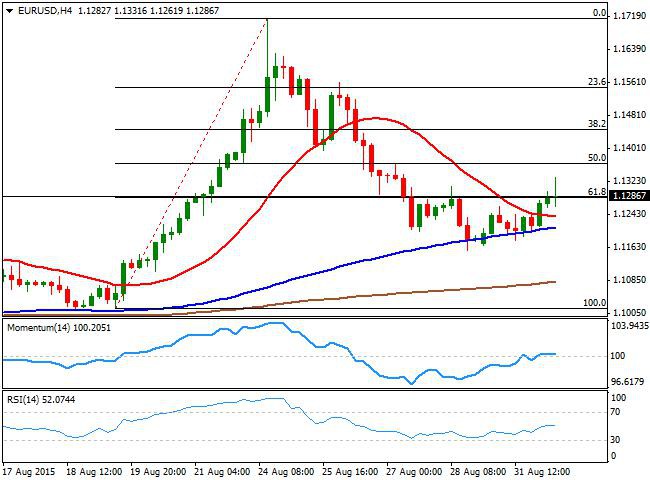
Ausbruch aus dem Dreieck?
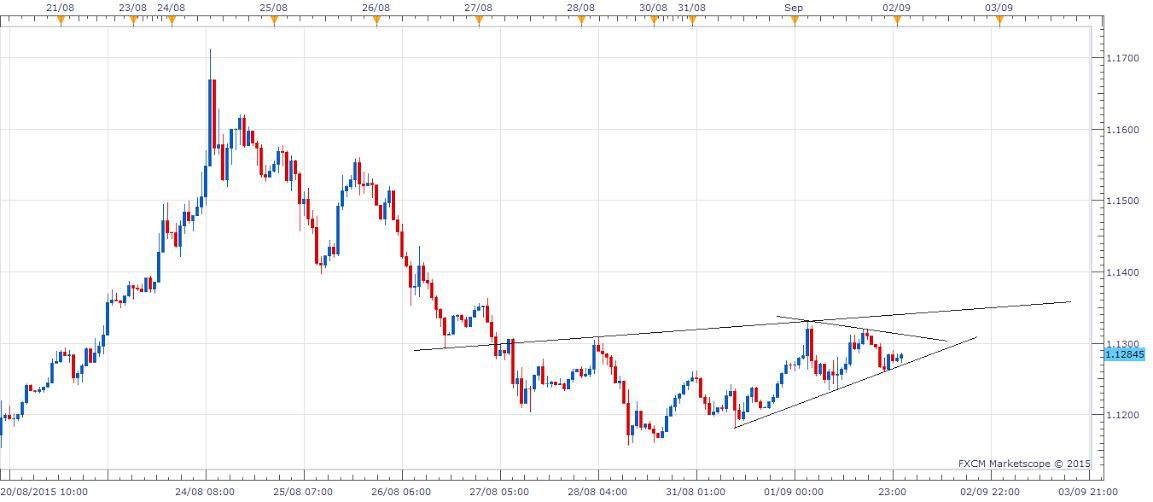
Über 1,1311 geht es zur 1,1342 und dann gerät die 1,14 in den Fokus.
Unter 1,1275 sind die nächsten Ziele bei 1,12 und 1,1155. http://bit.ly/1L2Qlj4" target="_blank" rel="nofollow ugc noopener">http://bit.ly/1L2Qlj4
Ich favorisiere die Abwärtsbewegung, da mit einer dovish EZB zu rechnen ist.
Dreieck wurde nach unten aufgelöst
Nun befinden wir uns in einem Abwärtskanal. Mit großen Kursbewegungen ist vor den morgigen US NFP aber nicht zu rechnen. http://bit.ly/1L2Qlj4" target="_blank" rel="nofollow ugc noopener">http://bit.ly/1L2Qlj4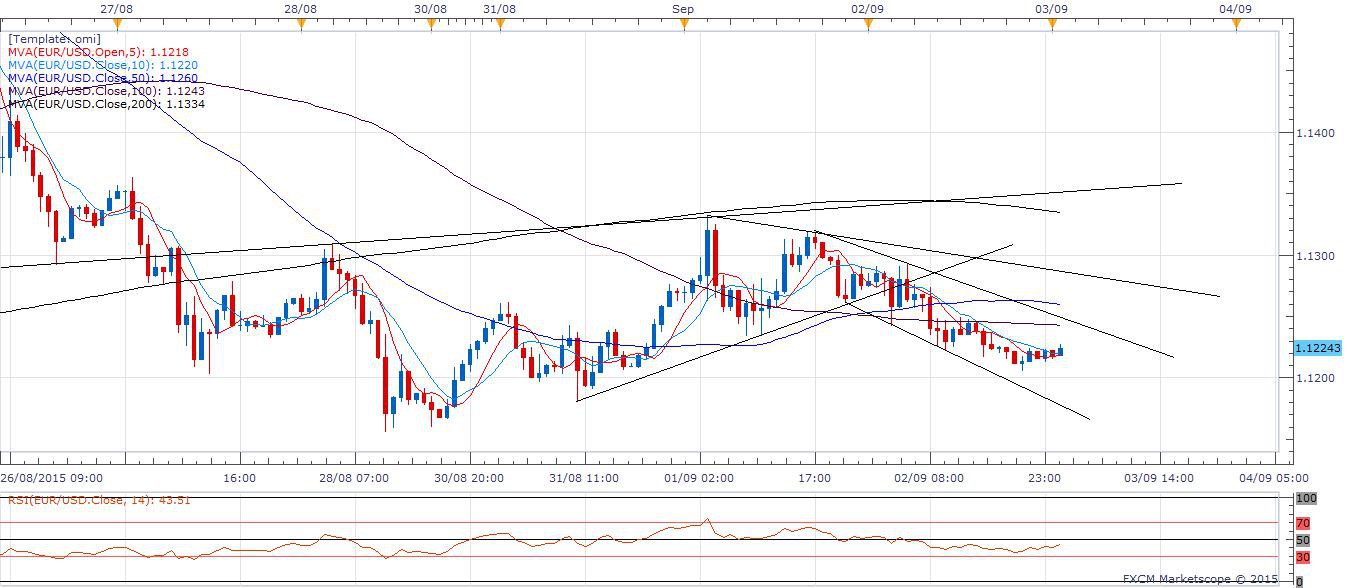
NFP entscheidet
Sind die Zahlen besser als erwartet steigen die Spekulationen auf eine Fed Zinserhöhung am 17. September -> EUR/USD fällt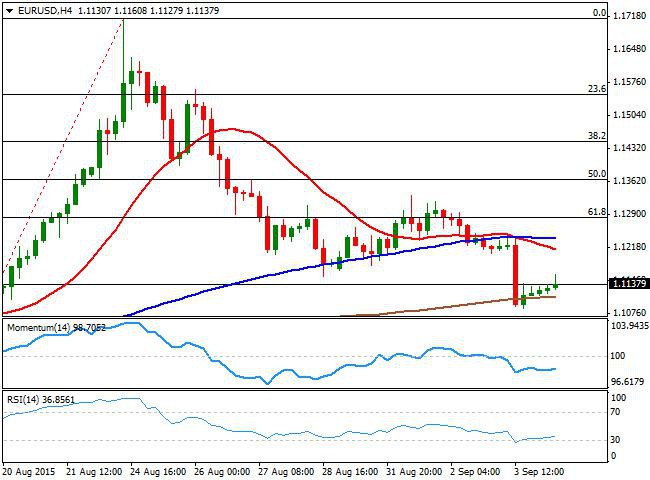
Wichtige Ebenen sind hierbei die 1,1050, 1,0980 und 1,0970 http://bit.ly/1L2Qlj4
Die Bären sind zurück
Das BIP gestern war überraschend positiv und ich frage mich wo das Wachstum herkommt. Dem Euro hat es jedenfalls nichts genutzt. Mal schaun ob heute die Unterstützung bei 1,1088 einem ersten Test unterzogen wird. http://bit.ly/1L2Qlj4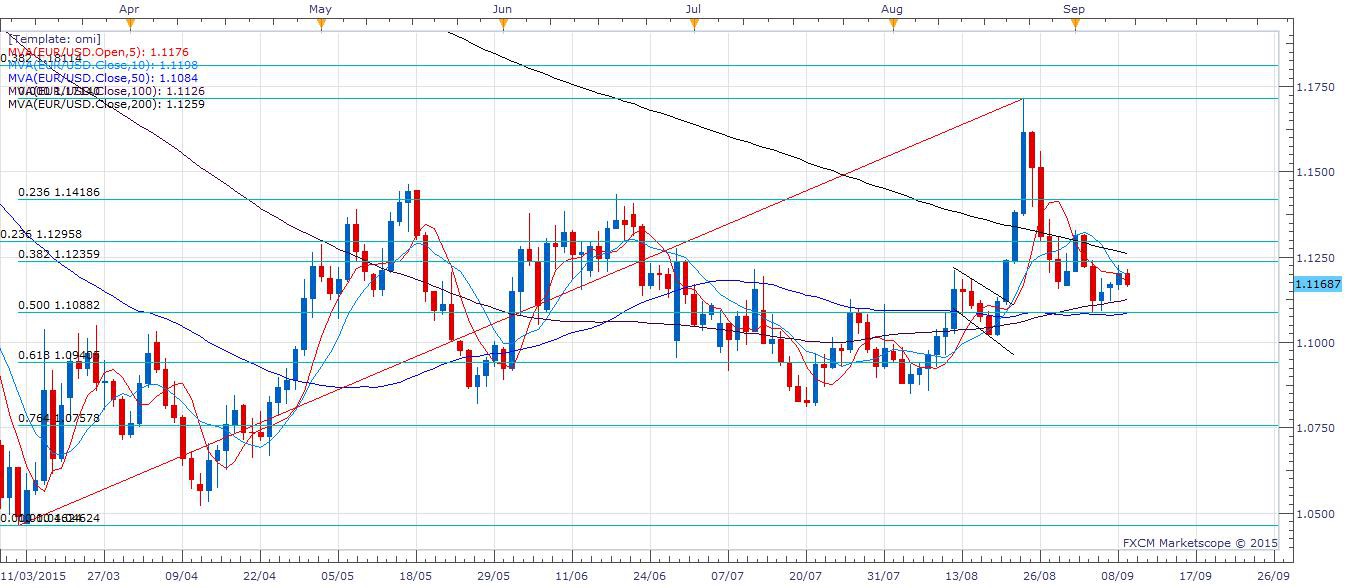
EUR/USD Ausbruch über 200-Tage-MA ist geglückt
Endlich konnte der 200-Tage-MA überwunden werden. Die nächste kritische Marke ist die 1,1296. Gibt es hier keinen nachhaltigen Ausbruch gerät der 200-Tage-MA bei 1,1249 erneut in Gefahr. http://bit.ly/1L2Qlj4" target="_blank" rel="nofollow ugc noopener">http://bit.ly/1L2Qlj4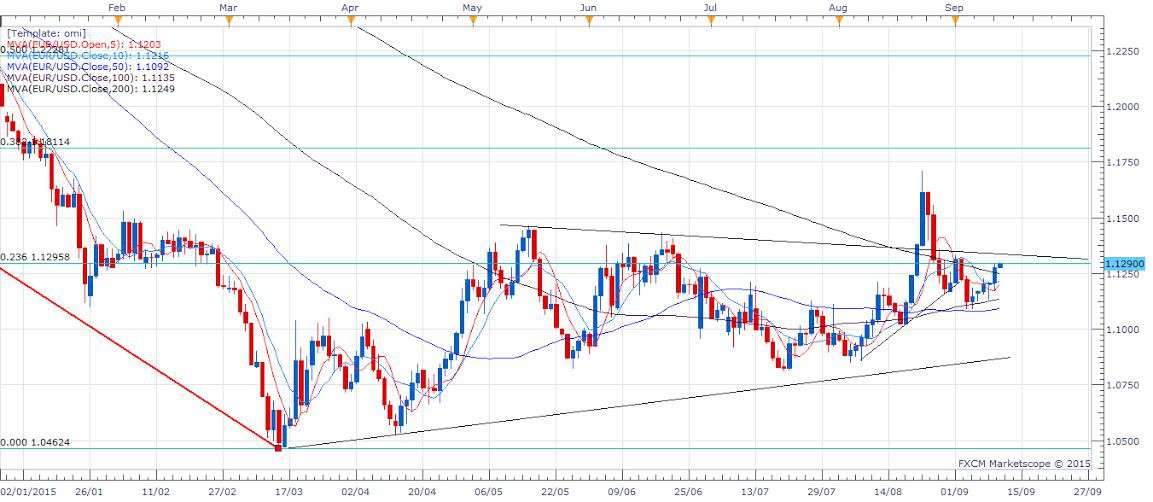
Stundenschlusskurs unter 1,1296
und der Weg zur 1,1230 ist frei. Mit guten ZEW Ergebnissen kann genau das passieren. In letzter Zeit wirken sich nämlich gute Daten auf den Euro schlecht aus. http://bit.ly/1L2Qlj4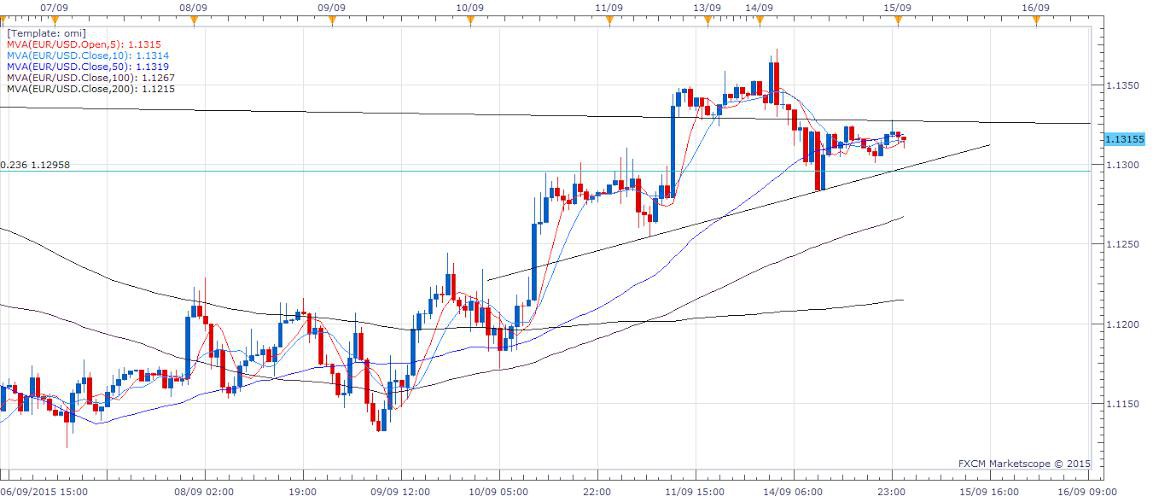
Belastungsprobe für den EUR
Der PMI Chinas und Deutschland fiel schlecht aus und so richtig geholfen hat das dem Euro nicht. Scheinbar warten alle auf die Draghi Rede in Brüssel. http://bit.ly/1L2Qlj4Aktuell wird das 61,8% Retracement (1,1155) der Aufwärtsbewegung vom 20. Juli getestet. Bleibt der Kurs darunter kommt die 1,08 ins Spiel.
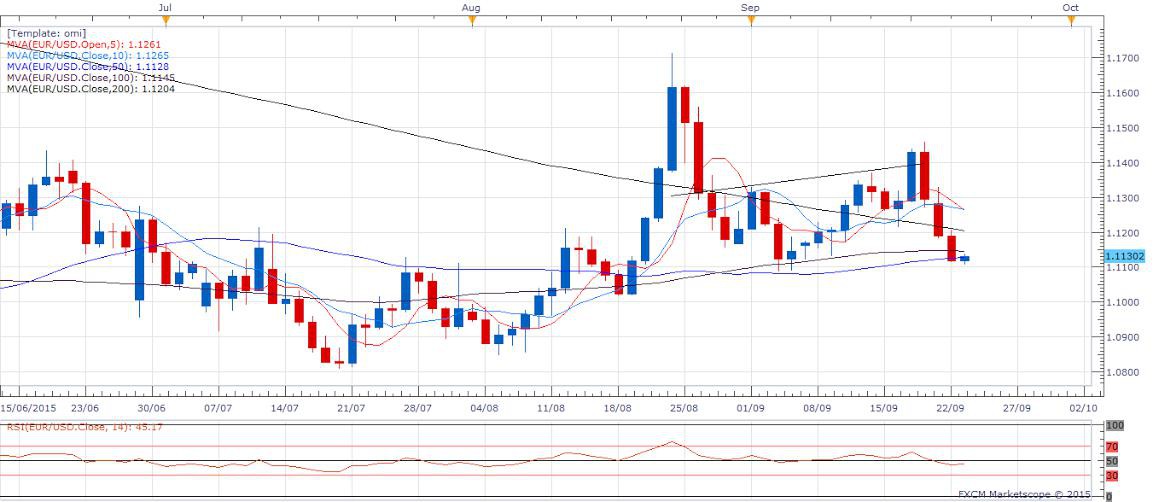
Unter 1,13 sieht es nicht gut aus
Auf einem möglichen Weg nach oben liegen Widerstände bei 1,1271 (grüne Linie auf dem Chart), 1,1296 (23,6 % des übergeordneten Abwärtstrends) und 1,1310 (blaue Linie auf dem Chart). http://bit.ly/1MTOldS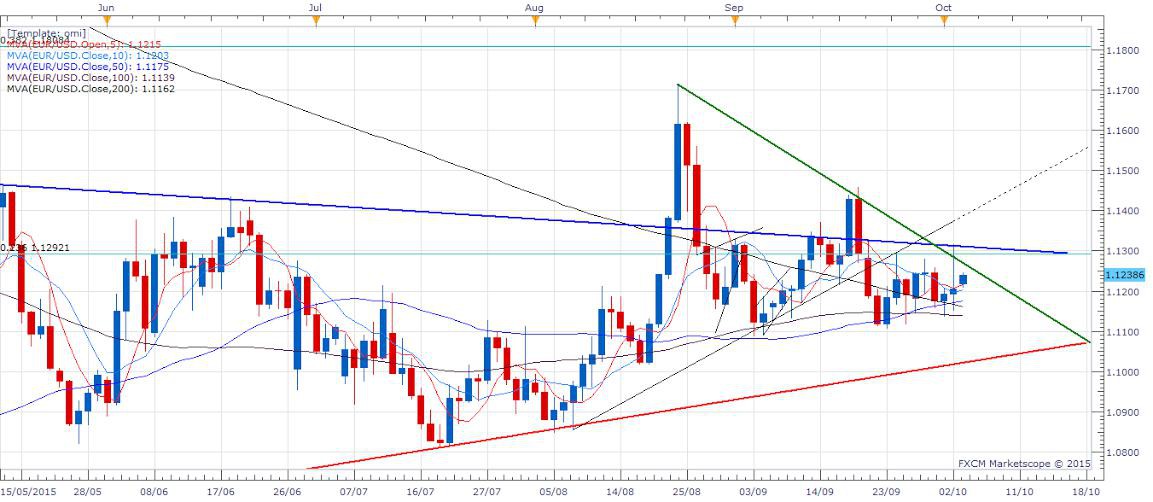
Trendlinienwiderstand verhindert weitere Gewinne
Die Widerstandszone von 1,1280/1,1300 hält. Kommt es zu einem H4 Schlusskurs unter dem Monatspivot von 1,1241? http://bit.ly/1GvId6N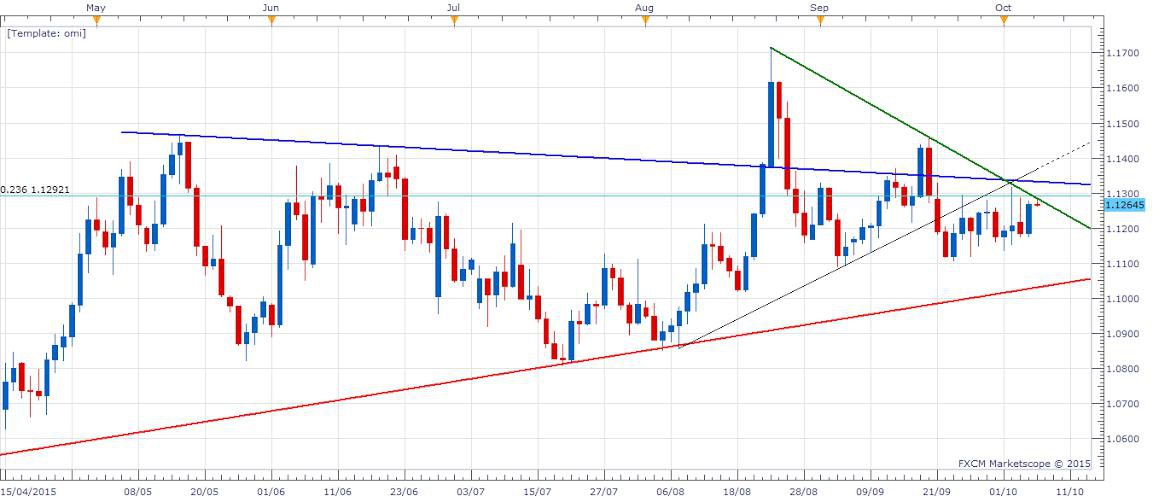
NFP Hoch wurde gebrochen
Das NFP Hoch vom letzten Freitag ist genauso Geschichte wie eine Fed Zinserhöhung in diesem Jahr. Sieht also gut aus für den EUR/USD. Mal schaun ob er die 1,14 durchbricht um die 1,1460 ins Visier zu nehmen. bit.ly/1QdhvW1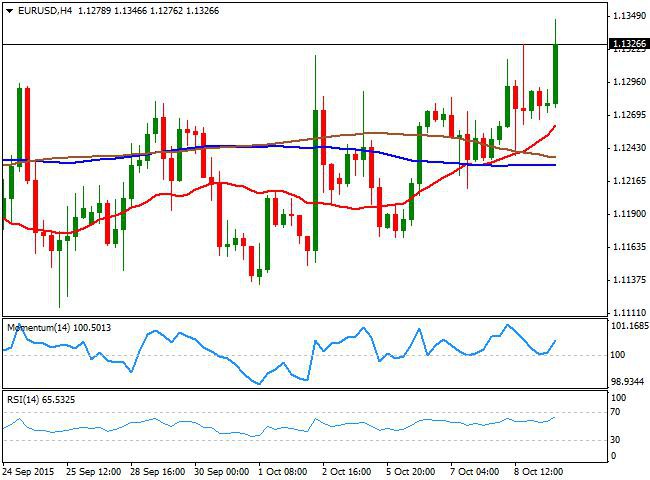
Morgen wird es richtig interessant
Doch bis zur Veröffentlichung der US-NFP wird es zu einem Rangehandel kommen. Doch dann stellt sich die entscheidende Frage. Sind die NFP gut genug um die Dezember Zinserhöhung zu unterstützen? http://bit.ly/20vM00d
Leider haben wir noch 4 Jahre diesen Italiener und dessen portugesische Freund in der EZB.
Ausbruch aus dem Dreieck?
Wenn das Dreieck auf dem Stundenchart nach oben aufgelöst wird, so sind Gewinne zum 200-Stunden-MA von 1,0630 denkbar. Vor der EZB am Donnerstag sehe ich hier dann eine gute Gelegenheit für Shorts. http://bit.ly/1HC7vGw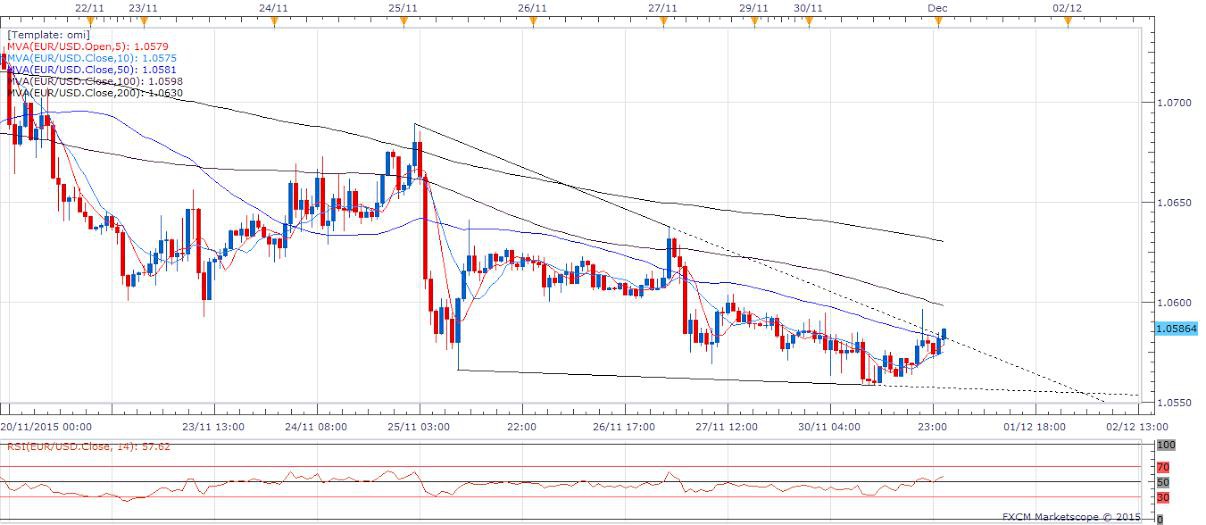
H4 technisch rauf
Auf dem H4 sieht es nach einer möglichen Aufwärtskorrektur aus. Der Kurs fällt während der RSI und Momentum-Indikator steigt -> DivergenzAber die EZB am Donnerstag und die NPF am Freitag werden wohl eher für einen Rangehandel sorgen... http://bit.ly/1MTdMMS
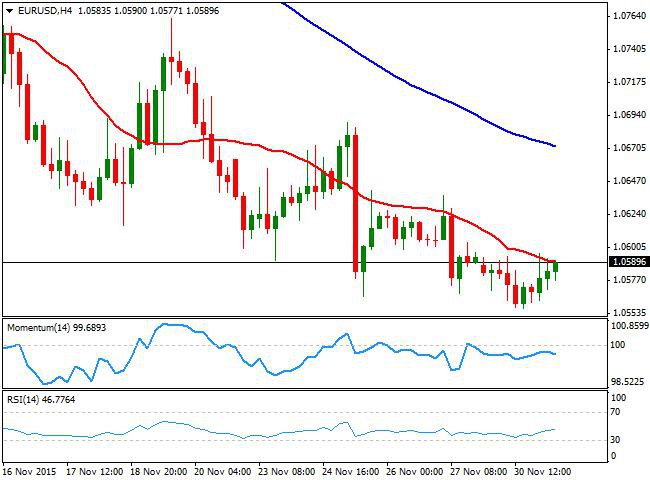
Bullish über 1,06?
Das sich der EUR/USD bereits gestern so hartnäckig über der 1,06 halten konnte war für mich völlig unerwartet. Ob da heute vor der morgigen EZB noch einmal schwache Shorts aus dem Markt gedrängt werden um günstig größere Short Positionen aufbauen zu können? http://bit.ly/1LNhLXj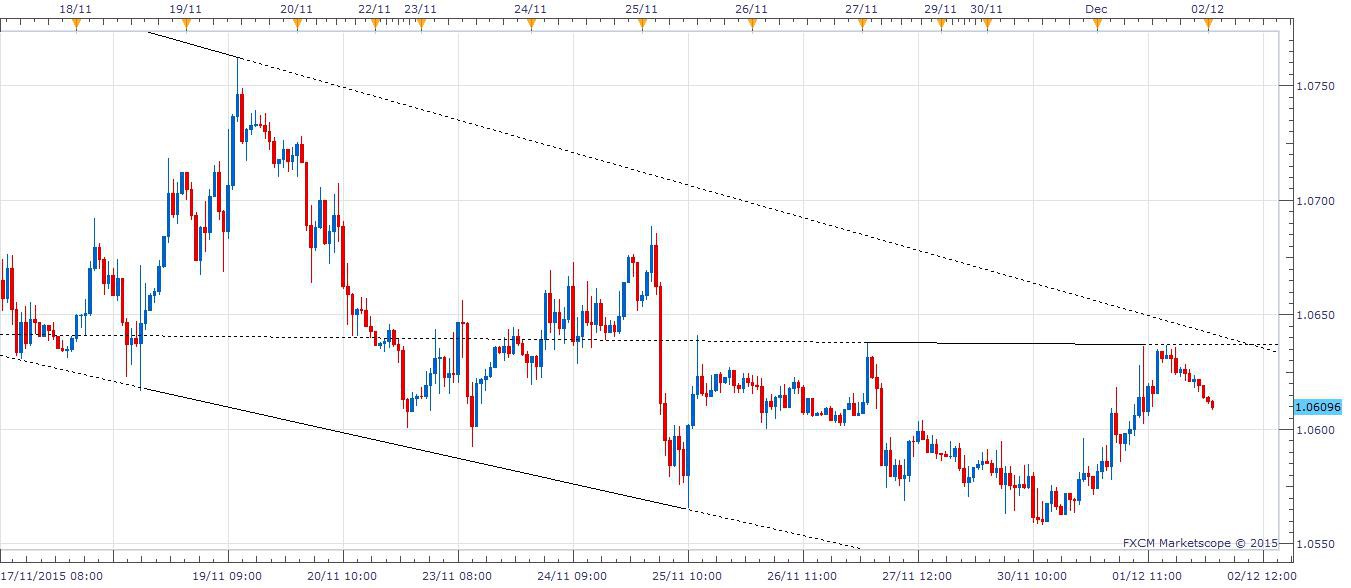
EZB bläst zum Angriff
Heute ist es soweit - M. Draghi bläst zum Halali und die Treibjagd auf den Euro ist eröffnet. Wird die langfristige Trendlinienunterstützung bei 1,0390 erreicht werden? http://www.fxstreet.de.com/analysis/eurusd-prognose/2015/12/…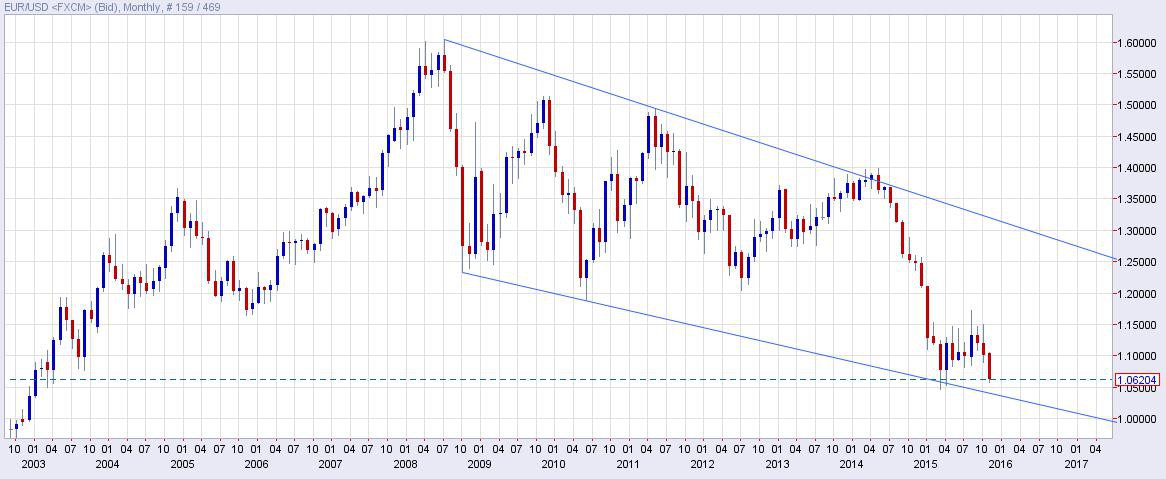
Kommt nun doch die Aufwärtsbewegung trotz der EZB?
Laut einem Bloomberg Bericht kann es durchaus passieren, dass die EZB heute nicht wie erwartet umfangreiche Maßnahmen startet. Sollte das so kommen, so werden sicherlich panikartig Short-Positionen geschlossen werden und der Kurs bricht durch die Decke. http://www.fxstreet.de.com/analysis/eurusd-prognose/2015/12/…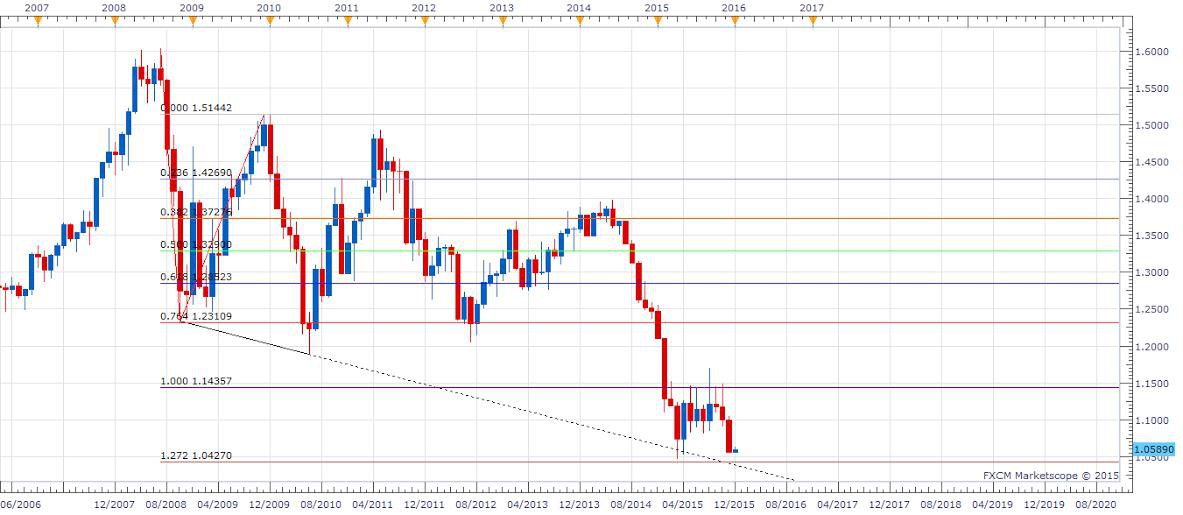
Was haben Euro und Russischer Rubel gemeinsam? Die Richtung!
Eurozonen CPI und Immobilienverkäufe
Aus fundamentaler Sicht wird heute was geboten. Wichtige Kursmarken liegen für mich am 50% Retracement der letzten Aufwärtsbewegung bei 1,0964 und dem Monats R1. Ich werde nach einer Short Gelegenheit Ausschau halten die mich in Richtung des Monats Pivot von 1,0841 mitnimmt.CPI enttäuscht und lässt den Kurs abstürzen
Der EUR/USD testete heute Morgen das 61,80 % Retracement bei 1,0964. Anschließend wurde der R1 Monats Pivot bei 1,0946 durchbrochen. Leider kam es auf dem Weg zur S1 Unterstützung zu keinem Test des R1-Monats Pivot von unten, wo ich auf einen Short-Einstieg wartete.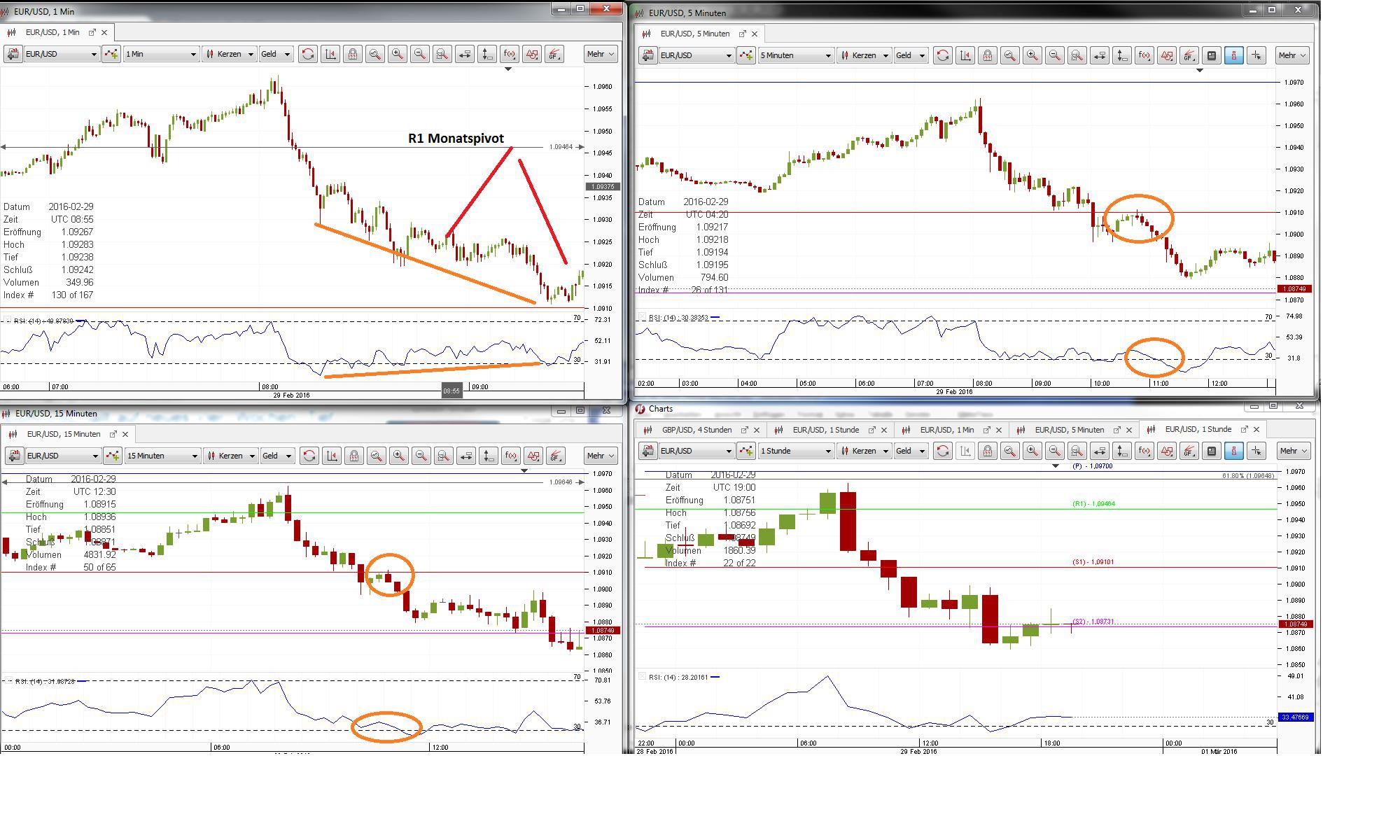
Die S1 Unterstützung wurde ebenfalls durchbrochen und es kam zu einem Test von unten. Der RSI war jedoch auf mehreren Charts im unteren Bereich der 30, so dass aus technischer Sicht nicht mit genügend Abwärtsdynamik zu rechnen war, um einen Trade einzugehen.
Arbeitslosenquote, PMI und ISM
Nach dem gestrigen Ausbruch nach unten wird sich zeigen wie der Markt auf die Veröffentlichungen der Arbeitslosenquote, PMI und ISM reagiert. Während der EUR/USD gestern noch über dem Monatspivot lag, befindet er sich heute zum Monatsbeginn darunter.
wusste gar nicht dass Olaf Schubert auch Chartanalysen macht
Antwort auf Beitrag Nr.: 51.871.029 von Robert_Reichschwein am 01.03.16 12:26:34Das ist nich Olaf, ich bin sein Bruder Bernd...
Erzeugerpreisindex und ADP Arbeitsmarktbericht
Aus rein fundamentaler Sicht wird der EUR/USD heute mit dem Erzeugerpreisindex der Eurozone und dem US ADP Arbeitsmarktbericht konfrontiert. Ich werde die technischen Niveaus im Auge behalten.Pivot: 1,0864
S1: 1,0841 / S2: 1,0827 / S3: 1,0805
R1: 1,0887 / R2: 1,0901 / R3: 1,0923
US NFP
Bereits morgen erwarten uns die US NFP und gestern kam es im EUR/USD lediglich zu einer 55 Pips Range. Schwer vorstellbar, dass die Eurozonen PMI Ergebnisse und die Einzelhandelsumsätze sowie die US Arbeitsmarktdaten und der ISM nicht-Produktion da heute für viel Bewegung sorgen werden.Tagespivot: 1,0858
R1: 1,0879 / R2: 1,0892 / R3: 1,0913
S1: 1,0536 / S2: 1,0823 / S3: 1,0802 (wird verstärkt duch die Monats S1: 1,0806)
EZB kommt
Morgen ist es soweit - die EZB Sitzung steht an...Tagespivot: 1,10206 (verstärkt durch Monatspivot)
S1: 1,0996 S2: 1,0980 S3: 1,0956
R1: 1,1046 R2: 1,1060 R3: 1,1084
EZB - Des Rätsels Lösung folgt in wenigen Stunden
Die ganze Welt ist gespannt was heute passiert. Holt Mario Draghi zum Tiefschlag aus oder wird es ein lächerliches Schattenboxen?EZB Draghi hat es getan
umfangreiche geldpolitische Lockerungen wurden verabschiedet. Aber was macht der EUR? Industrieproduktion der Eurozone
Von den Fundamentaldaten her hat der heutige Tag außer der Industrieproduktion der Eurozone nichts zu biete. Damit gewinnen die technischen Parameter an Bedeutung.Werden die US-Einzelhandelsumsätze den EUR/USD bewegen?
Die Einzelhandelsumsätze der USA werden heute um 13:30 Uhr veröffentlicht. Es wird erwartet, dass diese im Februar gegenüber dem Vormonat um -0,2% fallen. Das Ergebnis ist ein Frühindikator für die Inflation und somit wirkt sich dies auch auf die Erwartungen an eine Fed Zinserhöhung aus. Wie wird der EUR/USD auf die Daten reagieren?Tagespivot: 1,1118
S1: 1,1081 - S2: 1,1057 - S3: 1,1021
R1: 1,1156 - R2: 1,1179 - R3: 1,1217
Wird die FOMC den USD beflügeln?
Die FOMC Sitzung wird heute zeigen ob es direkt zu einer Zinserhöhung kommt, oder ob wenigstens weitere Zinserhöhungen in diesem Jahr in Aussicht gestellt werden.Tagespivot: 1,1101
S1: 1,1081 - S2: 1,1069 - S3: 1,1048
R1: 1,1111 - R2: 1,1134 - R3: 1,1154
EUR/USD long
Moin! Ist ja schön, dass dieser Dino-Thread noch am Leben gehalten wird.
Hier wurde mal, vor vielen Jahren, richtig diskutiert. Damals gab es einen genialen Kontraindikator, den ich leider aus den Augen verloren habe... :O
Ich bin gerade long im ED, aber primär als kurzfristigen Hedge für meine US-Aktien. Das hat letzte Woche schon ganz gut geklappt als der Euro trotz Draghis Bazooka zulegen konnte.
Wen Frau Yellen heute rumzickt, dann kann es ganz schnell in Richtung 1,15 laufen...
Gruß
Julia
geht doch
zieht sauber durch unsere solider Gemeinschaftswährung
Wieso steigt jetzt plötzlich der EUR/US-Dollar nach der Fed-Enscheidung?
Wenn die EZB den Zins senkt und die Fed den Zins anhebt, sollte dann EUR/US-Dollar nicht eigentlich fallen? Oder versteh ich hier was falsch?
Wenn die EZB den Zins senkt und die Fed den Zins anhebt, sollte dann EUR/US-Dollar nicht eigentlich fallen? Oder versteh ich hier was falsch?
Antwort auf Beitrag Nr.: 51.996.191 von andkul am 16.03.16 19:46:03Frau Yellen hat aber durchblicken lassen, dass es voraussichtlich weniger Zinsschritte geben wird. Der Markt reguliert jetzt das, was bereits vorher antizipiert worden war.
Antwort auf Beitrag Nr.: 51.996.251 von DIE_GERECHTIGKEIT am 16.03.16 19:51:53mhm, ok, danke für die Info. Ich glaub von die Währungswetten lass ich besser die Finger...
Antwort auf Beitrag Nr.: 51.996.260 von andkul am 16.03.16 19:54:02ist vielleicht besser...
Trotzdem extrem spannend momentan. And dieser Marke werden sich viele mittelfristige Trader überlegen, ob sie ihre Trendpositionen ED short nicht glatt stellen. Einig warten jetzt vielleicht noch auf neu Gegenreaktion aber wenn die ausbleibt, dann gibts noch mal einen kleinen Boost / Squeeze
Trotzdem extrem spannend momentan. And dieser Marke werden sich viele mittelfristige Trader überlegen, ob sie ihre Trendpositionen ED short nicht glatt stellen. Einig warten jetzt vielleicht noch auf neu Gegenreaktion aber wenn die ausbleibt, dann gibts noch mal einen kleinen Boost / Squeeze

Antwort auf Beitrag Nr.: 51.996.191 von andkul am 16.03.16 19:46:03
Meiner Meinung nach ist der Grund warum der EURUSD so eklatant gestiegen ist der selbe wie schon weiter oben geschrieben wurde der, dass zwar jetzt noch keine Zinsen erhöht wurden, aber bereits erwähnt wurde, dass die Zinsen bald angehoben werden.
"Trade the rumor not the fact"
FED Zinsentscheid
Es war ein turbulenter Abend an den Börsen nach dem FED Zinsentscheid.Meiner Meinung nach ist der Grund warum der EURUSD so eklatant gestiegen ist der selbe wie schon weiter oben geschrieben wurde der, dass zwar jetzt noch keine Zinsen erhöht wurden, aber bereits erwähnt wurde, dass die Zinsen bald angehoben werden.
"Trade the rumor not the fact"
Fed zaubert das Ass aus dem Ärmel
Es ist wirklich sehr spannend/aufregend was da so völlig außerhalb der allgemeinen Prognosen passiert. Erst letzte Woche hat Draghi den Hammer ausgepackt und nun rudert die Fed zurück. Noch vor 3 Monaten sprach man von 4 Zinserhöhungen in diesem Jahr und nun sind es nur noch 2. Wie sieht es dann im Juni aus? Geht man dann auf eine Zinserhöhung zurück? Aktuell scheint alles möglich zu sein - sogar ein neues Fed QE Paket noch in diesem Jahr.Tagespivot: 1,1174
S1: 1,1104 - S2: 1,1060 - S3: 1,0990
R1: 1,1244 - R2: 1,1288 - R3: 1,1358
Keine wichtigen Daten vor dem Wochenende
Das Wochenende steht vor der Tür und es gibt heute keine wichtigen Daten. Die allgemeinen Risikotrends sollten zu einem Kursrückgang führen, da viele ihre Schäfchen ins Trocken bringen. Was ist deine Meinung?Tagespivot: 1,1288
S1: 1,1236 - S2: 1,1204 - S3: 1,1151
R1: 1,1340 - R2: 1,1373 - R3: 1,1425
Antwort auf Beitrag Nr.: 52.008.401 von Realianer am 18.03.16 08:58:16Das Thema des Titels ist aktueller den je und seit März 2016 kein Beitrag mehr?
Haben sich anscheinend auf etwas geeinigt, der EUR überlebt oder geht baden?
Haben sich anscheinend auf etwas geeinigt, der EUR überlebt oder geht baden?
Der Euro zeigt stärke! Ziel 1,30 USD ...
Antwort auf Beitrag Nr.: 54.620.294 von leone2 am 27.03.17 15:01:26
Ein Jahr später haben wir immernoch das gleiche Bild. Ich sehe den Anstieg ebenfalls in Richtung 1,30
Zitat von leone2: Der Euro zeigt stärke! Ziel 1,30 USD ...
Ein Jahr später haben wir immernoch das gleiche Bild. Ich sehe den Anstieg ebenfalls in Richtung 1,30
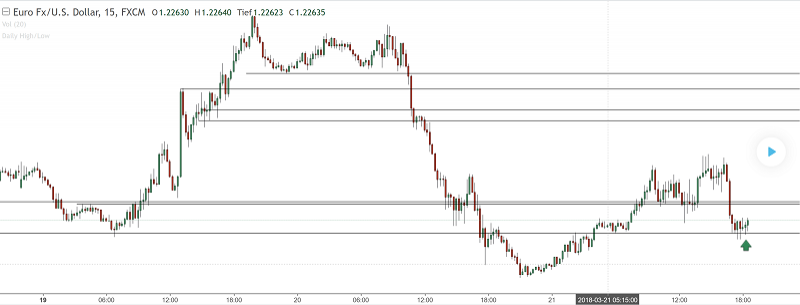
Antwort auf Beitrag Nr.: 57.354.158 von lukeskyblogger am 22.03.18 13:05:46...manchmal denke ich, die Luft bleibt ihm weg. Er nimmt Anlauf und bricht wieder zusammen. Naja, ... auf ein Neues "zwinker"
Hi,
Wo glaubt ihr, dass die Reise hingeht? Werden wir Kurse von 1,50 USD sehen?
Der Artikel drückt ganz gut meine Meinung aus.
https://www.welt-der-finanzen.com/euro-vs-dollar/
Wo glaubt ihr, dass die Reise hingeht?
 Werden wir Kurse von 1,50 USD sehen?
Der Artikel drückt ganz gut meine Meinung aus.
https://www.welt-der-finanzen.com/euro-vs-dollar/
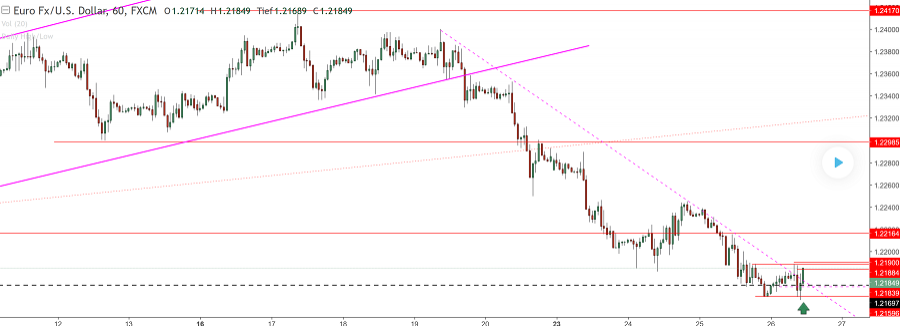
Antwort auf Beitrag Nr.: 57.636.924 von lukeskyblogger am 26.04.18 17:14:10ich hab keinen Chart zur Hand, aber ich habe das berühmte Bauchgefühl das in der Tat ein guter Zeitpunkt wäre.
Antwort auf Beitrag Nr.: 57.408.356 von Gandalf498 am 28.03.18 11:45:15Netter Artikel https://www.welt-der-finanzen.com/euro-vs-dollar/, alles drin
Marktgesetze) "Nach den Gesetzen des Marktes müsste eigentlich der Euro gegenüber dem Dollar noch weiter abwerten, da die EZB weiter im großen Stil Euros druckt, während die FED ihre Bilanz verkürzt und die Zinsen anhebt. Eine Erhöhung des Angebots bei gleichbleibender Nachfrage hat normalerweise einen Preisrückgang zur Folge. Verschärft müsste dieser Effekt noch werden durch die gleichzeitige Verknappung des Angebots beim Dollar."
Steigt mit Trotz) "Steigt der Euro trotzdem, heißt das, dass die Nachfrage nach dem Euro noch stärker gestiegen ist, als das Angebot oder im Umkehrschluss, dass die Nachfrage nach dem Dollar stark nachgelassen hat."
Marktgesetze ungültig) "Alles in allem sind Kurse von 1,50 USD durchaus möglich"
Ähhh wie nun?
Marktgesetze) "Nach den Gesetzen des Marktes müsste eigentlich der Euro gegenüber dem Dollar noch weiter abwerten, da die EZB weiter im großen Stil Euros druckt, während die FED ihre Bilanz verkürzt und die Zinsen anhebt. Eine Erhöhung des Angebots bei gleichbleibender Nachfrage hat normalerweise einen Preisrückgang zur Folge. Verschärft müsste dieser Effekt noch werden durch die gleichzeitige Verknappung des Angebots beim Dollar."
Steigt mit Trotz) "Steigt der Euro trotzdem, heißt das, dass die Nachfrage nach dem Euro noch stärker gestiegen ist, als das Angebot oder im Umkehrschluss, dass die Nachfrage nach dem Dollar stark nachgelassen hat."
Marktgesetze ungültig) "Alles in allem sind Kurse von 1,50 USD durchaus möglich"
Ähhh wie nun?
Antwort auf Beitrag Nr.: 57.637.611 von Liechtstein am 26.04.18 18:08:01Menschen sind einfach irrational bzw. emotional
Kurz gesagt: An der Börse ist kurzfristig alles möglich, mag es noch so unlogisch sein.
“Die Börse hängt nur davon ab, ob es mehr Aktien als Idioten oder mehr Idioten als Aktien gibt.” — André Kostolany
Kurz gesagt: An der Börse ist kurzfristig alles möglich, mag es noch so unlogisch sein.
“Die Börse hängt nur davon ab, ob es mehr Aktien als Idioten oder mehr Idioten als Aktien gibt.” — André Kostolany
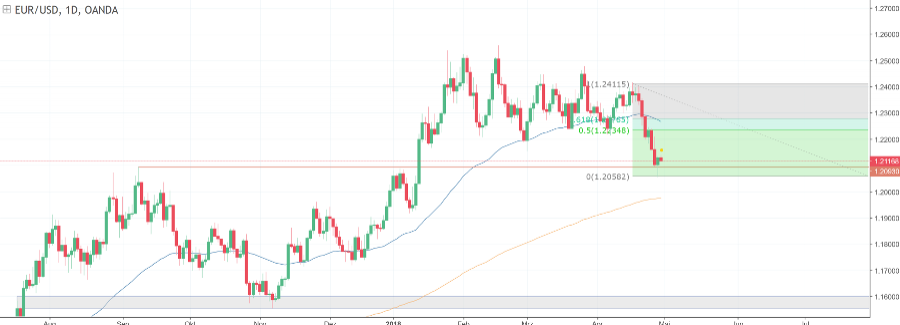
Antwort auf Beitrag Nr.: 57.649.620 von Gandalf498 am 27.04.18 20:17:36Der Artikel ist konfus. Von der Kursentwicklung kann man das eher nicht sagen
Antwort auf Beitrag Nr.: 57.663.093 von lukeskyblogger am 30.04.18 15:44:03Kann theoretisch, aber ob er will? Unten ist auch eine Menge Platz
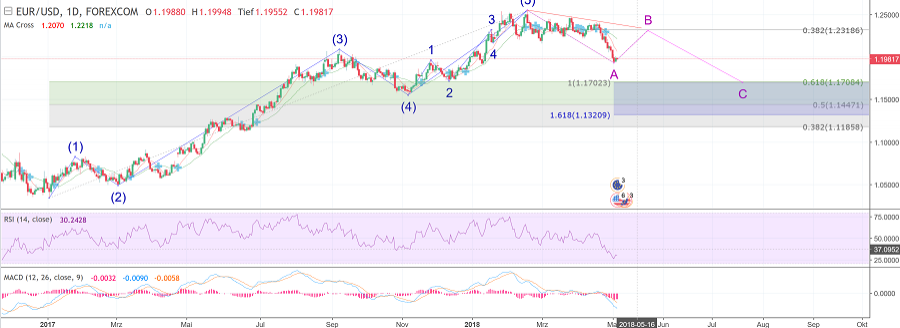
Antwort auf Beitrag Nr.: 57.663.534 von Liechtstein am 30.04.18 16:26:02...dies weiß niemand :-) trade was Du siehst. Mit ADX und Parabolic klappt das gut, wenn der Trend über 30 steigt...
Antwort auf Beitrag Nr.: 57.701.373 von aliney am 05.05.18 15:20:01Ich gehe davon aus, dass der EUR auf Sicht von 12 Monaten auf 1,10 USD fallen wird. Könnt ihr mir Optionsscheine oder Zertifikate nennen mit denen ich das abbilden kann?
Antwort auf Beitrag Nr.: 57.701.796 von ikarus1304 am 05.05.18 17:46:31Der Euro wird in den nächsten monaten die 1,34€ erreichen.
Antwort auf Beitrag Nr.: 57.741.955 von Atreffer1 am 11.05.18 16:55:55... wäre super 😎
Euro/Dollar mehrjährige Chart gibt Auskunft wo geht der Trend hin
Da schaut doch mal auf den mehrjährigen Trend ! - Eindeutig - oder ?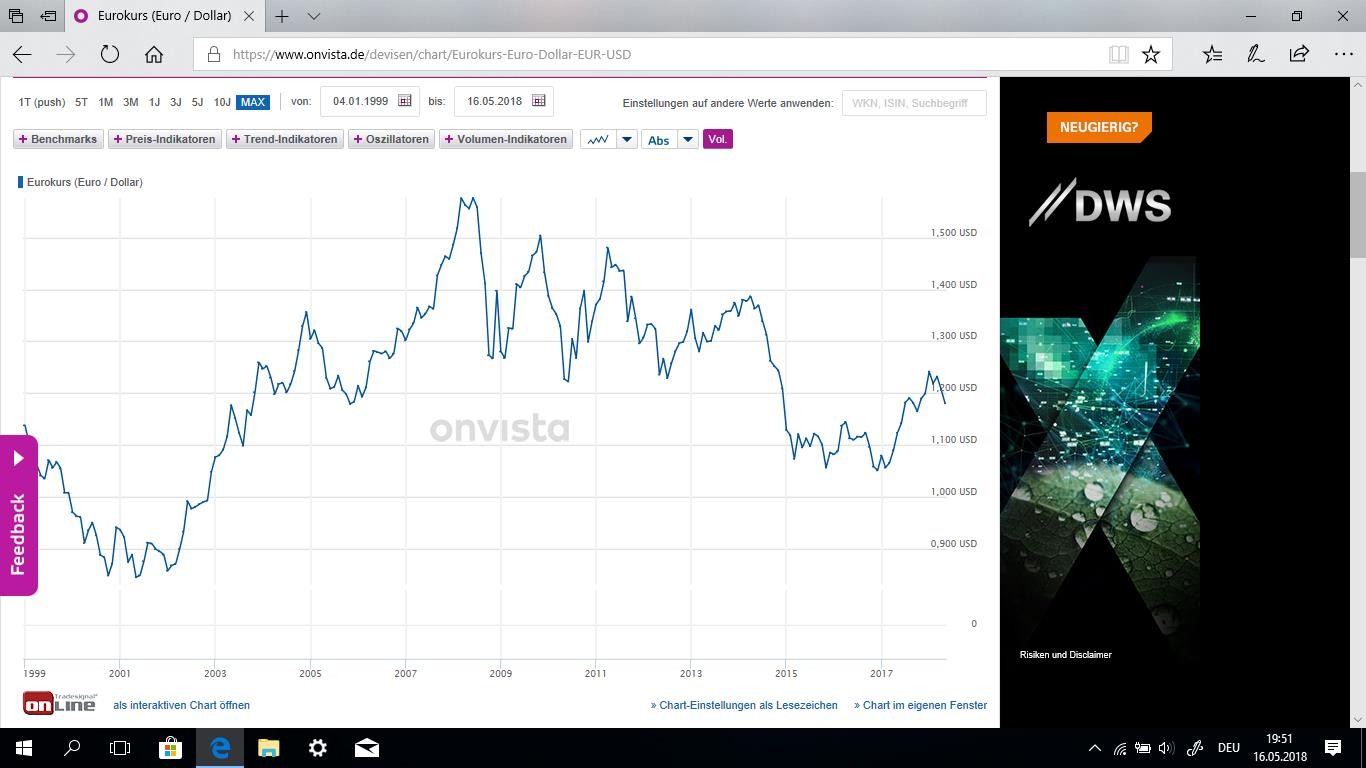
Antwort auf Beitrag Nr.: 57.775.849 von cybermanne55 am 16.05.18 20:01:36kommt darauf an wie alt du werden willst
Aktuelle Chartanalyse
Hier gibt es mal wieder eine aktuelle Chartanalyse.Schönen Sonntag!
Ihr Karsten Kagels
Hallo an alle,
hab dieses Chart zum Dollarindex gefunden. Finde die Veranschaulichung sehr interessant, wie sich die beiden Kurse spiegeln! Vielleicht eine wichtige Info für euch...
Good trades an euch!
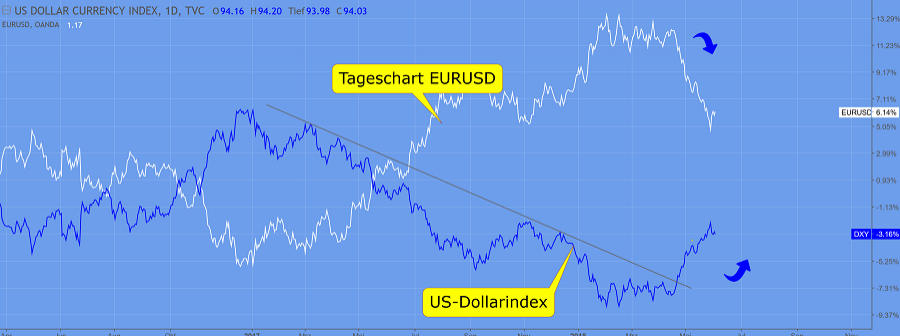
hab dieses Chart zum Dollarindex gefunden. Finde die Veranschaulichung sehr interessant, wie sich die beiden Kurse spiegeln! Vielleicht eine wichtige Info für euch...
Good trades an euch!

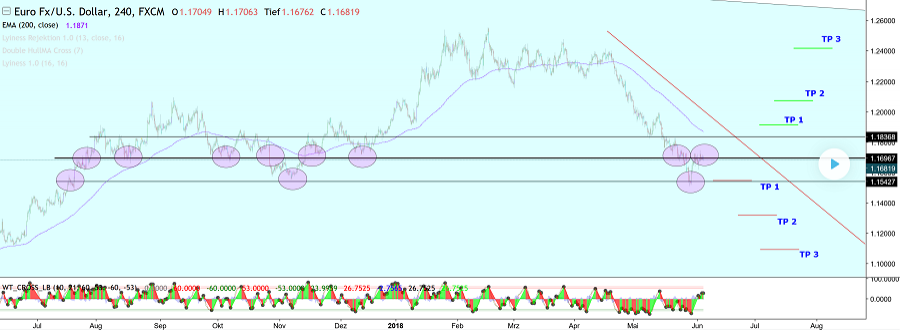
Antwort auf Beitrag Nr.: 7.050.788 von Yamster am 06.08.02 00:18:22Nein ich denke nicht das sa 0,9 unmöglisch die nächsten 5 jahren tiefswer wird auf 1.135 und hochswert dieses jahr 1.235
Mfg
Meine meinung
Mfg
Meine meinung
Hallo an alle,
was denkt ihr und @markusdeutschland, EUR USD verkaufen oder halten? Bin mir gerade nicht sicher.
Good trades!
was denkt ihr und @markusdeutschland, EUR USD verkaufen oder halten? Bin mir gerade nicht sicher.
Good trades!
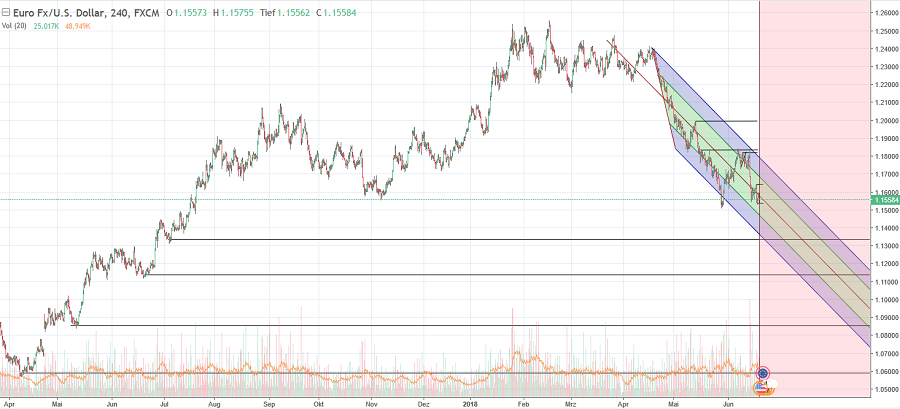
Antwort auf Beitrag Nr.: 58.026.088 von lukeskyblogger am 20.06.18 13:45:26
Was soll die EZB denn machen? In Handelskriegen ist eine schwache Währung gut, hebt sie doch einen Teil der Zölle durch den Wechselkurs praktisch wieder auf und der Export bricht nicht ganz so stark ein. Außerdem braucht die EZB, wie sie ja immer wieder betont, Inflation um den Schuldenberg wegzuinflationieren. Was ist da einfacher als die Inflation über steigende Rohstoffpreise zu importieren. Von daher wird die EZB einen Teufel tun und gegen einen schwachen EURO vorgehen. Die Frage ist eher: Wann wird es dem FED zu bunt weil die US Wirtschaft nicht mit dem starken Dollar zurecht kommt?
Zitat von lukeskyblogger: Hallo an alle,
der Abwärtstrend im EUR/USD hält weiter an und fällt immer weiter ab... Hier ein Chart, welches den Trendkanal aufzeigt. Die Frage ist, wann macht die EZB endlich mal was..?
Good Trades
Was soll die EZB denn machen? In Handelskriegen ist eine schwache Währung gut, hebt sie doch einen Teil der Zölle durch den Wechselkurs praktisch wieder auf und der Export bricht nicht ganz so stark ein. Außerdem braucht die EZB, wie sie ja immer wieder betont, Inflation um den Schuldenberg wegzuinflationieren. Was ist da einfacher als die Inflation über steigende Rohstoffpreise zu importieren. Von daher wird die EZB einen Teufel tun und gegen einen schwachen EURO vorgehen. Die Frage ist eher: Wann wird es dem FED zu bunt weil die US Wirtschaft nicht mit dem starken Dollar zurecht kommt?
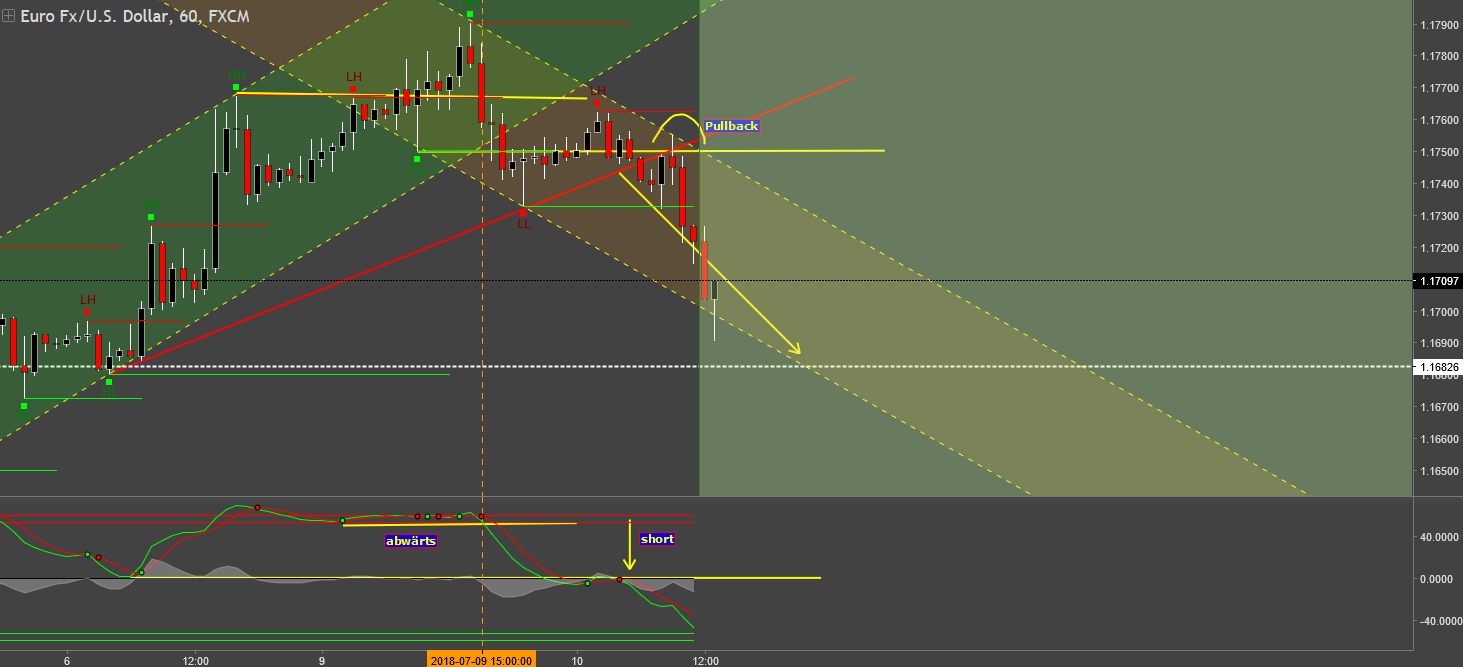
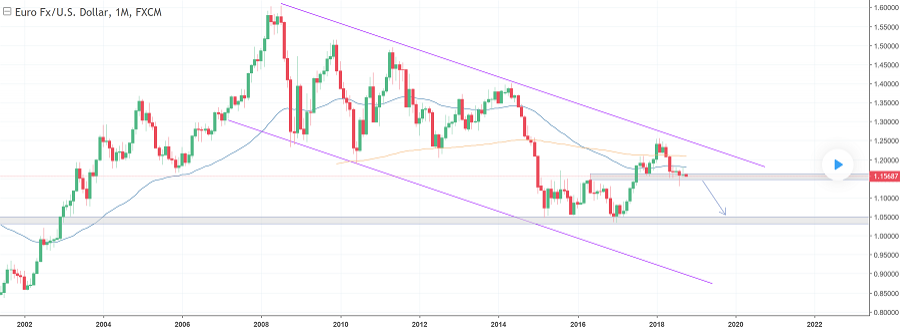
€/$ Stop auf 1.14320 gezogen (Kaufkurs 1.1495)
Ist ein Notfallstop.
Aktuell: 1.1607 (Tageshoch)
Ziel 1: 1.1640
Ziel 2: 1.17
Ist ein Notfallstop.
Aktuell: 1.1607 (Tageshoch)
Ziel 1: 1.1640
Ziel 2: 1.17
Draghi und der EURUSD
EZB-Präsident Mario Draghi hat angedeutet, dass die Europäische Zentralbank unter Umständen ihre Forward Guidance zu den EZB-Zinsen ändern könnte... doch wo geht es mit dem EURUSD zum Jahresende hin? Finde, dass es Andre Stagge in dieser Analyse wirklich auf den Punkt gebracht hat!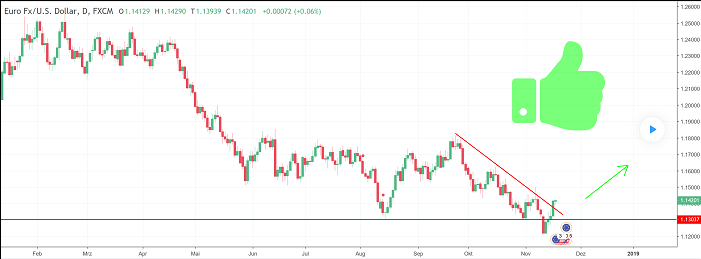
Kauf 2 Kontrakte E7 Future.
Sollte die Position nicht ins Plus laufen, kaufe ich mehr.
E7 USD BOT 2 JUN19 Futures 1.1515 03:26:09 GLOBEX 2.74 null

Sollte die Position nicht ins Plus laufen, kaufe ich mehr.
E7 USD BOT 2 JUN19 Futures 1.1515 03:26:09 GLOBEX 2.74 null
!
Dieser Beitrag wurde von CommunitySupport moderiert. Grund: Spam, Werbung!
Dieser Beitrag wurde von CommunitySupport moderiert. Grund: Spam, Werbung!
Dieser Beitrag wurde von CommunitySupport moderiert. Grund: Spam, Werbung!
Dieser Beitrag wurde von MadMod moderiert. Grund: Spam, Werbung!
Dieser Beitrag wurde von CloudMOD moderiert. Grund: Spam, Werbung
The German government is on course to cut its growth forecasts for 2019 to only 0,5%
Von 2,1% zu 0,5%
Von 2,1% zu 0,5%
EUR/USD Short
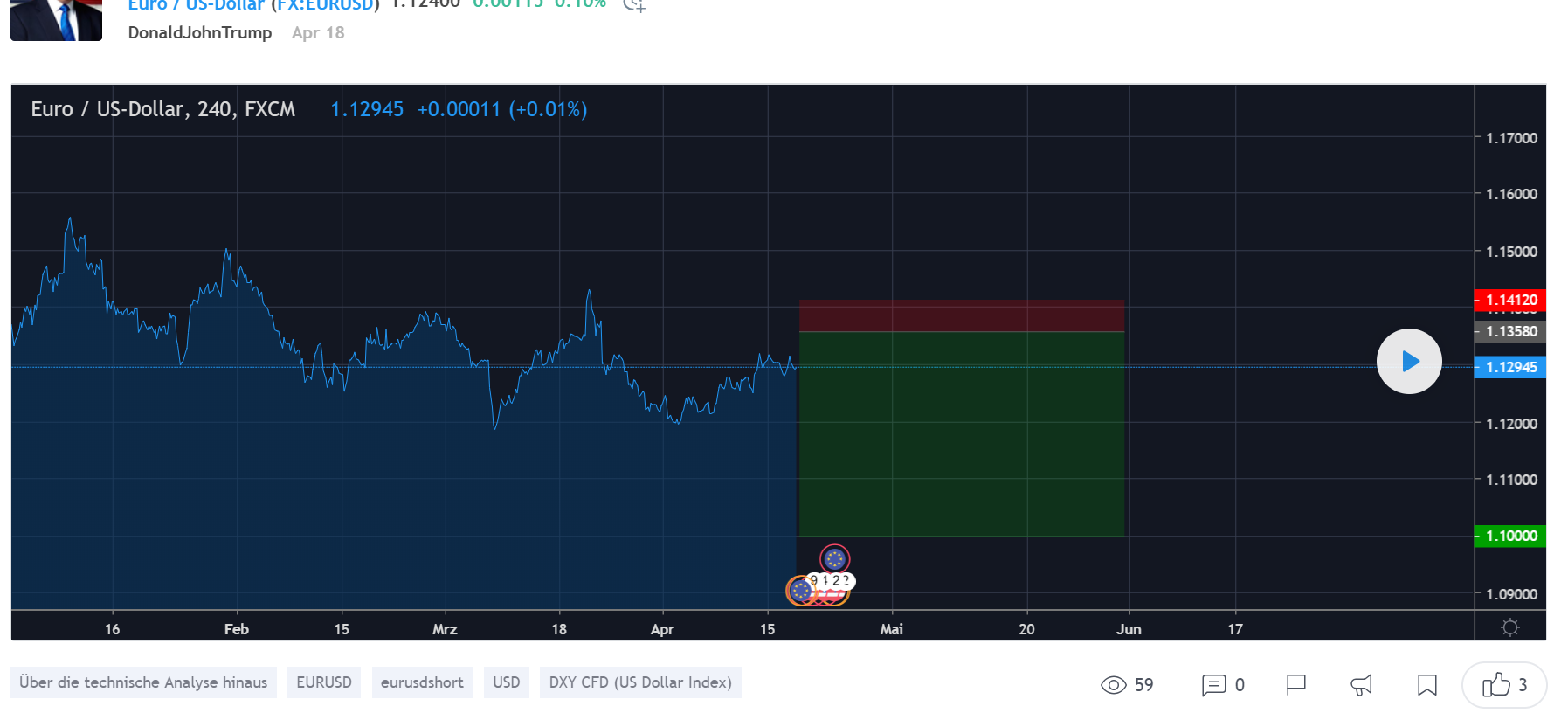
trade on holiday?
Antwort auf Beitrag Nr.: 60.398.313 von Gold2018 am 22.04.19 15:25:08Why not....?
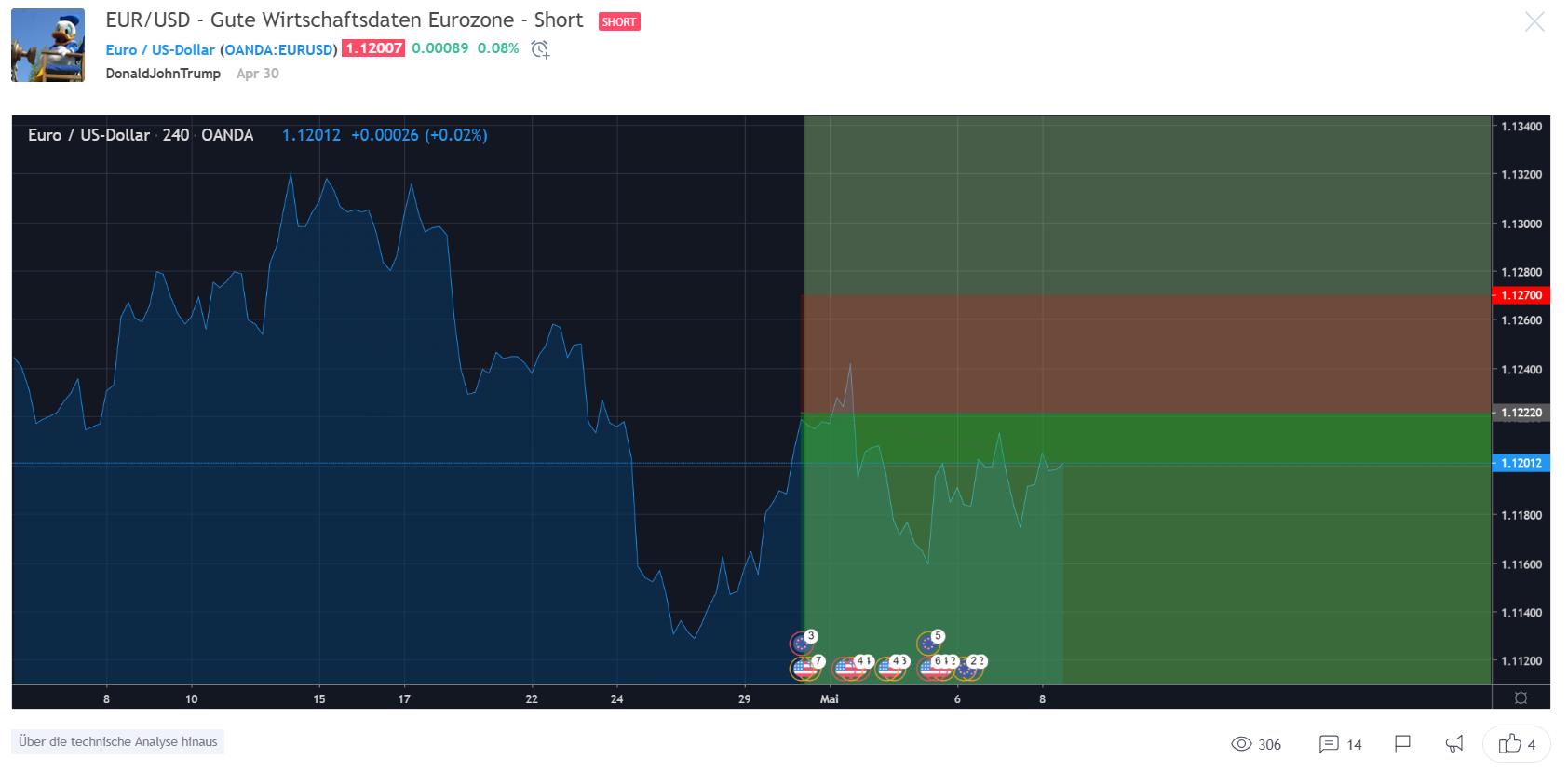
Wie macht man sowas??
Hey Leute, ich bin noch nicht allzugange im Trading, möchte aber mal so gut werden die die hier:Habt ihr eine Ahnung wie die das machen? oder ist das Zufall? Gerade in den kürzeren Zeiträumen wirkt das für mich immer so... schwierig?!
Hier gibts die Analyse zum mitverfolgen:
https://de.tradingview.com/chart/USDCHF/1gKu23Tb/
Viel erfolg!
Update Beitrag #16774
EUR gestern mit gutem Bar. Die Schwelle zum Einfärben (mit Farbe Grün) wurde überschritten. Aber nur ganz knapp.
Im Bereich um 1.085 werde ich zusätzliche Kontrakte kaufen. Mehr Volatilität wäre von Vorteil. Solange sich der Kurs in einer Range von 2 Cent bewegt... kann ich nichts machen!
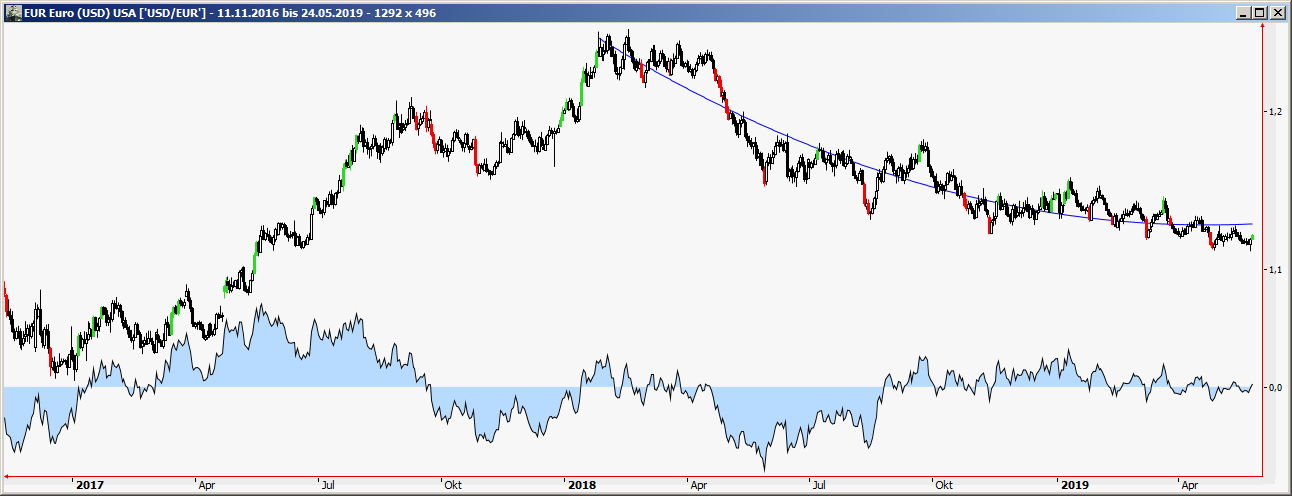
EUR gestern mit gutem Bar. Die Schwelle zum Einfärben (mit Farbe Grün) wurde überschritten. Aber nur ganz knapp.
Im Bereich um 1.085 werde ich zusätzliche Kontrakte kaufen. Mehr Volatilität wäre von Vorteil. Solange sich der Kurs in einer Range von 2 Cent bewegt... kann ich nichts machen!

EURUSD Long???
Ich weiss ja nicht wie ihr das seht, aber ich bin dem EURUSD gegenüber sehr bearish eingestellt. Dann bin ich auf eine Analyse gestossen, die BULLISH ist?! Ich dachte die Prognosen für die deutsche Wirtschaft wurden gerade erst gesenkt? klar, Deutschland ist nicht der gesamte Euroraum, aber doch einer der wenigen "Netto-Zahler" der EU...Was haltet ihr davon:
Und mehr Infos:
https://de.tradingview.com/chart/E61!/lWQ14qgZ/
Ich bin davon gerade... Geschockt!
Europa ist keine politische Einheit.
Die Deutschen sehen die Rolle der EZB sehr kritisch,weil QE immer eine Umverteilung ist
die USA und die Chinesen dagegen können ohne Zögern Vollgas geben.
und werden das mit Sicherheit auch machen
Die Deutschen sehen die Rolle der EZB sehr kritisch,weil QE immer eine Umverteilung ist
die USA und die Chinesen dagegen können ohne Zögern Vollgas geben.
und werden das mit Sicherheit auch machen
ich finde den Chart plausibel und geh auch langsam long ....
Wie man sehr gut analysiert?!
Ist zwar der USDCAD, aber die Erkenntnisse die man hier gewinnen kann, sind sehr groß!Ich habe mir gerne die 5 Minuten genommen, um zu sehen wie hier analysiert wird, und worauf geachtet wird!
Sehr guter Mehrwert. Zumindest für mich!
Wer Zeit hat, sollte sich das ansehen, oder zumindest als Bookmark setzen...
https://de.tradingview.com/chart/USDCAD/rBbow0fF/
Der Chart alleine sagt nicht viel aus, trotzdem will ich euch den nicht vorenthalten!
Happy Trading Ihr lieben!
Fortsetzung Beitrag #16786/#16774
Meine Juni Kontrakte laufen aus, ich habe heute in September Kontrakte getauscht. Der realisierte Verlust beträgt ~3700$.
Die Kursdifferenz der Kontrakte beträgt ~0.8 Cent (pro Quartal aufgrund des Zinsunterschieds).
Ich werde erst zukaufen, wenn der Verlust mindenstens doppelt so groß ist. Alles andere wäre unnötiger Aktionismus...
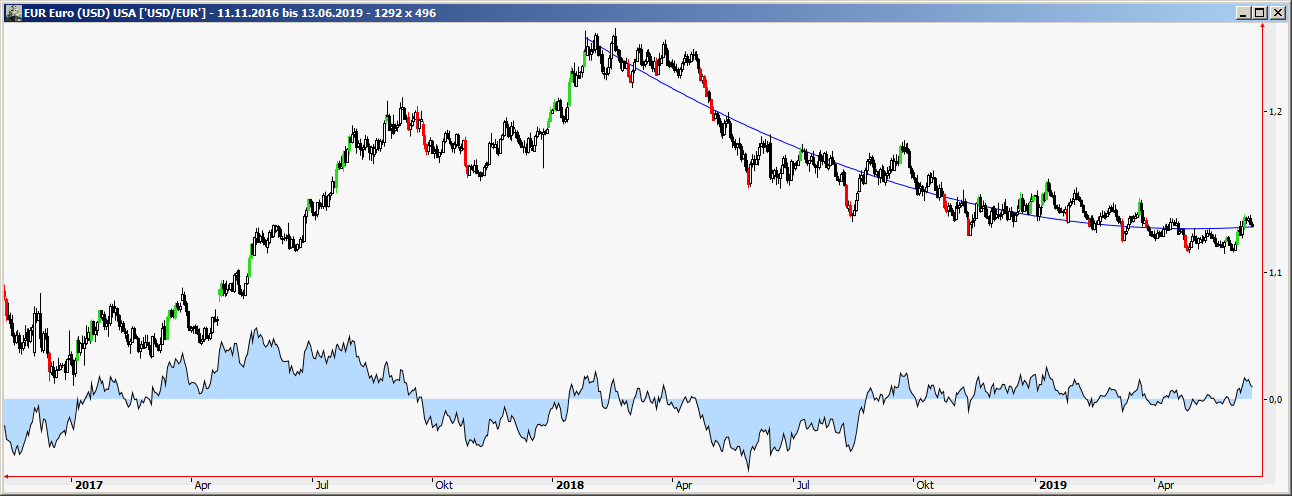
E7 USD SLD 2 JUN19 Futures 1.1220 17:40:37 GLOBEX 2.74 null
E7 USD BOT 2 SEP19 Futures 1.1301 17:50:59 GLOBEX 2.74 null
Meine Juni Kontrakte laufen aus, ich habe heute in September Kontrakte getauscht. Der realisierte Verlust beträgt ~3700$.
Die Kursdifferenz der Kontrakte beträgt ~0.8 Cent (pro Quartal aufgrund des Zinsunterschieds).
Ich werde erst zukaufen, wenn der Verlust mindenstens doppelt so groß ist. Alles andere wäre unnötiger Aktionismus...
E7 USD SLD 2 JUN19 Futures 1.1220 17:40:37 GLOBEX 2.74 null
E7 USD BOT 2 SEP19 Futures 1.1301 17:50:59 GLOBEX 2.74 null
Technamental traden?
ich bin zwar eher ein Techniker, finde jedoch das man die Fundamentals nicht aus den Augen lassen darf. Dazu habe ich was schönes gefunden:https://de.tradingview.com/chart/DE02Y/BMnmhpfa/
bisher hatte der Typ fast immer recht, mit seinen Analysen. Und da es immer um Statistische Vorteile geht, werde ich diese Langfristige Ansicht in meine nächsten Trades einfliessen lassen...
Hier noch der Chart:
Viel Erfolg!
Antwort auf Beitrag Nr.: 60.946.924 von new-in-trading am 03.07.19 15:58:38
Wie weit soll der Euro noch runter?
Zitat von new-in-trading: ich bin zwar eher ein Techniker, finde jedoch das man die Fundamentals nicht aus den Augen lassen darf. Dazu habe ich was schönes gefunden:
https://de.tradingview.com/chart/DE02Y/BMnmhpfa/
bisher hatte der Typ fast immer recht, mit seinen Analysen. Und da es immer um Statistische Vorteile geht, werde ich diese Langfristige Ansicht in meine nächsten Trades einfliessen lassen...
Hier noch der Chart:
![]()
Viel Erfolg!
Wie weit soll der Euro noch runter?
Update Beitrag #16791
September Kontrakt läuft aus. Man muss rollen.
Der realisierte Verlust beträgt ~$3600. Zusammen mit dem Juni Kontrakt somit $7300.
Ich habe beschlossen, meine Position heute um einen Kontrakt (auf 3 Kontrakte) zu erhöhen.
Let´s see what happens!
- E7 USD SLD 2 SEP19 Futures 1.1012 13:04:30 GLOBEX 2.74 null
E7 USD SLD 1 SEP19 Futures 1.1012 13:04:30 GLOBEX 1.37 null
E7 USD SLD 1 SEP19 Futures 1.1012 13:04:30 GLOBEX 1.37 null
- E7 USD BOT 3 DEC19 Futures 1.1088 13:07:13 GLOBEX 4.11 null
E7 USD BOT 1 DEC19 Futures 1.1088 13:07:12 GLOBEX 1.37 null
E7 USD BOT 1 DEC19 Futures 1.1088 13:07:13 GLOBEX 1.37 null
E7 USD BOT 1 DEC19 Futures 1.1088 13:07:13 GLOBEX 1.37 null

September Kontrakt läuft aus. Man muss rollen.
Der realisierte Verlust beträgt ~$3600. Zusammen mit dem Juni Kontrakt somit $7300.
Ich habe beschlossen, meine Position heute um einen Kontrakt (auf 3 Kontrakte) zu erhöhen.
Let´s see what happens!

- E7 USD SLD 2 SEP19 Futures 1.1012 13:04:30 GLOBEX 2.74 null
E7 USD SLD 1 SEP19 Futures 1.1012 13:04:30 GLOBEX 1.37 null
E7 USD SLD 1 SEP19 Futures 1.1012 13:04:30 GLOBEX 1.37 null
- E7 USD BOT 3 DEC19 Futures 1.1088 13:07:13 GLOBEX 4.11 null
E7 USD BOT 1 DEC19 Futures 1.1088 13:07:12 GLOBEX 1.37 null
E7 USD BOT 1 DEC19 Futures 1.1088 13:07:13 GLOBEX 1.37 null
E7 USD BOT 1 DEC19 Futures 1.1088 13:07:13 GLOBEX 1.37 null
Antwort auf Beitrag Nr.: 61.458.500 von Gruenfeld am 11.09.19 13:17:27
wie lange ist 1 EUR noch mehr wert als 1 $ ???
Zitat von Gruenfeld: Update Beitrag #16791
September Kontrakt läuft aus. Man muss rollen.
Der realisierte Verlust beträgt ~$3600. Zusammen mit dem Juni Kontrakt somit $7300.
Ich habe beschlossen, meine Position heute um einen Kontrakt (auf 3 Kontrakte) zu erhöhen.
Let´s see what happens!
- E7 USD SLD 2 SEP19 Futures 1.1012 13:04:30 GLOBEX 2.74 null
E7 USD SLD 1 SEP19 Futures 1.1012 13:04:30 GLOBEX 1.37 null
E7 USD SLD 1 SEP19 Futures 1.1012 13:04:30 GLOBEX 1.37 null
- E7 USD BOT 3 DEC19 Futures 1.1088 13:07:13 GLOBEX 4.11 null
E7 USD BOT 1 DEC19 Futures 1.1088 13:07:12 GLOBEX 1.37 null
E7 USD BOT 1 DEC19 Futures 1.1088 13:07:13 GLOBEX 1.37 null
E7 USD BOT 1 DEC19 Futures 1.1088 13:07:13 GLOBEX 1.37 null
wie lange ist 1 EUR noch mehr wert als 1 $ ???
Keine Ahnung.
Beide Währungen sind schlicht Ansprüche auf dem Papier (oder mittels Datenbankeintrag). Die Geldmenge wird in etwa gleich stark verwässert. Langfristig gesehen sollte die Kursentwicklung somit konstant verlaufen. Sollte der Kurs auf Parität fallen, kaufe ich halt einen 5.ten Kontrakt (aktueller Stand 3). Soweit der Plan.
Kann aber sein, dass ich meine €/$- Postion irgendwann auflöse und in BitCoin- Future tausche...
Beide Währungen sind schlicht Ansprüche auf dem Papier (oder mittels Datenbankeintrag). Die Geldmenge wird in etwa gleich stark verwässert. Langfristig gesehen sollte die Kursentwicklung somit konstant verlaufen. Sollte der Kurs auf Parität fallen, kaufe ich halt einen 5.ten Kontrakt (aktueller Stand 3). Soweit der Plan.
Kann aber sein, dass ich meine €/$- Postion irgendwann auflöse und in BitCoin- Future tausche...
Antwort auf Beitrag Nr.: 61.578.858 von Gruenfeld am 26.09.19 21:37:35
Der Euro fällt immer weiter. Ohne halten geht's auf 1 zu 1.
Zitat von Gruenfeld: Keine Ahnung.
Beide Währungen sind schlicht Ansprüche auf dem Papier (oder mittels Datenbankeintrag). Die Geldmenge wird in etwa gleich stark verwässert. Langfristig gesehen sollte die Kursentwicklung somit konstant verlaufen. Sollte der Kurs auf Parität fallen, kaufe ich halt einen 5.ten Kontrakt (aktueller Stand 3). Soweit der Plan.
Kann aber sein, dass ich meine €/$- Postion irgendwann auflöse und in BitCoin- Future tausche...
Der Euro fällt immer weiter. Ohne halten geht's auf 1 zu 1.
Antwort auf Beitrag Nr.: 61.602.112 von Nutzer156 am 01.10.19 05:49:53Wie weit fällt der Euro noch?
Antwort auf Beitrag Nr.: 61.602.115 von Nutzer156 am 01.10.19 05:59:22Mein Tipp:
Kurzfristig steht ggf. eine Brexit Einigung in letzter Minute in Sicht, was vermutlich einen kleinen Kurssprung auslösen könnte. Da würde ich schon ein, zwei Cent einplanen.
Langfristig, denke ich aufgrund der Zinsdifferenz zwischen EUR und USA, weiteren Abwärtstrend des EUR. Lange zähe Erosion.
Da ich gut in USD investiert bin kann der Kurs auch Morgen auf ein neues Allzeittief sinken. Hätte nicht's dagegen.
Kurzfristig steht ggf. eine Brexit Einigung in letzter Minute in Sicht, was vermutlich einen kleinen Kurssprung auslösen könnte. Da würde ich schon ein, zwei Cent einplanen.
Langfristig, denke ich aufgrund der Zinsdifferenz zwischen EUR und USA, weiteren Abwärtstrend des EUR. Lange zähe Erosion.
Da ich gut in USD investiert bin kann der Kurs auch Morgen auf ein neues Allzeittief sinken. Hätte nicht's dagegen.
Antwort auf Beitrag Nr.: 61.746.301 von NUE_Invest am 22.10.19 19:11:50Eine Stunde später zeichnet sich wohl ab, dass mein tipp Falsch war. Parlament stimmt in erster Abstimmung zu. Euro geht um 0,25% nach unten innerhalb von Minuten.
Antwort auf Beitrag Nr.: 61.578.540 von Nutzer156 am 26.09.19 20:54:05
Ich hoffe nicht mehr Lange. Da ich stark in USD investiert bin. Aktien und Devisen.
Aber der Abschwung des Euro schwächt sich ab. Die Zinsdifferenz wird kleiner.
Nun durch eine Einigung im Zollstreit zwischen China und USA könnte sich kurzfristig wieder was tun. Ich hoffe es jedenfalls.
Meine Glaskugel sagt: Parität Ende 2020 Anfang 2021.
Zitat von Nutzer156: wie lange ist 1 EUR noch mehr wert als 1 $ ???
Ich hoffe nicht mehr Lange. Da ich stark in USD investiert bin. Aktien und Devisen.
Aber der Abschwung des Euro schwächt sich ab. Die Zinsdifferenz wird kleiner.
Nun durch eine Einigung im Zollstreit zwischen China und USA könnte sich kurzfristig wieder was tun. Ich hoffe es jedenfalls.
Meine Glaskugel sagt: Parität Ende 2020 Anfang 2021.
Antwort auf Beitrag Nr.: 61.836.303 von NUE_Invest am 04.11.19 23:52:32Nach kurzer Schwächephase wieder eincent geschafft.
Schaut ihr euch die langfristige Wellen an?
Ich spekuliere auf einen eur/usd Richtung 1,40/1,50 in den nächsten 5 Jahren. Wir stehen kurz vor einer dynamischen Welle 3...
Ich spekuliere auf einen eur/usd Richtung 1,40/1,50 in den nächsten 5 Jahren. Wir stehen kurz vor einer dynamischen Welle 3...
Antwort auf Beitrag Nr.: 62.039.312 von Sugar2000 am 28.11.19 22:33:45
Wird die südeuropäische EZB den Euro nicht eher unter die Parität befördern?
Zitat von Sugar2000: Schaut ihr euch die langfristige Wellen an?
Ich spekuliere auf einen eur/usd Richtung 1,40/1,50 in den nächsten 5 Jahren. Wir stehen kurz vor einer dynamischen Welle 3...
Wird die südeuropäische EZB den Euro nicht eher unter die Parität befördern?
Antwort auf Beitrag Nr.: 62.039.312 von Sugar2000 am 28.11.19 22:33:45Ich sehe nur einen seit über 10 Jahren sinkenden Eurokurs.
Und wenn ich den Chart genauer ansehe, könnte der EUR ohne Probleme bis zu Parität durchrauschen.
Gründe:
a) In den USA läuft die Konjunktur besser
b) Zinsdifferenz zu Gunsten der USA
und das alles nicht erst seit Gestern.
Und wenn ich den Chart genauer ansehe, könnte der EUR ohne Probleme bis zu Parität durchrauschen.
Gründe:
a) In den USA läuft die Konjunktur besser
b) Zinsdifferenz zu Gunsten der USA
und das alles nicht erst seit Gestern.
Antwort auf Beitrag Nr.: 62.043.824 von NUE_Invest am 29.11.19 15:29:24Und genau das denken alle... Und was kommt dann meistens?
Btw die aktuelle kaufkraftparität eur/usd liegt bei rd. 1,30. In der Regel pendelt der Kurs +/-20% um die kkp.
Lasst uns den Markt weiter beobachten!
Btw die aktuelle kaufkraftparität eur/usd liegt bei rd. 1,30. In der Regel pendelt der Kurs +/-20% um die kkp.
Lasst uns den Markt weiter beobachten!
Antwort auf Beitrag Nr.: 62.045.885 von Sugar2000 am 29.11.19 19:58:14Woraus leitest Du die Kaufpreisparität bei EIR 1,30 ab?
Antwort auf Beitrag Nr.: 62.046.536 von NUE_Invest am 29.11.19 22:03:37Die 1,30 stammen aus diversen Modellen führender fx Banken, u.a. HSBC Devisenkompass
Antwort auf Beitrag Nr.: 62.046.593 von Sugar2000 am 29.11.19 22:13:41Ah, ok. Hab mir darüber noch keine Gedanken gemacht.
Fortsetzung Beitrag #16794
Dezember Kontrakt läuft aus. Ich muss rollen.
Das realisierte Ergebnis beträgt diesmal ~ plusminus Null.
Sehr ärgerlich, dass dieses Währungspaar Rekorde an Gleichmässigkeit aufstellt!
Ausgerechnet wenn ich damit handle...
E7 USD SLD 3 DEC19 Futures 1.1091 18:56:37 GLOBEX 4.11 null
E7 USD BOT 3 MAR20 Futures 1.1163 18:51:23 GLOBEX 4.11 null
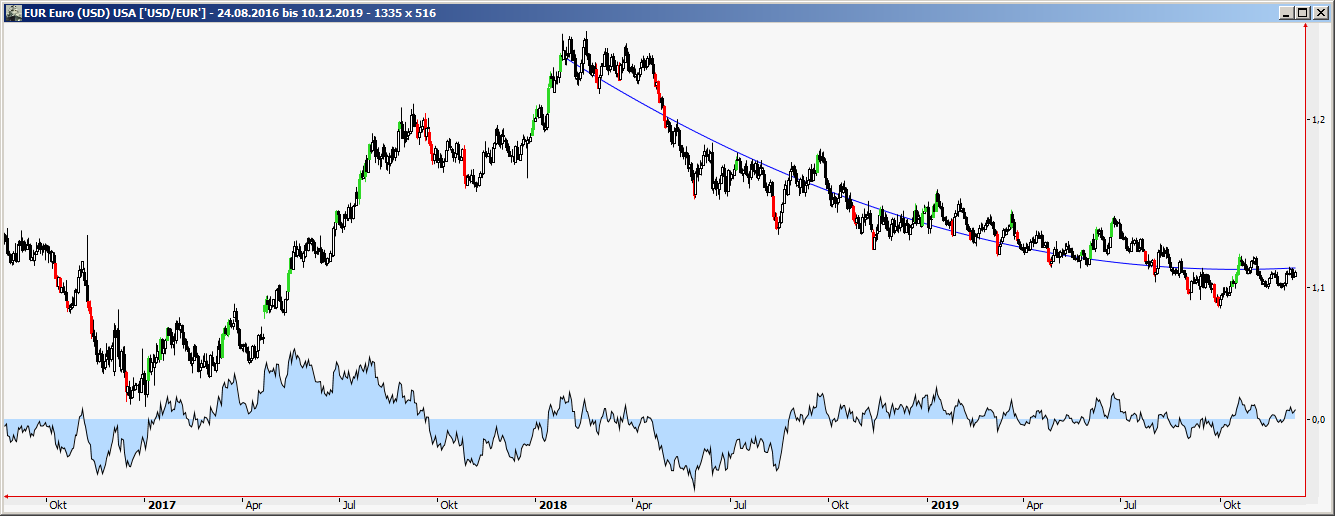
Dezember Kontrakt läuft aus. Ich muss rollen.
Das realisierte Ergebnis beträgt diesmal ~ plusminus Null.
Sehr ärgerlich, dass dieses Währungspaar Rekorde an Gleichmässigkeit aufstellt!
Ausgerechnet wenn ich damit handle...
E7 USD SLD 3 DEC19 Futures 1.1091 18:56:37 GLOBEX 4.11 null
E7 USD BOT 3 MAR20 Futures 1.1163 18:51:23 GLOBEX 4.11 null
Antwort auf Beitrag Nr.: 62.125.658 von Gruenfeld am 10.12.19 18:59:17
Warum stürzt der Euro jetzt schon wieder so massiv ab?
Zitat von Gruenfeld: Fortsetzung Beitrag #16794
Dezember Kontrakt läuft aus. Ich muss rollen.
Das realisierte Ergebnis beträgt diesmal ~ plusminus Null.
Sehr ärgerlich, dass dieses Währungspaar Rekorde an Gleichmässigkeit aufstellt!
Ausgerechnet wenn ich damit handle...
E7 USD SLD 3 DEC19 Futures 1.1091 18:56:37 GLOBEX 4.11 null
E7 USD BOT 3 MAR20 Futures 1.1163 18:51:23 GLOBEX 4.11 null
Warum stürzt der Euro jetzt schon wieder so massiv ab?
Antwort auf Beitrag Nr.: 62.209.125 von Nutzer156 am 20.12.19 18:54:34https://www.spiegel.de/politik/ausland/brexit-unterhaus-stim…
Würde ich mal tippen, passt zeitlich zusammen.
Würde ich mal tippen, passt zeitlich zusammen.
Antwort auf Beitrag Nr.: 62.209.269 von NUE_Invest am 20.12.19 19:11:55
Danke. Ist die 1,11 jetzt auch Geschichte?
Zitat von NUE_Invest: https://www.spiegel.de/politik/ausland/brexit-unterhaus-stim…
Würde ich mal tippen, passt zeitlich zusammen.
Danke. Ist die 1,11 jetzt auch Geschichte?
Antwort auf Beitrag Nr.: 62.411.900 von Nutzer156 am 17.01.20 21:41:14
Und nun schon die 1,10 ?
Zitat von Nutzer156:Zitat von NUE_Invest: https://www.spiegel.de/politik/ausland/brexit-unterhaus-stim…
Würde ich mal tippen, passt zeitlich zusammen.
Danke. Ist die 1,11 jetzt auch Geschichte?
Und nun schon die 1,10 ?
Antwort auf Beitrag Nr.: 62.596.108 von Nutzer156 am 05.02.20 20:46:43Hoffentlich
Antwort auf Beitrag Nr.: 62.616.598 von NUE_Invest am 07.02.20 17:04:08
Wieso hoffentlich?
Zitat von NUE_Invest: Hoffentlich
Wieso hoffentlich?
Antwort auf Beitrag Nr.: 62.616.850 von Nutzer156 am 07.02.20 17:28:23Weil ich gegen den Euro investiert bin.
Wann steigt der Euro endlich ?
Antwort auf Beitrag Nr.: 62.640.850 von crackz am 11.02.20 07:55:17
Warum sollte er? Die Südeuropäer werden den Wert immer weiter drücken.
Zitat von crackz: Wann steigt der Euro endlich ?
Warum sollte er? Die Südeuropäer werden den Wert immer weiter drücken.
Toler Short Sparplan, hier wird niemals was steigen!
Antwort auf Beitrag Nr.: 62.662.213 von Gold2018 am 12.02.20 20:42:06
Wie soll ein solch konstruierter Euro denn steigen?
Zitat von Gold2018: Toler Short Sparplan, hier wird niemals was steigen!
Wie soll ein solch konstruierter Euro denn steigen?
Antwort auf Beitrag Nr.: 62.674.420 von Nutzer156 am 13.02.20 20:07:00Ja der geht pleite , morgen neue Währung 😂
Antwort auf Beitrag Nr.: 62.674.420 von Nutzer156 am 13.02.20 20:07:00Das frag mich nicht
Ich rechne nach der starken Bewegung gegen den EUR aktuell mit einer Gegenbewegung Ri 1,09. Die 1,0777 ist eine wichtige techn Marke und könnte ein kurzfr. Boden sein.
Antwort auf Beitrag Nr.: 62.735.701 von CapCheck33 am 20.02.20 10:51:14
so stark wie Gold steigt, trotz hartem Dollar, rechne ich eher damit das bald Tante Merkel
blass vor die Kamera tritt um den Europäern mitzuteilen, das es eine Währungsreform geben wird.
Zitat von CapCheck33: Ich rechne nach der starken Bewegung gegen den EUR aktuell mit einer Gegenbewegung Ri 1,09. Die 1,0777 ist eine wichtige techn Marke und könnte ein kurzfr. Boden sein.
so stark wie Gold steigt, trotz hartem Dollar, rechne ich eher damit das bald Tante Merkel
blass vor die Kamera tritt um den Europäern mitzuteilen, das es eine Währungsreform geben wird.
Antwort auf Beitrag Nr.: 62.751.373 von Abfischer am 21.02.20 17:31:01
Heute schon mal GEKUCKT?
Signifikante Gegenbewegung des EUR/USD.
Ich mach keine Politik sondern seh mir die Fakten und Trends an. 😉
Momentan Boden und Umkehrforma, mit deutlichem Ausbruch, auch Hinterlegt durch die schwachen Wirrschaftsdaten heute in den USA. Eher weitere Zinssenkung durch die FED zu erwarten um die US-Konjunktur über die Wahlen zu stützen. Das sind Momentan eher Argumente für den EUR kurz - mittelfristig.
Zitat von Abfischer:Zitat von CapCheck33: Ich rechne nach der starken Bewegung gegen den EUR aktuell mit einer Gegenbewegung Ri 1,09. Die 1,0777 ist eine wichtige techn Marke und könnte ein kurzfr. Boden sein.
so stark wie Gold steigt, trotz hartem Dollar, rechne ich eher damit das bald Tante Merkel blass vor die Kamera tritt um den Europäern mitzuteilen, das es eine Währungsreform geben wird.
Heute schon mal GEKUCKT?
Signifikante Gegenbewegung des EUR/USD.
Ich mach keine Politik sondern seh mir die Fakten und Trends an. 😉
Momentan Boden und Umkehrforma, mit deutlichem Ausbruch, auch Hinterlegt durch die schwachen Wirrschaftsdaten heute in den USA. Eher weitere Zinssenkung durch die FED zu erwarten um die US-Konjunktur über die Wahlen zu stützen. Das sind Momentan eher Argumente für den EUR kurz - mittelfristig.
ich glaube keinem Land der Welt geht es wirtschaftlich so gut wie den USA.
die haben ihre Transformation zu Digitaliserung vollendet, und sind bestens gerüstet für die kommenden
50 Jahre.
China setzt auf Masse , Kopien, Rohstoffabbau und Energie.
und die Europäer? hinken überall hinterher und haben Fahrradwege und Klimaneutralität als Agenda.
davon wird kein Affe satt !
die haben ihre Transformation zu Digitaliserung vollendet, und sind bestens gerüstet für die kommenden
50 Jahre.
China setzt auf Masse , Kopien, Rohstoffabbau und Energie.
und die Europäer? hinken überall hinterher und haben Fahrradwege und Klimaneutralität als Agenda.
davon wird kein Affe satt !
Antwort auf Beitrag Nr.: 62.751.577 von Abfischer am 21.02.20 17:50:50
Tut mir leid. Das ist keine wirkliche sachliche Argumentation, schon gar nicht für einen Währungs-/Finanzthread, sondern eher für das AntiAnti-Gejammere auf Facebook u. Co.
Zitat von Abfischer: ich glaube keinem Land der Welt geht es wirtschaftlich so gut wie den USA.
die haben ihre Transformation zu Digitaliserung vollendet, und sind bestens gerüstet für die kommenden
50 Jahre.
China setzt auf Masse , Kopien, Rohstoffabbau und Energie.
und die Europäer? hinken überall hinterher und haben Fahrradwege und Klimaneutralität als Agenda.
davon wird kein Affe satt !
Tut mir leid. Das ist keine wirkliche sachliche Argumentation, schon gar nicht für einen Währungs-/Finanzthread, sondern eher für das AntiAnti-Gejammere auf Facebook u. Co.
Antwort auf Beitrag Nr.: 62.751.664 von CapCheck33 am 21.02.20 17:57:01bin ich anderer Meinung.
ich sage in 2 Jahren steht der Euro bei Einführung 0,80 !!
und diese Wette werde ich gewinnen.
ich sage in 2 Jahren steht der Euro bei Einführung 0,80 !!
und diese Wette werde ich gewinnen.
Antwort auf Beitrag Nr.: 62.752.138 von Abfischer am 21.02.20 18:44:41
Für den Euro spricht auch nichts, oder?
Zitat von Abfischer: bin ich anderer Meinung.
ich sage in 2 Jahren steht der Euro bei Einführung 0,80 !!
und diese Wette werde ich gewinnen.
Für den Euro spricht auch nichts, oder?
Update Beitrag #16810
März Kontrakt läuft aus. Man muss wieder rollen. Realisiertes Ergebnis beträgt wiederum ~ plusminus Null.
Wäre der Euro etwas weiter gefallen (ungefähr ein Cent mehr), hätte ich einen 4ten Kontrakt gekauft. Grmpf! Muss ich mich halt mit weniger Gewinn begnügen...
Umgerechnet beträgt die Steigung der blauen Funktion aktuell 1.42% pro Jahr.
E7 USD SLD 3 MAR20 Futures 1.1160 MÄR 3 18:50:19 GLOBEX 4.11 null
E7 USD BOT 3 JUN20 Futures 1.1205 MÄR 3 18:49:08 GLOBEX 4.11 null
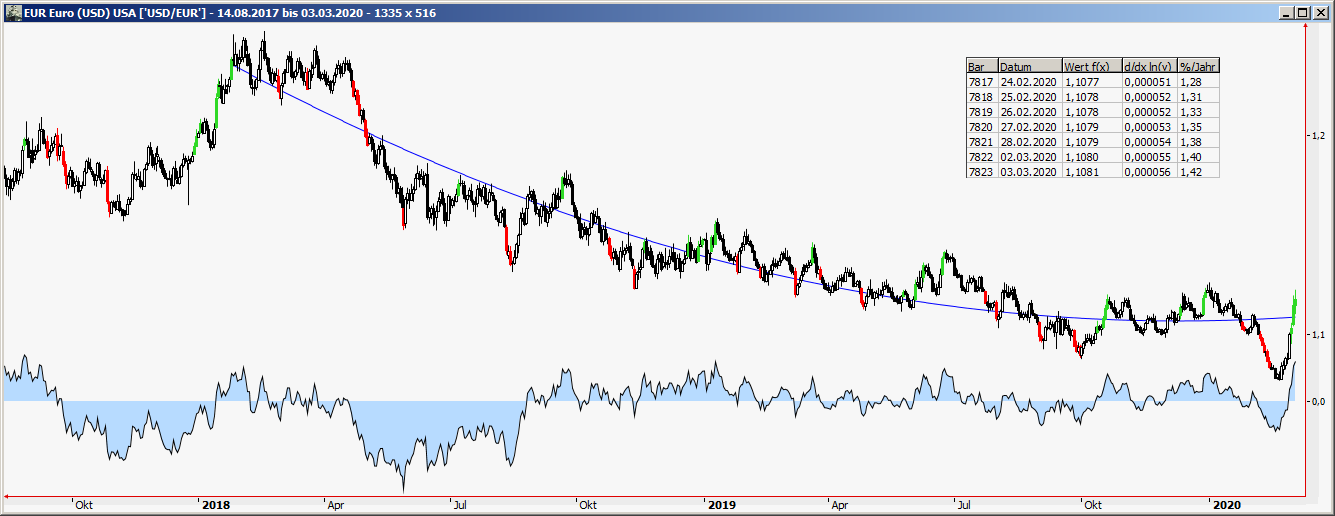
März Kontrakt läuft aus. Man muss wieder rollen. Realisiertes Ergebnis beträgt wiederum ~ plusminus Null.
Wäre der Euro etwas weiter gefallen (ungefähr ein Cent mehr), hätte ich einen 4ten Kontrakt gekauft. Grmpf! Muss ich mich halt mit weniger Gewinn begnügen...
Umgerechnet beträgt die Steigung der blauen Funktion aktuell 1.42% pro Jahr.
E7 USD SLD 3 MAR20 Futures 1.1160 MÄR 3 18:50:19 GLOBEX 4.11 null
E7 USD BOT 3 JUN20 Futures 1.1205 MÄR 3 18:49:08 GLOBEX 4.11 null
Geht der Anstieg beim Euro weiter?
Die letzten Tage waren schon extrem.
Die letzten Tage waren schon extrem.
Realistisch oder nicht?
Was meint ihr, bietet uns der EurGbp ein günstigeres Level für einen Kauf an, oder wird er da durch fallen und sich eher in Richtung ATL auf machen?Ich finde beide Ansichten interessant und vor allem den Short halte ich für recht Wahrscheinlich:
https://de.tradingview.com/chart/EURGBP/pclTCjmB/
Ich warte auf den Einstieg. Entweder schon in der Mitte, oder eben dann weiter oben. Als Positionstrade kann man das machen, denke ich.
Fortsetzung Beitrag #16831
Verkauf meiner E7 Future Kontrakte.
Grund: Der Euro befindet sich weit oberhalb der blauen Funktion.
Realisierter Gewinn ~ 4800$
Zusammen mit dem realisierten Verlust der Dezember 19 Kontrakte (siehe Beitrag #16794) steht insgesamt ein Verlust von 2900$ zu Buche. Welchen ich locker wegstecken kann...
- E7 USD SLD 3 JUN20 Futures 1.1463 15:18:36 GLOBEX 4.11 null
E7 USD SLD 2 JUN20 Futures 1.1463 15:18:36 GLOBEX 2.74 null
E7 USD SLD 1 JUN20 Futures 1.1463 15:18:36 GLOBEX 1.37 null
Verkauf meiner E7 Future Kontrakte.
Grund: Der Euro befindet sich weit oberhalb der blauen Funktion.
Realisierter Gewinn ~ 4800$
Zusammen mit dem realisierten Verlust der Dezember 19 Kontrakte (siehe Beitrag #16794) steht insgesamt ein Verlust von 2900$ zu Buche. Welchen ich locker wegstecken kann...
- E7 USD SLD 3 JUN20 Futures 1.1463 15:18:36 GLOBEX 4.11 null
E7 USD SLD 2 JUN20 Futures 1.1463 15:18:36 GLOBEX 2.74 null
E7 USD SLD 1 JUN20 Futures 1.1463 15:18:36 GLOBEX 1.37 null
Antwort auf Beitrag Nr.: 62.901.555 von Landei1717 am 06.03.20 08:25:26
Geht der Untergang des Euros weiter?
Warum?
Zitat von Landei1717: Geht der Anstieg beim Euro weiter?
Die letzten Tage waren schon extrem.
Geht der Untergang des Euros weiter?
Warum?
Gibt es einen fundamentalen Grund warum der Rotz steigt?
EurUsd
Ist für mich wieder ein Short Kandidat!Es gibt einfach zu viele Indizien dass er fallen sollte. Allerdings konsolidiert ja grade so gut wie alles am Markt... Lassen wir uns überraschen, ich selbst fahre einen ähnlichen Fahrplan wie diesen hier:
https://de.tradingview.com/chart/EURUSD/tJc4Ovp9/
Viel Erfolg!
Antwort auf Beitrag Nr.: 64.192.246 von new-in-trading am 26.06.20 12:19:44Sieht bislang nicht so aus. Die 1,14 wird bald genommen. Trump findet das gut, Lagard hat keine Ahnung. Doller shorten...
Antwort auf Beitrag Nr.: 64.400.759 von theinfonaut am 14.07.20 10:57:35Bin mit 2 K Short😊
1,15 wird kommen. Ein starker Euro macht aus meiner Sicht keinen Sinn. Europa ist wirtschaftlich schwächer durch die Krise gekommen als die USA und das wird so bleiben. Einzig die geringeren Ölumsätze senken die $ Nachfrage.
Antwort auf Beitrag Nr.: 64.413.926 von theinfonaut am 15.07.20 10:20:15Also ab 1,15 erste Shorts auf den Euro?
Hat sich gelohnt
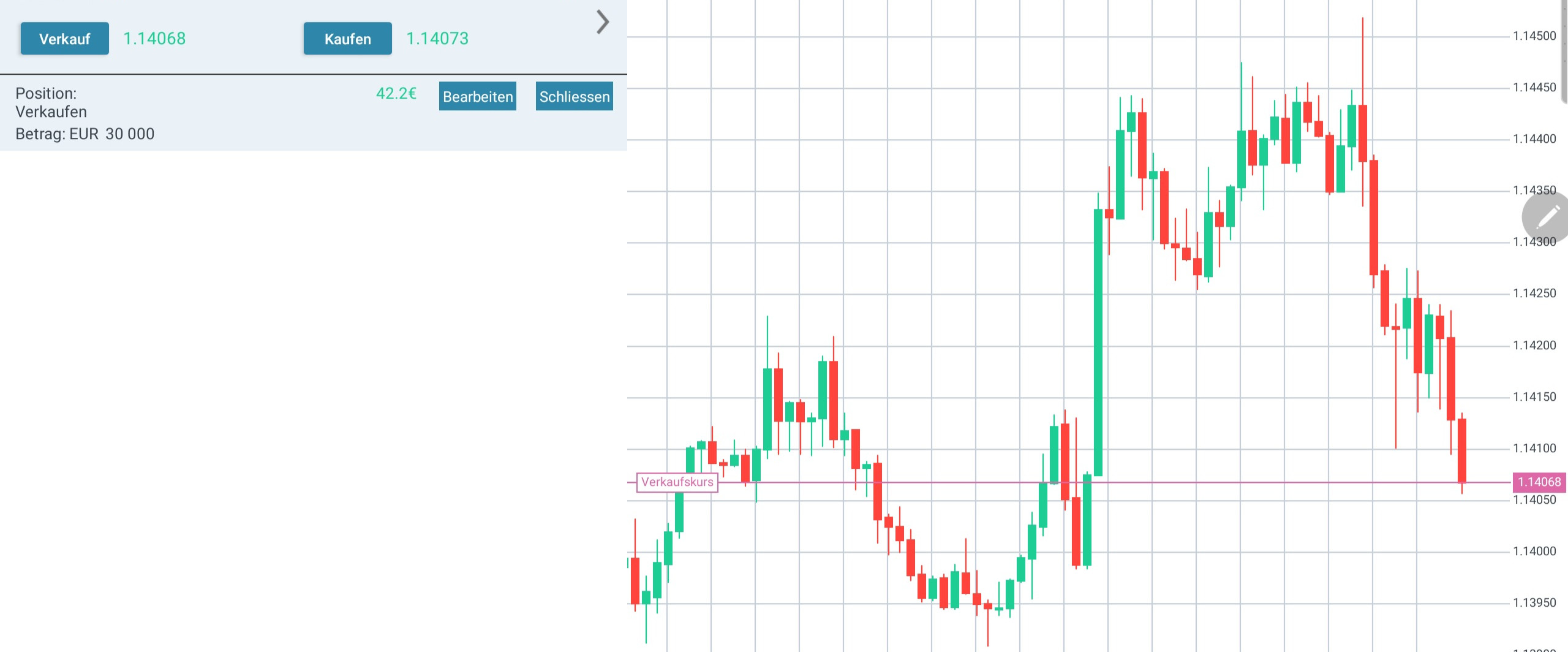
Antwort auf Beitrag Nr.: 64.422.191 von Gold2018 am 15.07.20 17:58:04War ein Volttreffer haha
Antwort auf Beitrag Nr.: 64.413.926 von theinfonaut am 15.07.20 10:20:15
Geht schon wieder abwärts. Der Euro ist einfach wertlos.
Zitat von theinfonaut: 1,15 wird kommen. Ein starker Euro macht aus meiner Sicht keinen Sinn. Europa ist wirtschaftlich schwächer durch die Krise gekommen als die USA und das wird so bleiben. Einzig die geringeren Ölumsätze senken die $ Nachfrage.
Geht schon wieder abwärts. Der Euro ist einfach wertlos.
Was macht den EUR wertloser als den USD?
Das frage ich mich die ganze Corona Zeit schon. Die Amis leben von Luftschlössern und faulen Krediten. Die fliegen denen sehr bald schon um die Ohren. Macht den EUR nicht besser, der Goldpreis flüstert uns aber, wie es um die FIATWährungen insgesamt steht.
Ein böses Ende hoffentlich nimmt es nicht.
Das frage ich mich die ganze Corona Zeit schon. Die Amis leben von Luftschlössern und faulen Krediten. Die fliegen denen sehr bald schon um die Ohren. Macht den EUR nicht besser, der Goldpreis flüstert uns aber, wie es um die FIATWährungen insgesamt steht.
Ein böses Ende hoffentlich nimmt es nicht.
Antwort auf Beitrag Nr.: 64.538.139 von el_padre am 24.07.20 20:06:11Und: Der Dollar ist immer auch irgendwie gedeckt gewesen. Früher einfach als Leitwährung durch die Masse weil alles neu und super war, dann durch den Goldstandard, durch den Konsum, dann durch den Ölhandel. Im Zeitalter von Wasserstoff und alternativen Energien und den Volkswirtschaften in Asien fehlen dem Doller einige wichtige Argumente. Das Vereinigte Königreich mit Irland und anderen Inseln alleine könnte vor seinen Küsten fast soviel alternative Energie erzeugen wie an der gesamten Ostküste der USA. Wenn die das denn wollten.
Antwort auf Beitrag Nr.: 64.441.283 von Nutzer156 am 16.07.20 22:20:031,165 und Momentum steigt. Dollar ist auch gegen andere Währungen schwach. Die ersten Analysten sagen 1,22 voraus. Dollarflucht? Hat die FED überzogen? Steckt China dahinter?
Ein zu starker Euro würde unsere Exporte mit Sicherheit stark belasten. Warum schießt die EZB nicht dagegen ?
so 1 bubble wow help me!
Dollarschwäche geht weiter, gut für die Gewinne der fetten 4 im S&P 500. Normalerweise fängt die EZB ab 1,17 an gegenzusteuern Erst verbal später mit Käufen, aber Lagard geht lieber auf die Sonnenbank. Nächstes Kursziel 1,20.
EURUSD short dank starkem USD
Es kann sich der Trend langfristig drehen. Jetzt besteht die Möglichkeit den EUR zu verkaufen. 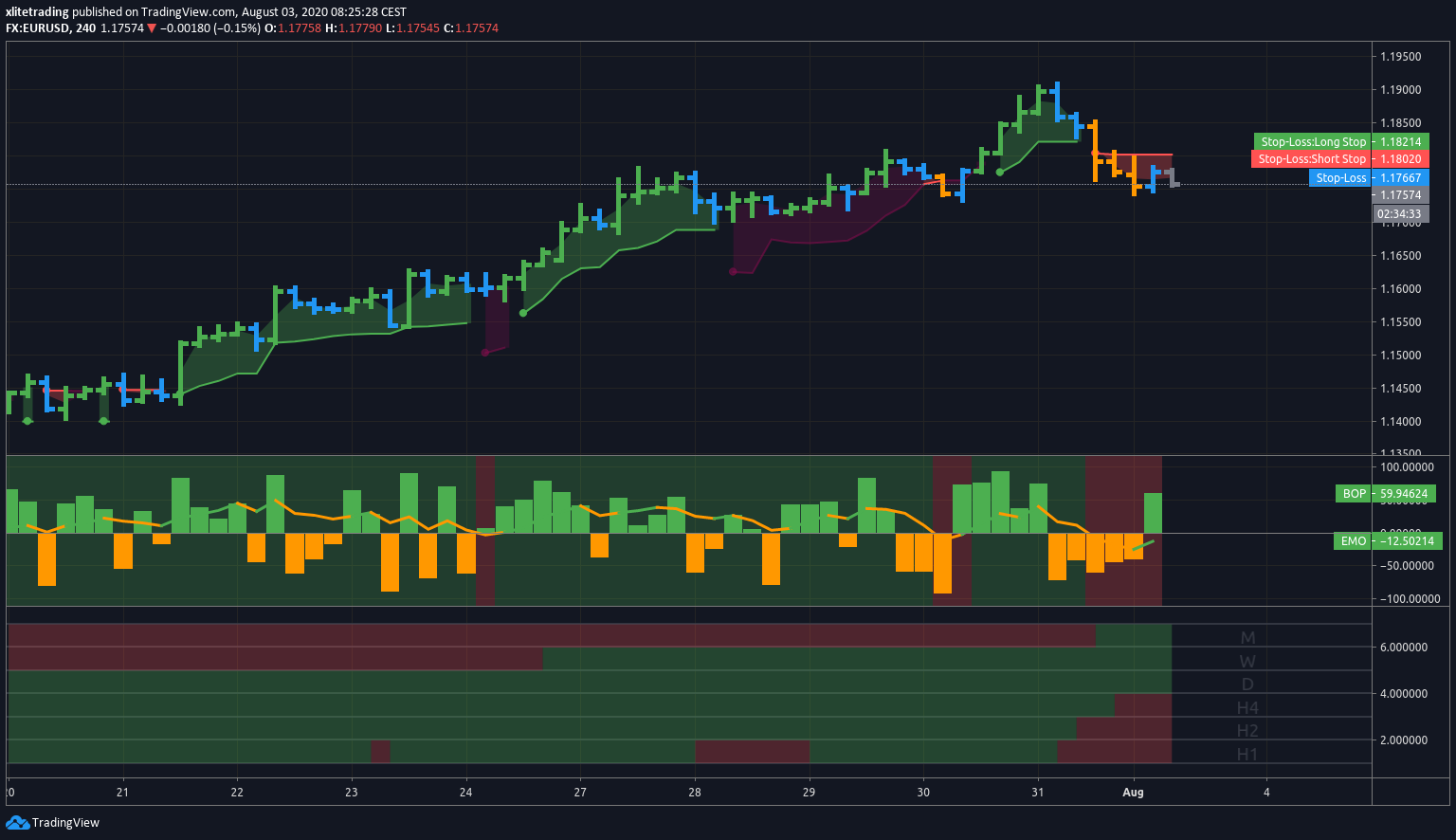
Nervöse Händler können einen Stopp bei 1.1820 platzieren. Ich bin dann mal short.
Habe die Position zwischenzeitlich geschlossen.
Antwort auf Beitrag Nr.: 64.638.760 von xlite-trading am 04.08.20 11:44:54
Warum so früh
Habe die 1.14 auf dem Plan
Zitat von xlite-trading: Habe die Position zwischenzeitlich geschlossen.
Warum so früh
Habe die 1.14 auf dem Plan
Antwort auf Beitrag Nr.: 64.696.633 von Goldfly am 09.08.20 10:52:34Bei 1.1788 wurde ein neues Verkaufssignal ausgegeben. Bin auch wieder short. 1.14 wäre der Hammer :-)
Viel Glück
Viel Glück
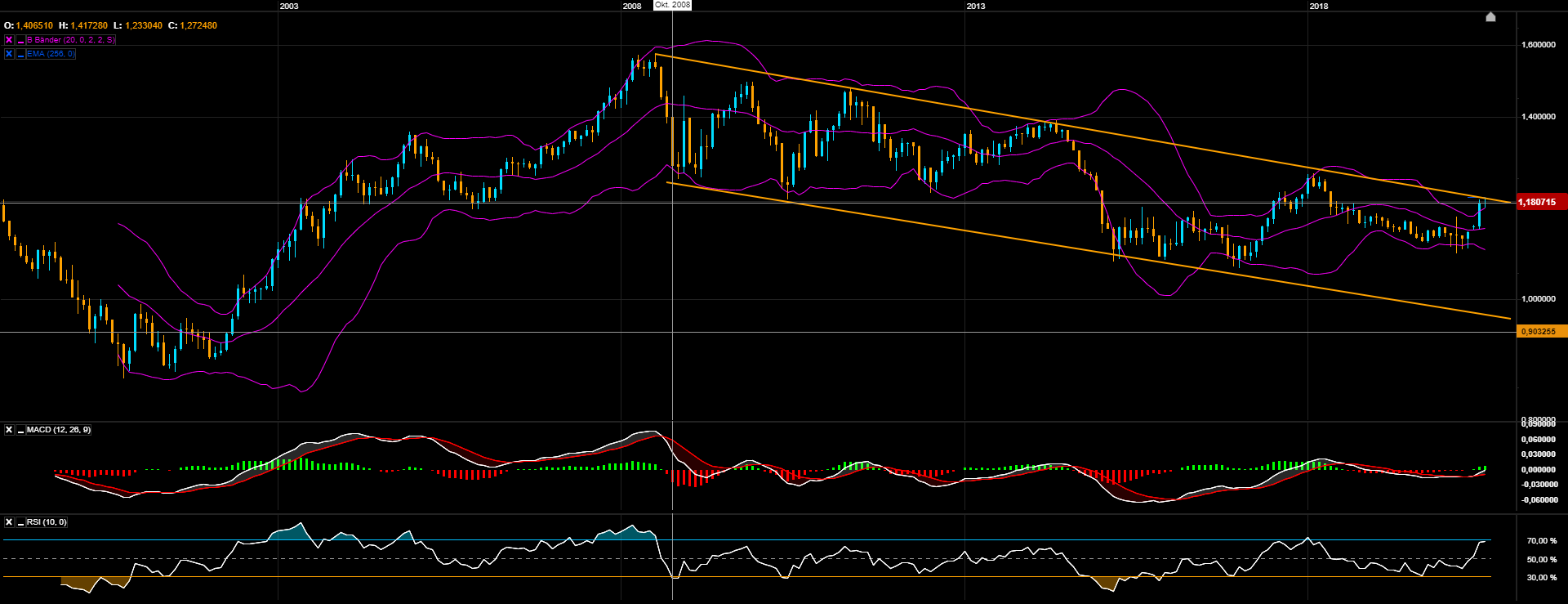
Antwort auf Beitrag Nr.: 64.705.204 von xlite-trading am 10.08.20 13:27:20Bin voll bei Ihnen short
Dachte wir hätten das Hoch gesehen, nun nähern wir uns der 1,20?!?
Bin mit meinem Short wieder raus. Merkwürdig, dass weder von der Exportwirtschaft noch von der EZB kaum etwas zum Dollar zu hören ist.
Hier wird gerade das US Ausland abgekocht. Trump wird es freuen. Wenn es einen Masterplan für Trump gibt, wie der Dollar schwächer politisiert wird, genau so würde ich es tun. Politische Unruhe stiften, ausländische Firmen verklagen, ausländische Firmen ausschließen, Zinsen auf Null.
Hier wird gerade das US Ausland abgekocht. Trump wird es freuen. Wenn es einen Masterplan für Trump gibt, wie der Dollar schwächer politisiert wird, genau so würde ich es tun. Politische Unruhe stiften, ausländische Firmen verklagen, ausländische Firmen ausschließen, Zinsen auf Null.
Läuft der short, obwohl mir die 1,10 besser gefallen
Antwort auf Beitrag Nr.: 64.816.279 von Goldfly am 19.08.20 18:37:40Meiner ist noch im Minus, noch so ein Tag und er ist wieder im Spiel.
EUR/USD klettert auf höchsten Stand seit Mai 2018
EUR/USD setzt im europäischen Handel am Dienstagvormittag seinen Höhenflug infolge des Strategiewechsels der Federal Reserve Bank (Fed) und der damit verbundenen Aussicht auf noch längere Zeit unverändert niedrige US-Leitzinsen auf ein frisches Zweijahreshoch fort. Im Hoch wurde das Währungspaar bislang bei 1,1997 gehandelt – der höchste Stand seit Anfang Mai 2018.Vollständige Diskussion unter:
https://www.wallstreet-online.de/diskussion/1322524-31-40/wi…
Antwort auf Beitrag Nr.: 64.705.204 von xlite-trading am 10.08.20 13:27:20
Könnten Ende nächster Woche die 1,14 ankratzen
Läuft doch gut
Zitat von xlite-trading: Bei 1.1788 wurde ein neues Verkaufssignal ausgegeben. Bin auch wieder short. 1.14 wäre der Hammer :-)
Viel Glück
Könnten Ende nächster Woche die 1,14 ankratzen
Läuft doch gut
Antwort auf Beitrag Nr.: 65.203.093 von Goldfly am 26.09.20 20:56:00seh ich anders, der Euro ist kurz vorm Start nach oben
Tendenziell wird der Euro aber bald fallen, die CoT-Daten sind extrem bearisch:
https://youtu.be/smThkCeDej0
https://youtu.be/smThkCeDej0
Antwort auf Beitrag Nr.: 65.280.821 von optiontrader24 am 05.10.20 10:13:01ich sage er wird steil steigen, denn der US Dollar ist absolut am Ende...außerdem möchte man ja auch in den USA, dass der Dollar abwertet....
Kann dass, nach dem Rücksetzer der Nacht, ein guter Longeistieg beim EURO zum US-Dollar sein?
Die Unruhen in den USA könnten den US-Dollar weiter schwächen.
Die Unruhen in den USA könnten den US-Dollar weiter schwächen.
Wie von mir erwartet steigt der Euro jetzt wieder.
Einfaches Einfügen von wallstreetONLINE Charts: So funktionierts.
Der Euro wird höchstwahrscheinlich am Mehrjahreshoch abprallen und die aufgebaute Blase wird sich auflösen. Zielkurs 1,09.
Antwort auf Beitrag Nr.: 66.321.965 von Robert1985 am 07.01.21 09:44:30
Hoffen wir (also ich) mal, dass du recht hast. Brauche demnächst Euro für einen Hauskauf und habe das Geld momentan als USD rumliegen.
Zitat von Robert1985: Der Euro wird höchstwahrscheinlich am Mehrjahreshoch abprallen und die aufgebaute Blase wird sich auflösen. Zielkurs 1,09.
Hoffen wir (also ich) mal, dass du recht hast. Brauche demnächst Euro für einen Hauskauf und habe das Geld momentan als USD rumliegen.
Antwort auf Beitrag Nr.: 66.322.016 von sbendel am 07.01.21 09:46:56
Dito. Also zumindest was die Geldanlage betrifft.Habe mich mit vielen Studien und Analysen beschäftigt. Meine Überzeugung ist, dass der Euro den kürzeren ziehen wird.
Irgendwann wird die Nullzinspolitik am Ende sein. Die Verschuldung vieler europäischer Staaten wird den Euro bald einholen.
Zitat von sbendel:Zitat von Robert1985: Der Euro wird höchstwahrscheinlich am Mehrjahreshoch abprallen und die aufgebaute Blase wird sich auflösen. Zielkurs 1,09.
Hoffen wir (also ich) mal, dass du recht hast. Brauche demnächst Euro für einen Hauskauf und habe das Geld momentan als USD rumliegen.
Dito. Also zumindest was die Geldanlage betrifft.Habe mich mit vielen Studien und Analysen beschäftigt. Meine Überzeugung ist, dass der Euro den kürzeren ziehen wird.
Irgendwann wird die Nullzinspolitik am Ende sein. Die Verschuldung vieler europäischer Staaten wird den Euro bald einholen.
Antwort auf Beitrag Nr.: 66.321.965 von Robert1985 am 07.01.21 09:44:30Das Mehrjahreshoch liegt ungefähr bei 1,25 US$ pro Euro
Bis dahin könnte er kurzfristig noch mal steigen, vielleicht ist das auch das Ziel der Wärungsmanipulationsmafia der weltweit vernetzten Banken.
Bis dahin könnte er kurzfristig noch mal steigen, vielleicht ist das auch das Ziel der Wärungsmanipulationsmafia der weltweit vernetzten Banken.
An Sylvester waren die europäischen Märkte dicht. Da fiel der Euro Kurzzeit um 2,5 %
Zeichen für Manipulation?
Zeichen für Manipulation?
Vermutlich werden sie heute, wenn sie gleich mit dem Abfischen der unten liegenden knappen Calls fertig sind, den Euro wieder nach oben katapultieren. Die Ereignisse in den USA dürften den Dollar, wenigsten kurzfristig, weiter schwächen.
Es sieht jetzt schon nach der Umkehr nach oben aus.
Zwischen 1,2285 und 1,2290 sehe ich so was wie einen Boden.
Das ist nur meine Meinung , keine Handelsempfehlung!
Es sieht jetzt schon nach der Umkehr nach oben aus.
Zwischen 1,2285 und 1,2290 sehe ich so was wie einen Boden.
Einfaches Einfügen von wallstreetONLINE Charts: So funktionierts.
Das ist nur meine Meinung , keine Handelsempfehlung!
Jetzt habe ich meine Put erstmal eliminiert, die Gewinne lasse ich nicht wieder sausen, in den letzten Tage waren sie am nachmittag immer wieder verlustig. Bleibe vorerst flat.
Jetzt sind wir genau da wo er gestern nach oben gedreht hat, der zweite Test der 1,2270
Na gut, dann hatten sie wohl die Knock Outs Calls mit der KO Schwelle 1,2250 im Visier, die sind nun erledigt, jetzt kann der Fahrstuhl wieder nach oben fahren um die dort liegenden Put auszuknocken.
Man kann nur versuchen mit dem Zug ein Stück in die richtige Richtung mitzufahren und rechtzeitig wieder aussteigen, bevor es wieder dreht.
Man kann nur versuchen mit dem Zug ein Stück in die richtige Richtung mitzufahren und rechtzeitig wieder aussteigen, bevor es wieder dreht.
Viele nette gehebelte Scheinchen sind derzeit am steigen.
https://www.onvista.de/derivate/Knock-Outs-auf-Eurokurs-Euro…
Der großen Gewinnchance steht das Totalverlustrisiko gegenüber.
Mal sehen wie weit sie den Euro jetzt nach oben katapultieren, der Grund (die Unruhen in den USA) ist ja gegeben, dass dürfte heute Nachmittag zur Börseneröffnung in den USA ordentlich für Druck auf den US-DOLLAR sorgen.
Das ist keine Handelsempfehlung!!
https://www.onvista.de/derivate/Knock-Outs-auf-Eurokurs-Euro…
Der großen Gewinnchance steht das Totalverlustrisiko gegenüber.
Mal sehen wie weit sie den Euro jetzt nach oben katapultieren, der Grund (die Unruhen in den USA) ist ja gegeben, dass dürfte heute Nachmittag zur Börseneröffnung in den USA ordentlich für Druck auf den US-DOLLAR sorgen.
Einfaches Einfügen von wallstreetONLINE Charts: So funktionierts.
Das ist keine Handelsempfehlung!!
Jetzt baut sich ordentlich Druck auf, der Euro wird wohl gleich gewaltig nach oben springen!?
Das ist nur meine Meinung und keine Handelsempfehlung!

Das ist nur meine Meinung und keine Handelsempfehlung!
Wer sagt es denn?? Gleich geht es wieder über die 1,23.... US$/EUR💹
Der Euro hat wohl seinen Höhenflug beendet.
Die Signale für einen drastischen Rückgang mehren sich.
Die Signale für einen drastischen Rückgang mehren sich.
Der Aufwärtstrend ist ungebrochen, so kleien Pausen wie gestern gab es zwischendurch immer wieder mal.
Einfaches Einfügen von wallstreetONLINE Charts: So funktionierts.
Der allmorgentliche Absacker war für mich der beste Longeinstieg seit langem, endlich wieder bewegung im EUR/USD-Paar.
Einfaches Einfügen von wallstreetONLINE Charts: So funktionierts.
[/url]
Mal sehen ob der wieder auf 1 Euro hochspringt!?
Immer nur überschaubare Anzahl (Spielgeld) und mit Stopp versehen um das Totalverlustrisiko zu minimieren.
DZ BANK AG Deut.Zentral-Gen. TurboC 17.03.21 EO/DL 1,22 Hebel-Bull-Zertifikat
WKN: DFN8X9 ISIN: DE000DFN8X96
Der vorherige Beitrag und auch dieser sind nur meine Meinung und keine Handelsempfehlung!
Immer nur überschaubare Anzahl (Spielgeld) und mit Stopp versehen um das Totalverlustrisiko zu minimieren.
DZ BANK AG Deut.Zentral-Gen. TurboC 17.03.21 EO/DL 1,22 Hebel-Bull-Zertifikat
WKN: DFN8X9 ISIN: DE000DFN8X96
Der vorherige Beitrag und auch dieser sind nur meine Meinung und keine Handelsempfehlung!
Der ist zwar etwas teurer, jedoch viel sicherer, unter 1,21 fällt der Euro heute bestimmt nicht.🤣🤣
So;; nun steig über 1,2400 US$Du....
https://www.onvista.de/derivate/knockout/TURBO-BULL-AUF-EUR-…
Das ist nur meine Meinung und keine Handelsempfehlung!
Vorsicht!!!
Trotzdem Totalverlustrisiko!!
🤣So;; nun steig über 1,2400 US$Du....
https://www.onvista.de/derivate/knockout/TURBO-BULL-AUF-EUR-…
Das ist nur meine Meinung und keine Handelsempfehlung!
Vorsicht!!!
Trotzdem Totalverlustrisiko!!
Meinen Put von heute Nacht habe ich ziemlich zum richtigen Zeitpunkt veräußert und in einen Call gewandelt, mal sehen ob es klappt.
Ich denke, irgendwann, wenn die Manipulationsgarde unten fertig ist und es scheint so als ob sie das jetzt bald sind, schießt der Euro wieder, aus unerklärlichen Gründen, senkrecht nach oben, auf neue Hochs.💹
Mal sehen wie schnell wir die 1,2270 wieder unter uns lassen?!
Das ist nur meine Meinung und keine Handelsempfehlung!!!
Ich denke, irgendwann, wenn die Manipulationsgarde unten fertig ist und es scheint so als ob sie das jetzt bald sind, schießt der Euro wieder, aus unerklärlichen Gründen, senkrecht nach oben, auf neue Hochs.💹
Mal sehen wie schnell wir die 1,2270 wieder unter uns lassen?!
Einfaches Einfügen von wallstreetONLINE Charts: So funktionierts.
Das ist nur meine Meinung und keine Handelsempfehlung!!!
Es ist schön, wenn ich den Stopp in den Gewinnbereich hochziehen kann, dann lebt es sich gleich viel entspannter.😆

Ich rechne nicht unter dem Bereich 1,25 - 1,26 USD/$ mit einem Trendbruch, dort lag auch die vorherige Trendumkehrformation. Dieses Ziel werden die Marktmanipulteuere bestimmt noch anlaufen.😇
Wie immer, nur meine Meinung und keine Handelsempfehlung!!
Einfaches Einfügen von wallstreetONLINE Charts: So funktionierts.
Wie immer, nur meine Meinung und keine Handelsempfehlung!!
Wohin geht der EUR?
In die USA!!!🤠🤣🤣
In die USA!!!🤠🤣
🤣
Hier wird die ganz große Marktpsychologie gespielt, die runden Marken, wie heute die 1,22 werden knapp angelaufen, danach geht es langsam aber sicher nach oben. Die Zockergemeinde wartet darauf, dass die runde Marke eliminiert wird und scheut den Einstieg.
Dann geht es wieder richtig zur Sache und die oberen Ziele werden angelaufen, das umgekehrte Spiel beginnt und läuft und läuft immer so weiter. Die Banken gewinnen fast immer.
Die meisten, immer zu spät rein und zu früh oder zu spät wieder raus, nur die Banken liegen genau richtig.😇
Feste Ziele..Stopps verhindern den ungebremsten Rücklauf der Gewinne.
Mein enger Schein von heute früh hat sich seit dem schon mehr als verdoppelt, fällt z. B. der Stopp bei 1,2240 wurde immer noch Gewinn realisiert.
Das ist keine Handelsempfehlung!!
🐉
Dann geht es wieder richtig zur Sache und die oberen Ziele werden angelaufen, das umgekehrte Spiel beginnt und läuft und läuft immer so weiter. Die Banken gewinnen fast immer.
Die meisten, immer zu spät rein und zu früh oder zu spät wieder raus, nur die Banken liegen genau richtig.😇
Feste Ziele..Stopps verhindern den ungebremsten Rücklauf der Gewinne.
Mein enger Schein von heute früh hat sich seit dem schon mehr als verdoppelt, fällt z. B. der Stopp bei 1,2240 wurde immer noch Gewinn realisiert.
Das ist keine Handelsempfehlung!!
🐉
Chart, Prognose usw..
https://www.kagels-trading.de/chartanalysen/eur-usd-chartana…
Bei ca der 1,2210--1,2215 ist er wieder nach oben abgedreht.
https://admiralmarkets.com/de/analysen/eurusd-tages-updates
https://www.kagels-trading.de/chartanalysen/eur-usd-chartana…
Bei ca der 1,2210--1,2215 ist er wieder nach oben abgedreht.
https://admiralmarkets.com/de/analysen/eurusd-tages-updates
Wie vorhergesagt, so schnell sind wir wieder bei 1,2270 angekommen

Einfaches Einfügen von wallstreetONLINE Charts: So funktionierts.
Bin bei 1,2270 raus und flat.
Jetzt kann der Euro von mir aus hinstürzen wo er will.
Schönes WE!!
Das ist keine Handelsempfehlung!!
Jetzt kann der Euro von mir aus hinstürzen wo er will.
Schönes WE!!
Das ist keine Handelsempfehlung!!
Jetzt kann er schnell unter 1.16 fallen, extreme Abwärtsdynamik baut sich auf.
Wir werden es gleich in diesem Chart sehen.
Das ist keine Handelsempfehlung!!
Wir werden es gleich in diesem Chart sehen.
Einfaches Einfügen von wallstreetONLINE Charts: So funktionierts.
Das ist keine Handelsempfehlung!!
So kann man sich täuschen, er will wohl doch erstmal über die 1,2500 springen?!
Die 1,22000 scheinen zu halten, mal sehen ob er wieder nach oben durchstartet?!!
Ich finde ja!
1,30 ist hart aber auch drin.
Was mir Gedanken macht ist der schwedische Krone zum Euro.
Schweden ist so ein spezielles Land, und auch ihre Währung.
2008 hatten wir die Bankenkrise, und dort hat Schweden riesen Gewinne gemacht.
Es hat damit zu tun:
...wollte keine Menschen entlassen, und Beordert alle sollten weniger arbeiten und bekommen 80% ihres Lohnes.
Dann war die Krise vorbei, und viele Unternehmen brauchten Zeit für Rekrutieren- Menschen um zu arbeiten, nur die Schweden nicht Sie arbeiteten und verdienten wie 10 Jahre. Reines Gewinn.
Jetzt ist die Corona-Krise dran, Schweden hat alles falsch gemacht, und es sind viele Menschen verstorben, und die Produktion läuft auf Hochtouren von zu Hause.
Wie ist es mit den Fabriken und Unternehmen?
Es sind volle Bucher nur die Produktion ist nicht gut. Wie sieht es mit der Krone aus?
1 € = 10.80 kr. Damals!
1 € = 11 kr. Vor einige Zeit!
1 € = 10,06 kr. Jetzt!
Euro ist stark!
Krone schwedische?
Was sollte passieren? Im Vergleich zu damals.
1 €. = 12kr...13...kr. Mehr?
Was passiert ???
Ich denke die schwedische Krone wird fallen, dadurch dass die Schweden keinen Lager haben auch Geld Lager so landet 1€= 14kr ist okej
1,30 ist hart aber auch drin.
Was mir Gedanken macht ist der schwedische Krone zum Euro.
Schweden ist so ein spezielles Land, und auch ihre Währung.
2008 hatten wir die Bankenkrise, und dort hat Schweden riesen Gewinne gemacht.
Es hat damit zu tun:
...wollte keine Menschen entlassen, und Beordert alle sollten weniger arbeiten und bekommen 80% ihres Lohnes.
Dann war die Krise vorbei, und viele Unternehmen brauchten Zeit für Rekrutieren- Menschen um zu arbeiten, nur die Schweden nicht Sie arbeiteten und verdienten wie 10 Jahre. Reines Gewinn.
Jetzt ist die Corona-Krise dran, Schweden hat alles falsch gemacht, und es sind viele Menschen verstorben, und die Produktion läuft auf Hochtouren von zu Hause.
Wie ist es mit den Fabriken und Unternehmen?
Es sind volle Bucher nur die Produktion ist nicht gut. Wie sieht es mit der Krone aus?
1 € = 10.80 kr. Damals!
1 € = 11 kr. Vor einige Zeit!
1 € = 10,06 kr. Jetzt!
Euro ist stark!
Krone schwedische?
Was sollte passieren? Im Vergleich zu damals.
1 €. = 12kr...13...kr. Mehr?
Was passiert ???
Ich denke die schwedische Krone wird fallen, dadurch dass die Schweden keinen Lager haben auch Geld Lager so landet 1€= 14kr ist okej
Jetzt schaut euch die schwedische Krone an! Tipp!
1 € = 11 kr
1 € = 11 kr
Koch bei n-tv. Biden und morgen!

 Durchsuchen
Beitrag zu dieser Diskussion schreiben
Zu dieser Diskussion können keine Beiträge mehr verfasst werden, da der letzte Beitrag vor mehr als zwei Jahren verfasst wurde und die Diskussion daraufhin archiviert wurde.
Bitte wenden Sie sich an feedback@wallstreet-online.de und erfragen Sie die Reaktivierung der Diskussion oder starten Sie eine neue Diskussion.
Investoren beobachten auch:
| Wertpapier | Perf. % |
|---|---|
| +1,31 | |
| +1,74 | |
| +1,26 | |
| +1,25 | |
| +1,28 | |
| +0,02 | |
| -0,41 | |
| -0,73 | |
| -3,56 | |
| +0,21 |
Meistdiskutiert
| Wertpapier | Beiträge | |
|---|---|---|
| 298 | ||
| 142 | ||
| 103 | ||
| 95 | ||
| 64 | ||
| 64 | ||
| 56 | ||
| 54 | ||
| 43 | ||
| 42 |


07.05.24 · dpa-AFX · Intel |
07.05.24 · dpa-AFX · EUR/USD |
07.05.24 · wallstreetONLINE Redaktion · EUR/USD |
07.05.24 · dpa-AFX · Fresenius Medical Care |
07.05.24 · dpa-AFX · EUR/USD |
07.05.24 · dpa-AFX · EUR/USD |
07.05.24 · dpa-AFX · Fresenius Medical Care |
07.05.24 · dpa-AFX · EUR/USD |
| Zeit | Titel |
|---|---|
| 07.05.24 | |
| 06.05.24 | |
| 04.05.24 | |
| 19.03.24 | |
| 28.12.23 | |
| 24.12.23 | |
| 17.12.23 | |
| 01.12.23 | |
| 24.11.23 | |
| 23.10.23 |